







Prince of Wales, Alaska

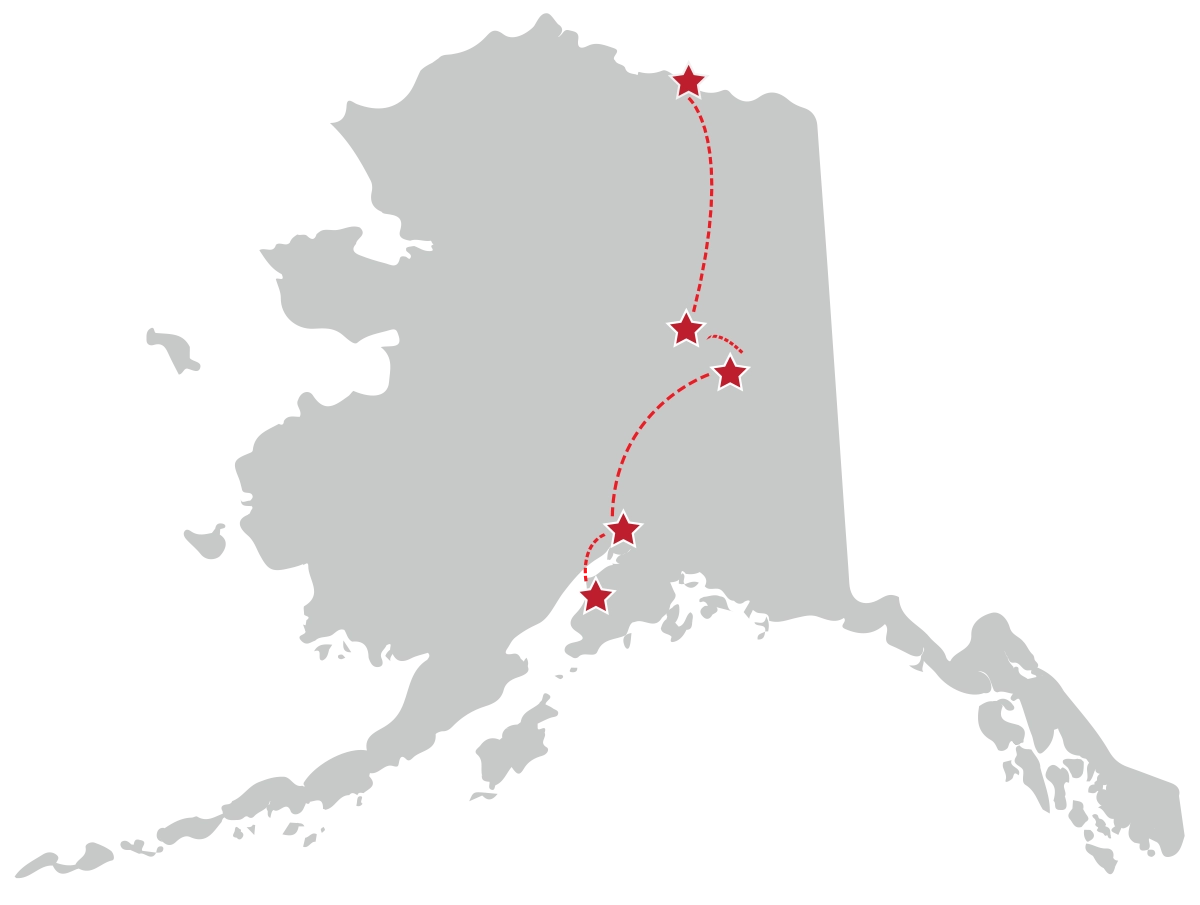
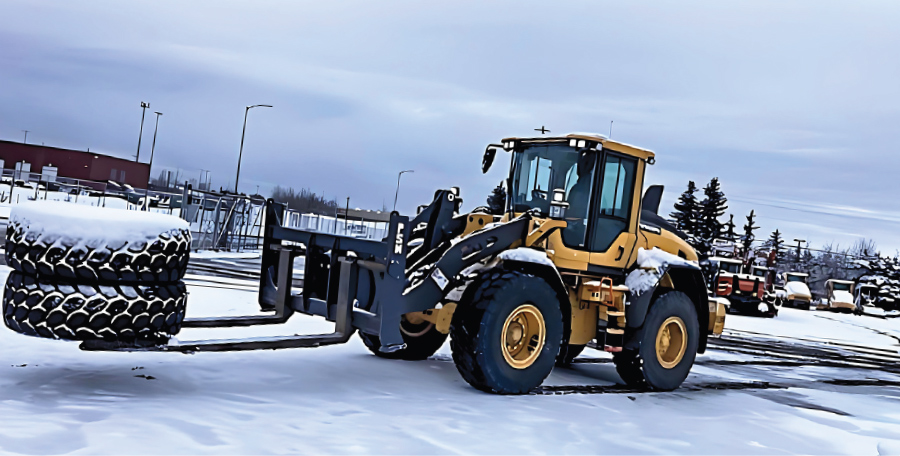
Learn more about what powerful, fuel efficient Volvo haulers can do for your operation.

907.563.3822
Fairbanks
907.931.8808
Juneau
907.802.4242
Ketchikan
907.247.2228

Sales Rep.
Anchorage Branch

Sales Rep.
Anchorage Branch
In Alaska. The best sales and products support lineup.
In your corner. The winning team.
Correction: On page 12 of the April 2026 issue, one of the founders of the Brother Francis winter shelter in Anchorage was misidentified as Bob Easton; his name is Bob Eaton.
Correction: On page 12 of the April 2026 issue, one of the founders of the Brother Francis winter shelter in Anchorage was misidentified as Bob Easton; his name is Bob Eaton.
About The Cover
Highlights


Where Traditions Shape Tomorrow
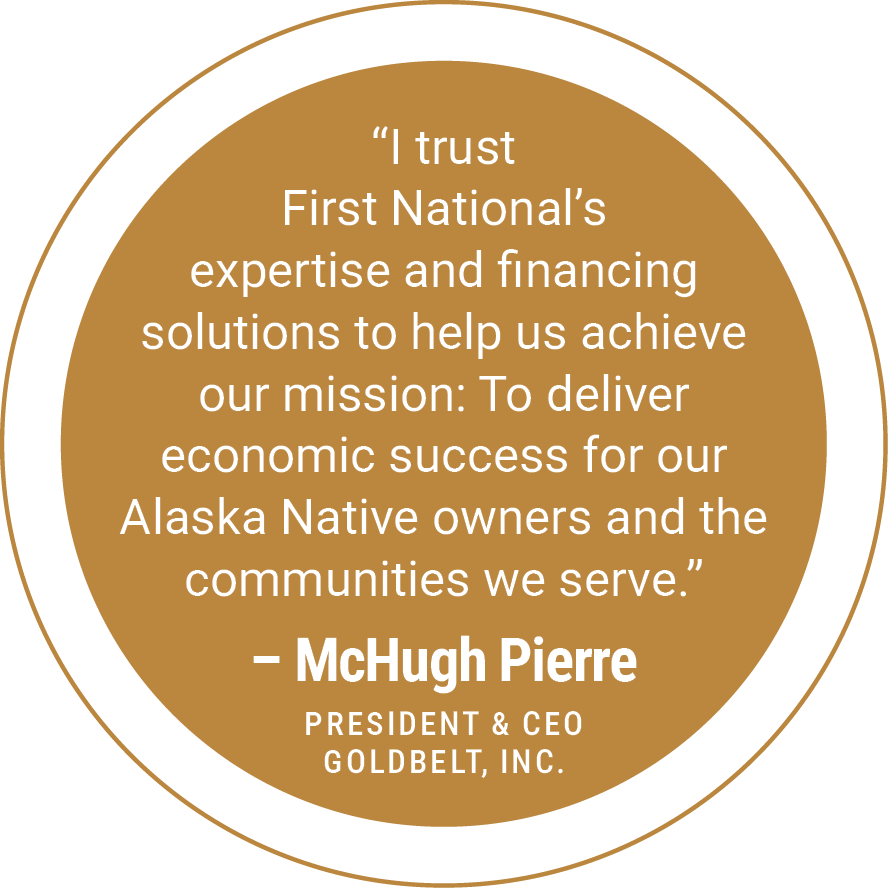
Alaska Native businesses like Goldbelt drive economic growth benefiting both shareholders and their communities. First National Bank Alaska delivers the One Solution — a comprehensive suite of financial tools — to help them succeed, all backed by the experience of Alaska’s largest community bank.

-
Editorial
Tasha Anderson, Managing Editor
Scott Rhode, Senior Editor
Rindi White, Associate Editor
Emily Olsen, Editorial Assistant -
PRODUCTION
Monica Sterchi-Lowman, Art Director
Fulvia Caldei Lowe, Production Manager
Patricia Morales, Web Manager -
BUSINESS
Billie Martin, President
Jason Martin, VP & General Manager
James Barnhill, Accounting Manager -
Sales
Charles Bell, VP Sales & Marketing
907-257-2909 | cbell@akbizmag.comChelsea Diggs, Account Manager
907-257-2917 | chelsea@akbizmag.comWeston Giliam, Account Manager
907-257-2911 | wgiliam@akbizmag.comTiffany Whited, Marketing & Sales Specialist
907-257-2910 | tiffany@akbizmag.com -
Contact
akbizmag.com | 907-276-4373
Press releases: press@akbizmag.com
Billing: billing@akbizmag.com
Subscriptions: circulation@akbizmag.com
From the Editor
s a brand, Alaska Business has permanently adopted a cautiously optimistic outlook. For those who don’t recall, the phrase “cautiously optimistic” was more or less required in every economic forecast and keynote speech in the state during the few years of slow growth between oil prices crashing in 2014 and the rise of the pandemic in 2020. Even with those particular obstacles behind us, within these pages the phrase retains its utility.
There are some projects that—considering the long, long, long, long road they’ve traveled—we approach with a healthy dollop of caution. Without naming names, an LNG pipeline or the Alaska-to-Canada rail line may or may not fall in that category (although we love every update we can find on them). Others, such as a study on the feasibility of extracting rare earth elements from seaweed, are so early and speculative there’s little to propel them forward except optimism, and we’re happy to share it.
laska’s small businesses are rewriting the playbook on resilience, using technology to optimize operations, hone their competitive edge, and fuel their growth. Technology-driven tools are essential to the success of small businesses in Alaska. From AI-powered customer solutions to business platforms such as BuyAlaska, entrepreneurs are embracing digital transformation and making an impact on the local economy. Telecommunications providers are facilitating this shift, delivering connectivity and solutions that help businesses streamline workflows, rapidly scale, and adapt to a constantly changing marketplace.

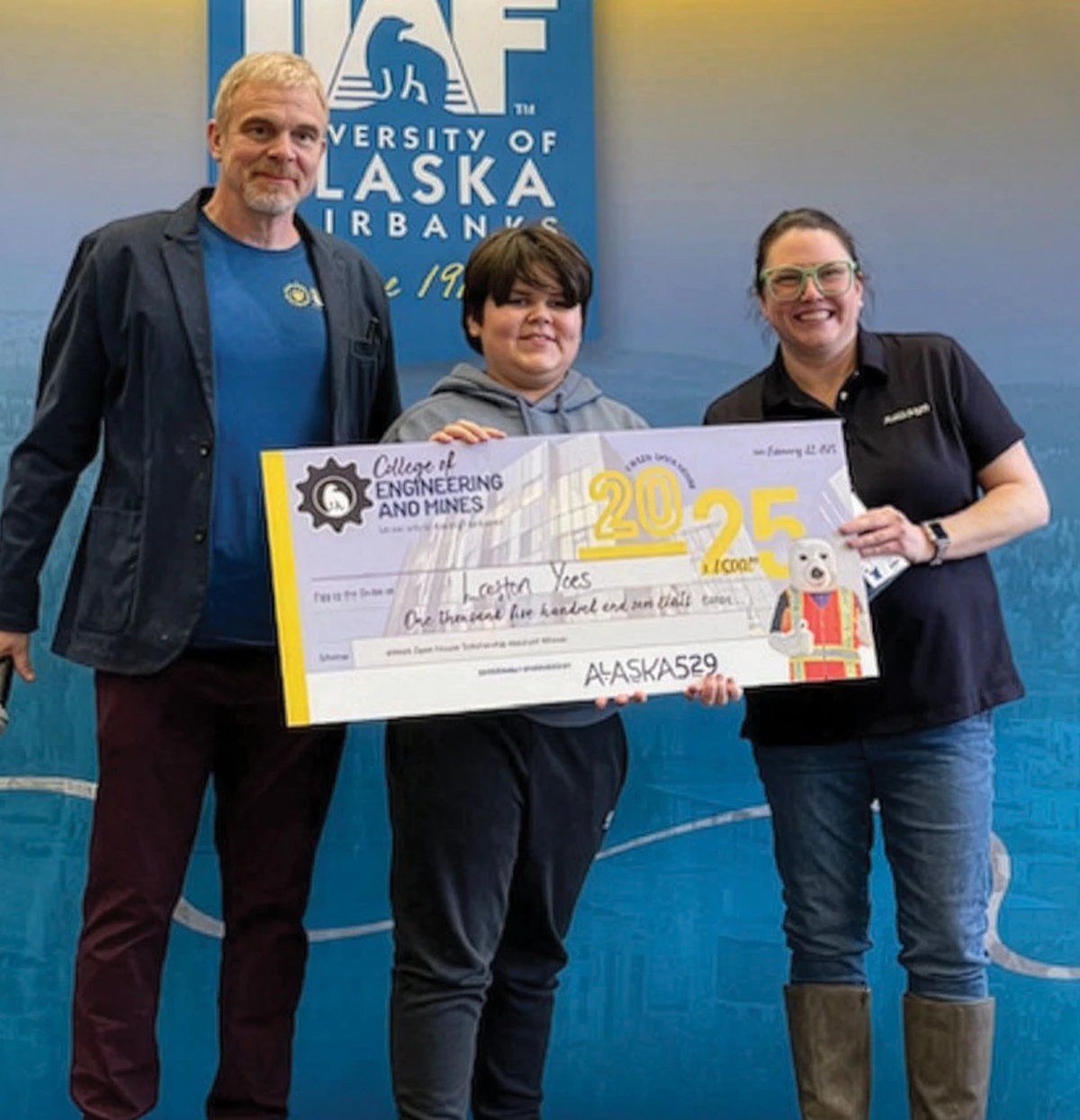
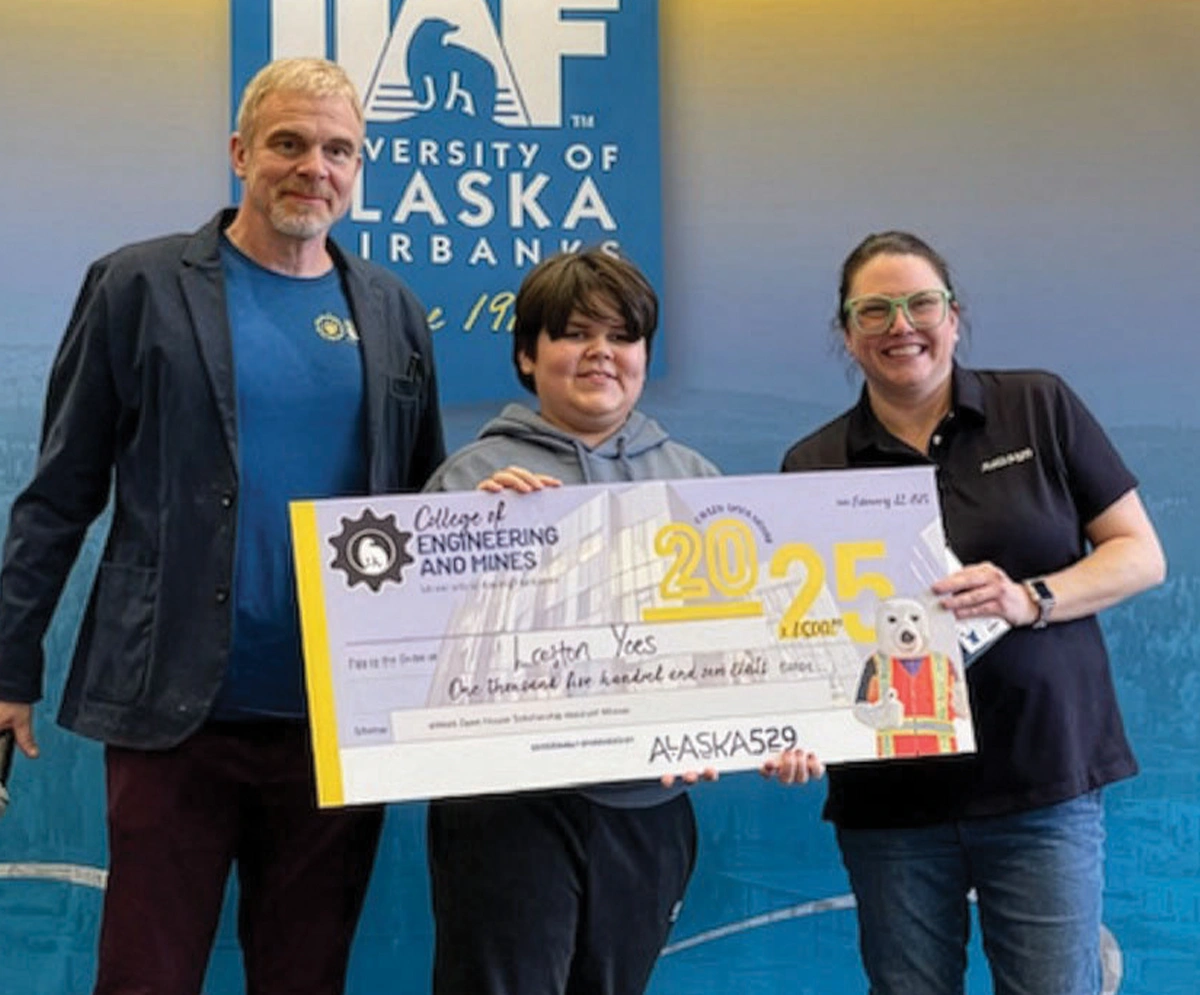
aula Hill grew up in Hooper Bay, a small Yup’ik community on the Bering Sea coast. Her mother pushed all of her kids to pursue education beyond high school and enrolled them in Alaska’s college savings program to help make that happen.
Hill went on to attend UAF—and now she’s pushing her own daughters, ages 3 and 14, and saving for them too.
“It feels like an honor,” Hill says of being part of the program for a second generation. “Being able to contribute to them after they leave my home and start their journeys. I know it doesn’t really feel like a difference each year, but everything adds up, and by the time they’re done with high school it will really make a huge impact.”
Come
together
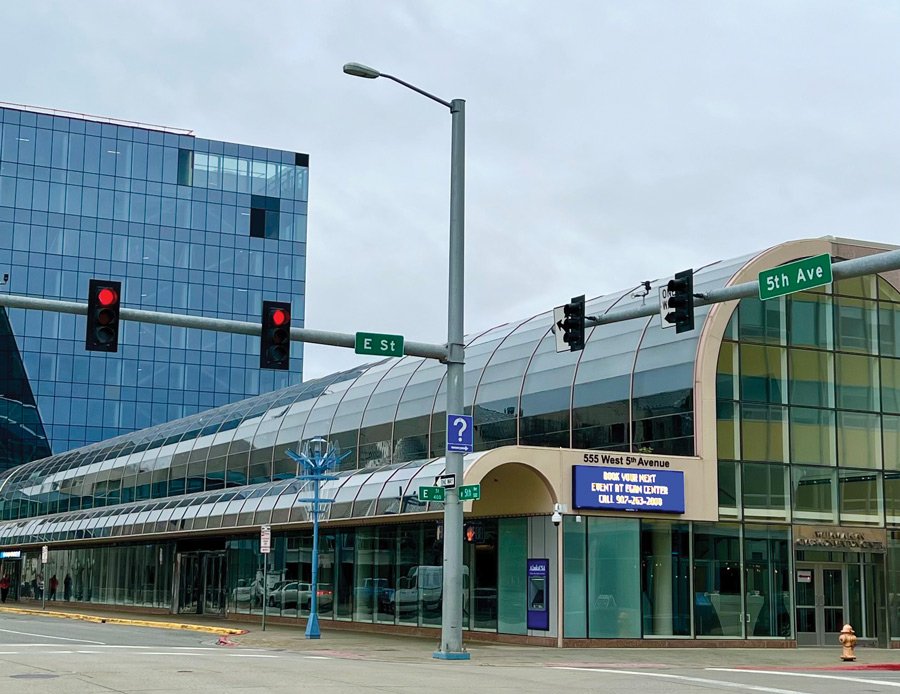


Events | Concerts | Conferences | Conventions | Banquets | Meetings | Trade Shows | Weddings | In-house Catering | Equipment Technology






Hall of Fame 2026

nnovation in Alaska emerges in remote communities, harsh climates, and challenging environments where solving problems requires creativity, persistence, and collaboration—and often urgency, delivering on the leading edge of innovation, against circumstances and limitations faced by relatively few others.
That spirit is exactly what the Alaska Innovators Hall of Fame celebrates. Each year, the program recognizes Alaskans whose ideas, inventions, and leadership are helping shape the state’s future—advancing industries, strengthening communities, and tackling the unique challenges of life in the 49th State. The selection committee is an advisory board formed within the University of Alaska system to promote “research and development as an enterprise and as an engine for economic development in Alaska.”
The 2026 inductees represent three distinct but interconnected forms of innovation: academic research, community-scale energy systems, and sustainable building technology. From protecting infrastructure built on thawing permafrost to transforming the reliability of a remote coastal power grid to developing new tools for energy-efficient homes in Arctic climates, the work of Doug Goering, Clay Koplin, and Tom Marsik reflects ingenuity and dedication to bolstering Alaska’s communities that are leveraging best-available solutions for viability.

he line between enlightened self-interest and predatory greed is easily blurred. In Alaska, this was perhaps most infamously seen a little over a decade ago when Mark Avery, a lawyer and trustee for a local airline, secured massive loans by leveraging a $350 million charitable trust—diverting the funds not into the community but into a private fleet of vintage military planes and a personal security force.
Federal prosecutor Steve Skrocki noted that Avery “burned through $52 million… in six months.” While his blatant theft may be a criminal outlier, the trajectory is a reminder that an unchecked hunger for more, stripped of a moral compass, can scorch an organization faster than any market crash.
Avery’s actions represent the extreme of a philosophy often debated in boardrooms. “Greed is right,” as Gordon Gekko famously declared in the 1987 film Wall Street, but in the real world, “greedy” is rarely a compliment. From an economic perspective, this impulse keeps the gears turning. Whether we call it greed or extreme ambition, the desire for more stimulates market activity and pushes individuals toward greater levels of success, in part because incentives are important. They’re the strategic rewards that align individual effort with company goals, turning personal ambition into the fuel that drives collective accomplishments. Even amassing wealth has redeeming qualities, as it creates the concentrated capital necessary for large-scale philanthropy and global impact.
Paid Advertisement


ig things never happen by accident.
The accomplishments that shaped Alaska and our business community demanded adaptation to harsh weather; short construction seasons; and complex supply chains, logistics, labor, and regulatory constraints in a remote place. Progress required breaking uncertainty into manageable parts: action items, deliverables, timelines, milestones, phases, and, ultimately, projects.
Project management serves as a North Star, whether the goal is GCI laying an 800-mile subsea fiber optic cable to improve rural connectivity; ANTHC expanding the Alaska Native Medical Center to meet a growing patient population; the Air Force establishing an F-35 squadron at Eielson Air Force Base; or ConocoPhillips developing the Willow Project to produce 180,000 barrels of oil per day.
In 2026, the Project Management Institute’s Alaska Chapter turns forty.

They might work overtime to repair storm-ravaged villages or redesign a highway to heal a fractured neighborhood. They may stimulate the year-round economy of a small town by erecting a foundational asset for visitors and locals to enjoy. They could create lasting monuments to science and nature, spaces for learning about Alaska’s living and physical wonders. And, of course, construction trades invest in educating successors in their skills, developing the workforce that assembles the concrete, steel, and wood that are foundational to so many economic promises.


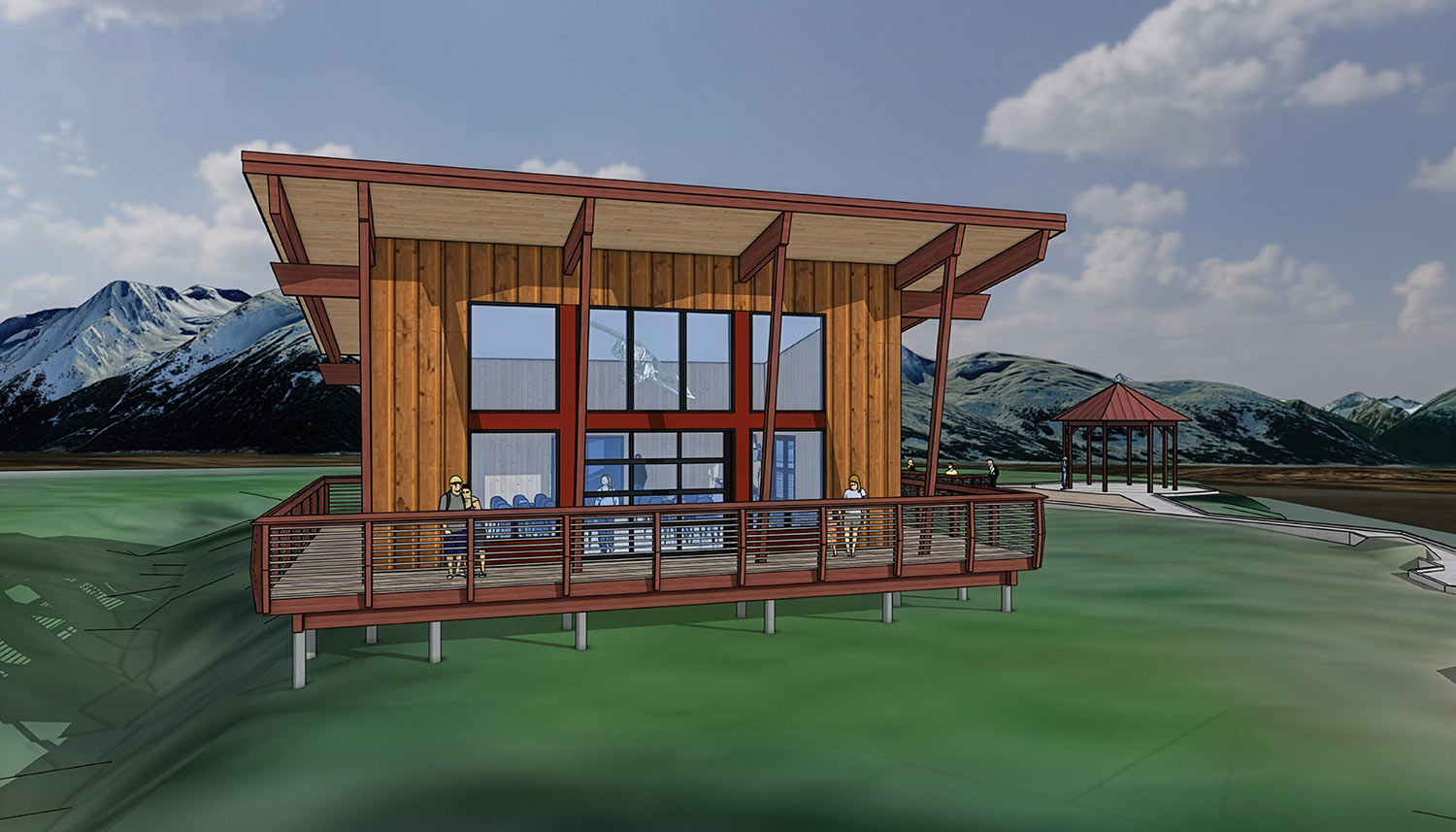
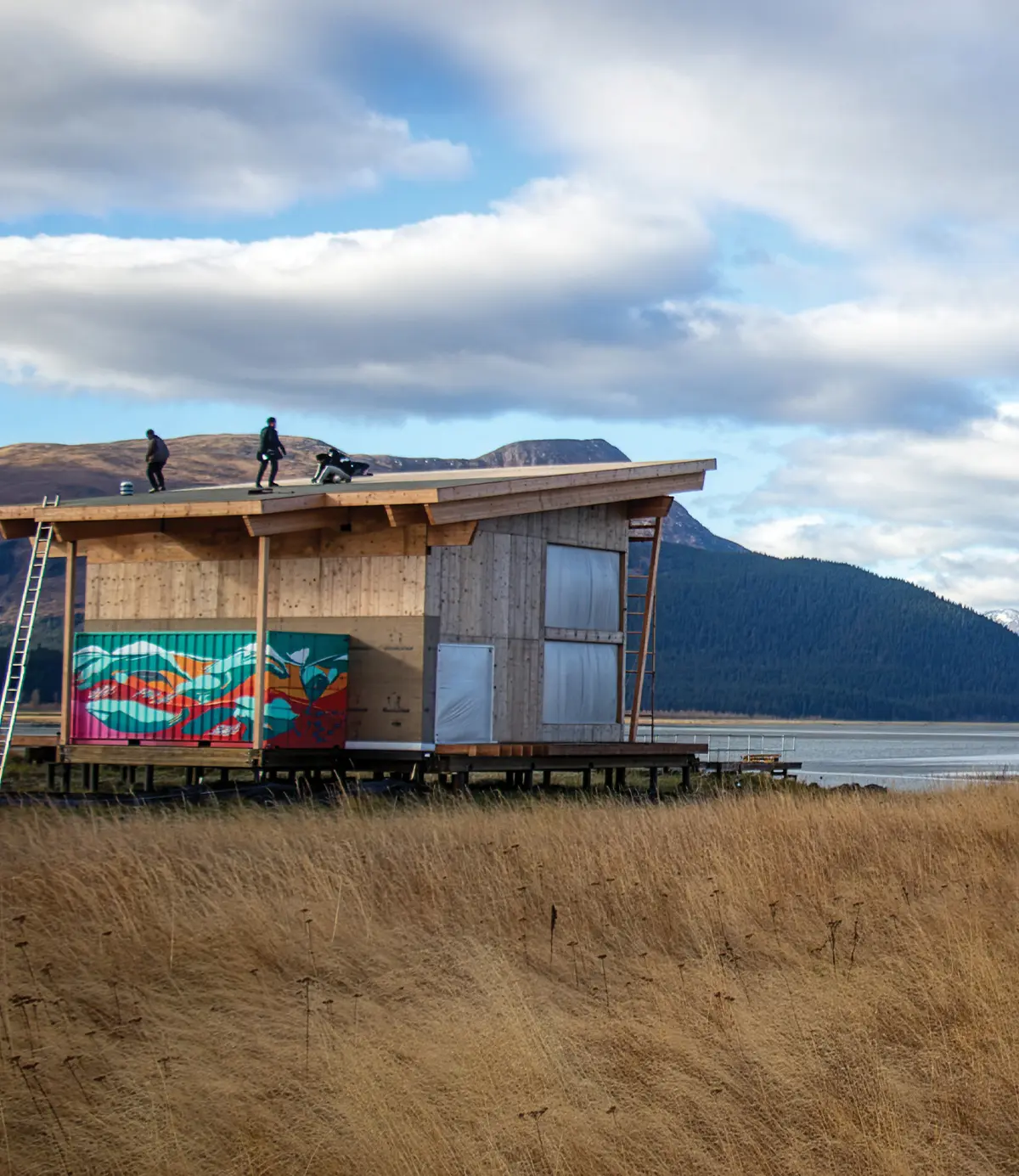
and animals attract visitors to the Alaska Wildlife Conservation Center (AWCC) near Portage, from the elk, deer, muskox, moose, and wood bison to the bears, lynx, and porcupines. Situated at the head of Turnagain Arm as it is, AWCC also looks toward the marine habitat. This month, AWCC is opening the Matson Ocean Education Center (MOEC), a space where science, culture, and community converge. The new facility is designed to educate students and the public about Cook Inlet, its tides, its glaciers, and its wildlife, with a special focus on the critically endangered Cook Inlet beluga whale.
The MOEC is strategically positioned at “The Point,” a sweeping boardwalk that overlooks Turnagain Arm. It’s a scenic place with surging tides, glistening glaciers, and abundant wildlife—including beluga whales that frequently swim past. For years, the boardwalk has offered a peaceful vantage point for AWCC visitors. But on rough-weather days, it can be one of the harshest spots on the property. The new building changes that. “The location is pretty special,” says AWCC Executive Director Sarah Howard. “Having a building out there will still allow people to appreciate the space but also be able to get out of the weather and be sheltered a little bit.”


embers of the Alaska chapter of the National Association of Women in Construction (NAWIC) have been part of the massive effort since October to rebuild western Alaska communities affected by Typhoon Halong. Five NAWIC members shared their perspectives on the recovery effort.
“These people, they typically are at home during the holidays,” explains Hughes, Knik Construction’s health, safety, and security manager and a member of the NAWIC Alaska Chapter board of directors.
Landmark real estate & construction projects are represented by Schwabe.
We don’t just settle on knowing your industry. We live it. Spotting trends and navigating turbulent waters can’t happen from behind a desk. The insights come when we put on our hard hats and meet our clients where they are.
Schwabe, Williamson & Wyatt P.C.
420 L Street, Suite 400
Anchorage, AK 99501
(907) 339-7125




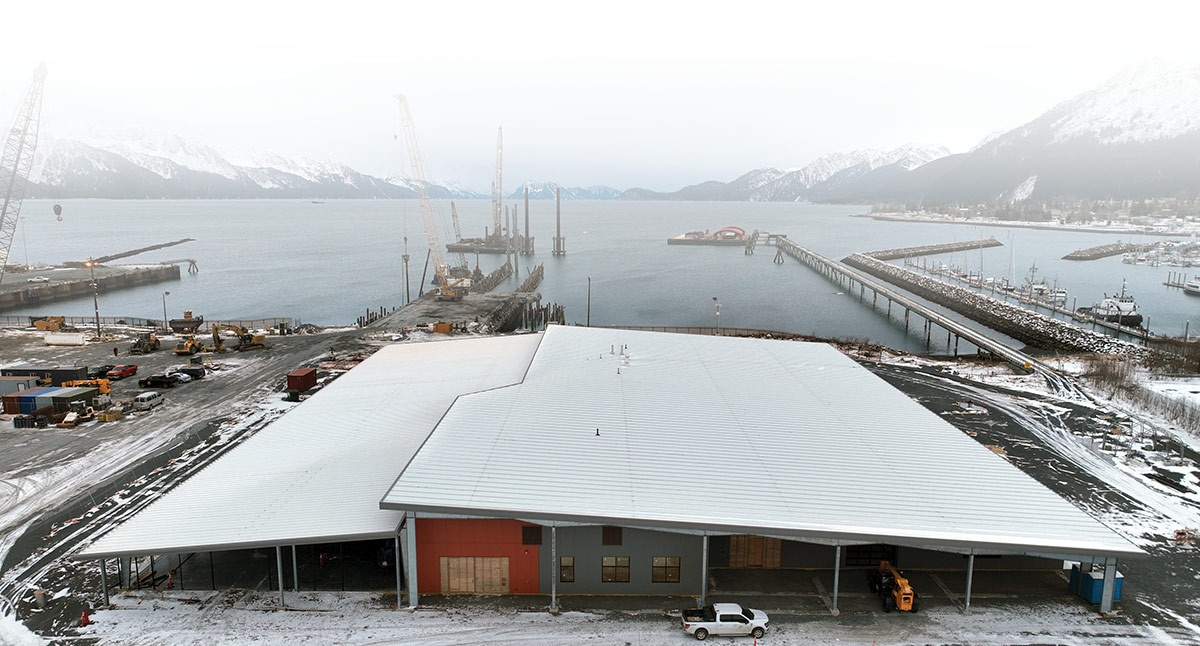
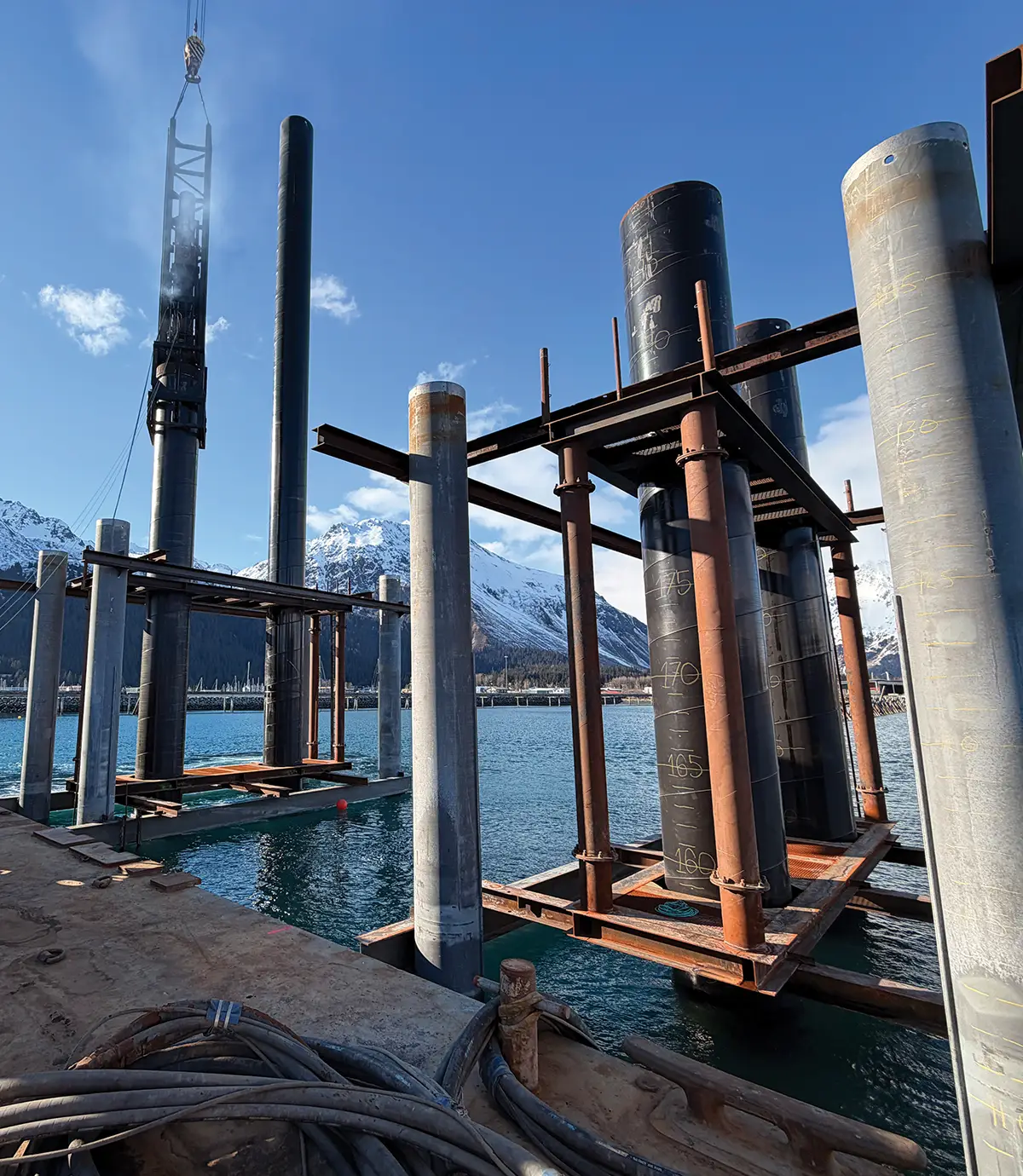
he Port of Seward has long been an important multimodal gateway, connecting marine cargo, cruise ship passengers, and rail passengers to Alaska. Now, a major infrastructure investment has transformed the aging facilities, expanding and modernizing the port to position it for increased economic opportunity.
The revitalized Seward Cruise Ship Terminal is designed as Alaska’s largest turn port, where passengers begin or end a voyage and ships are fully reprovisioned. It features a state-of-the-art floating double-berth pier, a 200-foot-long split transfer span, a 41,500-square-foot passenger terminal, and 27,500 square feet of covered outdoor space for luggage and passenger vehicles. The $137 million project is the culmination of a multi-year joint effort by the Alaska Railroad Corporation (ARRC), Royal Caribbean Group, and The Seward Company, headed by real estate developer Mickey Richardson.
The project’s partners stress the collaborative nature of the process.



ight stars of gold have adorned the Alaska flag since the territorial legislature adopted the design in 1927. Stargazing indoors had to wait almost a century, when the state’s first planetarium opened on the UAA campus in 2009, followed within a year by a second at the Anchorage Museum. Now, nearing the centennial of Benny Benson’s astronomical inspiration, the state is getting its third space theater.
The new planetarium opening at UAF this spring is a dream come true. For decades, UAF floated the idea but couldn’t gain solid support until recently. Now, tourists and Alaskans will have a new facility to experience the Great Land and its sky like never before.

Helping
Alaskans build
for 50 years.
Helping Alaskans build
for 50 years.


wo roads enter Alaska’s largest city, blending into the street grid before they intersect. The Seward Highway and Glenn Highway carry commuters into and out of Anchorage, as well as local traffic and drivers transiting the city via the junction of the highways.
The roads meet within the boundaries of the Fairview Community Council, and the neighborhood has watched for sixty years as municipal and state transportation planners have brainstormed ways to optimize the highway-to-highway flow. After several years of work on the Seward Glenn Connection Planning and Environmental Linkages (PEL) study, project leaders say they’re closer than ever to an answer.
“We want to provide certainty on where the new connection… is going to go and what it’s going to look like,” says Galen Jones, project manager for the Alaska Department of Transportation and Public Facilities (DOT&PF).



for
Hammers
Workforce development in the building trades
By Vanessa Orr

sittinan| Adobe Stock
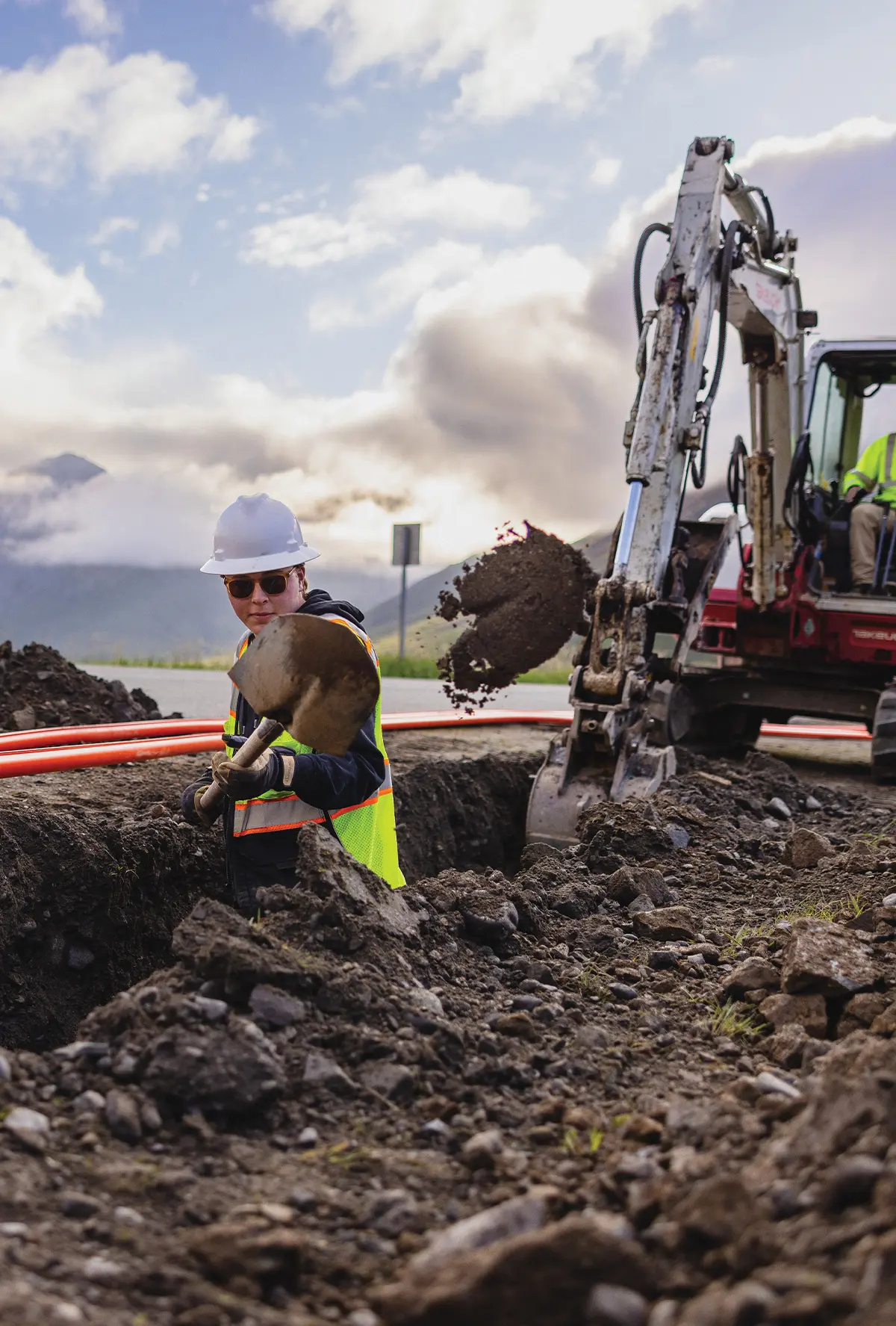
he construction industry’s need for skilled human workers continues to grow, and organizations in Alaska are doing their part to encourage young people to learn about careers in the trades.
Alaska has a growing need for workers in construction, transportation, and maritime industries. According to the Associated Training Services report, Regional Construction Trends: Where the Jobs Are Growing Fastest, forty-one states added construction jobs in the past year, showing nationwide growth, and Alaska’s 20.3 percent growth was the highest percentage increase.
While companies are hiring, however, many in the younger generation face significant barriers to entering the workforce.
YouScience’s 2024 Workforce Report: Fixing America’s Broken Talent Pipeline—which highlights employers’ hiring needs, perceptions of student readiness for the workforce, and preferences for educational qualifications versus practical, on-the-job training—notes that 86 percent of employers report that entry-level talent requires substantial or moderate additional training to be successful in their roles.

he Alaska Department of Transportation and Public Facilities (DOT&PF) is testing pedestrian safety technology in a pilot project in Kodiak. In early February, DOT&PF installed an advanced system on Rezanof Drive near Cope Street, overlooking Kodiak’s inner harbor, to improve nighttime visibility for pedestrians crossing the road. The pilot project will monitor the system’s durability and effectiveness to determine whether this technology could be used in other Alaska cities.
“The new Smart Pedestrian Lighting pilot in Kodiak is a dynamic pedestrian lighting technology designed to spotlight pedestrians as they enter the crosswalk,” says Sonny Mauricio, DOT&PF public information officer. “Unlike static streetlights, this system actively tracks movement to increase visibility for drivers, ensuring pedestrians are clearly illuminated throughout their entire crossing.”

arthquakes. Floods. Eruptions. Oil spills. Subsea cable breaks. Ransomware attacks. Twenty-first century emergency managers must plan for a growing list of scenarios, some increasingly complex. Since 2004, the Alaska Partnership for Infrastructure Protection (APIP) has helped educate and connect public and private-sector groups that have shared emergency concerns.
in a Digital World
n Alaska, connection looks a little different. Distance, terrain, and weather all shape how people communicate, and that’s part of why print still resonates especially strong here. Printed materials reach places and people that digital never fully can, especially in rural and Alaskan Native communities where a printed magazine, as it travels hand by hand and feels personal and trusted.
A printed ad isn’t just advertising. It’s presence. It’s a handshake when you can’t be there in person. It builds familiarity and keeps your name top of mind long after an online impression disappears.
When someone picks up a copy of Alaska Business, it is an experience miles away from a quick online scroll. It’s a pause. A break in the day where your brand has a reader’s full attention. Alaska Business magazines live on desks, in lobbies, and in jobsite trailers; real spaces where decisions actually happen.
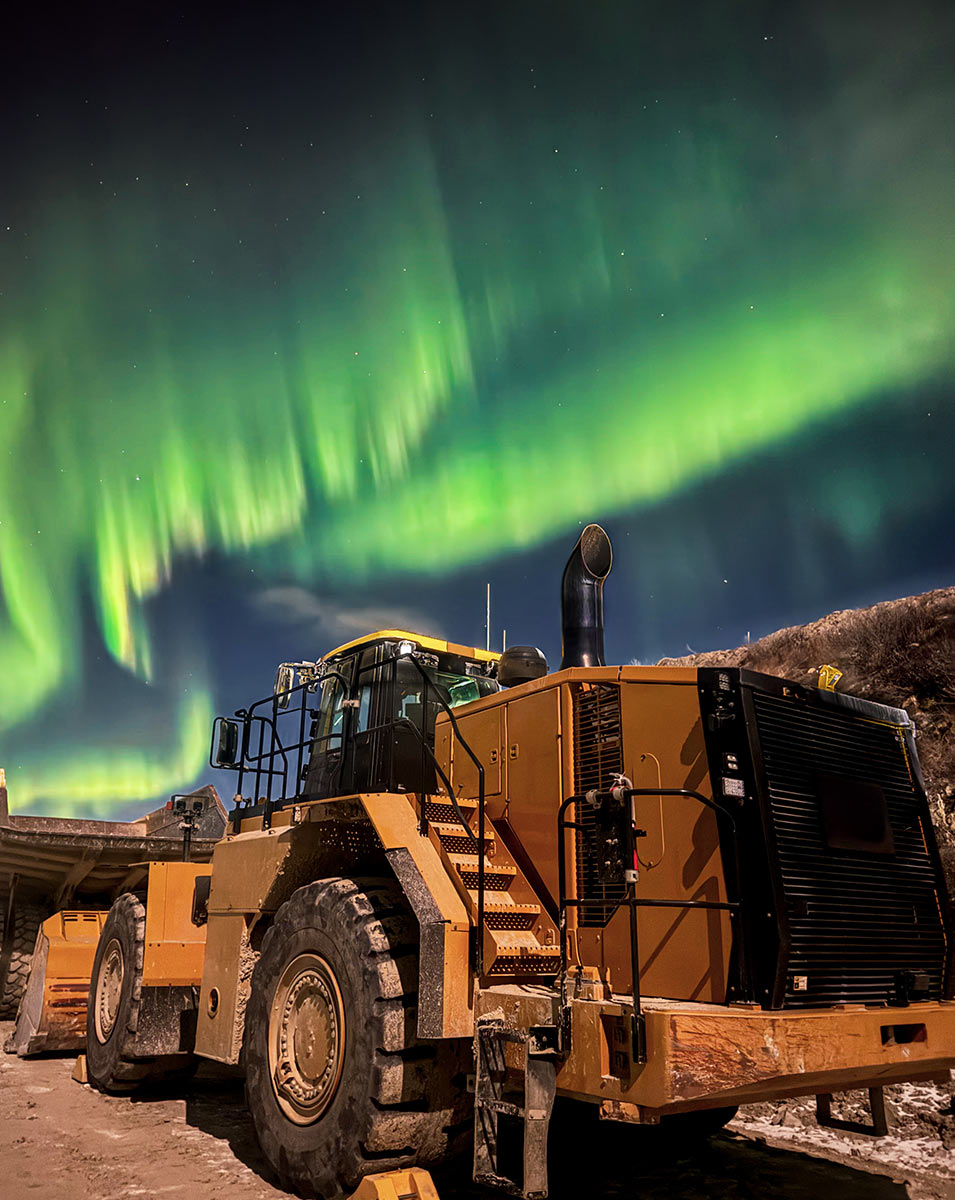
uty to shareholders is the guiding star for business decisions by Alaska Native corporations (ANCs). Not only is this principle established by the Alaska Native Claims Settlement Act (ANCSA), but corporations share this perspective when they become shareholders themselves. Equity ownership is one of many avenues for investing ANC assets. As part-owners of other companies, ANCs earn dividends that they return to their own shareholders.
Majority- or wholly owned subsidiaries are too numerous to list. For example, Calista Corporation, one of the twelve ANCSA regional corporations, operates a robust construction business line, strengthened in 2010 by acquiring Yukon Equipment and the Brice family of companies, and again in 2018 by acquiring STG and its sister companies. However, Calista also owns a piece of Delta Constructors; its Bektuq Holding arm acquired a 25 percent interest in late 2019. The minority, non-controlling stake gave Calista a partner in the resource development sector, turning a potential competitor for construction contracts into a source of revenue.
Investing instead of owning is a strategic choice that depends on ANCs’ goals, resources, and liquidity.
ero winning bids for the first federal oil and gas lease sale in Alaska mandated by the One Big Beautiful Bill Act of 2025 (OBBBA) was nothing to worry about. Instead of investing in offshore tracts in Cook Inlet, interested parties were keeping their powder dry for the main event later in March: leasing in the National Petroleum Reserve-Alaska (NPRA).
The sale, the first in the reserve since 2019, saw the second most acreage leased in a single sale, and the revenue is the most ever, in nominal dollars, at $163,696,722 in total receipts for 187 tracts.
While setting the stage for a major realignment of federal policy on oil and gas development, the Trump administration’s push for new oil and gas lease sales has renewed debate between those touting production as an economic necessity and those seeking the protection of the state’s environment, wildlife, and Indigenous traditions.

Providing Decades of Continuous Operational Presence Across Alaska
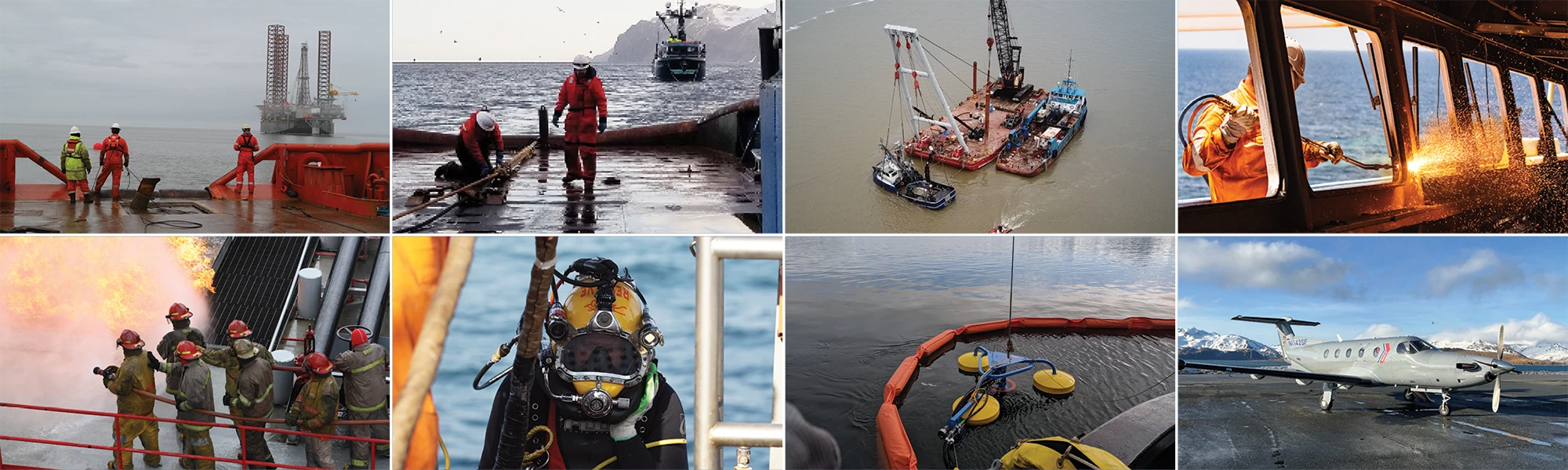
Aviation Charter Services ■ Marine Construction ■ Sommercial Diving ■ Wreck Removal
Disaster Relief & Debris Recovery ■ Fleet Maintenance & Repair Shipyard – Dutch Harbor
It Demands a Partner.
resolvemarine.com


o you know much about hermit crabs? In captivity, as they grow, their caretaker provides bigger shells and, when the crab is ready, it moves into a new one.
In the wild, this process is fascinating. When a larger shell becomes available, it creates a cascading set of transitions. Crabs line up beside the new shell in order of size. The largest crab moves into the empty shell, leaving its old one behind. The next crab moves into that one, and so on, down the line.
Biologists call this a vacancy chain, and a similar thing happens in organizations. A director retires, and a manager gets promoted to fill the role. A senior employee steps into management, and a new hire backfills the team. One transition triggers a chain reaction, and everyone must move into a bigger shell and learn to navigate the unfamiliar space.



The bookbinding workbench doubles as the shop’s front counter, just as the store itself doubles as a depository for used books and a meeting place for military veterans and homeless youth.
Part 42 of an ongoing video series.
 The board of directors hired Jay Hermanson, a principal at NorEnergi Consulting in Anchorage, to take over as CEO. Hermanson earned a bachelor’s degree in business administration and economics from Washington State University in Pullman, Washington, and he was the first employee and general manager of NANA Regional Corporation subsidiary Kuna Engineering.
TDX also welcomed a new CFO, Tatiana Prokofieva, who has more than a decade of experience in strategic leadership in financial reporting, governance, compliance, and long-range planning for Alaska Native Corporations, tribal governments, and federal contracting entities.
Alaska Trends
his edition of Alaska Trends features two reports: the construction industry’s economic impact and a construction forecast.
For impact, the construction industry’s presence in Alaska is well-noted through the common adage that Alaska has two seasons: winter and construction. Activities are highly visible as workers build or repair roads, buildings, and other infrastructure. But construction is a part of everyday Alaska life through less visible means, such as providing one in twenty Alaska jobs—accounting for 10 percent of all Alaska income—and an average wage surpassed by only a few other industries, such as oil and gas.
The construction forecast is a critical tool for construction companies, but considering the industry’s impact on the state—both through the projects constructed and the people constructing them—it is one indicator of the economy that all Alaska businesses operate in.
I’m going through Lee Childs’ Jack Reacher series… I just started the twelfth one [Nothing to Lose].
What charity or cause are you passionate about?
Frontline Missions… There’s definitely a purpose bigger than us, and I pray my thankfulness every day.
What’s the first thing you do when you get home after a long day at work?
Catch up with the family, hear all the stories of the day.
What vacation spot is on your bucket list?
New Zealand… They wrote the book on jet boats.
If you could domesticate a wild animal, what animal would it be?
Brown bear/grizzly bear. It’s my favorite animal.
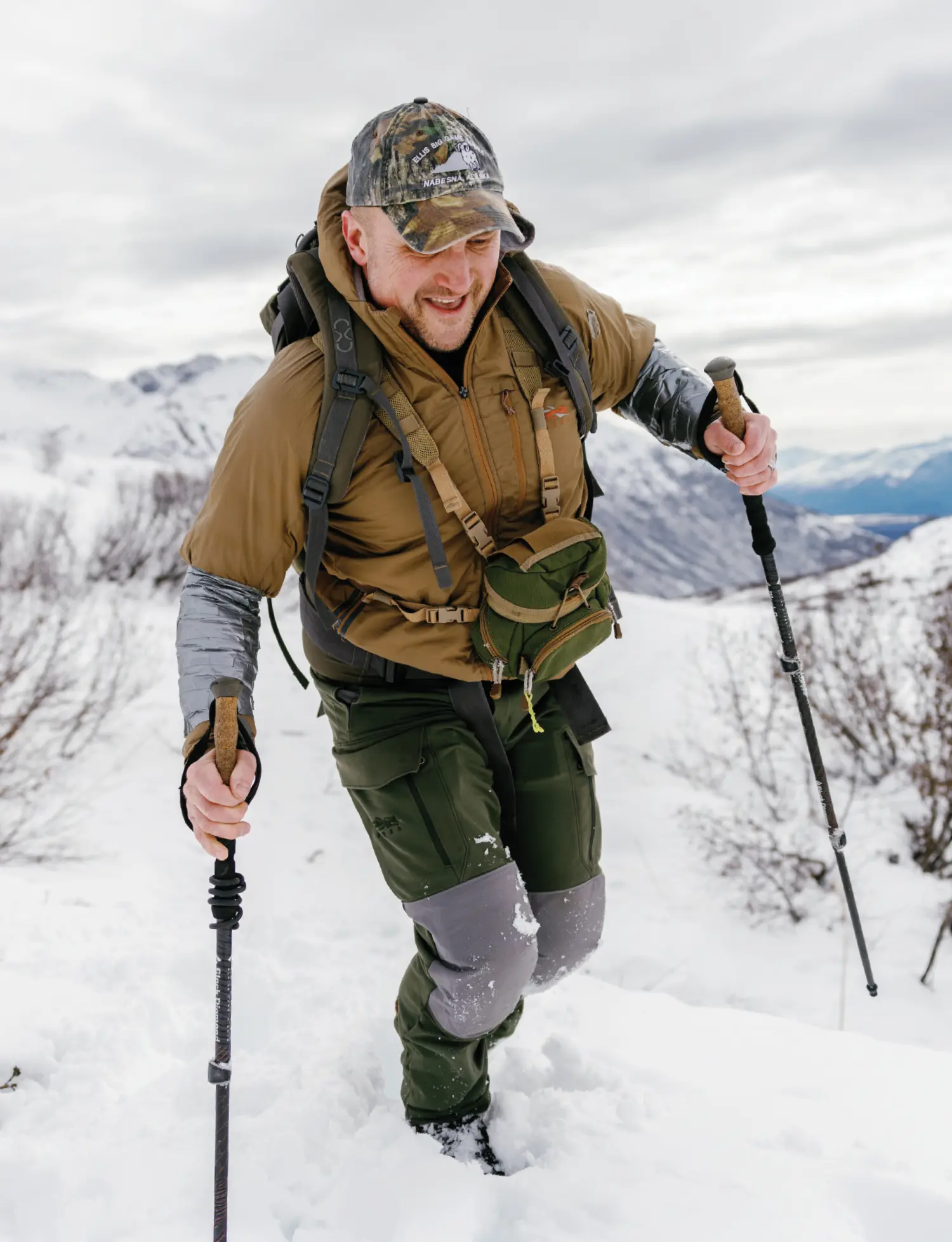
I’m going through Lee Childs’ Jack Reacher series… I just started the twelfth one [Nothing to Lose].
What charity or cause are you passionate about?
Frontline Missions… There’s definitely a purpose bigger than us, and I pray my thankfulness every day.
What’s the first thing you do when you get home after a long day at work?
Catch up with the family, hear all the stories of the day.
What vacation spot is on your bucket list?
New Zealand… They wrote the book on jet boats.
If you could domesticate a wild animal, what animal would it be?
Brown bear/grizzly bear. It’s my favorite animal.
Off the Cuff
dream of being a hunting guide attracted Jeff Miller to Alaska, and he still finds time for excursions as president of Cruz Construction. Miller started swinging a hammer as a carpenter’s assistant in Oregon. He tried studying medicine, but he recalls, “I really liked doing what I’d been doing to pay for college.”
Miller put in time as a project engineer at Wilder Construction and then joined Cruz Construction. He confided to founders Dave and Dana Cruz that he wished to run his own firm someday, so they cut him in as a third owner. Miller says, “Dave’s the best mentor you could ask for. I still talk to him half a dozen times every single day.”
- AIDEA Alaska Industrial Development and Export Authority
- Airport Equipment Rentals
- Alaska Dreams Inc.
- Altman, Rogers & Co.
- Anchorage Convention Centers
- Anchorage Sand & Gravel
- Arcticom
- ASRC Energy Services, LLC
- Associated General Contractors of Alaska
- Bering Straits Native Corp
- Chugach Alaska Corporation
- Conam Construction Co.
- ConocoPhillips Alaska
- Conrad-Houston Insurance Agency
- Construction Machinery Industrial
- Cook Inlet Tug & Barge Inc.
- Craig Taylor Equipment
- Crowley Fuels
- Cruz Companies
- Davis Constructors & Engineers Inc.
- Delta Constructors
- Denali Commercial
- Design Alaska
- Dorsey & Whitney LLP
- Doyon, Limited
- Engineered Solutions Group
- Equipment Source, Inc.
- First National Bank Alaska
- GCI
- Greer Tank
- Haskell Corporation
- Holmes Weddle & Barcott
- JD Steel Co Inc.
- Joint Base Elmendorf-Richardson
- King Halibut Lodge
- Landye Bennett Blumstein LLP
- LONG Building Technologies
- Lynden
- MT Housing Inc.
- N C Machinery
- NCB
- NECA Alaska Chapter
- Nenana Heating Services, Inc.
- Northern Air Cargo
- Northern Air Cargo
- Northrim Bank
- Oxford Assaying & Refining Inc.
- PeopleAK
- Personnel Plus Employment Agency
- Petro Marine Services
- PND Engineers, Inc.
- Port Mackenzie
- Project Management Institue, Alaska
- R & M Consultants Inc.
- Resolve Marine
- Resource Development Council
- RESPEC
- Schwabe, Williamson & Wyatt, P.C.
- Seward Fishing Club
- Society for Marketing Professional Services Alaska
- Sourdough Express, Inc.
- Spenard Builders Supply
- SYSTEMCENTER Alaska
- T. Rowe Price
- Teamsters Local 959
- The Plans Room
- The Wildbirch Hotel
- TOTE Maritime Alaska LLC
- Tutka, LLC
- Udelhoven Oilfield System Services, LLC
- UIC Commercial Services
- Yukon Equipment, Inc.