

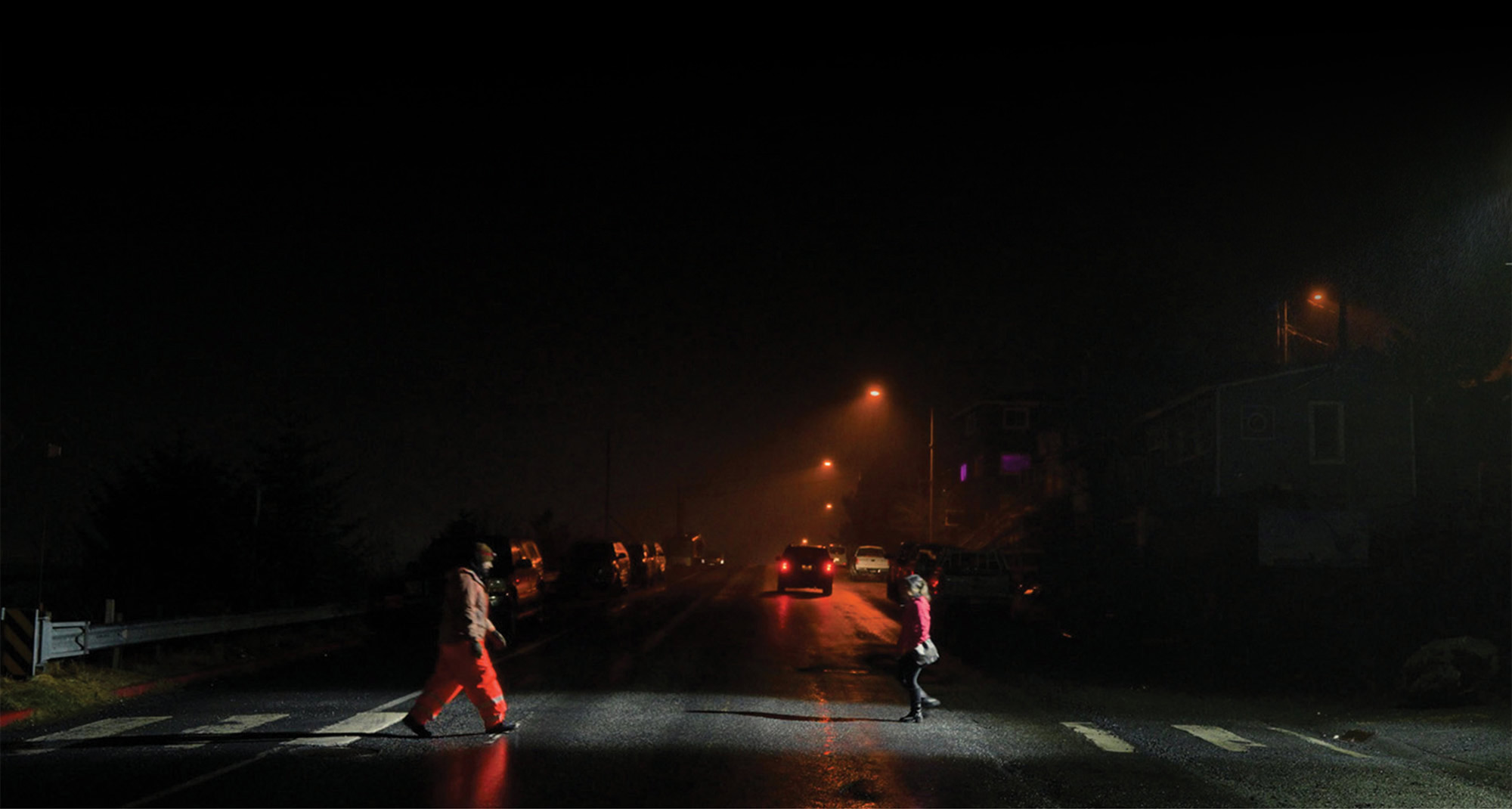
he Alaska Department of Transportation and Public Facilities (DOT&PF) is testing pedestrian safety technology in a pilot project in Kodiak. In early February, DOT&PF installed an advanced system on Rezanof Drive near Cope Street, overlooking Kodiak’s inner harbor, to improve nighttime visibility for pedestrians crossing the road. The pilot project will monitor the system’s durability and effectiveness to determine whether this technology could be used in other Alaska cities.
“The new Smart Pedestrian Lighting pilot in Kodiak is a dynamic pedestrian lighting technology designed to spotlight pedestrians as they enter the crosswalk,” says Sonny Mauricio, DOT&PF public information officer. “Unlike static streetlights, this system actively tracks movement to increase visibility for drivers, ensuring pedestrians are clearly illuminated throughout their entire crossing.”
The Smart Pedestrian Lighting pilot project is a collaborative effort with Intelligent Security Systems (ISS) using its SecurOS Soffit pedestrian safety system. Joe Harvey, director of ISS’ intelligent transportation systems sector, describes the Soffit system as an evolution of enhanced pedestrian systems that have relied on different static lighting and signaling systems. Soffit identifies pedestrians as they enter the crosswalk and illuminates them as they travel and exit the area. Nearby drivers will notice a clear, directed LED spotlight that illuminates pedestrians without causing glare or reducing visibility.
Harvey says there are several reasons the Soffit system is a good option. Soffit uses advanced video analytics to detect pedestrians and illuminates them only when they enter the crosswalk. The targeted approach increases driver awareness while minimizing unnecessary light pollution, making it an ideal solution for enhancing visibility during Alaska’s dark autumn months. The system is designed to cover up to four lanes of traffic, ensuring pedestrians are visible even when crossing major roads.
“The beauty and the brains behind the system is video intelligence,” says Harvey. “We are using a camera to identify the outline, shape, and size of individuals, then use the hardware in order to engage the LEDs where they are crossing.”
In standby mode, the system emits a low-level, static light no brighter than a standard streetlamp. The system changes to active mode when it detects a pedestrian, and the light “escorts” them across the road with a focused beam. Once the pedestrian safely clears the crosswalk, the system dims back to its energy-saving standby state.
New Jersey-based ISS donated the Soffit system to DOT&PF for the pilot project. Harvey says the general cost for a single system is around $20,000, depending on the level of weatherization and customization needed. Mauricio says it’s in the state’s best interest to thoroughly vet and test new technologies before committing significant public funds.
“ISS offered a unique opportunity to test their system in Alaska’s climate,” says Mauricio. “By collaborating with their team, our engineers can evaluate the system’s reliability and safety benefits in real-time.”
System installation is fairly quick. Once the system arrived, DOT&PF maintenance and operations crews, supported by the ISS service manager, completed the physical installation, diagnostics, and initial testing in approximately 6 hours. After nightfall, they performed final calibration and commissioning to ensure the sensors and light levels were optimized. Total setup time was between 8 and 12 hours.
DOT&PF is evaluating the system on two fronts: mechanical durability and community impact. The department must ensure the hardware can withstand Alaska’s extreme rain, wind, and snow over several seasons. Simultaneously, engineers are monitoring public usage and gathering feedback on how pedestrians and drivers interact with the system.
Alaska Department of Transportation and Public Facilities

No end date for the pilot project is currently set; however, DOT&PF will make a final determination about expanding the project to other areas once it has gathered sufficient data and analyzed the full scope of public input.
Though ISS has installed several Soffit pedestrian safety systems in other parts of the world, this pilot project is the first in Alaska. As part of the collaboration with DOT&PF, ISS will receive feedback on the system’s performance. Above all, Harvey says ISS wants to make sure the product is living up to the company’s standards. Customer feedback helps guide future versions.
“As you develop a product, you have an idea in mind and build towards that,” says Harvey. “Customer feedback identifies any areas for improvement or performance that we didn’t know were possible. Feedback will guide the next iterations and continue system evolution.”
Based on other case studies, ISS has developed ways to weatherproof its system for extreme temperatures. Specifically, the company added additional weatherproofing and heating inside the control cabinet. However, it can be further customized for Alaska’s subzero temperatures, as well as for locations with much hotter climates.
“There’s no easy answer when it comes to pedestrian safety, and we take that reality seriously,” Anderson said in a press release. “This pilot gives us a chance to explore a new tool that supports both pedestrians and drivers by improving visibility at night. If it works as we hope, it could become one more way we make Alaska’s roads safer for everyone.”
Harvey adds that ensuring the safety of vulnerable road users is a constant priority for cities and planners, which is why ISS is proud to collaborate with the State of Alaska on this pilot project.
According to Mauricio, the response from Kodiak residents has been overwhelmingly positive so far. He says they have already reached out to express their support, with many requesting similar installations in other areas of Kodiak and throughout the state.