

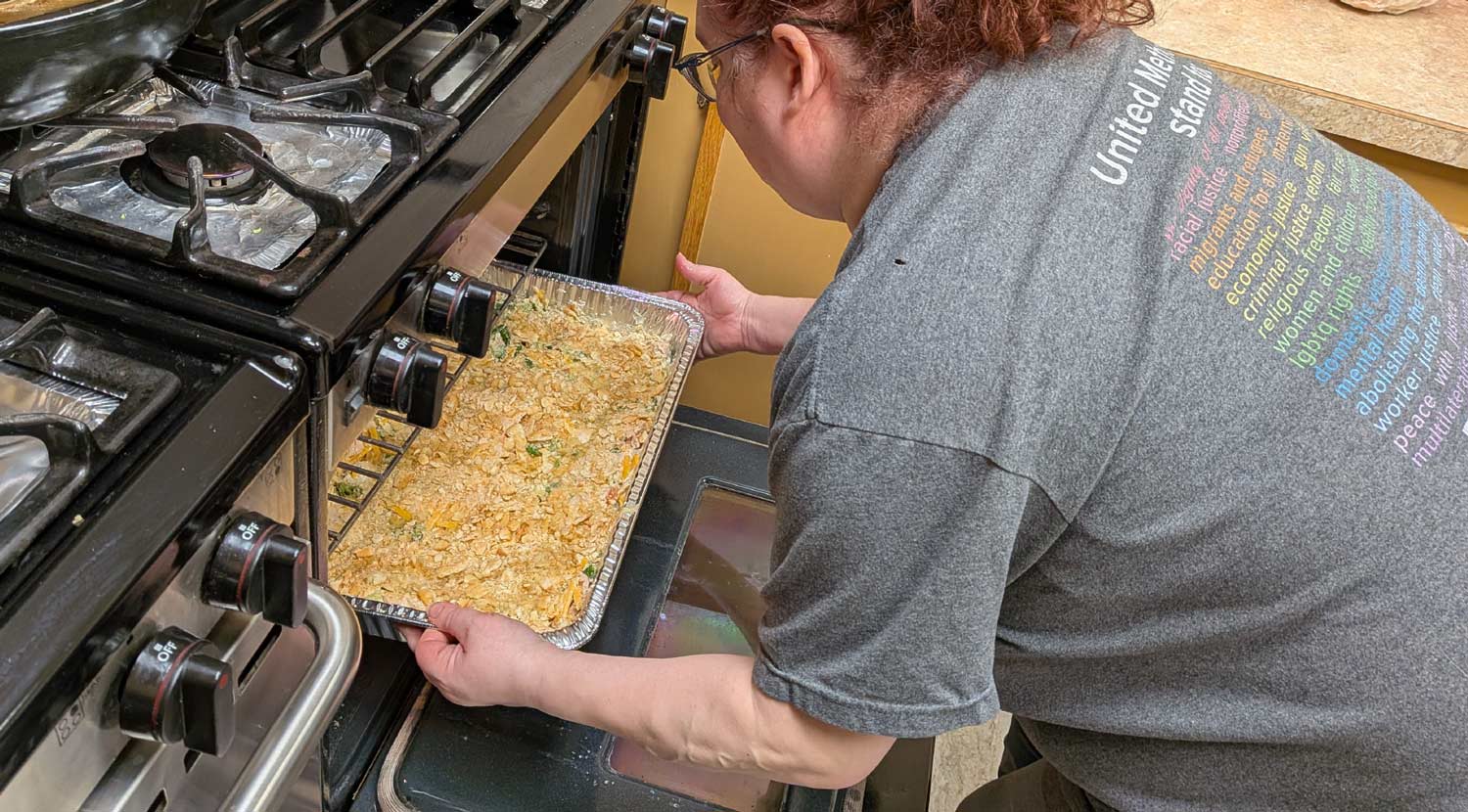
hen I started occasionally cooking dinner for Clare House, a Catholic Social Services Alaska-run shelter for women and children in Anchorage, I usually had more of one ingredient than I could use up in even a potluck soup. From canned clams to mustard, salmon to bok choy, each ingredient called for a crowd to feed. Central Lutheran Church’s monthly commitment to cook a dinner for the sixty to seventy residents of Clare House provided the perfect solution.
Eventually these efforts stirred my own hunger. I wanted to know more about the citywide effort through which more than twenty churches and a few other groups provide mostly home-cooked meals for Clare House, 365 days a year.
Christi Foist
The shelter opened on January 4, 1983, two months after the initial, but more short-term, Brother Francis Shelter near Downtown Anchorage. Both facilities were part of a city partnership with the then-Archdiocese of Anchorage, after multiple people’s deaths on city streets galvanized the community. The deaths weren’t attributable only to the freezing cold: in June 1980, a man sleeping in a dumpster behind Holy Cross Cathedral was fatally injured when it was emptied while he was still inside. Three more people froze to death in October 1982, which shocked the city.
By that point, two Catholic Brothers who’d worked on Skid Row in Spokane, Washington, had come to Alaska at the request of then-Archbishop Francis Hurley. Bob Eaton and Dave Sifferman were close to launching the first cold-weather version of Brother Francis Shelter, but they hadn’t finalized the details. The shelter opened a month later, on November 8; however, a March 27, 1983, Anchorage Daily News article reported the shelter still had no cots, beds, or sleeping bags for fire-safety reasons—only blankets.
Peggy Bergsrud
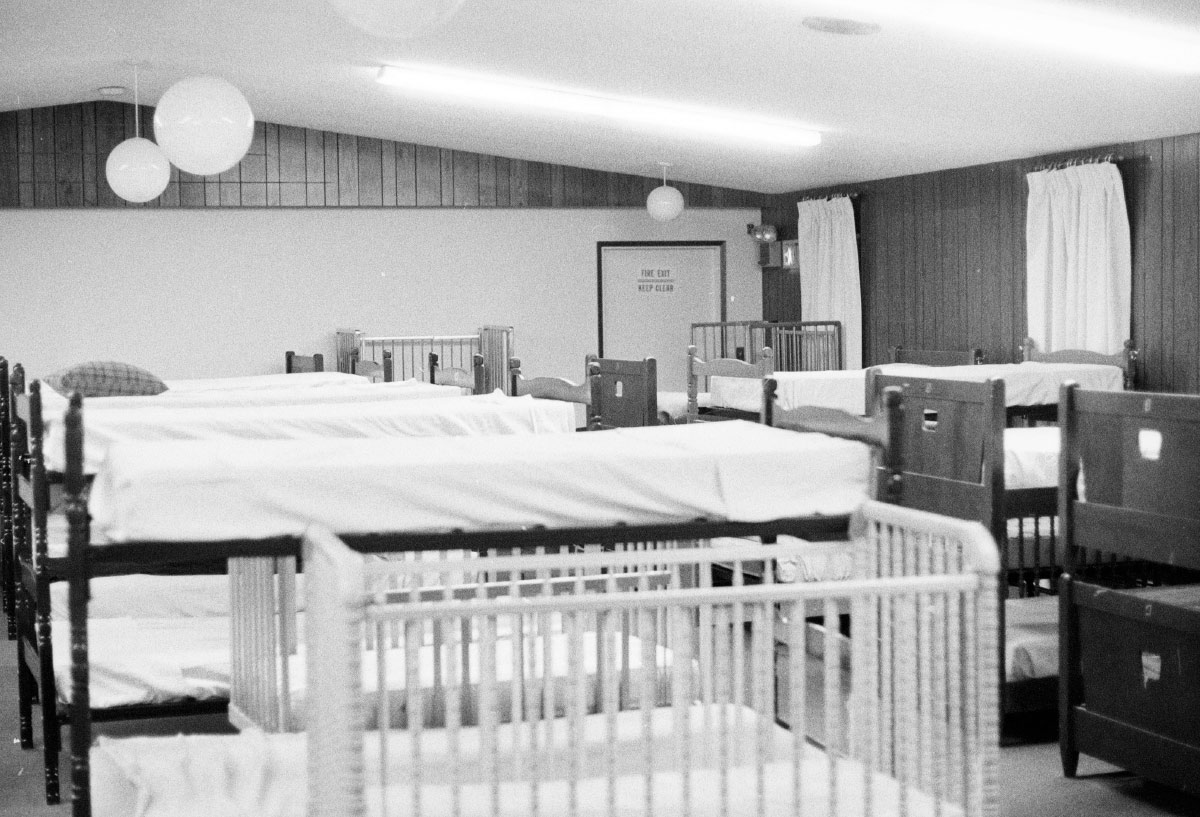
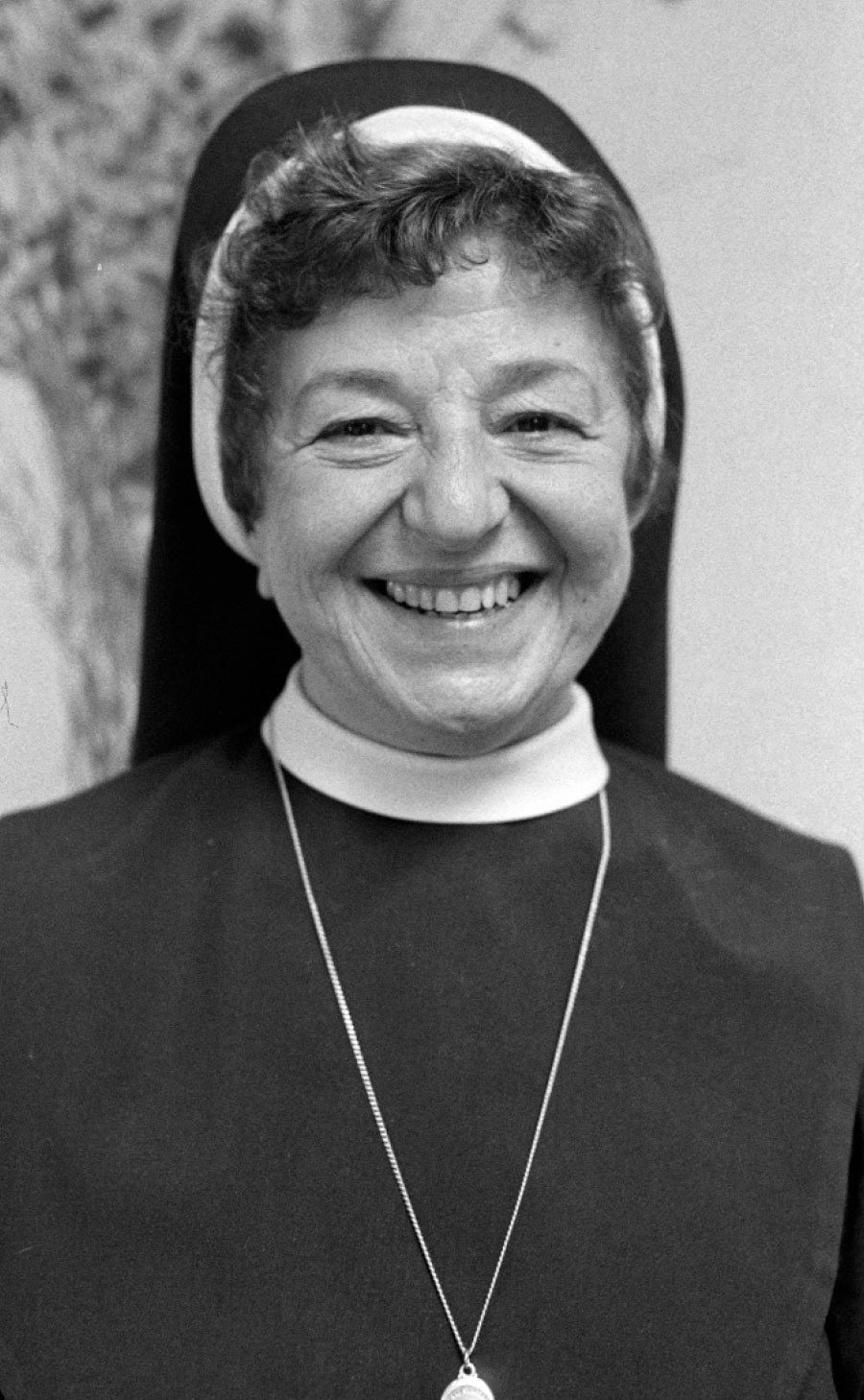
Days after the January 4 opening, an Anchorage Times story quoted the city’s then Family Services counselor Joyce Lee saying the Clare House “desperately needed” meals that a local church was bringing. According to a February 19, 1983, Anchorage Daily News account, Clare House initially had no showers and only a very small kitchen. So Sister Cincotta got to work. “She was not shy,” recalls Bergsrud, who wrote the job description for, interviewed, and basically chose the first Clare House director, Rosalie Nadeau.
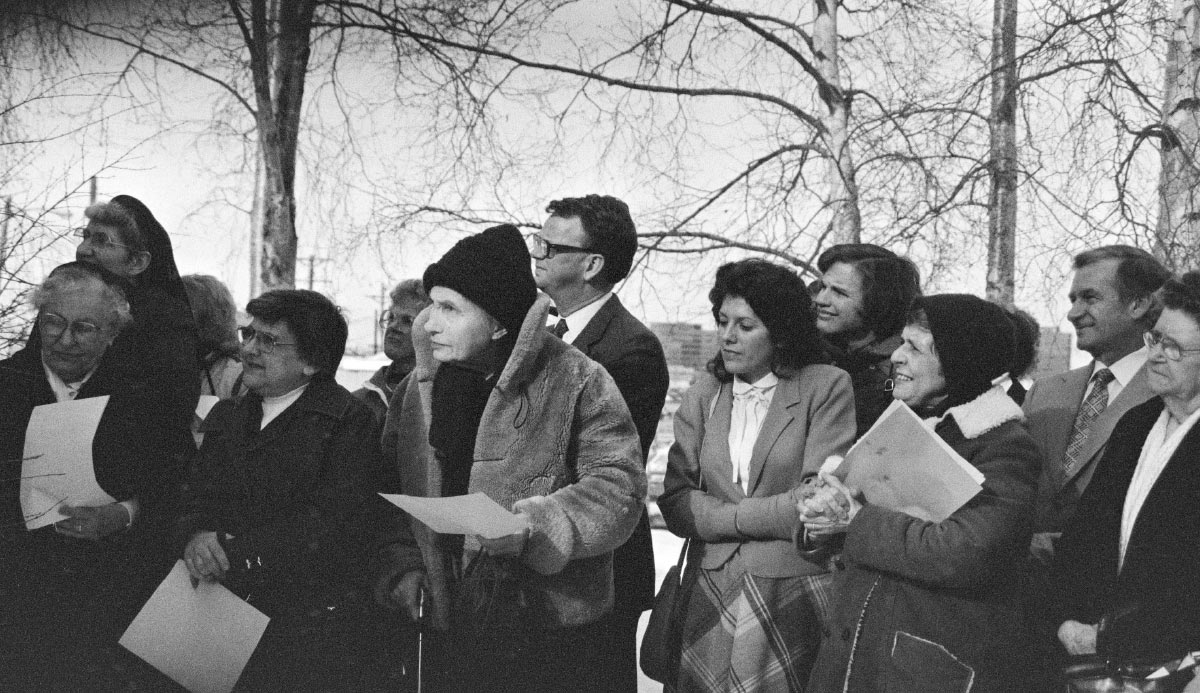
The shelter had opened with space for eight women and twelve children, but the need almost immediately exceeded that. The February story reported “residents have sometimes had to squeeze closer together to make room for more.” Clare House moved to its long-time location at 410 West 54th Avenue on Christmas Eve in 1984. There, it could help more people, but Bergsrud recalls that space, too, had a limited kitchen.
Peggy Bergsrud
For the many churches and other groups that continue to cook for Clare House each day, the answer is clear. “It’s good to put our money where our mouth is,” says Diana Williams, who coordinates Christ Community Church’s monthly Clare House meal. “That’s what we’re here for.”
It can also foster empathy, says David Rittenberg, chief program and impact officer for Catholic Social Services Alaska. “We’ve all experienced hunger; we’ve all experienced someone providing us with a meal to satiate that hunger,” he says.
For Jenn Miller, who coordinates and often cooks the monthly meal Anchor Park United Methodist Church provides, the program also underscores people’s dignity. “A lot of times… what gets served [to poor or homeless people] is slop,” she says. “It’s like, ‘Well, it’s good enough if it’s nutritious…’ Yeah, that’s true, but just because it serves the nutritional needs of somebody does not mean that’s what is wanted or needed.” Instead, Miller tries to provide food that she herself would eat: “I cook by heart.”
Peggy Bergsrud
According to Ardrey, groups typically cook once a month, usually the same day of the month—e.g., first Sunday or fourth Thursday. Cathedral of Our Lady of Guadalupe, one of the few churches that cooks more than one day a month, cooks on a Wednesday and also on the 29th of each month. John Fleming, the cathedral’s business manager, says Our Lady of Guadalupe picked up the “movable” day after another church had to stop providing the meal. A handful of groups also alternate months or cook less often than once a month. Christ Church Episcopal provides dinner every other month, for example.
Groups approach meals for Clare House in different ways, but most have a person who coordinates cooking and shopping efforts. Ardrey says she mostly focuses on answering questions rather than giving guidance. She gets an updated head count each week, to keep groups informed.
Tasha M. Porcello, coordinator for Christ Church Episcopal, says they treat any child over age 2 as an adult when calculating portions. “We always cook a little bit extra because, first, we want to make sure that people don’t have to ration food,” she says, “and then we throw in a little extra food in case the number went up.”
Williams of Christ Community Church, says her volunteers always assume sixty adults when cooking, but usually children outnumber adults. Both pregnant women and mothers with children can stay at the Clare House.
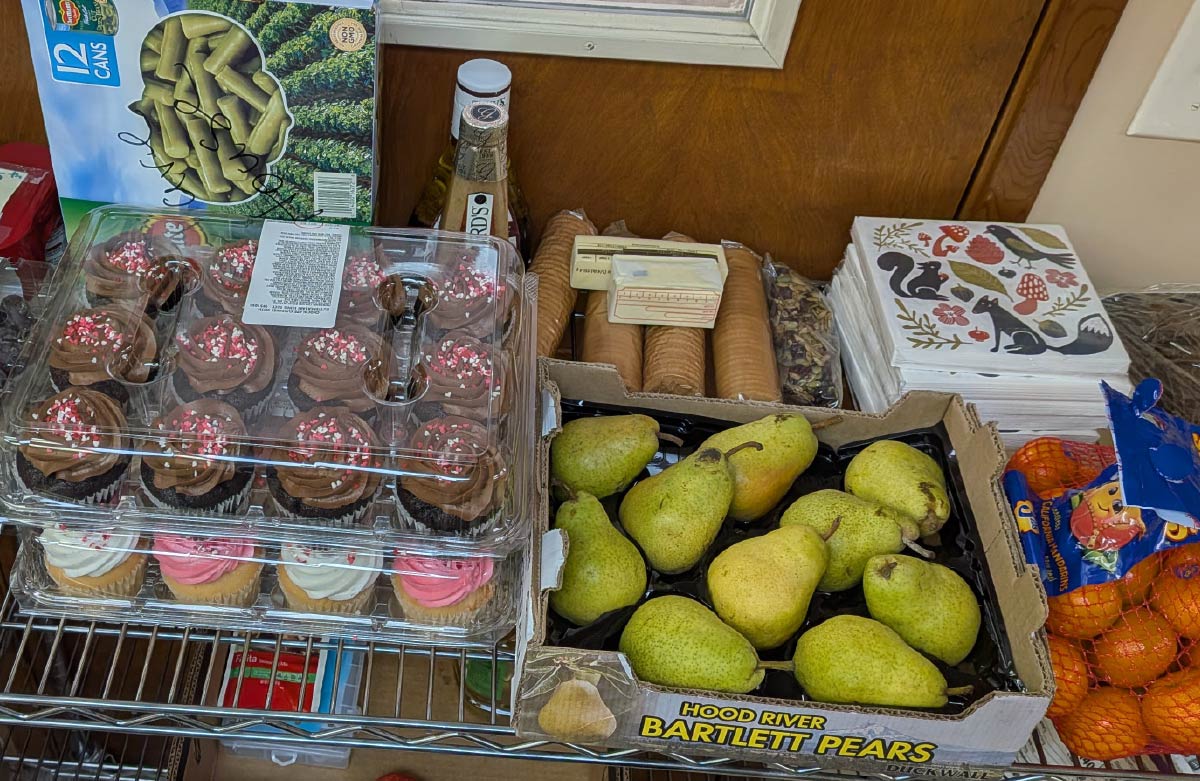
Porcello, who’s been coordinating the Christ Church Episcopal meal for about a year, usually plans the menu and creates a sign-up sheet for people to provide items. “We try to do a really balanced meal,” she says. This usually includes a main dish with protein (sometimes an animal protein like ham or salmon, if a parishioner donates fish) and a side course “with broad appeal.” Cooks also provide two to three other side dishes like potatoes or rice and one to two full servings of vegetables per person. For dessert, they usually provide cookies and fresh fruit.
Other churches cook the meal together. At St. Mary’s Episcopal Church coordinator Amy Lindsey says a small group usually cooks after the Sunday service, following a rotating menu. Miller and others at Anchor Park United Methodist usually cook a chicken pot pie for the Clare House in conjunction with their monthly United Women in Faith meal and meeting.
Christ Community Church also cooks together and makes the same dish each month: chicken enchiladas. Williams says the menu used to be more varied, but that made things more complicated. “This way, it’s kind of like another small group,” she says. “I’ve really enjoyed it.”
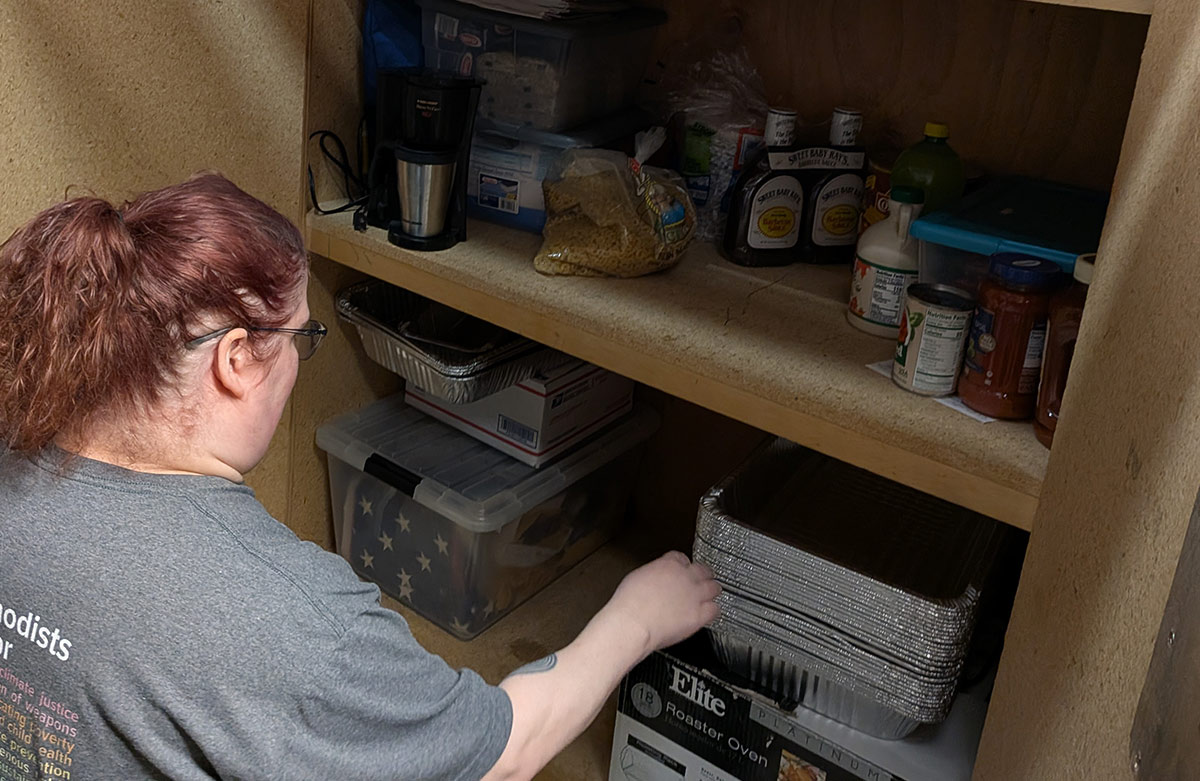
The day before the Friday when Christ Community Church provides dinner, Williams and her husband do most of the shopping at Costco and Walmart. The cooking group—usually six people, sometimes more—then meets at their church at 4 p.m. to fill four full-size aluminum pans with enchiladas, two with fiesta rice, and two with salad. A baker provides dessert. Williams says they can usually drop everything off around 6 p.m. for Clare House staff to warm and serve the next day.
Whatever the menu or their denomination—or lack thereof—each of these groups help carry on a long-time legacy of service. As the Anchorage Daily News quoted Sister Cincotta telling attendees of a 1996 charity ball, “Jesus did say, ‘Whatever you do to the least of my brothers and sisters, you do to me.’”