

uty to shareholders is the guiding star for business decisions by Alaska Native corporations (ANCs). Not only is this principle established by the Alaska Native Claims Settlement Act (ANCSA), but corporations share this perspective when they become shareholders themselves. Equity ownership is one of many avenues for investing ANC assets. As part-owners of other companies, ANCs earn dividends that they return to their own shareholders.
Majority- or wholly owned subsidiaries are too numerous to list. For example, Calista Corporation, one of the twelve ANCSA regional corporations, operates a robust construction business line, strengthened in 2010 by acquiring Yukon Equipment and the Brice family of companies, and again in 2018 by acquiring STG and its sister companies. However, Calista also owns a piece of Delta Constructors; its Bektuq Holding arm acquired a 25 percent interest in late 2019. The minority, non-controlling stake gave Calista a partner in the resource development sector, turning a potential competitor for construction contracts into a source of revenue.
Investing instead of owning is a strategic choice that depends on ANCs’ goals, resources, and liquidity.
For instance, Aleut became an investor in The Wildbirch Hotel as an entry point into tourism. “We did not have any holdings locally in the tourism industry, and without managing a tourism entity from a day-to-day standpoint, we really wanted to have a slice of that pie,” says Aleut COO Mandy Hawes. “We looked at our portfolio as a whole and said, ‘That’s a gap for us. How do we get into the game?’”
Hawes came to Aleut from the tourism industry, as former general manager of Alyeska Resort.
Last spring, just ahead of a grand opening for the refurbished hotel on Fourth Avenue in Downtown Anchorage, Aleut backed the project through its Aleut Real Estate subsidiary, joining as a strategic limited partner. “This partnership reflects our long-term vision of investing in Alaska in ways that generate meaningful impact,” Aleut CEO and President Skoey Vergen said at the time. “Through Wildbirch, we’re creating access, opportunity, and a launchpad for Aleut shareholders interested in hospitality careers.”
As part of the partnership, The Wildbirch Hotel agreed to a goal of hiring 10 percent of its workforce from among Aleut shareholders and descendants. Hawes says, “It was really important to make sure we could make the connection between our investment and giving back to the shareholders.”
Copper Bay Resources

“Partner vetting is the first step, really making sure we’ve chosen the right partner,” Hawes explains. “It’s about identifying the right partner and having that trusting relationship, having candid conversations, really a symbiotic relationship. To me, selecting the right partner is really critical.”
The Wildbirch Hotel is an example of a good fit, with local management led by former US Senator Mark Begich, who is eager to appeal to Alaska-based investors. “We are very selective in who we partner with,” says Hawes of Aleut’s approach. “We have a funnel of opportunities that come to us, some that don’t make it to the next stage of analysis.”
For Aleut, the choice between owning and investing must survive a decision matrix that gives great weight to community benefit. A deal-sweetener like shareholder hire by the hotel ensures that even passive investments fulfill the corporate mission of giving back.
Passive earning is not far from Aleut’s light touch with its more closely held assets, however. “We set the governance and guardrails for the subsidiaries, so they are accountable to the parent. We are actively involved, but we delegate a lot of the authority to subsidiaries for their own strategies,” says Hawes. “For passive investments, it’s a different mindset. Where we can offer a skill set, we will. However, for the most part, we are not managing any of those operations on a day-to-day basis.”
Hawes says Aleut board members inquired about the critical mineral potential of lands in its region, so the corporation sought an exploratory partner. “We looked at four different partners and had a very thorough matrix, a thorough process of choosing the right partner,” says Hawes. MDF rose to the top. MDF has worked with Doyon, Limited before, and it’s the leading investor of publicly held Felix Gold, which is developing a prospect north of Fairbanks with a near-term focus on antimony.
MDF and Aleut have framed this venture within the context of the green energy transition, providing copper for electric vehicles and renewable energy infrastructure.
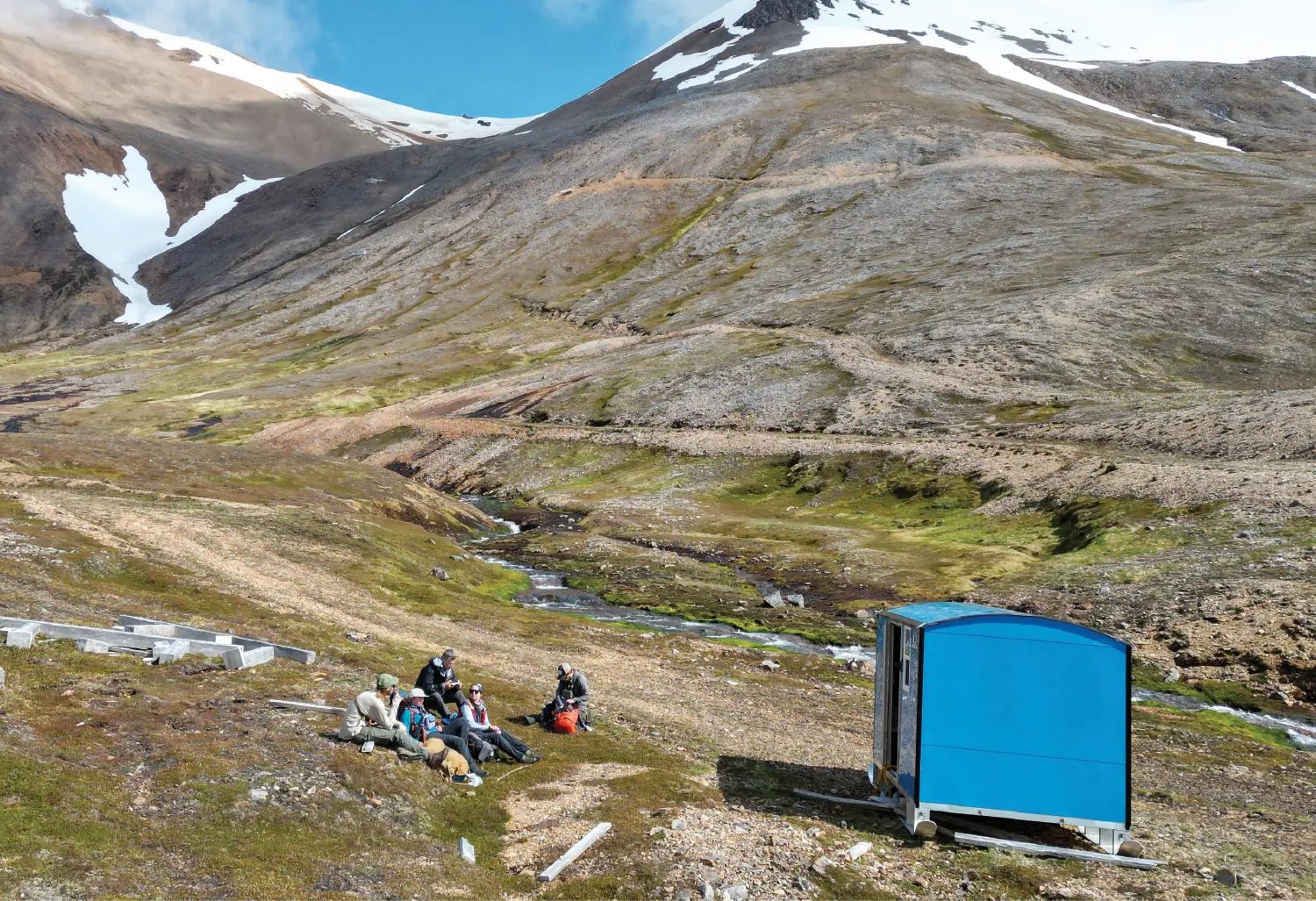
At this stage, Copper Bay Resources is a pre-exploratory mining operation just outside of Sand Point. This summer will be the third field season. The focus is on the Pyramid and San Diego Bay projects. Pyramid has an inferred resource of 206 million tonnes of copper, which could support a high-grade open pit mine. Copper Bay Resources is currently raising capital with an eye toward a potential public listing within the next year or so, which could significantly raise the value of Aleut’s equity stake.
Unlike traditional mining leases, the strategic partnership lets Aleut provide access to subsurface mineral rights in exchange for economic opportunities, including dividends, local hiring agreements, and scholarship contributions. Vergen and Hawes have emphasized that, while Copper Bay Resources is passive from a management standpoint, and MDF through Copper Bay Resources handles the day-to-day geology and operations, the corporation remains actively involved, with representation on a management committee to ensure the corporation’s and shareholders’ interests are represented and aligned.
Copper Bay Resources

The project is significant not just for its size but for its unique status as the first critical mineral project to receive direct investment from three different ANCs, totaling more than $15 million in committed capital. Aleut and Doyon combined for $5 million, and Bering Straits Native Corporation is the lead regional partner, starting with $2 million in 2023 and raising its commitment to $10.4 million. Its investment includes preferential hiring for shareholders and priority for subsidiary service contracts.
Hawes says Aleut was impressed enough to make Graphite Creek part of its strategic investments. “We spent quite a bit of time getting to know that team and understanding what the resource potential was, understanding who the people that are running the company are, and understanding the potential for that resource to come to fruition,” she says. “We’re really excited to keep watching how the story of Graphite One unfolds.”
In 2024 and 2025, Graphite One signed supply agreements with electric vehicle maker Lucid, lining up a customer for synthetic and natural graphite supplied from an Ohio processing plant to the car factory in Arizona. Via the US Export-Import Bank, the company has received letters of interest for up to $895 million in federal loans for mine and facility construction. And in 2023, the US Department of Defense awarded Graphite One a $37.5 million grant to complete its feasibility study. A final construction decision is targeted for late 2026 or early 2027.
Although Graphite One is on a federal permitting fast track, aiming for a potential record of decision later this year, the mine is not yet digging ore or generating revenue. The beauty of an equity holding, as opposed to an operational asset, is that it can yield unrealized capital gains before cash flow commences. “It has been a very successful investment so far for us,” says Hawes. “It’s publicly traded, and we have done well so far.”
By moving away from a “control-at-all-costs” model toward a mix of subsidiaries and passive equity, ANCs are ensuring that their guiding star leads toward responsible development and respect for the land for generations to come.
Subsidiaries, especially when they service federal contracts, are points of pride for the parent company. ANCs disclose all of their investments in their annual reports, including equity holdings, but shareholders are more interested in the operations of the corporate family. “We do give more color to our specific subsidiary holdings,” says Hawes of Aleut’s reports. “But we also have a section on our investment income and how that is allocated between marketable securities, tourism, real estate, and critical minerals.”
Equity holdings are a first step toward expanding ANCs’ revenue base. Diversification is key to support generational shareholder impact. Hawes says, “Across all investments, we look for a long-term alignment, responsible development, respect for the land, and opportunities that support market growth in the region.”