


arthquakes. Floods. Eruptions. Oil spills. Subsea cable breaks. Ransomware attacks. Twenty-first century emergency managers must plan for a growing list of scenarios, some increasingly complex. Since 2004, the Alaska Partnership for Infrastructure Protection (APIP) has helped educate and connect public and private-sector groups that have shared emergency concerns.
Events soon underscored the partnership’s importance. In late July 2010, a US Air Force C-17 cargo jet stalled during training for the Arctic Thunder Air Show, crashing on part of the Alaska Railroad. The military had to investigate the crash and resulting deaths, and the railroad had to repair the tracks so it could restore service. By convening a same-day meeting, APIP helped “prevent a larger ripple effect” and gave the military information “that allowed their accident investigation to continue” during track work, the Intersector Project report noted.
By 2014, an APIP recurring training event called Alaska Shield had earned the attention of the Federal Emergency Management Agency (FEMA). The US Senate subcommittee on emergency management, chaired by then-Senator Mark Begich, met that April in Anchorage with then-FEMA Administrator Craig Fugate to observe the 50th anniversary of the 1964 earthquake. The hearing “Fifty Years Since the Great Alaska Earthquake: The Role of First Responders in Catastrophic Disaster Planning” discussed how FEMA could learn from Alaska Shield.
The multi-day simulation event modeled a major earthquake, particularly its effects on the Port of Alaska in Anchorage. According to Fugate’s written testimony, “The Alaska Shield exercise was the centerpiece of the 2014 National Exercise Program Capstone Exercise… the culminating event in the biennial National Exercise Program Cycle.”
Today, APIP has nearly 1,000 members and meets the third Thursday of every month, September through May. “It takes… a whole slew of people to keep the lights on, keep the food in grocery stores, repair infrastructure, et cetera,” says Ben Hartlieb, APIP’s public sector co-chair. “No individual entity is an island in any of this.”
APIP’s leadership reflects this. Hartlieb, who works for the state’s Division of Homeland Security and Emergency Management, co-chairs APIP with Hillary Palmer, a program manager with Dewberry. “I try to make sure that the private sector interests and capabilities are known and discussed so that when an emergency arises we can connect everybody that needs to be connected,” Palmer says.
Alaska National Guard
APIP’s influence extends well beyond infrastructure. “In Alaska, we all wear many hats,” Palmer says. Volunteer and faith groups don’t typically run the kind of community-critical services that APIP focuses on. To inform and leverage such entities’ resources, states and the federal government rely on Voluntary Organizations Active in Disaster (VOAD), a nationwide nonprofit association. Some organizations might participate in both the national and state VOAD. Palmer says several APIP members also serve on VOAD. Because of that, she says, “everyone who attends APIP ends up being the messenger back to their organizations, plural.”
To make events accessible, APIP usually offers both an in-person and online component. “It’s pitched to be statewide,” Hartlieb says, but he’s not sure how many APIP members live and work outside Anchorage. Except for field trips, where the group might tour a facility, APIP meets at the AT&T Center in Anchorage and via Microsoft Teams. Meetings typically last about an hour and include a featured speaker. Topics have included debris management, briefings on the National Weather Service and Alaska Water and Wastewater Utility, and a tour of the Don Young Port of Alaska. Members also do occasional drills like the “rehearsal of concept” earthquake simulation. For events at the AT&T Center, Hartlieb says they usually have 20–30 people in the room and 70–100 people online.
Don Lynn, director of crisis management for Albertsons Companies, is one of those online viewers. Lynn joins the monthly Teams meetings from an office in Idaho, where he monitors events that could affect Albertsons’ operations in thirty-five states, including Carrs and Safeway supermarkets in Alaska. “Part of my responsibility is, when we talk about a cascading event that is going to involve Seattle, I raise my hand and I say, ‘Hey, what about Alaska?’”
Lynn says APIP is “crucial to identify the needs, not only of Alaska, but the challenges we need to overcome.” Though his work covers much of the country, Lynn says he doesn’t always have such a resource in other states. “APIP not only brings government and me as a company together; they bring together the other private sector… I look at Matson and TOTE as valuable partners.”
Those relationships have helped Lynn both in emergency response and understanding certain trends, like why his Kodiak store kept selling high volumes of chips and soda on certain days. “If I don’t know who to talk to, I can call Ben,” Lynn says. Through his APIP connections, he eventually realized that cruise ship traffic explained the strange sales spikes that might “wipe out the products that the locals need.” Now he can better plan when to adjust stock of popular items and maintain a more stable supply for Kodiak residents.
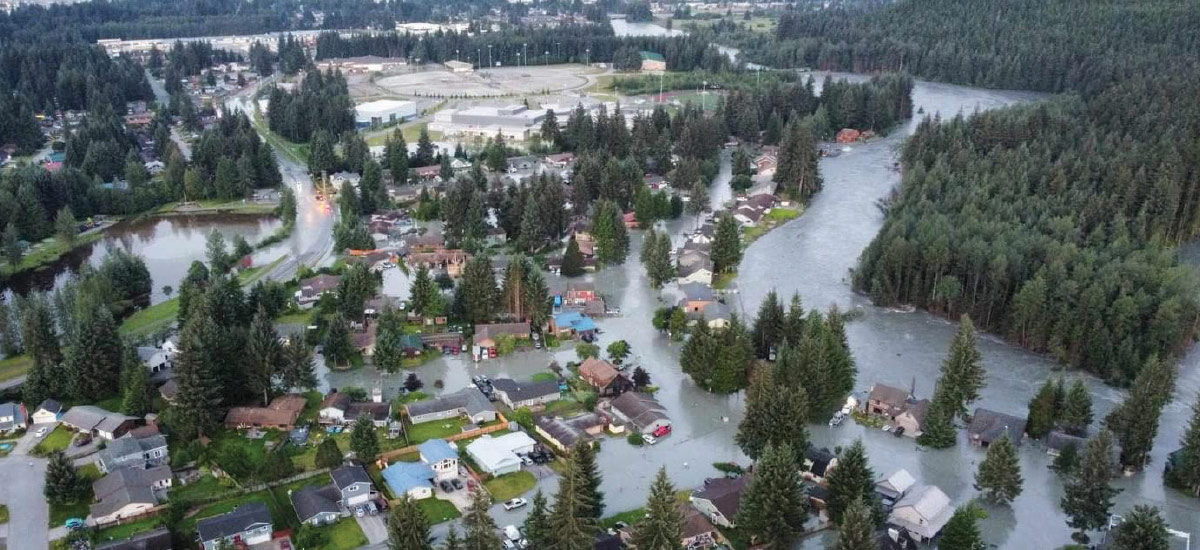
For Lynn, that’s part of what makes APIP so valuable. When an issue like the recurring glacial outburst in Juneau happens, it doesn’t just affect his customers, it also affects his employees. “It’s always about people,” he says.
US Geological Survey
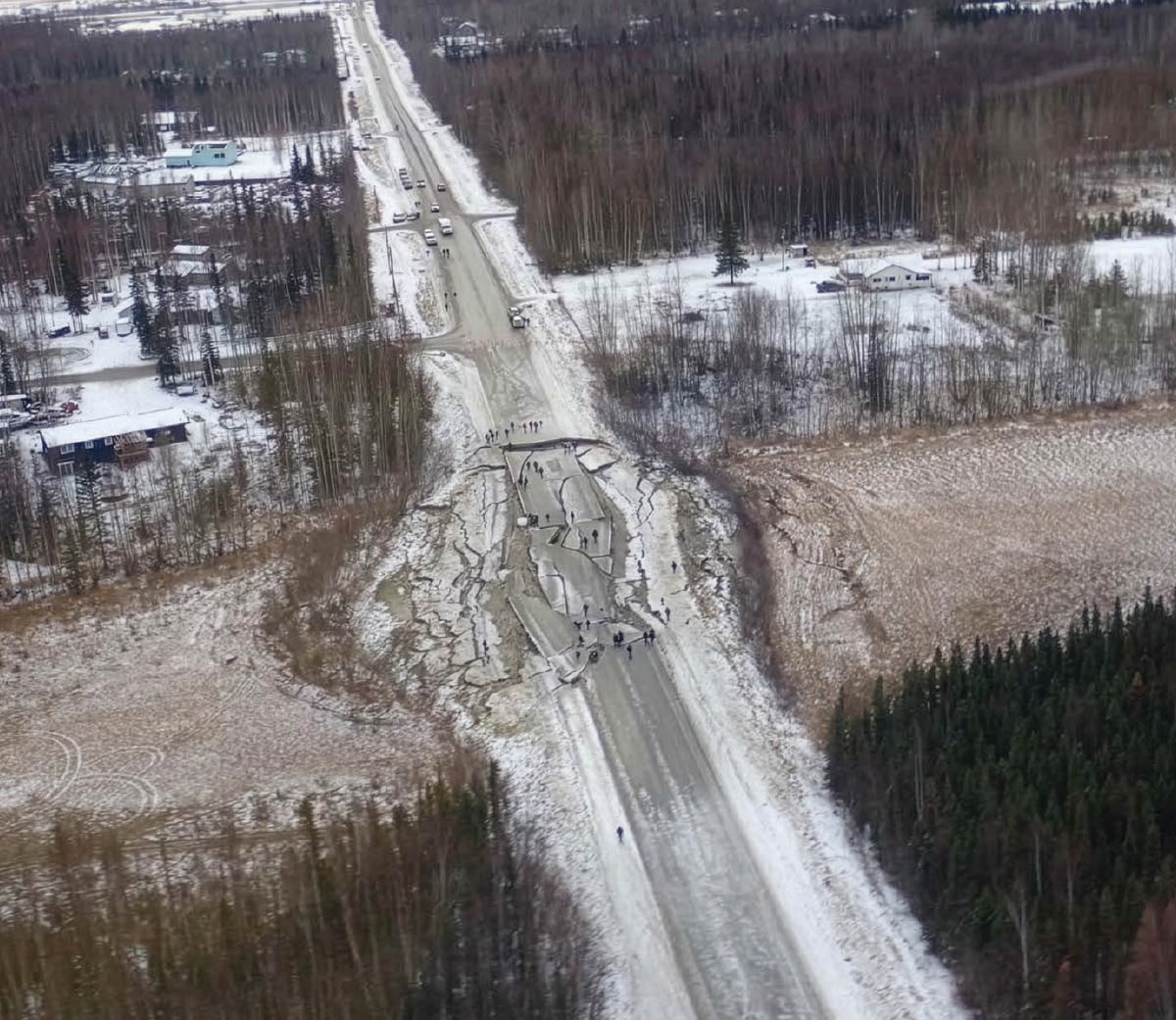
Later, in the quake’s aftermath, he had employees move a lot of the store’s wares outside, using “nature’s refrigerator” to maintain perishable items. “You just put up a bear patrol,” Lynn says. “I don’t know if the moose will get into it, but the bears will… How would Don know that if he didn’t get together and talk about some of these things, either with my employees or through APIP?”
For smaller organizations, Palmer says APIP can help businesses learn about their resources during a disaster. “There’s a meaningful support ecosystem, but navigating it requires knowing it exists in the first place. Bridging that awareness gap is one of the most practical things the public-private partnership model can do,” she says.
Businesses also may not understand how supply chains in other parts of the state work. Garcia says not all Alaskans know of NAC’s role transporting bypass mail and freight to rural Alaska or of its regular flights to and from hub communities like Bethel, where it flies up to twelve times a week. After Typhoon Merbok hit western Alaska in 2022, Garcia got a call from someone wanting to send supplies, but the person didn’t know about NAC’s schedule to and from hub cities or its three-plane fleet of 737s.
“There is a network and an entire logistics system in place because of the bypass mail system,” Garcia says. Thus, he was ultimately able to help the person who called achieve their goal. “That networking is so important from APIP, being able to know someone, where they work,” Garcia says.
During the response to Typhoon Halong last fall, Garcia turned again to APIP connections. At one point, a volunteer organization dropped off donations meant for the villages without providing all the information Garcia needed, like the point of contact for pickup, whom to bill for shipping, and so on. Because of APIP, “in a time of need, you can call and reintroduce yourself and remind them, ‘Hey, we’re here for you and how can we help.‘”
Membership in APIP costs nothing, but in a time of crisis, that time saved on planning and research can prove invaluable. “It’s always easier to make a plan on a blue-sky day than during an incident,” says Palmer.