

embers of the Alaska chapter of the National Association of Women in Construction (NAWIC) have been part of the massive effort since October to rebuild western Alaska communities affected by Typhoon Halong. Five NAWIC members shared their perspectives on the recovery effort.
“These people, they typically are at home during the holidays,” explains Hughes, Knik Construction’s health, safety, and security manager and a member of the NAWIC Alaska Chapter board of directors.
Instead, construction workers have had boots on the ground since the moment the typhoon struck on October 12, 2025, in an effort to get residents of affected towns and villages back into their homes.
When Typhoon Halong swept across the region from Kuskokwim Bay as far north as Kotzebue, Knik Construction had already wrapped its seasonal work in communities such as Bethel and Nightmute. In the wake of the storm, the company reopened its man camps in both communities to provide housing and support for partner contractors.
“Housing in remote communities is pretty slim to none,” Hughes describes. Local schools, where visiting construction workers would typically stay, were damaged in the storm or carried away by flooding.
Back in Anchorage, Hughes spent the winter coordinating logistics, shipping supplies—including personal protective equipment—to workers exposed to sewage or debris while they repair boardwalks and roads. Mid-winter, she sent new cooking supplies, slipping those Christmas goodies into the shipment for crews who continued to work through the holiday.
Moving supplies into remote Alaska isn’t simple even in ideal weather. Under normal circumstances, Bethel serves as a busy hub as people and goods move through to satellite communities. With evacuations of affected residents leaving the region, and increased shipments of construction supplies coming in, shipping backlogs made Hughes’ job more challenging.
“We have some locals working with radios in the [airport] control tower or at the runway to get some of the supplies, like lumber, out to remote villages,” Hughes says. “It’s super busy, so these guys are working every day—and they’re sitting in trucks for long hours, so I ordered fancy, ergonomic seat cushions to help make sure they’re comfortable, to take care of their spines while they’re assisting with radio communication.”
Thanks to Knik Construction’s regular-season projects in western communities, contractors had early access to supplies for immediate repairs post-typhoon. In Kotzebue, where Knik Construction had staged materials for an upcoming runway project, responding contractors were able to use the stockpile to make runway repairs and fix a bridge.
“The contractors in Alaska really come together and help in any way they can to make sure things get put back together,” Hughes says.
Originally from Teller, outside of Nome, Hughes is no stranger to the challenge of remote living. But typhoons like the one that struck western Alaska last October aren’t the norm. She observes, “These typhoons are very new. I have a young coworker who was like, ‘Well, yeah, they just happen every year,’ and I was like, ‘No, they don’t.’ This is not normal. It’s scary and alarming.”
Kim Drake | Sherri Kelly
“That was the scariest part,” describes Iriqtaq Hailstone, a certified heavy equipment mechanic for NANA Construction (previously Drake Construction before NANA acquired it in January) who has been driving a truck for the company in the aftermath of the typhoon. “The escape routes were either underwater or damaged.”
Hailstone’s sister Qutan had a front row seat to the bridge repairs. She spent two weeks flagging for NANA Construction while her coworkers moved excess dirt from the airport to replace what had eroded; they took out pillars and replaced, then reinforced, them.
“Just seeing it slowly get done within the weeks, it was quite nice to watch,” Qutan says.
Both sisters live outside Kotzebue and understand that life near the ocean can be risky. “But it’s pretty bountiful out there,” Iriqtaq points out.
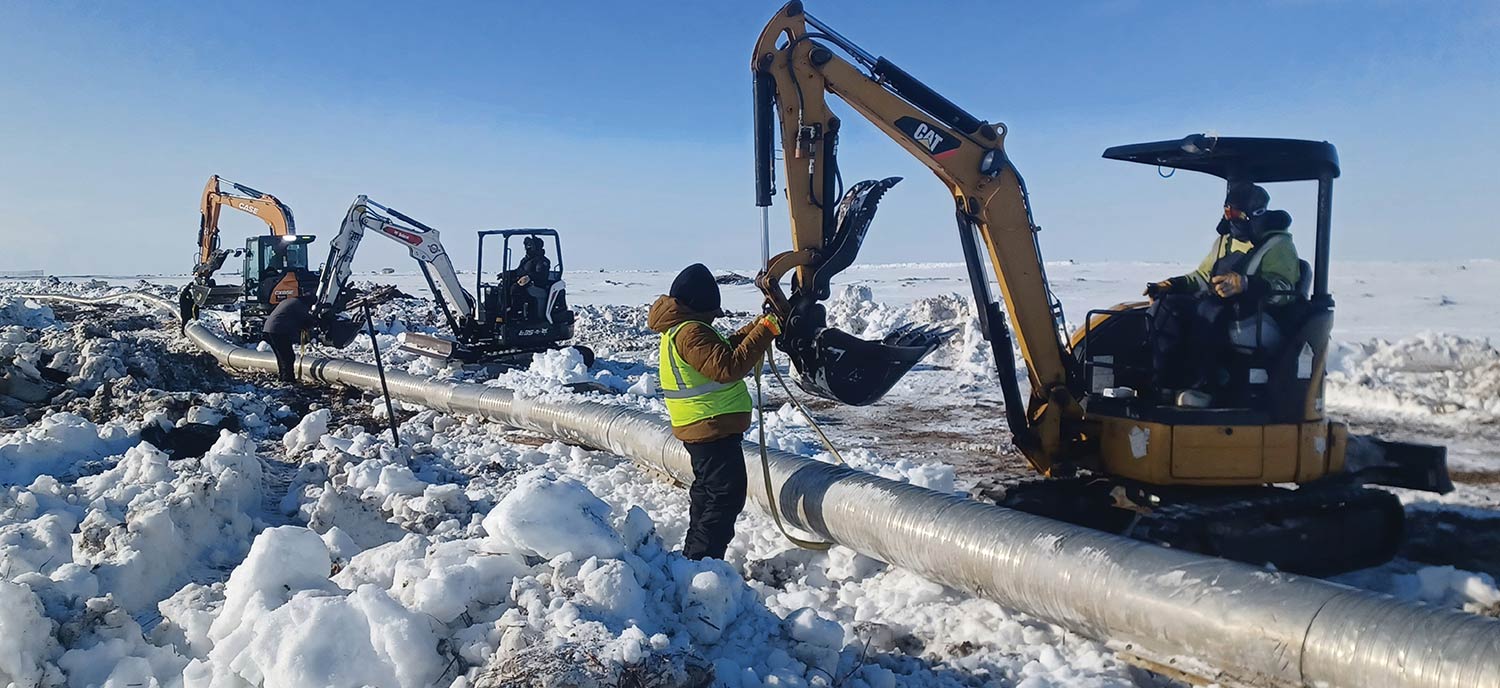
That local bounty was under threat from the local sewer lagoon. Although many Kotzebue homes escaped the worst of the storm, erosion at a cell block of the lagoon had to be repaired before sewage began to seep into the ocean.
Iriqtaq, who spent her time on the job driving E40 haul trucks between the airport and the lagoon’s cell block three, said the area, which locals call “tent city,” is also where people keep their meat drying racks, close to the ocean from which they hunt.
“If all that water was contaminated, they wouldn’t be able to wash their fish or process their skins properly,” Iriqtaq says. “We needed to keep it as clean as possible for the people’s sake.”
NANA Construction had already been preparing for the upcoming construction season, stockpiling gravel for a road project. “The moment the storm happened, it changed our priorities, and instead of using it for the road, NANA Construction used the gravel to rebuild the town,” says Iriqtaq.
“We happened to be in Kwigillingok already, so we had guys on the ground when the typhoon actually hit,” she says. “So they were there trying to help people dig things out, dig out vehicles.”
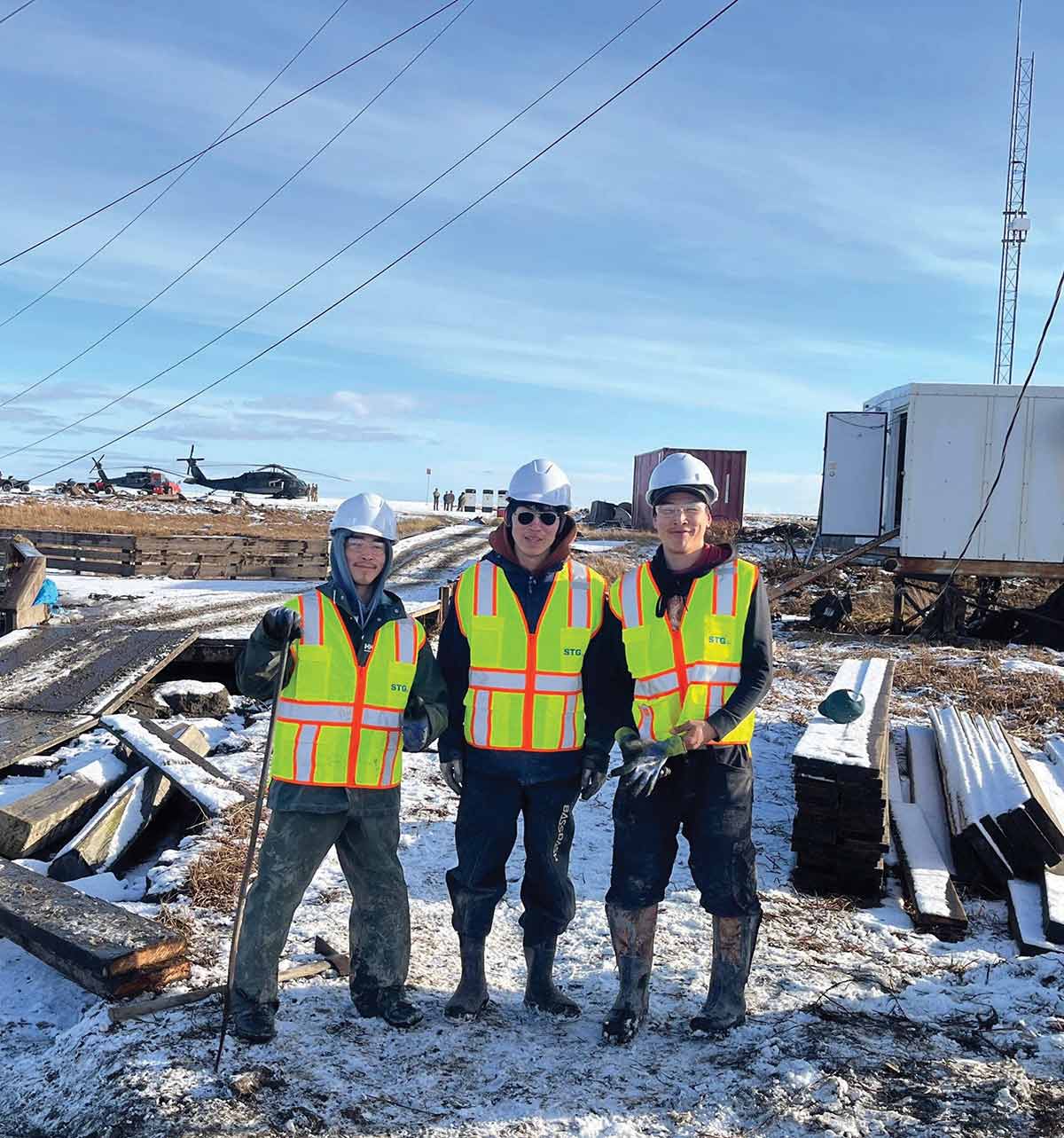
STG crews diverted from the work they’d come to Kwigillingok to do—installing helicals for a new water tank—to respond to emergency repairs to infrastructure in the wake of the typhoon.
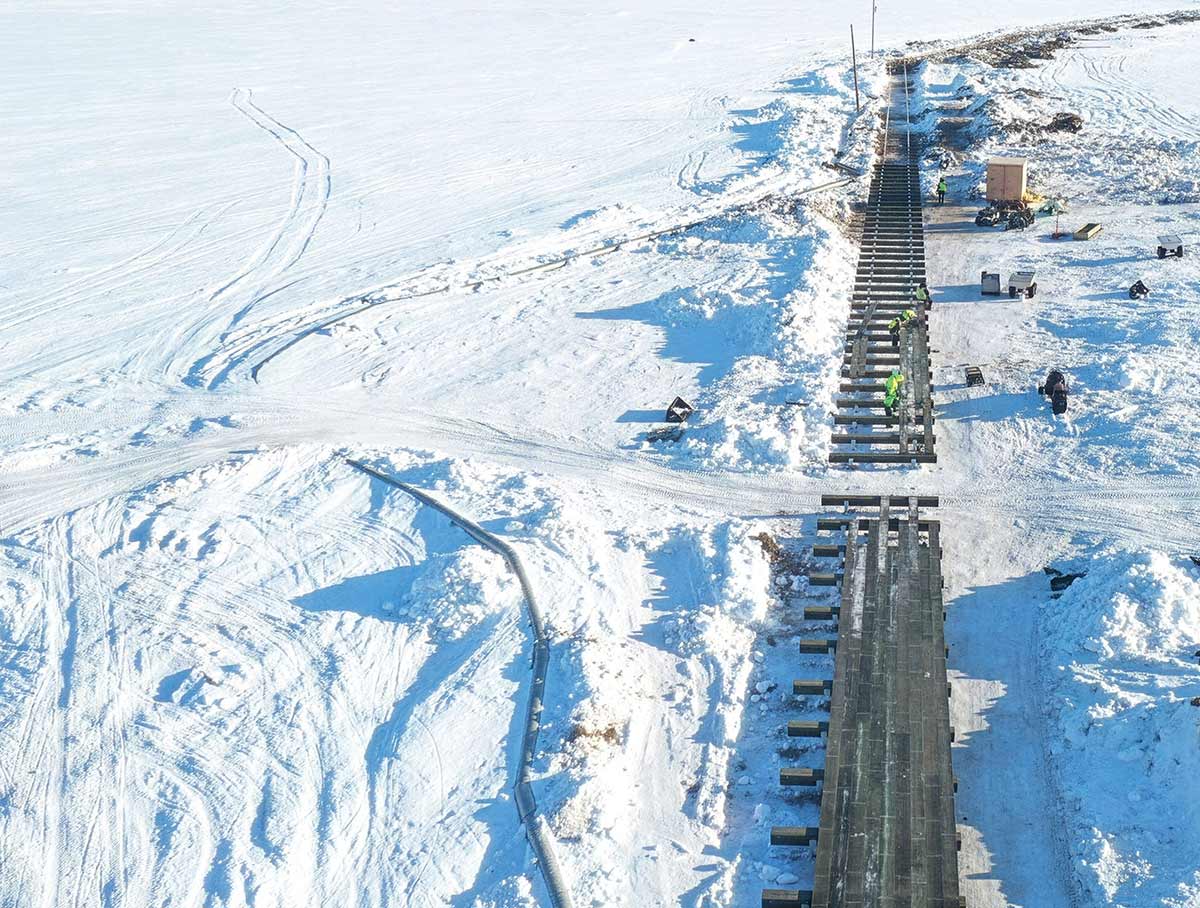
In many western villages, residents rely on systems of boardwalks to move between buildings. STG and Brice Inc.—sister companies owned by Calista, the Alaska Native corporation for the typhoon-affected region—are busy replacing helical piles to stabilize foundations in several villages where boardwalks were destroyed by flooding. In Kipnuk alone, Drake says, roughly five miles of boardwalk must be rebuilt.
Shipping materials to the region is challenging; trying to get heavy equipment into the area is practically impossible. By now, Drake says she has memorized the exact dimensions of a Ryan Air CASA aircraft’s door. Ryan Air’s fleet includes CASA 212-200 medium cargo aircraft designed and built by Spanish aircraft manufacturer Construcciones Aeronáuticas SA.
“The heavy equipment has to be small—not so heavy. It has to fit into a Herc [C-130 Hercules] or a CASA,” she explains. “This minute, I am trying to get a drill rig into a CASA.”
Even once she figures out how to get the equipment on a plane, getting it on the ground is a whole other logistical challenge. A Herc is too large to fly into Kwigillingok; while there’s a lake near the village that could be turned into a runway, maintaining that runway would mean more manpower. The alternative is to fly equipment and materials into Bethel, then find a way to move them overland to their final destination. Even with PistenBullies, tracked tractors made for breaking trail, getting materials where they need to be is a two- to two-and-a-half-day endeavor.
“The challenges are neverending,” Drake admits.
Still, there are bright spots. The day before this interview, Drake got a text from a worker in the field. “A photo of two puppies. ‘Do you have a place for these puppies to go?’ I was like, ‘I know somebody that really likes village dogs,’” she shares. She reached out to her friend, who expressed interest. But she also showed her husband the puppies who had survived the storm.
“He’s like, ‘No,’” she says, then she smiles. “But I don’t think the answer is completely no, yet.”
Kim Drake | Sherri Kelly
Kim Drake | Sherri Kelly
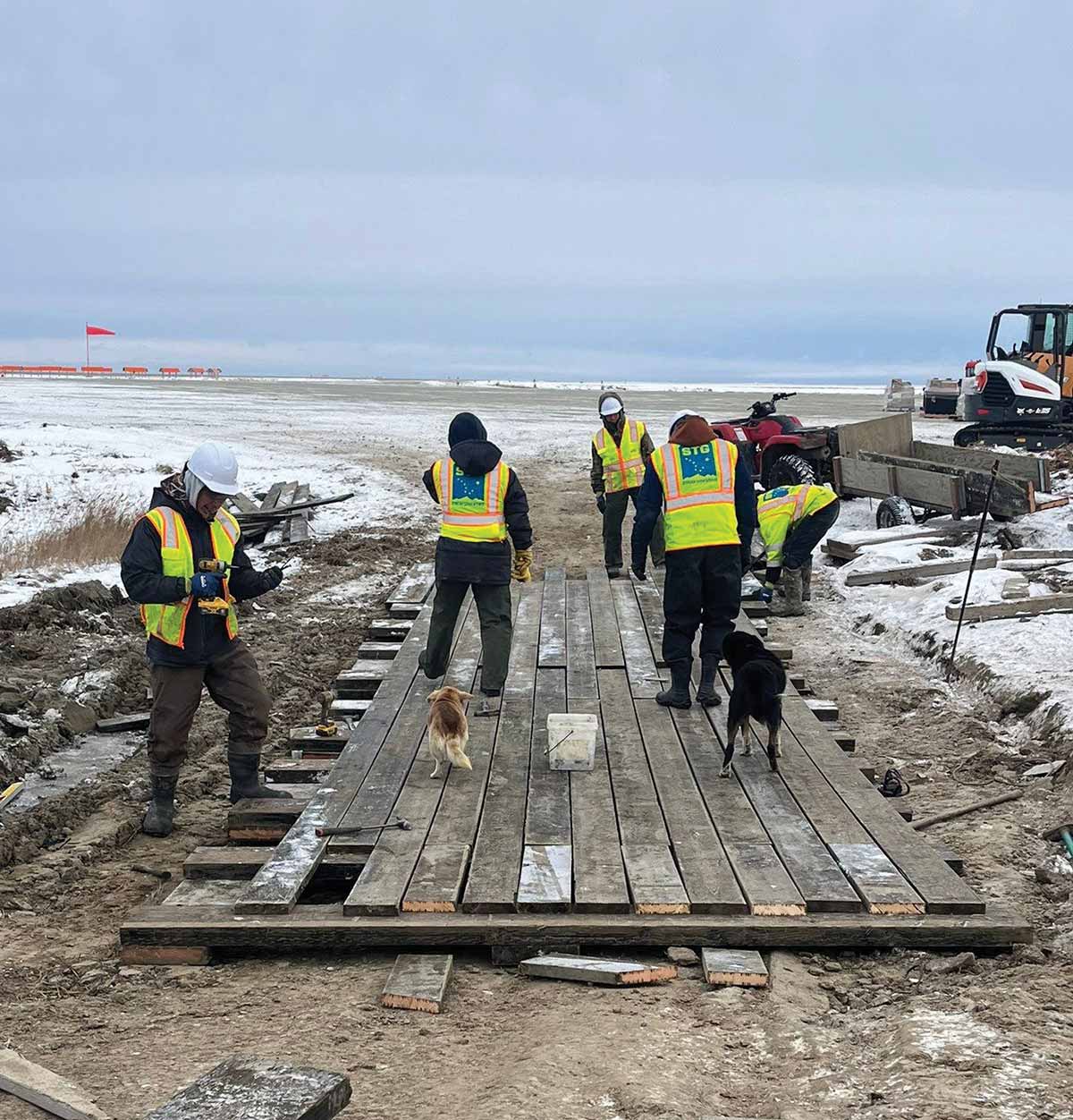
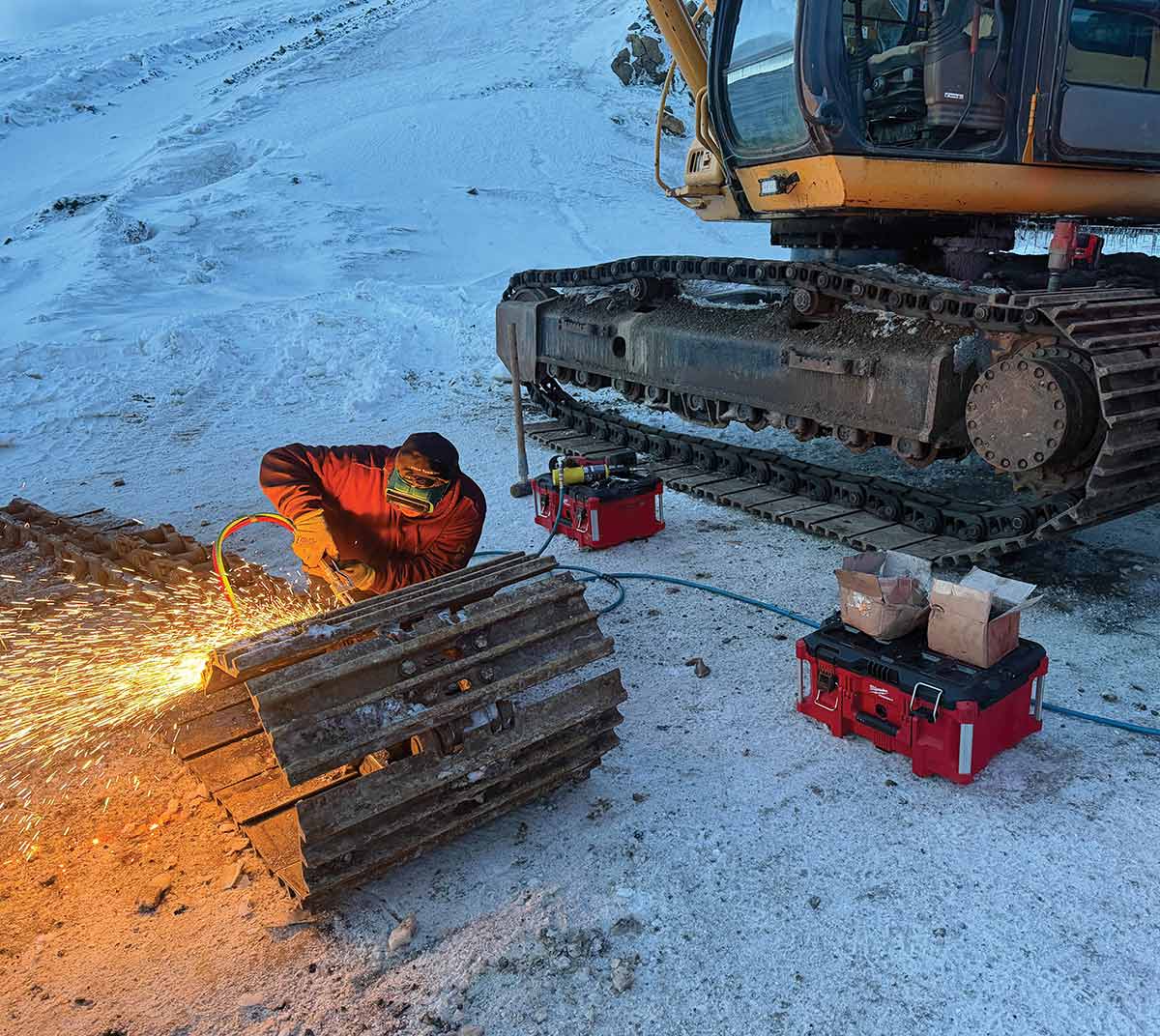
“The work has been done by sheer force of will and grit and heart and strength of the guys out there who are manually pulling, lifting, building, doing things,” Kelly says.
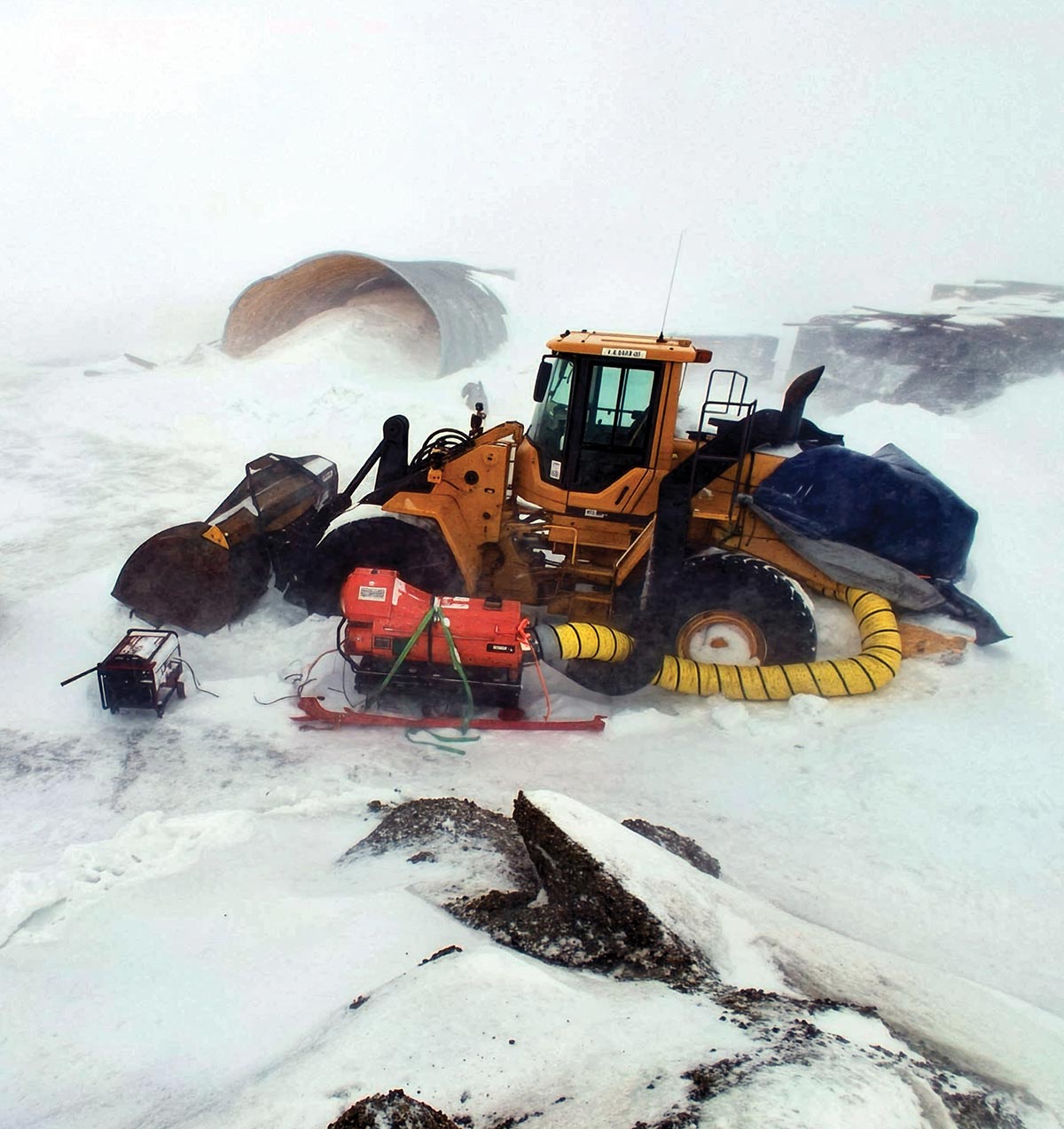
In addition to dealing with logistical challenges, crews are constantly battling weather. In winter, that means ambient temperatures, in some cases, of -40°F to -50°F. Blizzards roll through, undoing the work they’ve done.
“It’s Groundhog Day,” Kelly describes. “Power lines get knocked down by an ice storm several days after they fought hard to get them put up, or water treatment plants they had just fixed froze, and we have to go fix it again.”
Kelly has lived in Alaska most of her life; she’s spent some time in the South, as well, where she experienced hurricanes, tornadoes, and floods. But the only thing she can compare the damage from Typhoon Halong to is the aftermath of Hurricane Katrina.
Kim Drake | Sherri Kelly
Kim Drake | Sherri Kelly
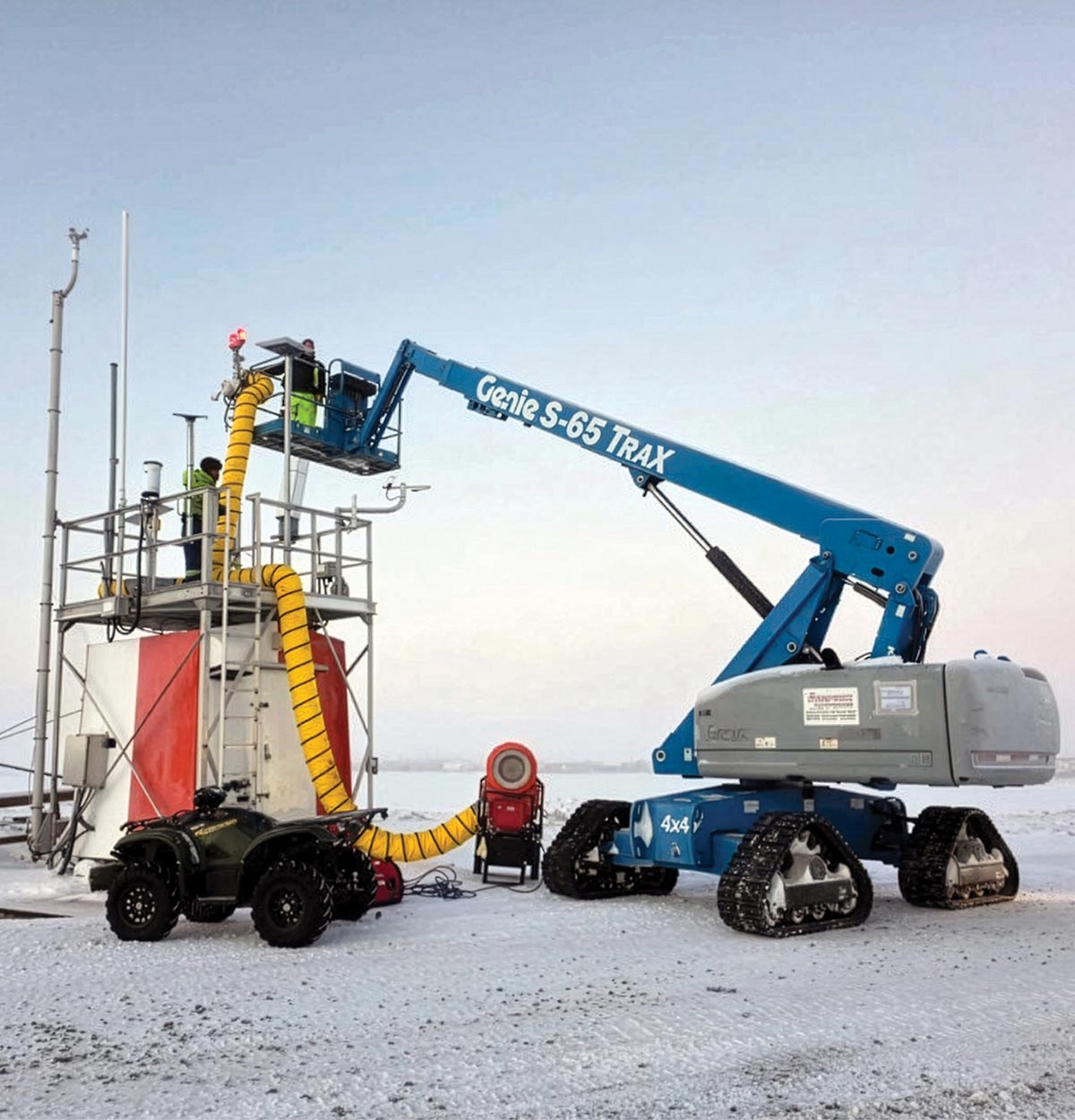
The workers she oversees are doing everything in their power to return as many people as they can to their homes. Kelly says when they first went into the villages affected by the storm, there was no power, no water, no sewer. Crews had to restore critical infrastructure—but to do that, they first had to clear debris to create paths so they could reach power and water lines.
In the meantime, she observed, families have gone back to old ways of surviving. In villages where water treatment plants froze solid, or where seawater tainted the freshwater ponds used for drinking, people have been riding snowmachines miles to ponds that are free of salt, to cut blocks of ice they bring home and melt down for drinking water.
“The challenges of everyday life out there, most people can’t even comprehend,” Kelly says.
Yet she’s been heartened to see how locals and visiting contractors work together. “To be able to work alongside the locals to help rebuild their own communities has been a really incredible thing to be a part of. You learn so much from them, and they’re so grateful for us. It’s a great working relationship when we can all come together and help each other,” says Kelly.
In addition to repairing basic services, cleaning debris, and rebuilding, Brice Inc.’s crews have undertaken the sensitive task of returning caskets to their resting places. In several villages, caskets were taken by the storm’s floodwaters and, in some cases, floated as far as ten miles away. Brice Inc. is working with the Alaska State Defense Force to find missing caskets and return them to where they belong.
Kim Drake | Sherri Kelly
“The deadline is there,” Drake says, “but there’s also nature’s deadline. There’s not a lot of work that goes on in a boardwalk village when it’s thawing or summertime. It’s just too hard to move equipment.”
Drake, Kelly, and other project managers tried to phase the work to complete as much as possible while the ground was still frozen. When summer arrives, crews will go straight from repairing damage from the typhoon into the busiest time of year for construction companies.
There’s little rest for the workers responding to the aftermath of this disaster, but it’s worth it. Kelly says, “All of the sacrifice, all of the dedication—when you go out and see the smiles on the faces of the families who are there, and you hear the children’s laughter and watch them play outside—this will go on for years to come, but it will be built stronger and better than it was.”