

Hall of Fame 2026

nnovation in Alaska emerges in remote communities, harsh climates, and challenging environments where solving problems requires creativity, persistence, and collaboration—and often urgency, delivering on the leading edge of innovation, against circumstances and limitations faced by relatively few others.
That spirit is exactly what the Alaska Innovators Hall of Fame celebrates. Each year, the program recognizes Alaskans whose ideas, inventions, and leadership are helping shape the state’s future—advancing industries, strengthening communities, and tackling the unique challenges of life in the 49th State. The selection committee is an advisory board formed within the University of Alaska system to promote “research and development as an enterprise and as an engine for economic development in Alaska.”
The 2026 inductees represent three distinct but interconnected forms of innovation: academic research, community-scale energy systems, and sustainable building technology. From protecting infrastructure built on thawing permafrost to transforming the reliability of a remote coastal power grid to developing new tools for energy-efficient homes in Arctic climates, the work of Doug Goering, Clay Koplin, and Tom Marsik reflects ingenuity and dedication to bolstering Alaska’s communities that are leveraging best-available solutions for viability.
Their innovations may focus on different systems—roads and pipelines, electric grids, or building technologies—but they share a common goal: solving real problems in one of the most challenging environments on Earth.
For Goering, that mission has always centered on practical solutions. “I got into engineering because of my interest in solving practical problems,” he says. “That hasn’t changed in retirement.”
Marsik echoes that same sense of purpose when describing his work with students and collaborators. “Every time we discover something new, it is like opening a new present,” he says. “It is a win/win/win—for the students, for the projects, and for the world.”
Together, the three innovators demonstrate how Alaska’s unique conditions can inspire breakthroughs that reach far beyond the state itself.
“I grew up in the Fairbanks area and had many years to observe and think about engineering challenges in Alaska,” he says. “After going to the University of Washington and the University of California Berkeley for undergrad and graduate degrees, I decided to return to Alaska and started a career at UAF in the late 1980s. Engaging in cold regions engineering problems was thus a natural for me.”
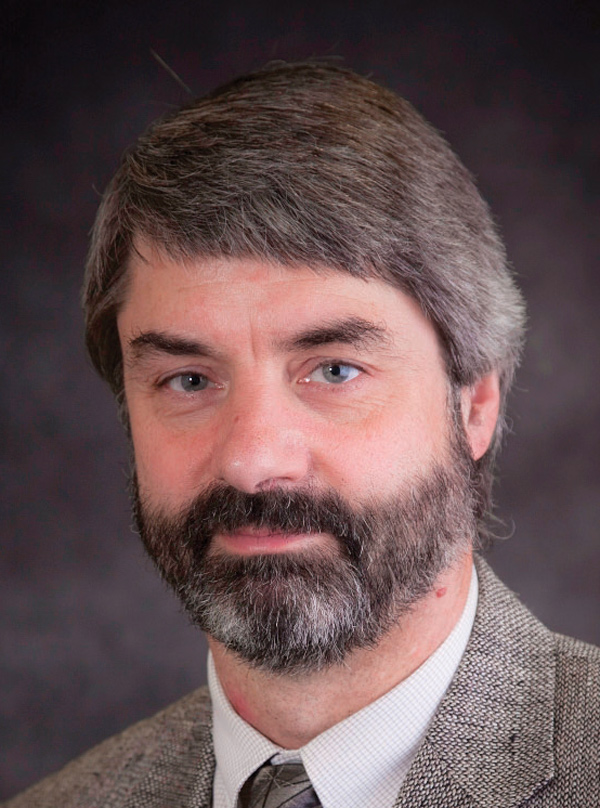
Even early in his career, Goering believed that combining technical expertise with real-world experience could produce new approaches to the state’s most pressing challenges.
“I always felt that a good engineering education combined with many years of practical experience dealing with cold regions issues could result in innovative approaches to Alaskan engineering challenges,” he says.
One of the biggest challenges is permafrost thaw, which threatens infrastructure across the state as the climate warms and development disturbs frozen ground layers.
“Climate change is conspiring with construction-related disturbance to really destabilize permafrost layers by promoting accelerated warming and thaw,” Goering explains. “Permafrost thaw is one of the biggest challenges plaguing Alaska’s infrastructure, and it’s only getting worse as the climate changes.”
To address the problem, Goering has been working on a new type of insulation designed specifically for Arctic environments. His concept aims to block summer heat from reaching the permafrost while allowing winter cold to flow downward and refreeze the ground.
“We are trying to develop a type of insulating layer that is effective at keeping summer’s heat away from the permafrost layer, while at the same time allowing the cold of winter to cool and preserve permafrost,” he says.
If successful, the technology could help stabilize the ground beneath critical infrastructure—from roads and railways to pipelines and transportation corridors—while reducing long-term maintenance costs.
Doug Goering
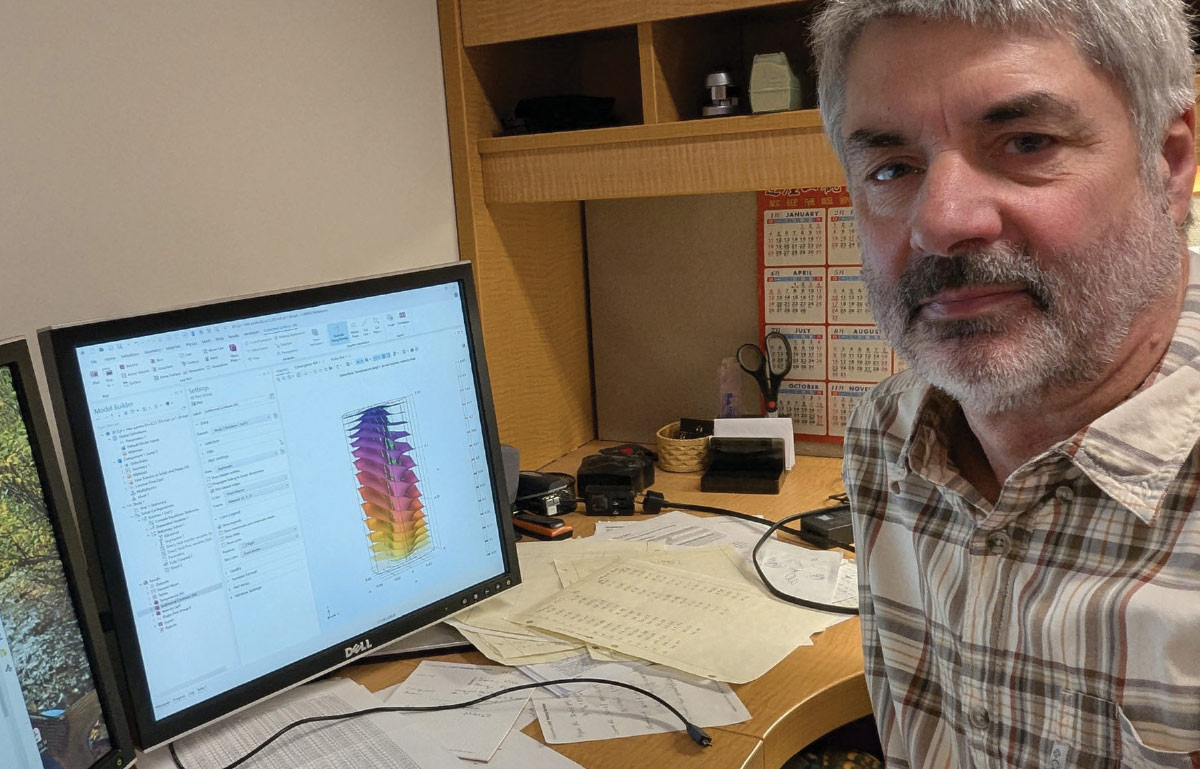
“The vision was to design a modern engineering facility that helped focus on hands-on student experiences and then bring that vision to life,” he says.
Today, the building supports both teaching and advanced research, providing laboratories and collaborative spaces for the next generation of engineers.
Goering also remains passionate about mentorship. Over the course of his career, he guided more than fifteen graduate students and influenced thousands of others.
His advice to young engineers is simple but powerful: focus on creativity. “I would counsel young engineers to focus on the creative, artistic, and innovative aspects of the engineering profession and think of the needed science and mathematical background as tools that are critical to turn their engineering ideas into reality,” he says.
Even since retiring from UAF in 2018, Goering continues to research and publish. For him, innovation remains as compelling as ever. “Retirement just gives me the opportunity to focus even more on interesting research,” he says.
His path into the field started early. “My father was an electrician for the State of Alaska—Airport Maintenance Electrician—and flew all over the state to remote communities bringing home stories from all over Alaska,” Koplin says. “I realized that people would need electricity for my lifetime, and a career in energy would allow me to work anywhere in Alaska that I wanted to.”
Under his leadership, the community’s energy system has undergone a remarkable transformation. Today, roughly 85 percent of Cordova’s electricity comes from hydropower, significantly reducing reliance on diesel fuel.
But the shift didn’t happen overnight.
“It was more a matter of many small steps and pieces over time than one big ‘set it and forget it’ transition to hydropower,” Koplin explains.
The result is one of the most reliable electric systems in Alaska. A major contributor to that reliability was the cooperative’s decision to convert the entire grid to underground power lines—a complex engineering effort that required routing cables across mountains, wetlands, rivers, and solid rock.
“Once the system was fully converted in 2011, our system reliability became exceptional,” he says.
Koplin has also shared Cordova’s experience with communities around the world, presenting on microgrids, hydropower innovation, and energy resilience at international gatherings such as the Arctic Circle Assembly. The lessons often extend beyond technology to the cooperative model itself. “The topics they are most interested in are our cooperative structure—community based and owned by the customers,” Koplin says.
His vision for the future of energy in Alaska is equally ambitious. Through his doctoral research at UAF, Koplin is exploring how data infrastructure and electric grids can work together—an emerging challenge as energy-intensive technologies expand. He invited Greensparc, developer of a modular 150 kW data center, to install its hardware inside one of the utility’s hydropower stations in 2024.
But for Koplin, innovation ultimately comes back to community. “I always think of energy as a community resource that has the potential to provide additional value,” he says. And he believes Alaska is uniquely positioned to lead in that space.
“Alaska has the energy, food, climate, and resources to be fully self-sufficient,” he says. “I hope that I can contribute to that future beyond just energy vision and implementation.”
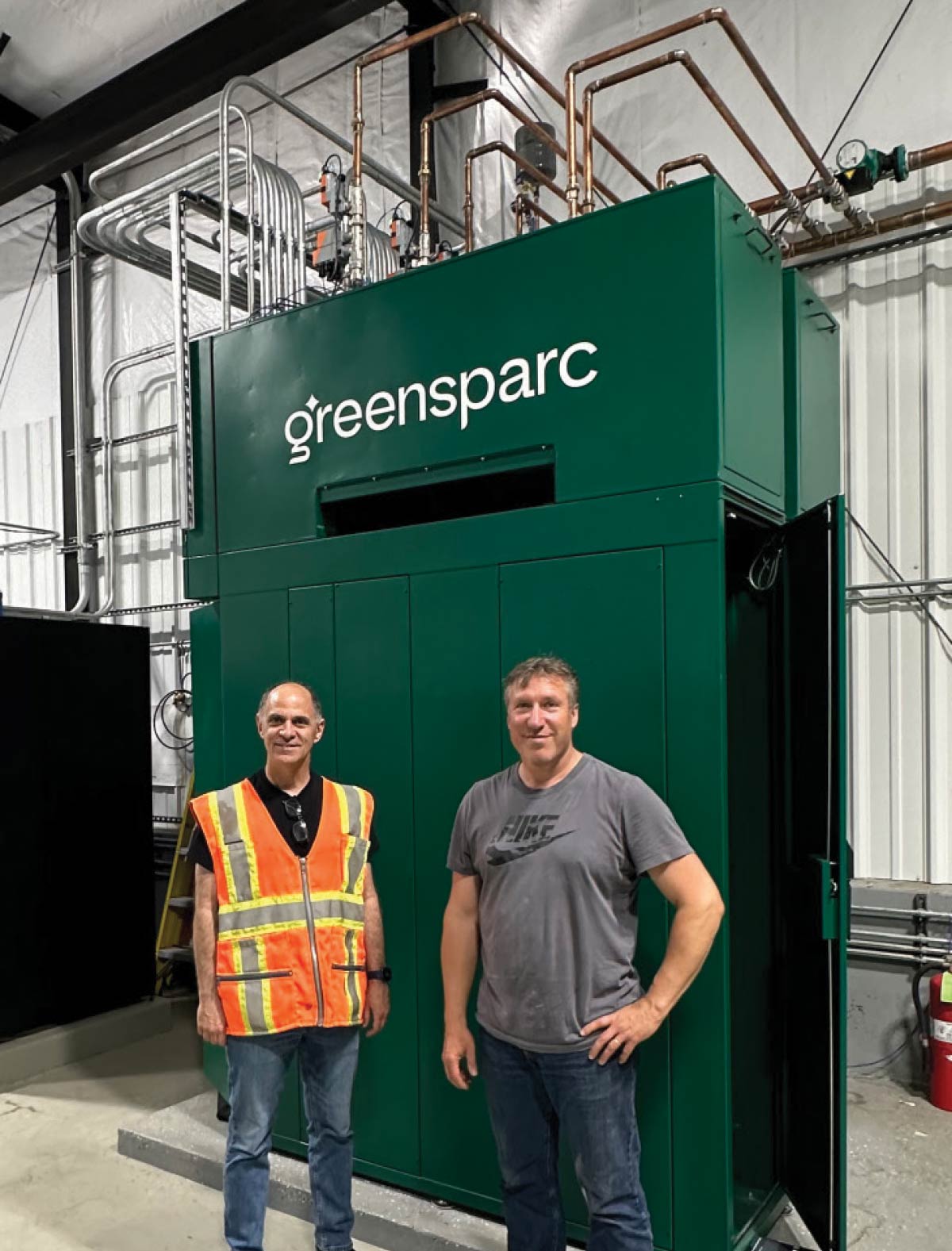
Clay Koplin
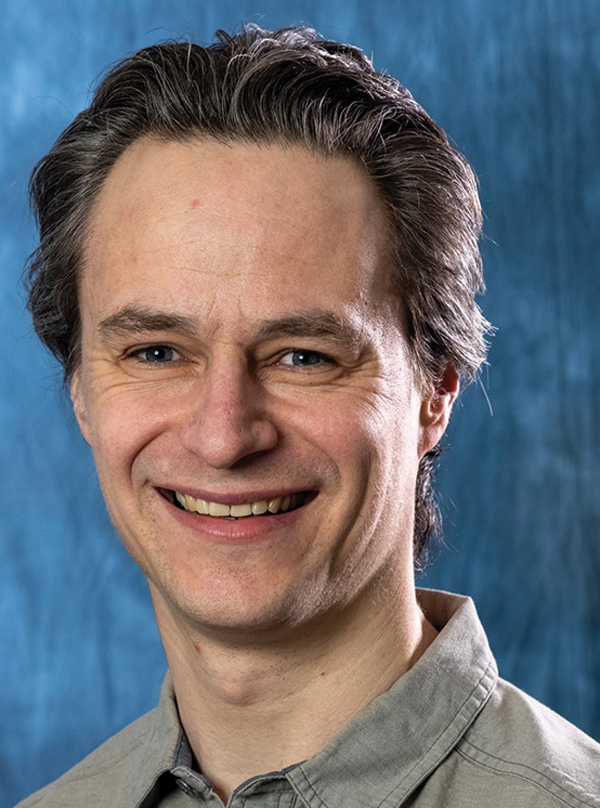
Tom Marsik
Recognizing the importance of energy in the Arctic, he decided to focus his doctoral research at UAF on sustainable energy systems. “Energy is such an important issue here, and with my background in engineering and looking where I can have the most positive impact, it made sense to do my PhD in Alaska and focus on energy-related issues,” he says.
Marsik now serves as professor of sustainable energy at UAF’s Bristol Bay Campus and Alaska Center for Energy and Power, and he has a joint position with the National Laboratory of the Rockies (known until December 2025 as the National Renewable Energy Laboratory) and the Cold Climate Housing Research Center.
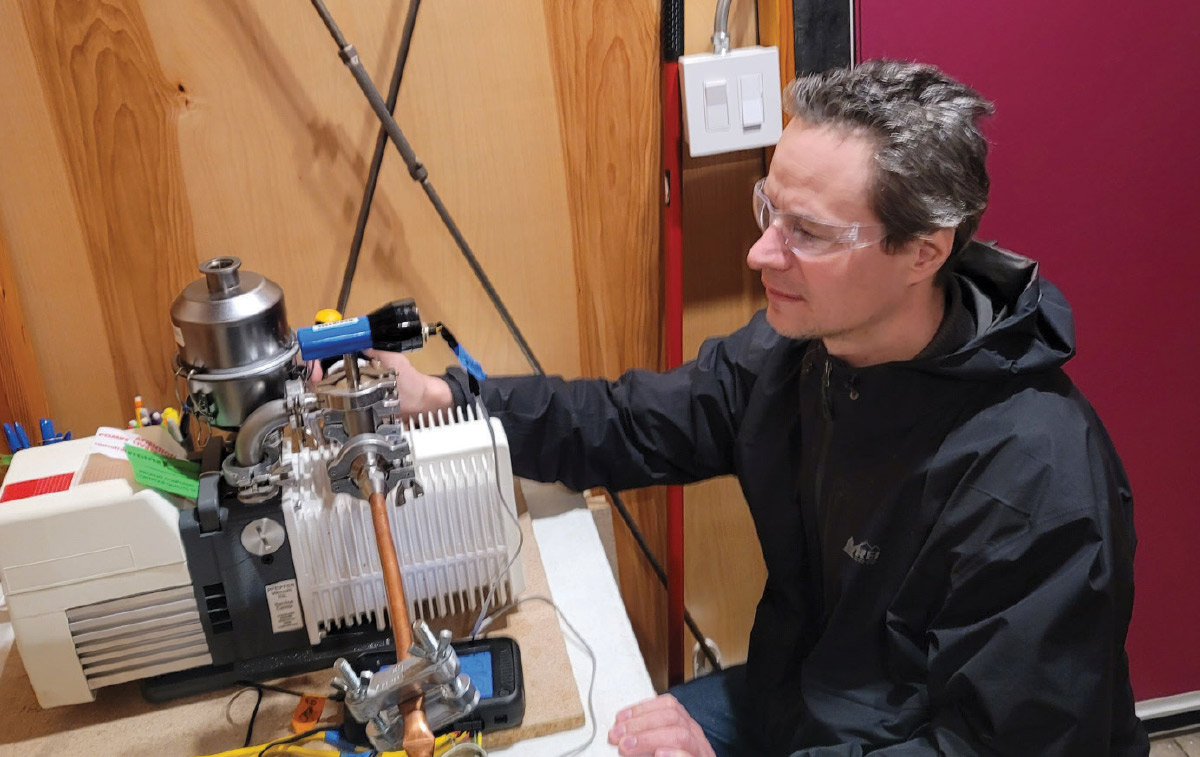
One of his most recognized inventions is the Arctic Dual Hood for heat recovery ventilation, a device designed to simplify the installation of heat recovery ventilation systems in cold climates. While conventional intake/exhaust vents for heat recovery ventilators tend to freeze up in cold climates, the Arctic Dual Hood uses a unique geometry that significantly reduces this issue.
Marsik’s work has always involved students, whom he sees as essential partners in innovation. “They are the future of this world,” he says. “They bring forward brilliant ideas, and we kick them back and forth, and that’s how we come up with working solutions.”
International collaboration also plays a key role in advancing Arctic energy solutions. “We are facing common challenges, so it only makes sense to work together on solving them,” Marsik says.
Looking ahead, one technology he believes could transform energy efficiency is active vacuum insulation, which dramatically increases insulating performance compared to conventional materials. “Vacuum is the best insulator—that’s what keeps your coffee or tea warm in a thermos bottle,” he says. “The same principle can be used for insulating buildings.” Though the technology is still evolving, Marsik believes its potential impact could be significant—especially for retrofitting older homes across Alaska.
Ultimately, however, his optimism about the future comes from the next generation. “When I think about the next generation of energy innovators in Alaska, I definitely think of my students,” he says. “There is so much creativity out there.”
And sometimes inspiration comes even closer to home.
“When I see my daughter come up with ingenious solutions that I haven’t thought of myself, it makes me smile,” he says. “Kids have brilliant ideas.”