








Prince of Wales, Alaska

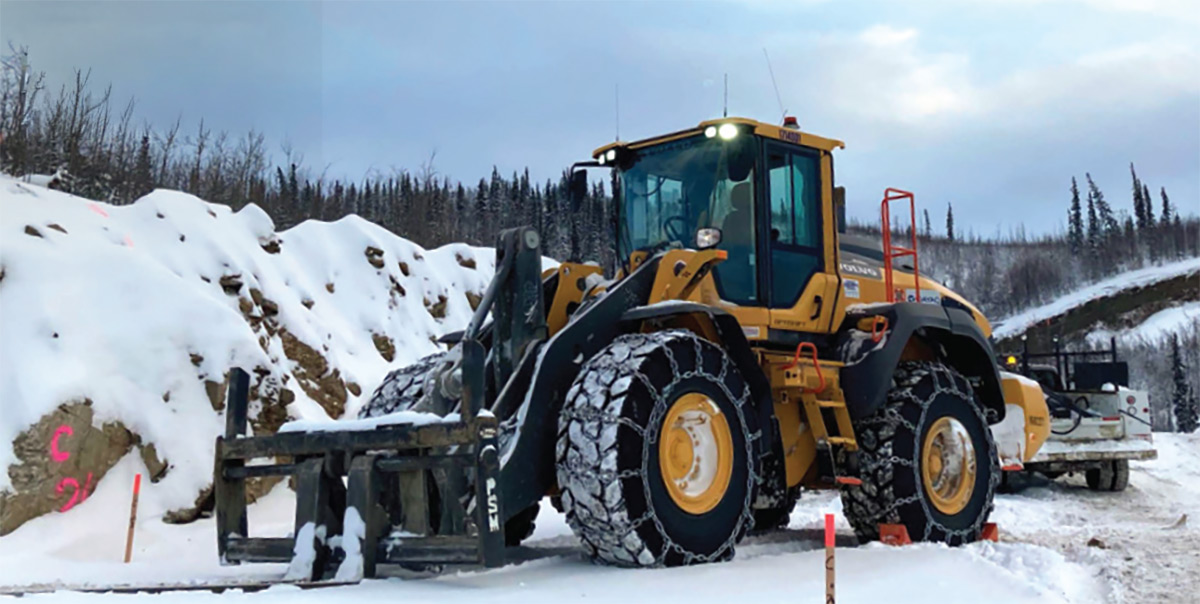
Learn more about what powerful, fuel efficient Volvo haulers can do for your operation.
Tok, Alaska

907.563.3822
Fairbanks
907.931.8808
Juneau
907.802.4242
Ketchikan
907.247.2228

Sales Rep.
Anchorage Branch

Sales Rep.
Anchorage Branch
In Alaska. The best sales and products support lineup.
In your corner. The winning team.
About The Cover
Highlights


Locally Sourced Solutions
At The Cookery, shaping tomorrow means building something that lasts. That’s why they trust First National Bank Alaska for personalized expertise and a banker who keeps pace with their goals. Through our One Solution approach, we deliver comprehensive tailored services to meet all The Cookery’s financial needs – helping them move forward with confidence, backed by the strength of Alaska’s largest community bank.

-
Editorial
Tasha Anderson, Managing Editor
Scott Rhode, Senior Editor
Rindi White, Associate Editor
Emily Olsen, Editorial Assistant -
PRODUCTION
Monica Sterchi-Lowman, Art Director
Fulvia Caldei Lowe, Production Manager
Patricia Morales, Web Manager -
BUSINESS
Billie Martin, President
Jason Martin, VP & General Manager
James Barnhill, Accounting Manager -
Sales
Charles Bell, VP Sales & Marketing
907-257-2909 | cbell@akbizmag.comChelsea Diggs, Account Manager
907-257-2917 | chelsea@akbizmag.comWeston Giliam, Account Manager
907-257-2911 | wgiliam@akbizmag.comTiffany Whited, Marketing & Sales Specialist
907-257-2910 | tiffany@akbizmag.com -
Contact
akbizmag.com | 907-276-4373
Press releases: press@akbizmag.com
Billing: billing@akbizmag.com
Subscriptions: circulation@akbizmag.com
From the Editor
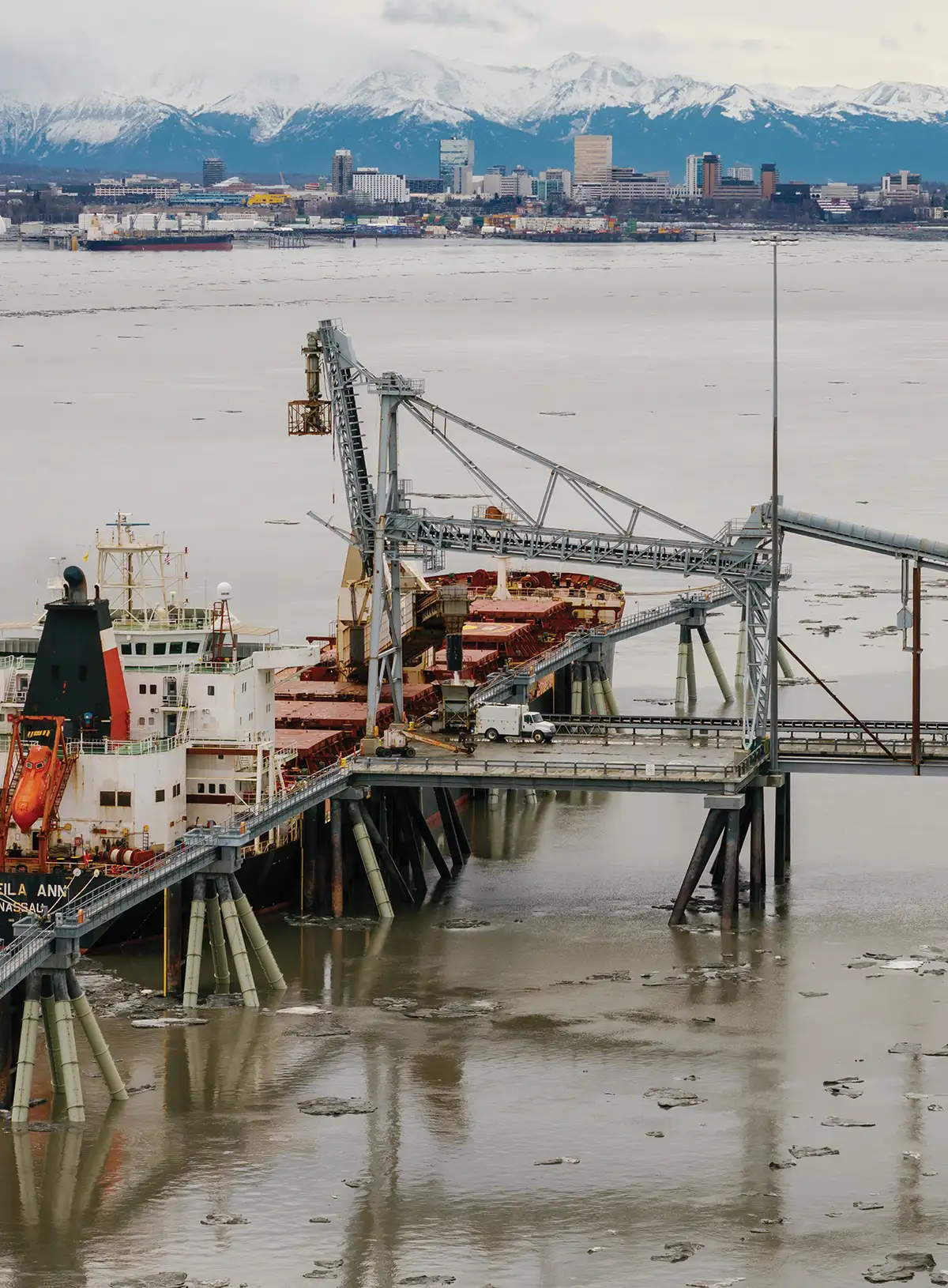
lthough located in the Matanuska-Susitna Borough, Port MacKenzie is only two miles from Anchorage, as the crow flies. Our readers can see that for themselves in the beautiful opening photo of the article “A New Ballgame” by Rindi White, which takes a look at the buildup of capabilities and activities at Port MacKenzie. The photo, taken by the incredible Kerry Tasker, shows the downtown Anchorage skyline, recognizable but just askew from the well documented and iconic view often photographed from Point Woronzof.
Port MacKenzie is undergoing a transition, evolving from being a viable alternative into, in certain circumstances, a port of preference.
For decades, the Don Young Port of Alaska has dominated the import of marine cargo into the state, in large part because, following the 1964 Good Friday Earthquake, it was believed that Anchorage was invulnerable to tsunamis like those that wrecked other Alaska ports. While we know today a tsunami at the Port of Alaska is possible, it remains unlikely.


multinational mining corporation and a nongovernmental fish advocacy group might seem like strange partners—but not in Alaska.
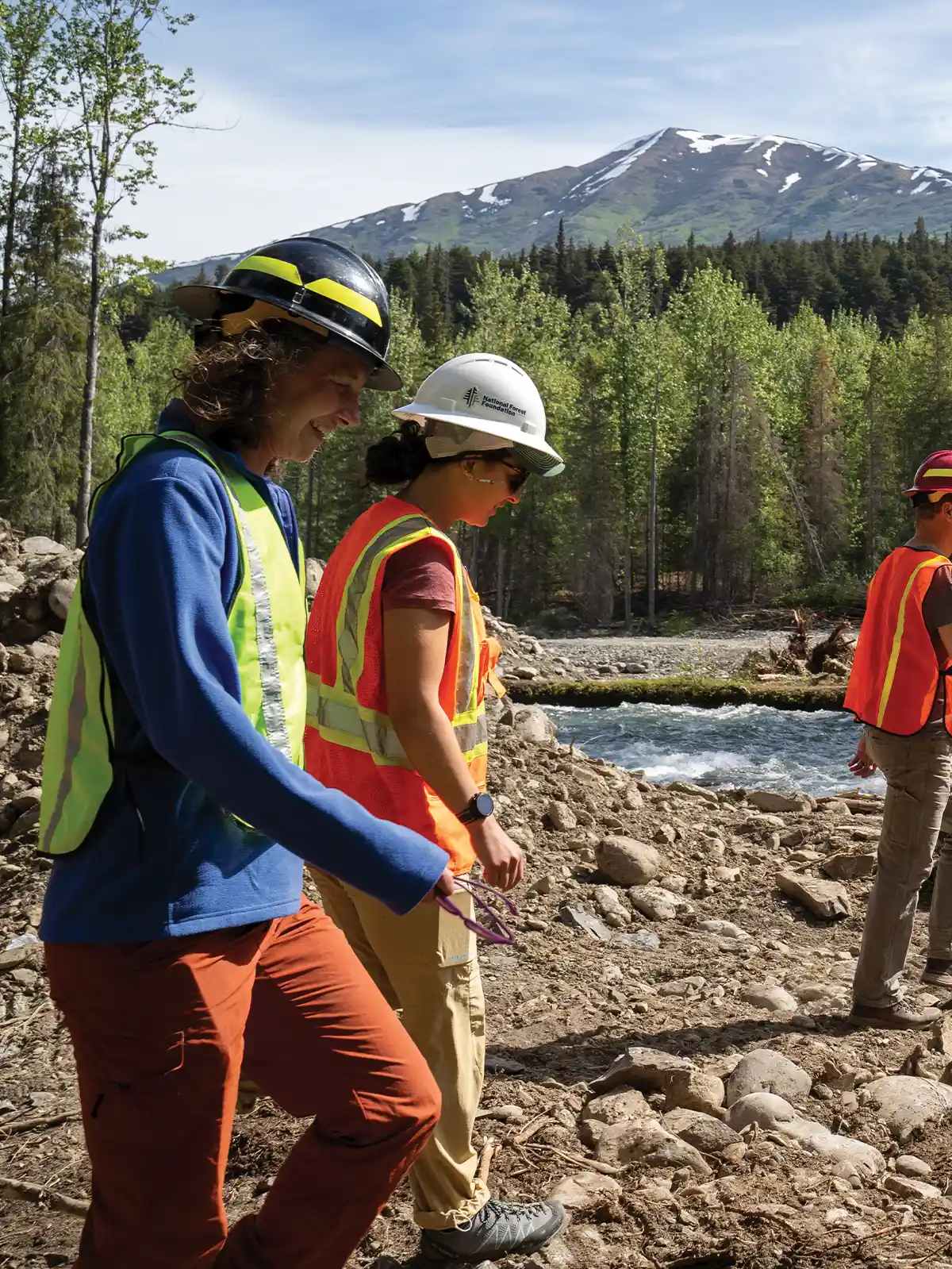
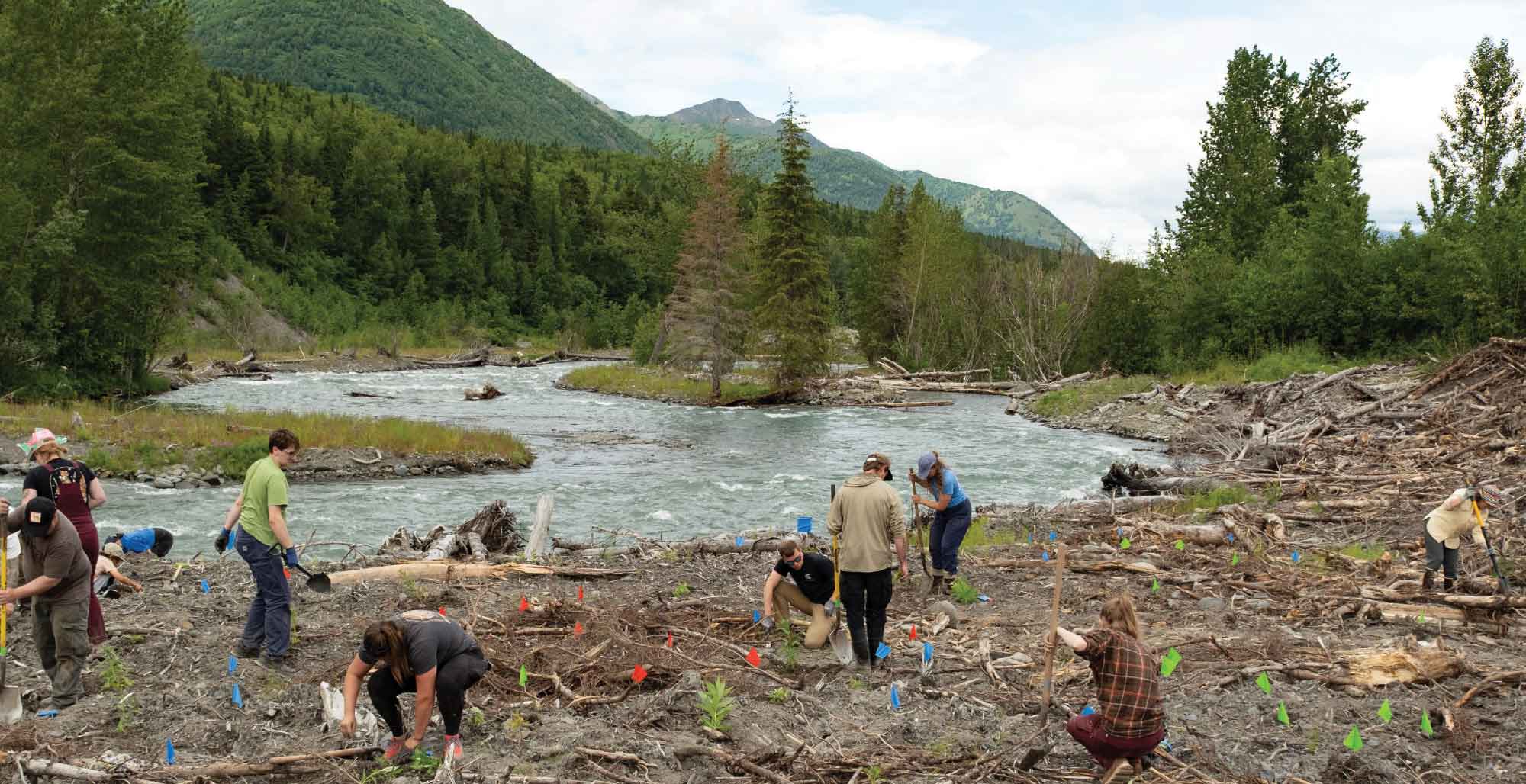
Kinross Alaska, the operator of Fort Knox gold mine north of Fairbanks, has worked with Trout Unlimited to take military veterans and active members of the armed forces fishing for several years, and now the organizations are collaborating to reclaim historic mining sites in the Turnagain Arm area under the Alaska Abandoned Mine Restoration Initiative. The inaugural project focuses on Resurrection Creek in Hope. The multi-year undertaking has been progressing since 2021 and is scheduled for completion this summer.
The historic project brings together mining companies, conservation organizations, the US Forest Service, the National Oceanic and Atmospheric Administration (NOAA), the National Forest Foundation, and others—all sharing the goal of improving Alaska’s fish habitat.
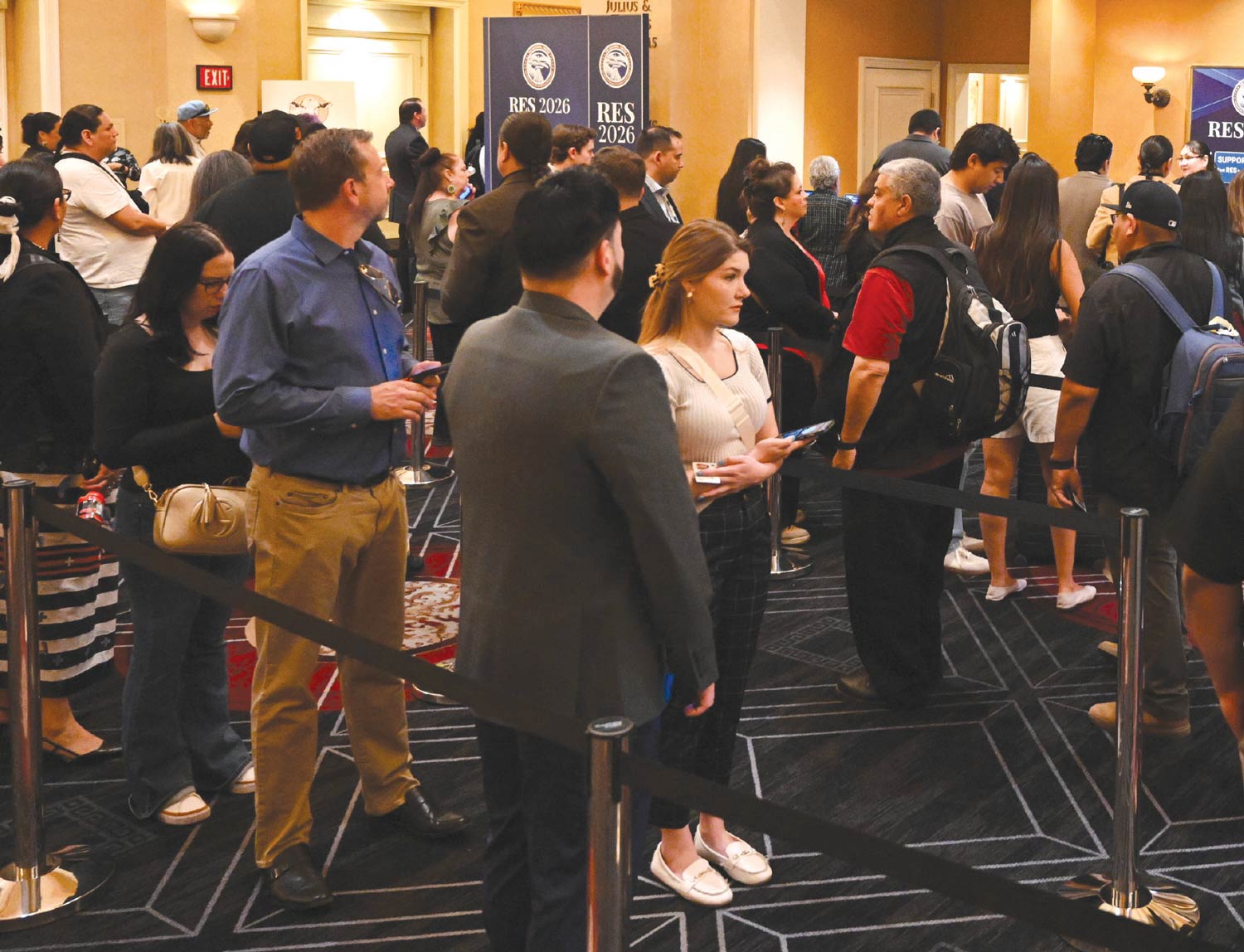
he snow in Alaska is long forgotten as the heat of the desert hits you the moment you walk off the plane. However, the work to make the National Center for American Indian Enterprise Development’s Reservation Economic Summit (RES) a success starts well before the winter weather, and even before summer sockeye runs hit the Last Frontier. Once at the conference, handshakes and hugs turn quickly into strategy discussions. Old relationships pick up where they left off, and new ones form with a clear sense of purpose. At RES, connection is not a side effect of the conference; it is where it all begins. The theme for the gathering in late March was “Rising Together.”
For Alaska Native leaders, business owners, and tribal representatives, RES has become one of the most important national stages to understand where Indian Country is headed—and where Alaska can learn and grow within it. Each year, RES brings together tribal governments, Native-owned businesses, federal agencies, and corporate partners from across the country. It is widely recognized as the largest Native-focused business conference in the United States.
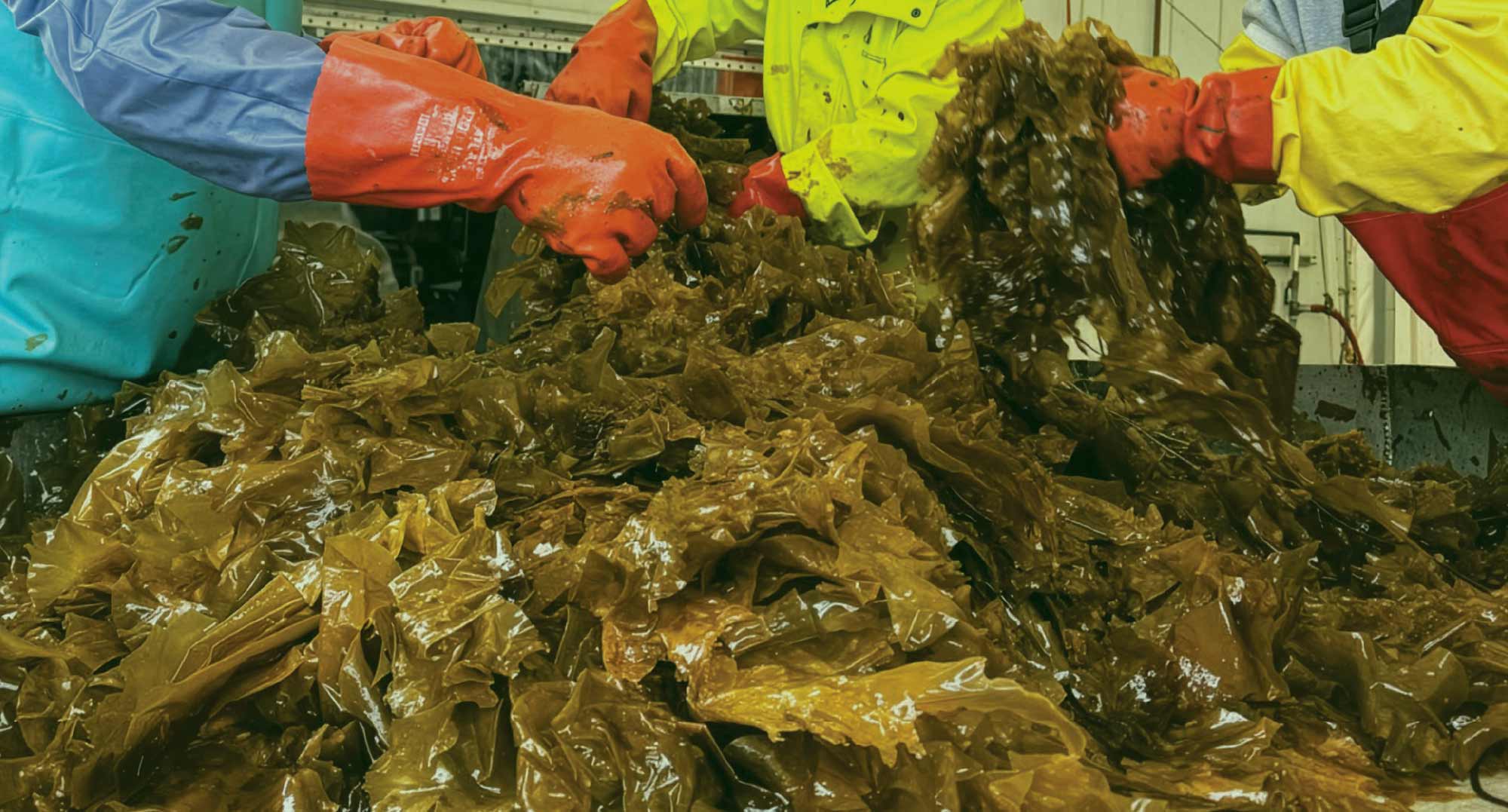
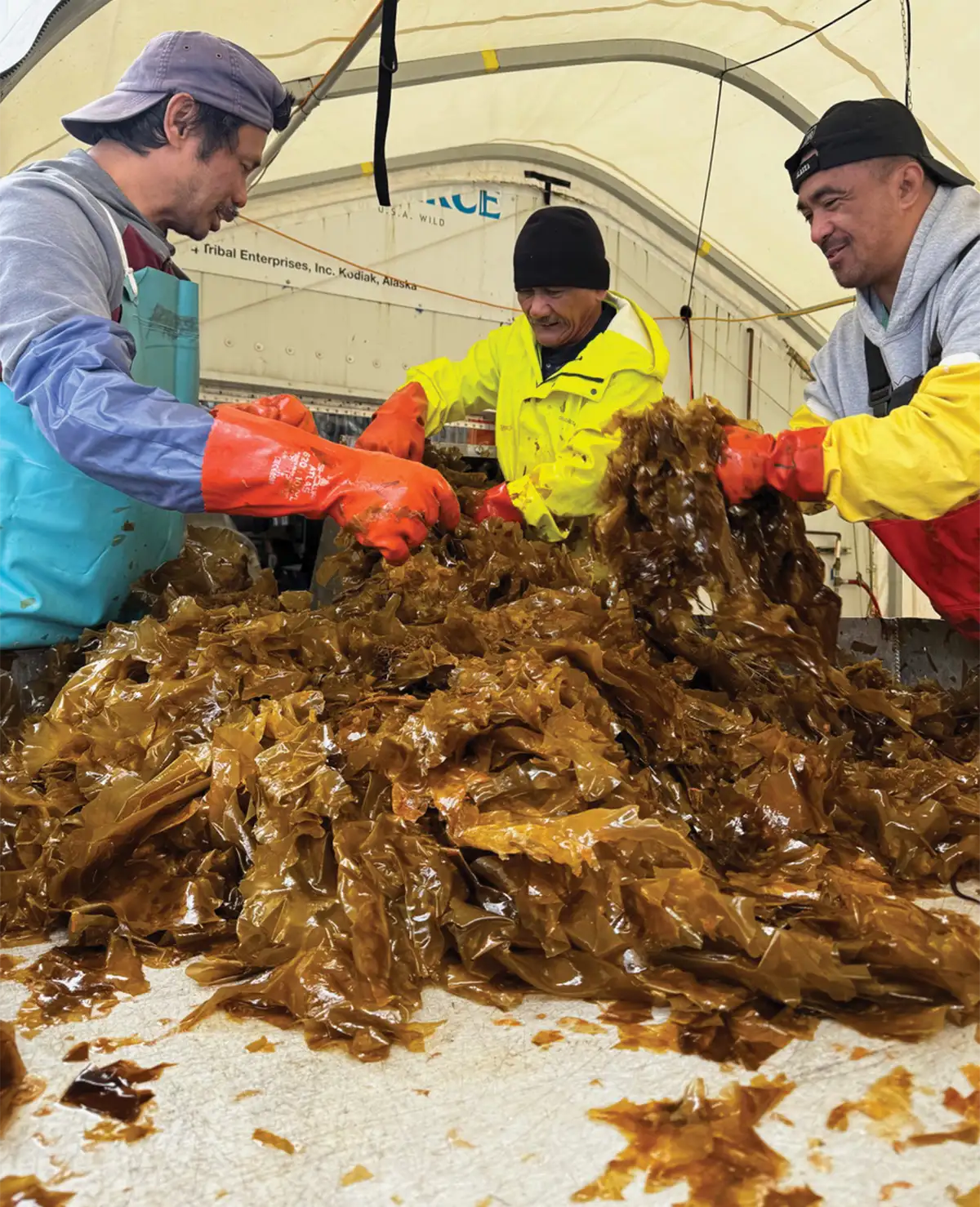
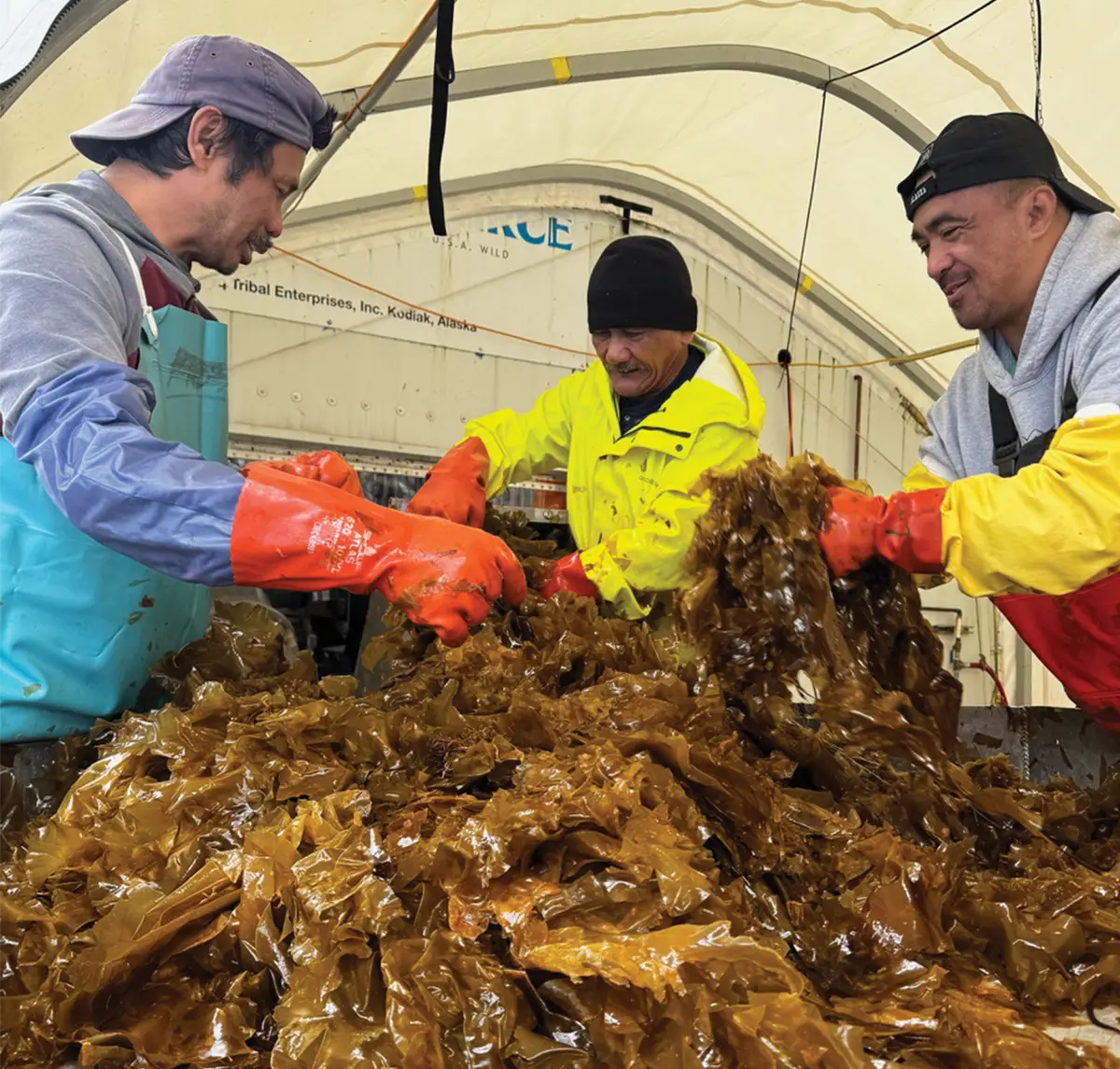
rom fishing line to fertilizer, food to medicine, kelp has a long history of use in Alaska Native technology. The state’s much newer formalized kelp industry, however, is still finding its way. When a major mariculture grant program ends this year, the kelp industry will face one of its biggest tests thus far.
“Shellfish and aquatic plants have historically been crucial to the subsistence and livelihoods of many Alaskans,” his order noted, yet the nascent industry had struggled to achieve more than modest profits. The stakes involved more than money; in the face of “future environmental threats,” kelp “can produce healthy foods and supplements, increase and preserve habitat for fish and invertebrates, and assist with bioremediation efforts in areas that contain excess carbon loads,” he wrote.
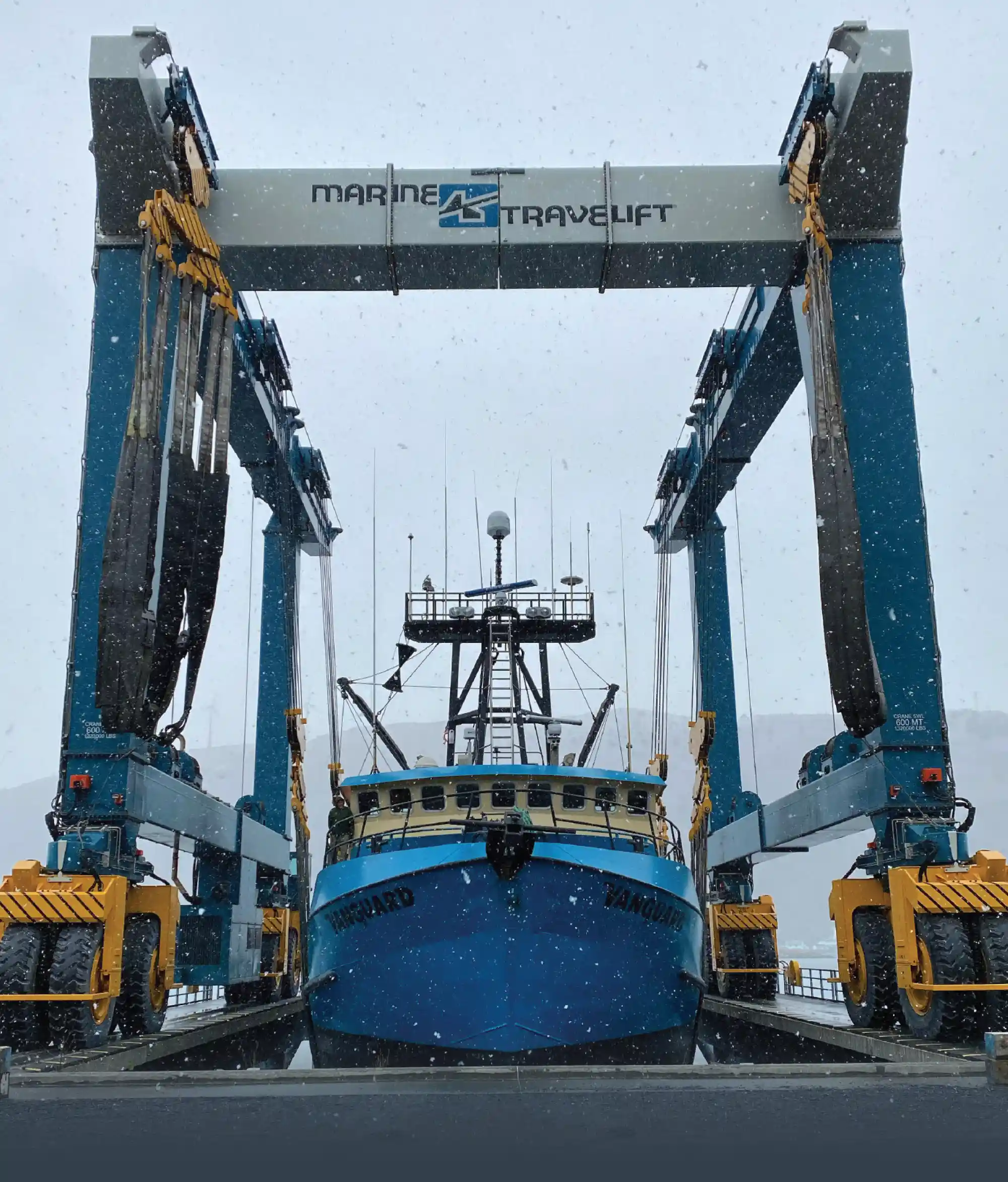
Commercial Diving and Marine Construction
Made in Alaska, by Alaskans!
Store and Sales – sales@highmarkmarine.com
Shipyard – ian@highmarkmarine.com

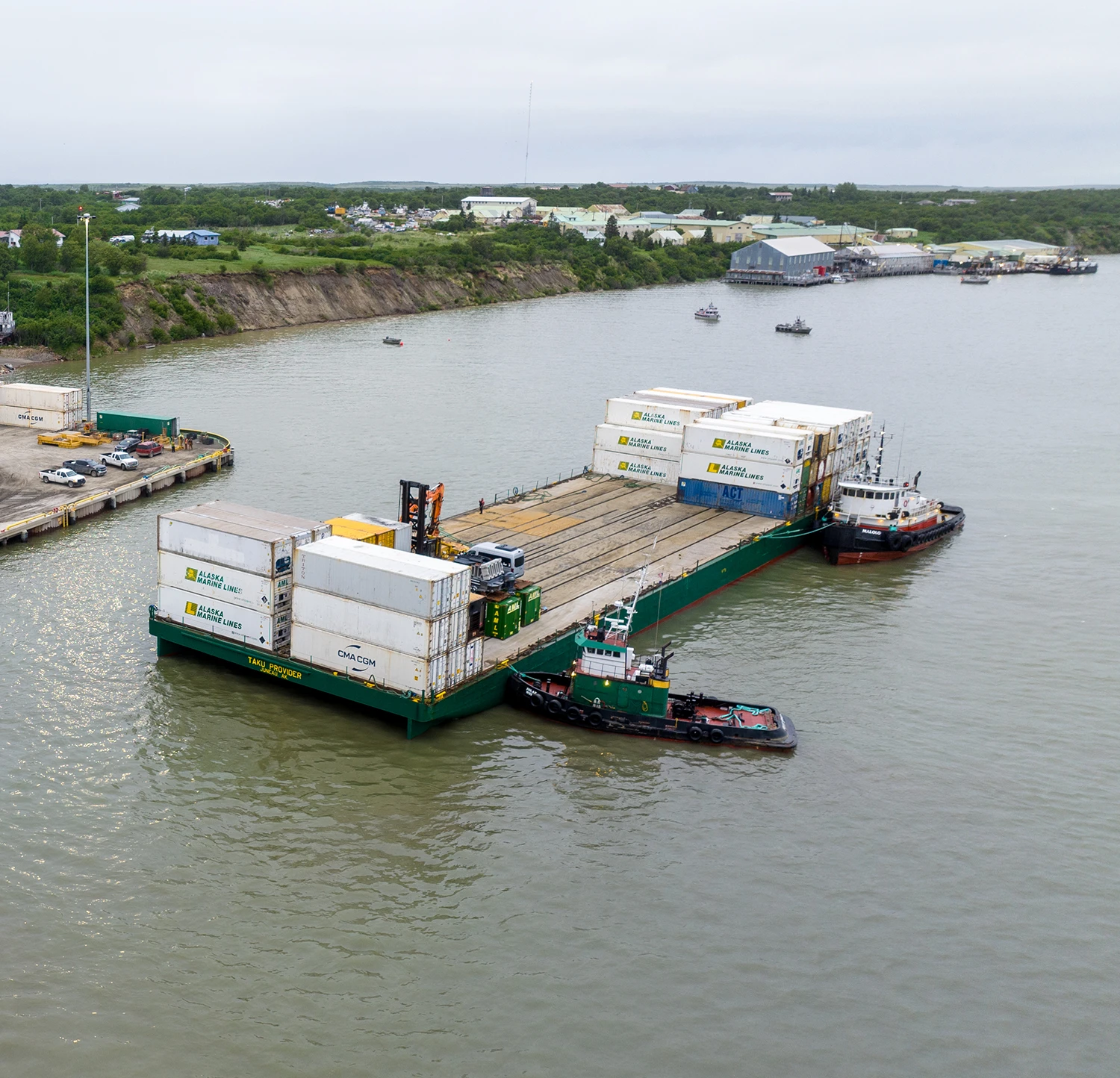
he Lynden family of companies prides itself on supporting Alaska’s seafood industry. Utilizing their vast array of transportation and logistics options—everything from barges covering the coastline of Alaska to Hercules cargo aircraft that reach even the most remote locations—they connect Alaska’s seafood to the world.
“We think of seafood logistics in two large components,” says Bret Harper, Vice President of Sales for Alaska Marine Lines, part of the Lynden family of companies. “Early in the year, fishermen and seafood processors need to position their boats and supplies in Alaska, so they are ready for the season. We move a lot of supplies up on our barges and other Lynden equipment. The first Western Alaska barge of the season is full of fishing boats and a great sight to see!”
s Body Renew Alaska evolves into its next chapter under incoming owner Aaron Miller, its focus is less on expansion for expansion’s sake. Rather, the fitness franchise’s focus is on returning to what made it successful in the first place. That means continual grounding in a specialized business model that can be difficult to maintain but essential to successful outcomes: a personal connection with clients and their unique fitness goals and journeys.
“At one point there were five Body Renew locations,” says Miller, who grew up in Anchorage. “Body Renew started really small. It was really a personal training studio that happened to sell memberships, and that’s really what their core was. Over time they expanded, they got bigger, they introduced more premium locations, and it transitioned to where it was just another gym, and it lost that personal touch.”
Come
together
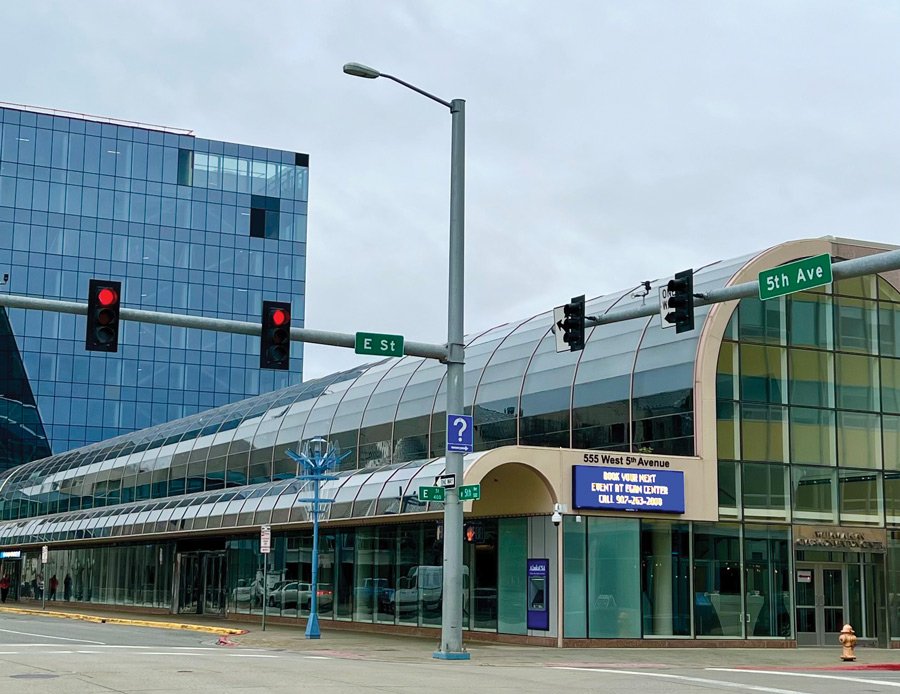


Events | Concerts | Conferences | Conventions | Banquets | Meetings | Trade Shows | Weddings | In-house Catering | Equipment Technology








Span Alaska’s owned network of terminals and equipment provides direct access to ~80% of Alaska’s population. This infrastructure ensures reliable, flexible service with tight control over quality and transit times.
LTL, Chill and Freeze, Hazmat and oversized cargo? We handle it all, managing all modes of transportation—LTL, truckload, rail, ocean, and air—to provide a single chain of control for dispatch, shipping, tracking, and billing.
Our direct, non-stop routing from our West Coast Service Centers to key hubs in Alaska improves transit times, minimizes handling, and reduces the risk of damage.
Leverage our logistics team to schedule pick up of your shipment from anywhere in the Lower 48 and schedule day-definite delivery throughout Alaska within our standard 1–2 days of vessel arrival.

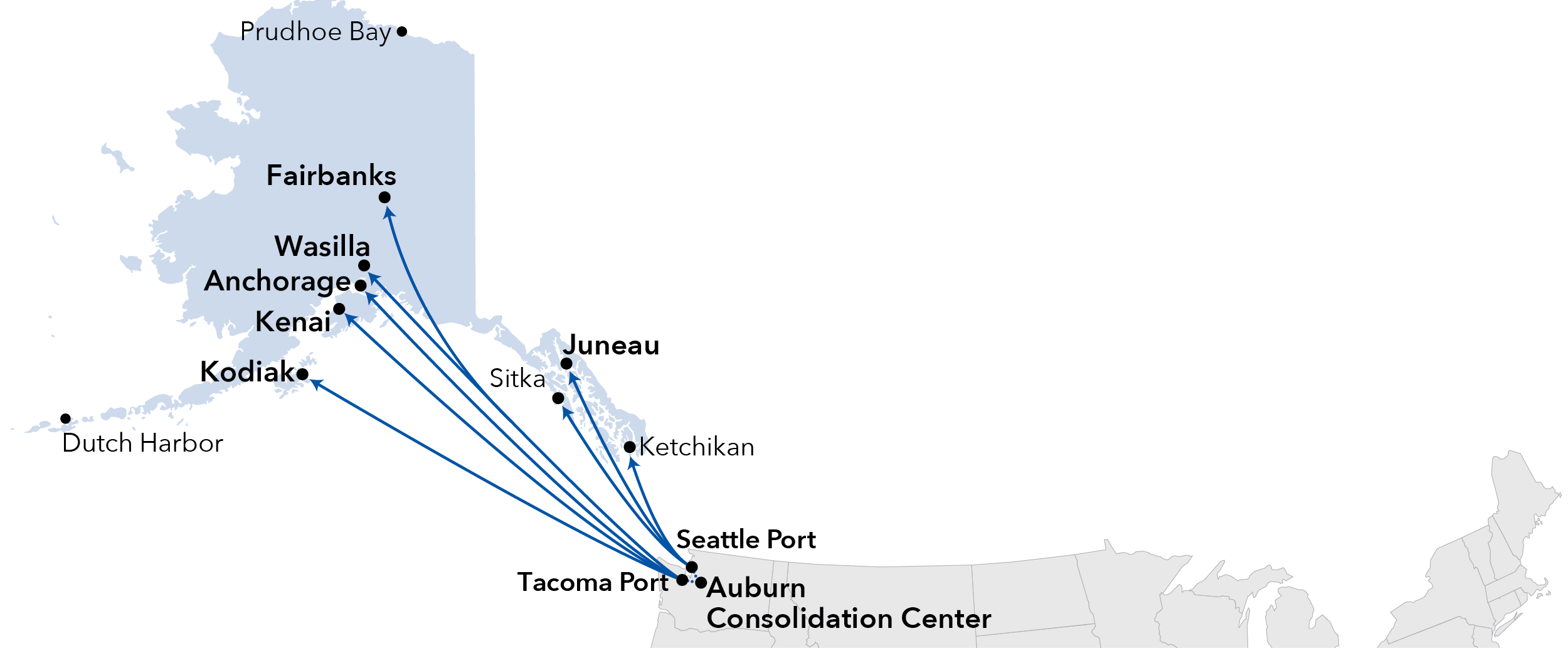



or a seemingly quiet little port about 40 miles from Wasilla, Port MacKenzie has a lot going on. From hosting participants in a military training exercise to being the jumping-off point for construction projects in western Alaska, the port maintains a hum of activity.
With large projects looming in Alaska—including a possible LNG pipeline from the North Slope; the West Susitna Access Road that would open up state land west of the Susitna River; a possible coal mine near Skwentna and other, nearer-term critical mineral mining efforts in the West Susitna area; and the completion of a railroad spur line from the Houston area south to the port—supporters hope that hum will soon sound more like a steady roar of activity.
“The exciting thing about Port MacKenzie is that we’re, in many ways, a diamond in the rough,” says Matanuska-Susitna Borough Port Director David Griffin. “We’ve barely scratched the surface of our possibilities.”
We live it.
Spotting trends and navigating turbulent waters can’t happen from behind a desk.
The insights come when we put on our hard hats and meet our clients where they are.
Schwabe, Williamson & Wyatt P.C.
420 L Street, Suite 400
Anchorage, AK 99501
(907) 339-7125

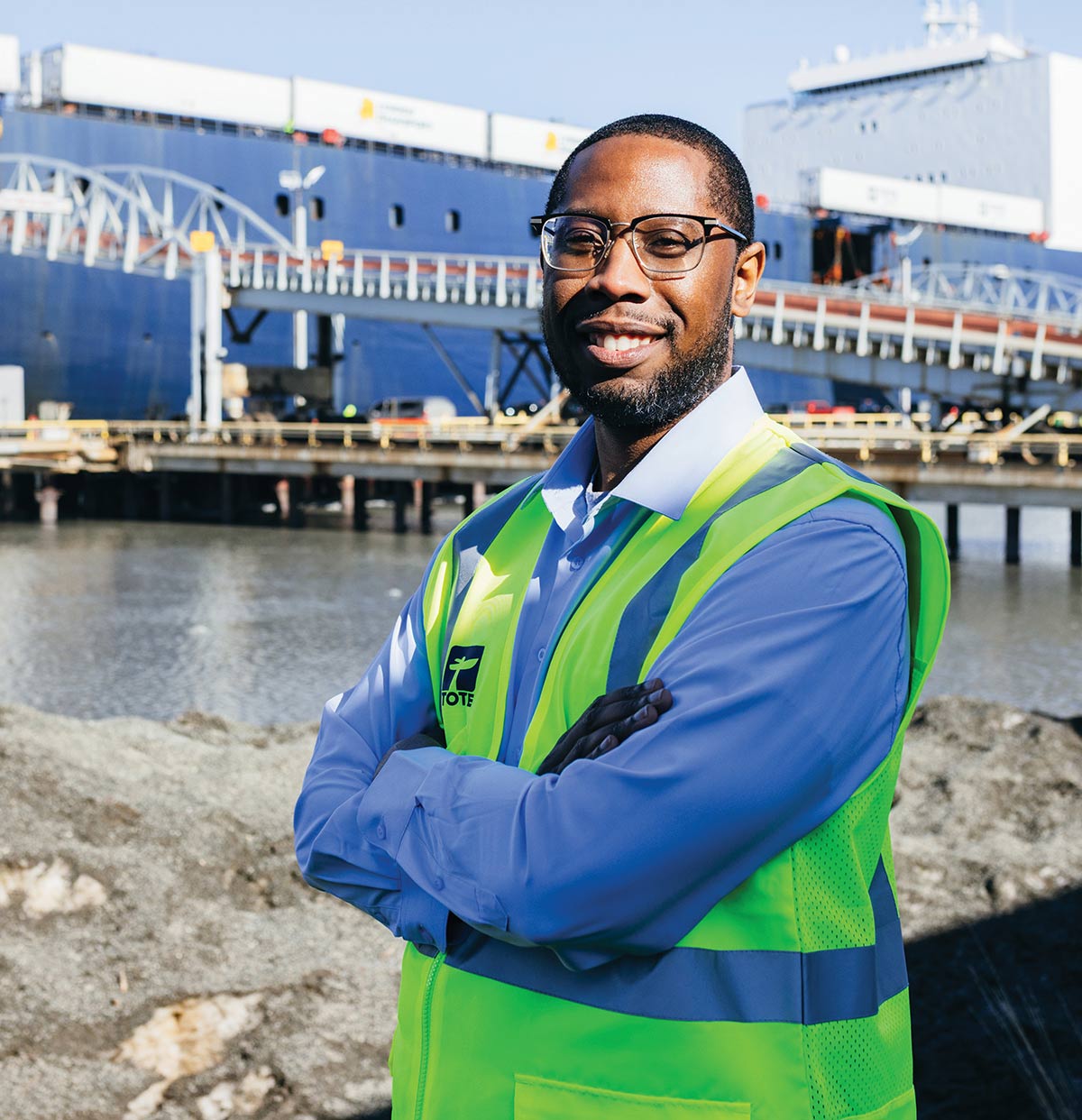
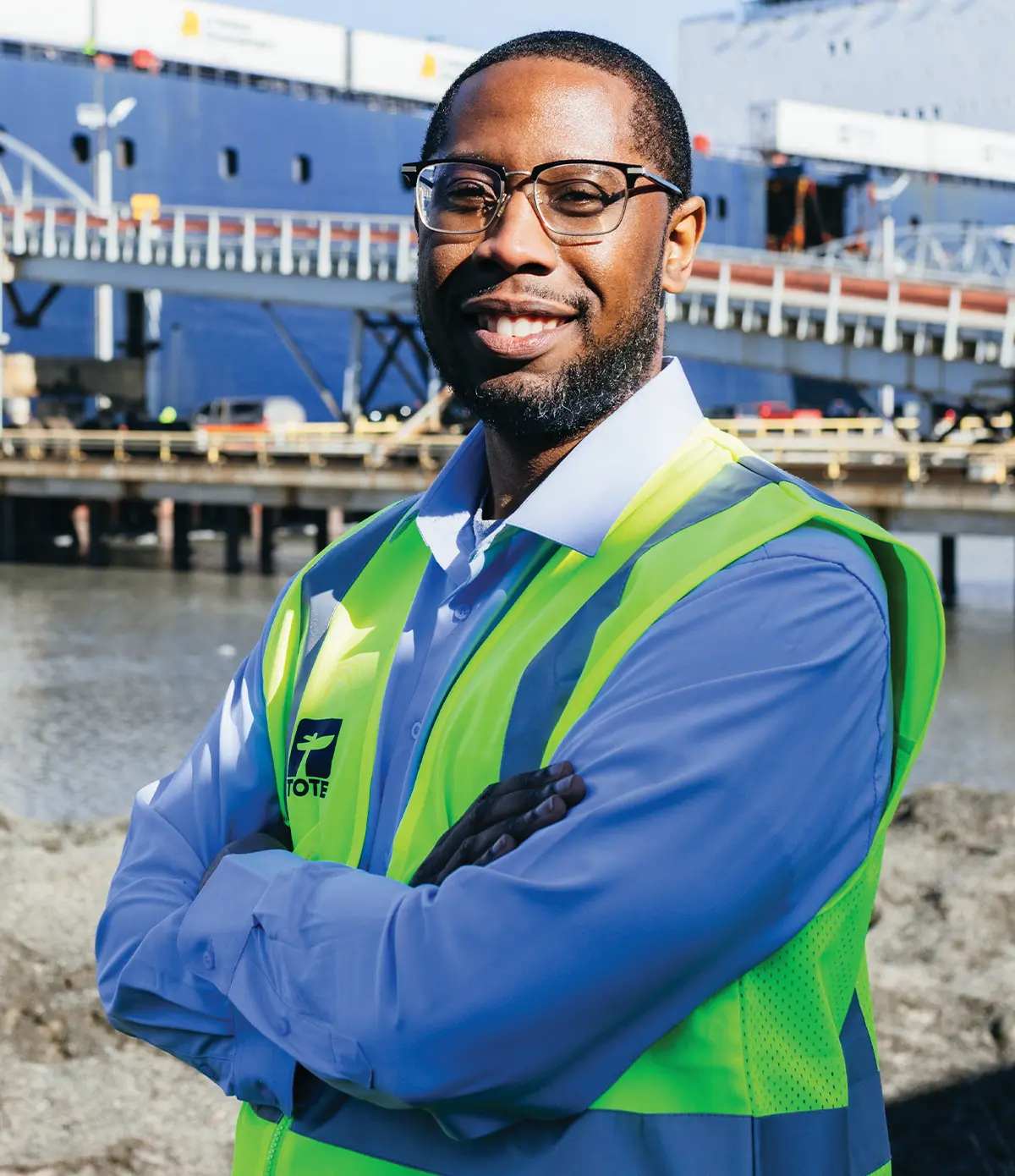
orey Nichols’ retail career has served him well—from Sam’s Club and Walmart to Amazon—and he brings that experience into his role as vice president and Alaska general manager for TOTE Maritime Alaska—a position he embarked on in December.
“I started in retail early in my career, and when a leadership role opened up, I moved into the management side,” says Nichols, who has a bachelor’s degree in environmental studies and an MBA from American Public University. “My openness to relocate is essentially what propelled my career. Being willing to move anywhere in the US took me to Washington, Colorado, and ultimately, Alaska.”
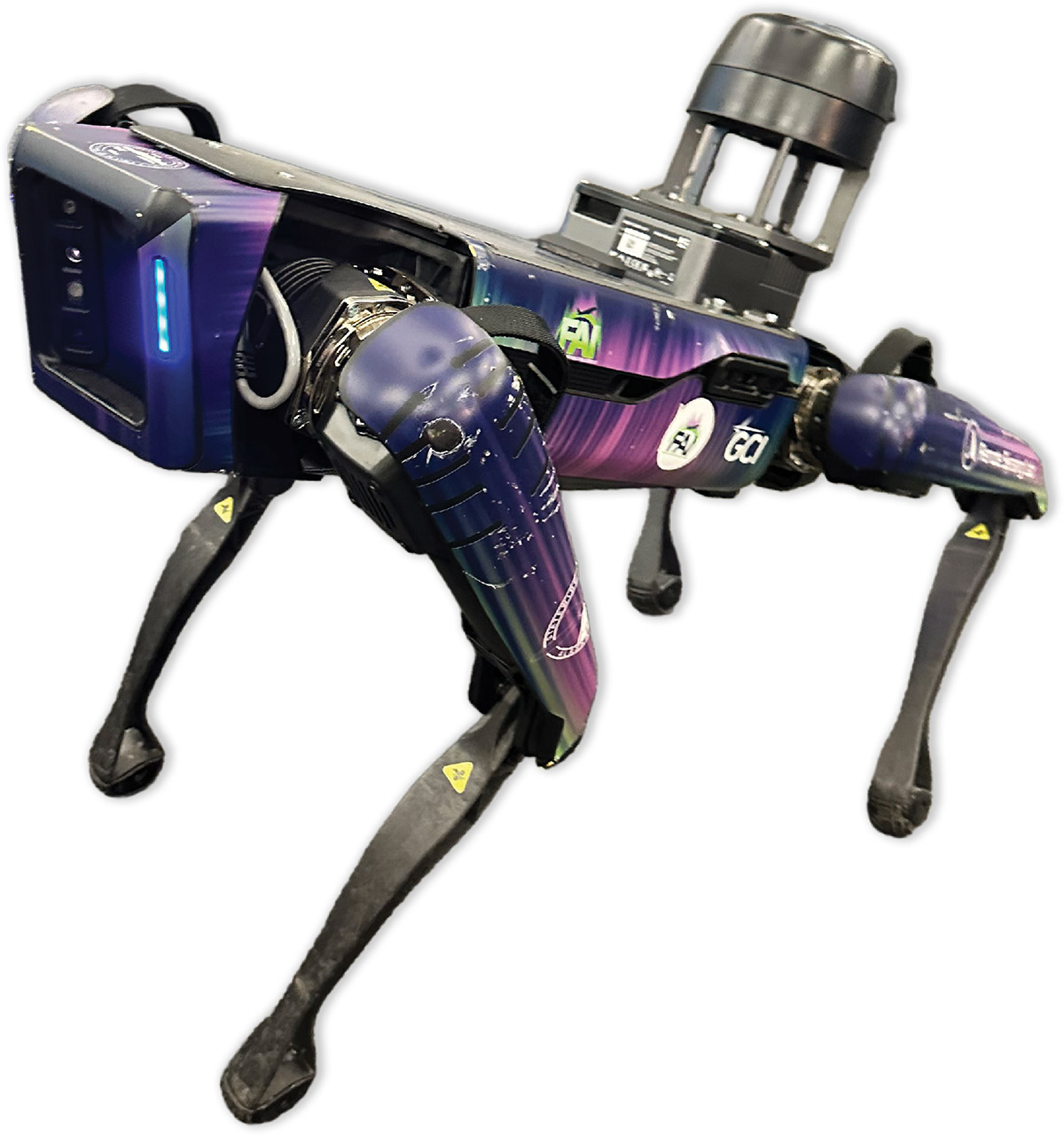
n the aftermath of Typhoon Halong last fall, emergency management officials examined the storm’s damage in a swath from Kuskokwim Bay to Nelson Island, all without setting foot on the ground. From a thousand miles away they assessed the situation in western Alaska thanks to the deployment of drone aircraft.
“Instead of trying to get personnel out to assess all these areas, you have the drones that are able to assess all of this infrastructure in real time,” said Stan Caldwell, director of the US Department of Transportation’s Strengthening Mobility and Revolutionizing Transportation grants program. He added that evaluating damage to roads, bridges, and other infrastructure in harsh winter conditions took hours, rather than days, thanks to the use of drones.

Providing Decades of Continuous Operational Presence Across Alaska
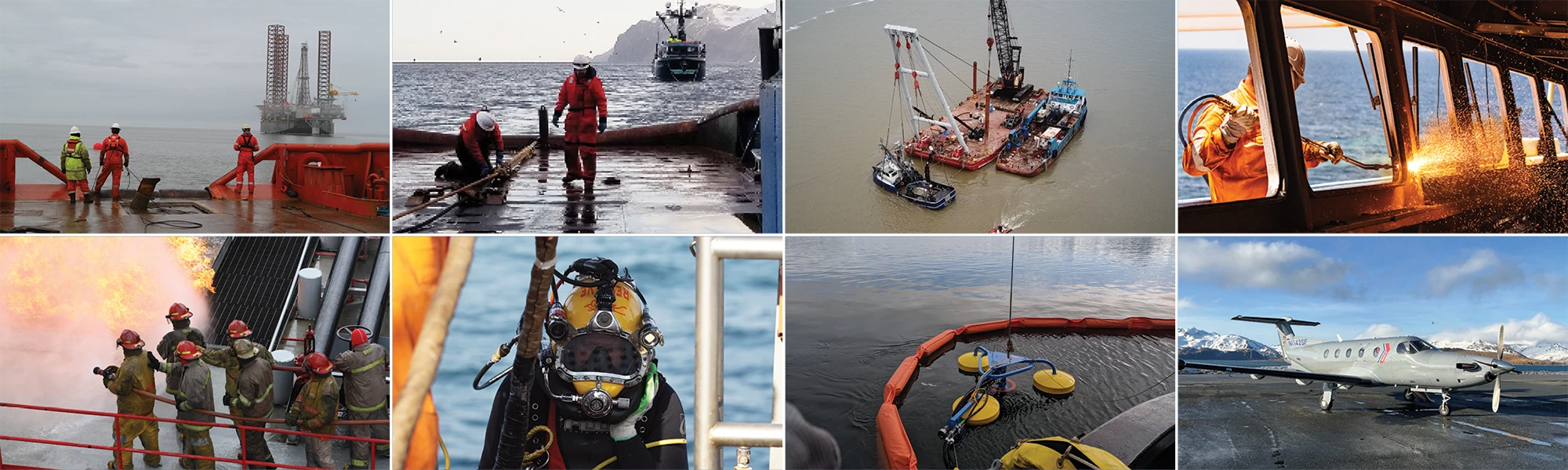
Aviation Charter Services ■ Marine Construction ■ Sommercial Diving ■ Wreck Removal
Disaster Relief & Debris Recovery ■ Fleet Maintenance & Repair Shipyard – Dutch Harbor
It Demands a Partner.
resolvemarine.com
Above
and
Beyond
By Rachael Kvapil
Everts Air
Everts Air
ommercial aviation is the safest way to travel—or so airlines have been saying since at least the ‘60s. But the industry has changed a lot since the advent of the Jet Age: it’s gotten orders of magnitude safer. By the late ‘90s, commercial carriers had less than one fatality per 2 billion miles flown, and rates continued to improve. From 2009 through 2024, there were zero fatal crashes of commercial passenger jets.
Aviation is a key mode of transportation in Alaska, especially for 82 percent of communities not connected to the state’s main road system. Flight operations in Alaska require strict adherence to federal safety regulations to ensure that passengers and cargo reach their destinations. Moreover, air carriers go beyond Federal Aviation Administration (FAA) regulations by developing additional safety policies and using advanced technologies to reduce risks for everyone involved.

ire beats cold. That elemental understanding explains the intuitive preference for internal combustion engines in Alaska’s climate. Combine that intuition with the observation that batteries, when stored in a freezer, lose their get-up-and-go, and Alaskans reasonably cast a skeptical eye on electric vehicles (EVs).
Furthermore, in communities where electricity prices are crushingly high, plugging in a two-ton appliance for daily recharging seems like madness.
“I certainly started with the presupposition that—in these rural, outlying Alaska communities like Kotzebue and Galena that rely on a lot of diesel generation for electric power and that get pretty cold in the winter—it might not be a good economic transition,” admits Michelle Wilber, a research engineer with the Alaska Center for Energy and Power, a laboratory based at UAF. “There might be a lot of energy used to keep the battery in the vehicle warm; very few people have warm garages to store their vehicles in; there would be a lot of energy, and that would translate into really high costs.”








The Boat Company
hile many tourism companies talk about the importance of protecting Alaska’s pristine beauty for future generations of travelers, one company is walking the talk—or perhaps more accurately, floating the boat.
The Boat Company is a mission-driven, luxury eco-cruise operation that has been offering immersive wilderness experiences in the Tongass National Forest since 1979. Unlike other cruise offerings, however, The Boat Company is the only not-for-profit cruise company in the world.
“We are really a unicorn when it comes to the travel industry; people scratch their heads when they hear about us because they don’t understand if we are a not-for-profit, a fishing tour operator, a cruise line, or a boat builder,” says Hunter McIntosh, president and executive director of The Boat Company. “At the end of the day, we’re a business. We’ve got to put heads in beds, otherwise, our not-for-profit work doesn’t exist.”

The Meeting:
February 1-5, 2027
1,400 participants
Estimated Economic Impact:
$1,348,218
Rooted in its mission to promote thriving communities through collaboration, communication, and education, the Forum drives substantive conversations on infrastructure, changing environments, energy innovation, and more. With the recent launch of a Job Training Certification track and a Career & Craft Fair, the event further highlights Alaskan workforce opportunity and artisanship.
Tanner Johnson, Community Programs Coordinator;
Jacquoi Porter, Finance Director;
Amy Penney, Deputy Director

The Meeting:
February 1-5, 2027
1,400 participants
Estimated Economic Impact:
$1,348,218
Rooted in its mission to promote thriving communities through collaboration, communication, and education, the Forum drives substantive conversations on infrastructure, changing environments, energy innovation, and more. With the recent launch of a Job Training Certification track and a Career & Craft Fair, the event further highlights Alaskan workforce opportunity and artisanship.
Meeting Champions (L-R):
Tanner Johnson, Community Programs Coordinator;
Jacquoi Porter, Finance Director;
Amy Penney, Deputy Director
Are you a member of an association?
Contact Visit Anchorage to bring your group to town:
meetings@anchorage.net | 907.276.4118

Motion and Flow Control Products
otion and Flow Control Products (MFCP) was founded in 1960 and offers customers distribution, services, and manufacturing support for hydraulic, pneumatic, electromechanical, and other industrial applications. Its goal is simple: “We strive to be your fluid power consultative advisor and premier solutions provider.”
Over the past sixty-six years, the company has built partnerships with sixty-nine manufacturers, suppliers, and third-party vendors—including being a leading distributor of Parker Hannifin industrial products—to ensure MFCP can meet customers’ varied equipment needs. And MFCP consistently finds itself on Industrial Distribution’s Big 50 list of the nation’s top industrial distributors, including as #39 in 2025.
Today, the privately held company has fifty-nine locations in eleven states across the Pacific Northwest, Western, and Rocky Mountain states, says Alaska District Manager Neil Shibe. Though headquartered in Littleton, Colorado, MFCP’s Alaska branches are run locally, which means the company has deep operational roots and teams who understand the state’s unique environment and industry requirements.





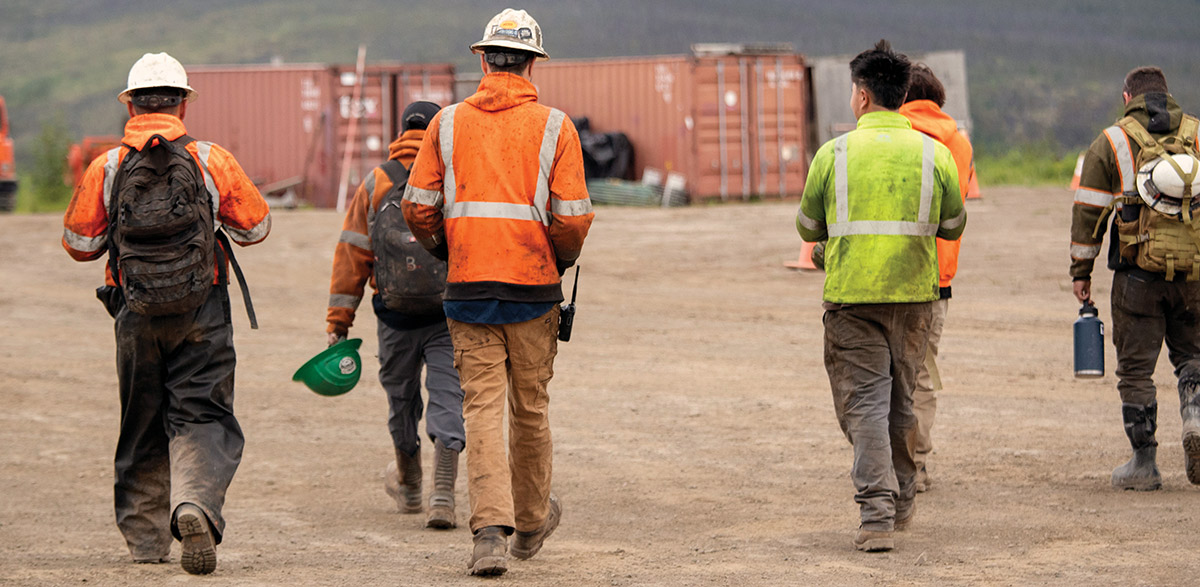
ong before any major mining company set foot in the Yukon-Kuskokwim region—where one of the world’s largest undeveloped gold deposits now sits—the gold was already known. Placer mining had been active in the area for decades, and the elders of the region’s Alaska Native corporations had taken note.
“Our elders specifically selected land in the hills above Crooked Creek because they knew gold was there,” says Andrea Gusty, president and CEO of The Kuskokwim Corporation, the Alaska Native village corporation that stewards the surface lands for ten villages along the middle of the Kuskokwim River’s course. “It was one of the priorities in land selections for the future of both our corporations.”
Beneath those surface lands, the mineral rights belong to Calista Corporation. Thom Aparuk Leonard, vice president of corporate affairs for the Alaska Native regional corporation, underscores the significance of the land claim. “By selecting the lands, the elders ensured that for any potential development, including the Donlin project, there would be direct oversight by the village corporation and the regional corporation,” he says.
Recklessness
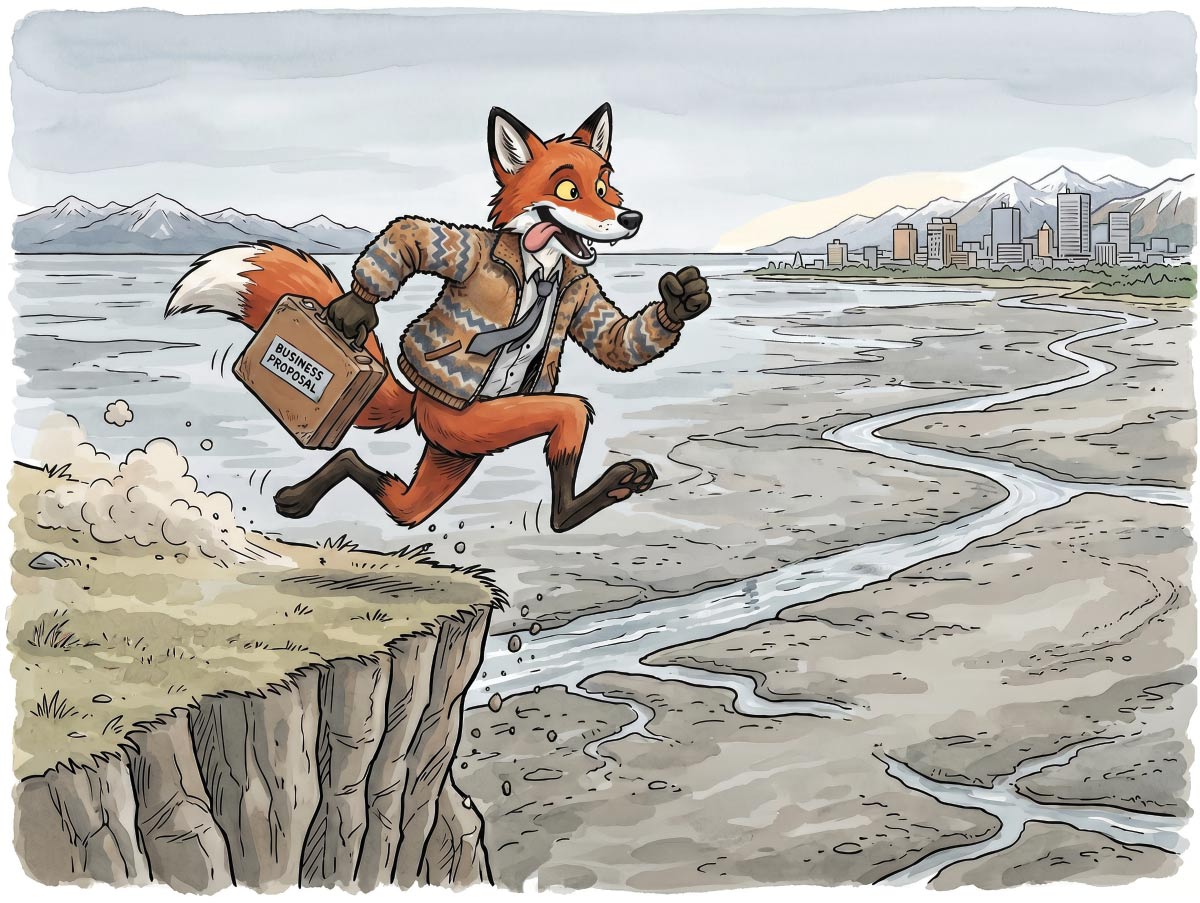
icture it: an 800-mile engineering marvel traversing Alaska’s rugged wilderness. An immense zinc mine powering Northwest Alaska’s economy. World-class sustainable harvests feeding global markets with seafood.
The Trans Alaska Pipeline System, Red Dog mine, and the Alaska fishing industry: These massive ventures represent high-stakes investments in infrastructure and resources that have transformed Alaska into a powerhouse of global energy, minerals, and food. Today, we call these ventures inspired, but that label masks a fundamental nuance and common misconception: there is a distinction between the risky and the reckless.
That line between bold visionary and reckless gambler is usually written in ink only after the dust settles and the checks clear. Winners are often labeled as geniuses while thousands of leaders who made similar bets but went bust are ignored. When you see any winner in the marketplace, their strategy can look like a guaranteed blueprint for success. This is survivorship bias in action, obsessing over the front-runners while ignoring the graveyard of those who made the same choices. Recklessness is a classic leadership trap, in part, because it is very easy to mistake good luck for repeatable strategy. Our brains are wired to find patterns in chaos, even when they don’t exist, and when a gamble pays off, it is easy to invent a story to explain why it worked. This explains, in part, why high-risk behavior is often rebranded as “visionary” in the business world.
ach March, Alaska Business invites readers from across the state to participate in the Best of Alaska Business Awards survey, one of our most anticipated annual traditions. This initiative gives voters the opportunity to recognize outstanding companies in their communities across more than thirty-five categories, highlighting the companies that help Alaska thrive.
The winners of the 2026 Best of Alaska Business Awards will be announced in the July issue, and the celebration continues beyond the magazine with a summer event designed to bring the community together.
Join us on July 16 from 5 p.m. to 7 p.m. when Alaska Business will host the Best of Alaska Business Summer Celebration at the Wildbirch Hotel in downtown Anchorage. The event will welcome winners, finalists, and professionals from across industries for an evening of celebration and connection. Attendees will enjoy live music, delicious food, refreshing cocktails, and interactive games in an energetic atmosphere on the sunny outdoor terrace.
The Summer Celebration is a signature event that highlights the achievements of businesses statewide while offering a fun and engaging networking experience.
Tickets are available to purchase at akbizmag.com/the-best-of-alaska-business/. The price is $35 per ticket. Readers and guests are encouraged to save the date and celebrate the best of the best in Alaska!
Part 43 of an ongoing video series.
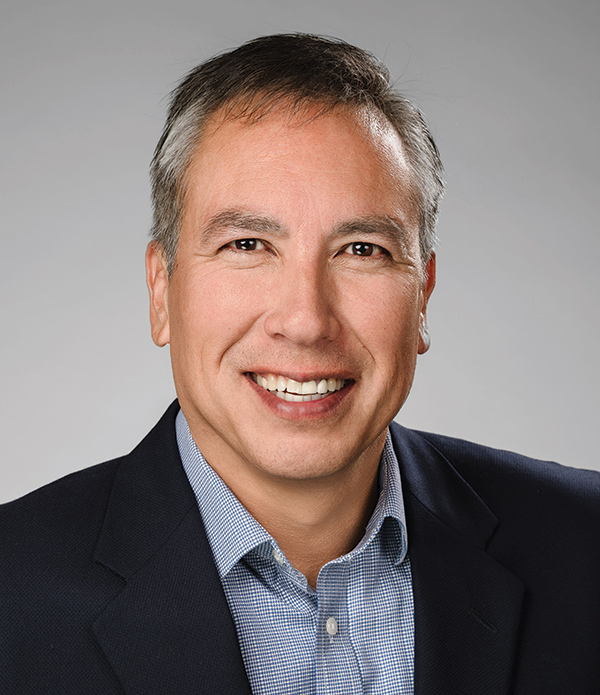
 The Alaska Native corporation for the Interior region has a new President and CEO for the first time in more than a decade. Dan Winkelman comes over from Yukon-Kuskokwim Health Corporation, where he was president and CEO, to take over for Aaron Schutt, who led Doyon, Limited since 2011. Winkelman is a member of the Shageluk Native Tribe and a Doyon shareholder. He holds a bachelor’s degree from the University of Oregon and earned a JD from the University of New Mexico. He joined Yukon-Kuskokwim Health Corporation in 2001 and had been CEO since 2014.
 Kathleen Benoit becomes the first female President in the firm’s seventy-five-year history. Benoit has been with Architects Alaska for thirteen years. Benoit holds a bachelor’s degree in design from the University of Florida, College of Architecture.
Alaska Trends
lying has become a commonplace form of travel, yet it remains a modern marvel. Hundreds of parts and pieces, equipment and hardware, software and human direction, must all work in sync to launch an aircraft into the air, propel it some distance, and allow it to land. Improvements in aviation safety continue daily, from updating runways and lighting to improving communications or fuel economy.
But not everything goes to plan every time. The Federal Aviation Administration records incidents involving airborne craft regardless of their severity. For incidents that result in a crash, injury, or death, in-depth investigations investigate the how, where, what, why, and when to build an evolving database that informs policies, procedures, and regulations for the next flight.
In this edition of Alaska Trends, we looked at data provided by the Federal Aviation Administration in “Air Traffic by the Numbers” published in June 2025 and “Wildlife Strikes to Civil Aircraft in the United States, 1990 – 2024” and were pleased to find that, even though the number of incidents may be high, great strides in aviation safety mean the numbers of injuries and casualties are remarkably low.
The Wright Brothers by David McCullough.
What charity or cause are you passionate about?
Food insecurity. I’m on the board of Turnagain Community Services.
What’s the first thing you do when you get home after a long day at work?
I change into sweatpants, and I check in on my family.
What vacation spot is on your bucket list?
Thailand.
If you could domesticate a wild animal, what animal would it be?
My favorite animal is a whale… Humpbacks, fin, blue, and gray whales: I love them all.
The Wright Brothers by David McCullough.
What charity or cause are you passionate about?
Food insecurity. I’m on the board of Turnagain Community Services.
What’s the first thing you do when you get home after a long day at work?
I change into sweatpants, and I check in on my family.
What vacation spot is on your bucket list?
Thailand.
If you could domesticate a wild animal, what animal would it be?
My favorite animal is a whale… Humpbacks, fin, blue, and gray whales: I love them all.
Off the Cuff
viation entered Sasha Swift’s life when she was an air traffic controller in the US Air Force, but she came to Girdwood in 2015 for the people. As a ramp agent for Alpine Air Alaska, she greeted guests, gave safety briefings, and loaded them into helicopters. She worked her way up to CEO when the company restructured its tourism and charter divisions.
“We do a lot of work all over the state with all the ‘ologists’ in remote locations,” says Swift of charter flights. Part of her job, too, is acting as a conduit between the operations team and maintenance team. Alpine Air Alaska fluctuates from about thirty year-round employees to about seventy in the summer.
Swift adds, “It’s mostly a people job, and the people are the most important thing to keep it running.”
- Airport Equipment Rentals
- Alaska Air Cargo - Alaska Airlines
- Alaska Mergers & Acquisitions, LLC
- Alaska Railroad
- Alaska School Activities Association
- Anchorage Convention Centers
- Anchorage Sand & Gravel
- Bristol Bay Native Corporation
- Chugach Alaska Corporation
- ConocoPhillips Alaska
- Conrad-Houston Insurance Agency
- Construction Machinery Industrial
- Cook Inlet Tug & Barge Inc.
- Craig Taylor Equipment
- Delta Constructors
- Denali Commercial
- Donlin Gold
- First National Bank Alaska
- Great Northwest Inc.
- Haskell Corporation
- Highmark Marine Fabrication, LLC
- Home Instead - HI Southern Alaska, Inc.
- JD Steel Co Inc.
- Joint Base Elmendorf-Richardson
- Kinross Alaska
- Kloosterboer Dutch Harbor
- Lynden
- Lynden
- Matson Inc.
- Northern Air Cargo
- Northern Air Cargo
- Oxford Assaying & Refining Inc.
- Petro Marine Services
- PND Engineers, Inc.
- Port Mackenzie
- Resolve Marine
- Rural Energy Enterprises
- Schwabe, Williamson & Wyatt, P.C.
- Seward Fishing Club
- Sourdough Express, Inc.
- Span Alaska Transportation LLC
- Stellar Designs Inc.
- T. Rowe Price
- The Wildbirch Hotel
- TOTE Maritime Alaska LLC
- Visit Anchorage

907.456.2000
907.522.6466
907.659.2000
907.895.9898
907.474.2000
907.335.5466
Fairbanks
907.456.2000
Anchorage
907.522.6466
Prudhoe Bay
907.659.2000
Delta Junction
907.895.9898
The Rental Zone
907.474.2000
Kenai Peninsula
907.335.5466