

Alaska Trends
lying has become a commonplace form of travel, yet it remains a modern marvel. Hundreds of parts and pieces, equipment and hardware, software and human direction, must all work in sync to launch an aircraft into the air, propel it some distance, and allow it to land. Improvements in aviation safety continue daily, from updating runways and lighting to improving communications or fuel economy.
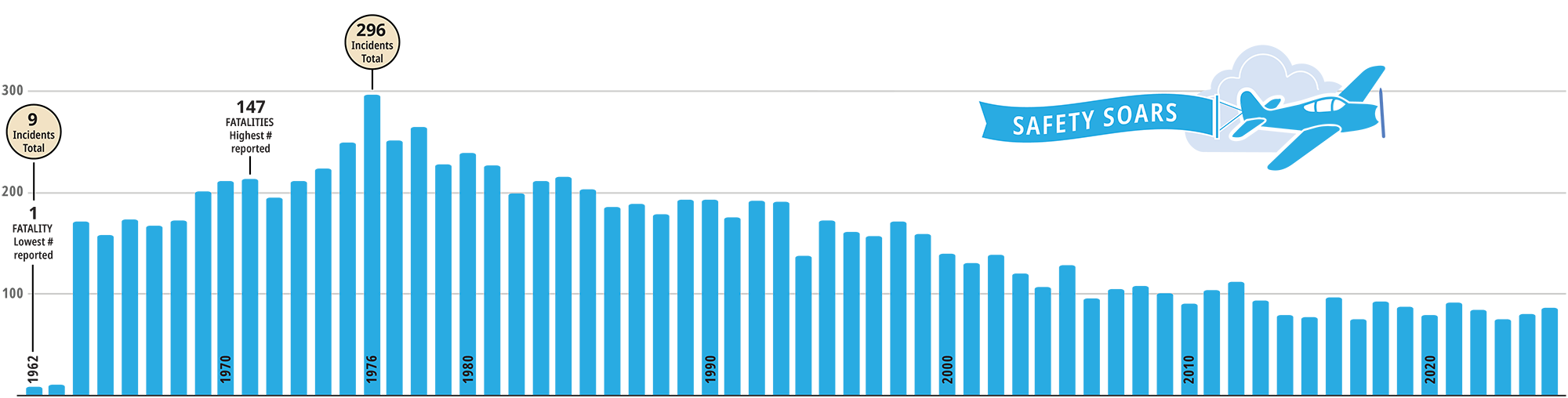
But not everything goes to plan every time. The Federal Aviation Administration records incidents involving airborne craft regardless of their severity. For incidents that result in a crash, injury, or death, in-depth investigations investigate the how, where, what, why, and when to build an evolving database that informs policies, procedures, and regulations for the next flight.
In this edition of Alaska Trends, we looked at data provided by the Federal Aviation Administration in “Air Traffic by the Numbers” published in June 2025 and “Wildlife Strikes to Civil Aircraft in the United States, 1990 – 2024” and were pleased to find that, even though the number of incidents may be high, great strides in aviation safety mean the numbers of injuries and casualties are remarkably low.
flight plans were filed in 2024.
of flights ended with an incident report in 2024.
aircraft were registered in Alaska in 2024.
1962-2025
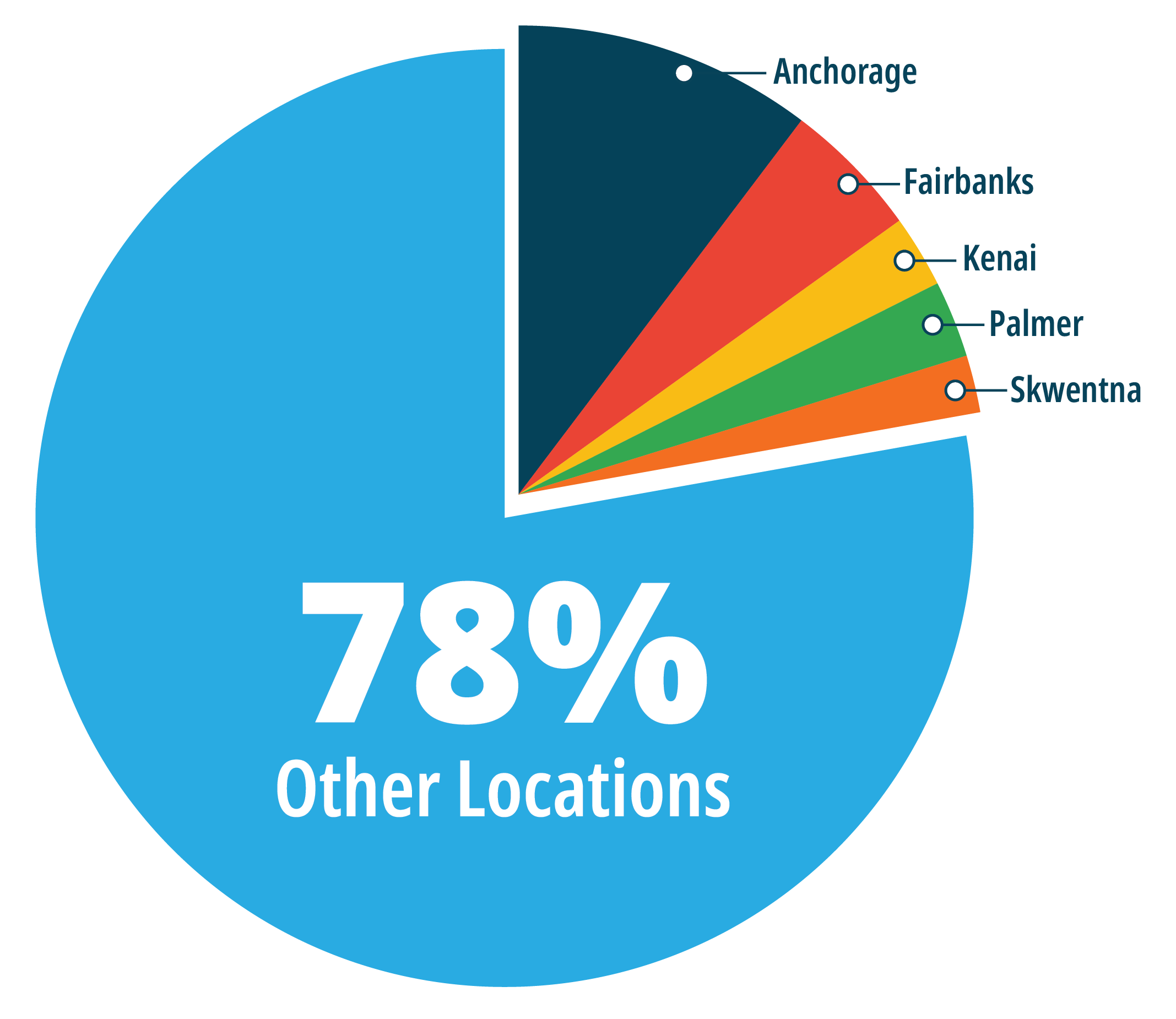

reported involved amateur built planes between 1962 & 2025.

reported were the result of a ptarmigan between 1962 & 2025

reported were the result of a red fox between 1962 & 2025.
