

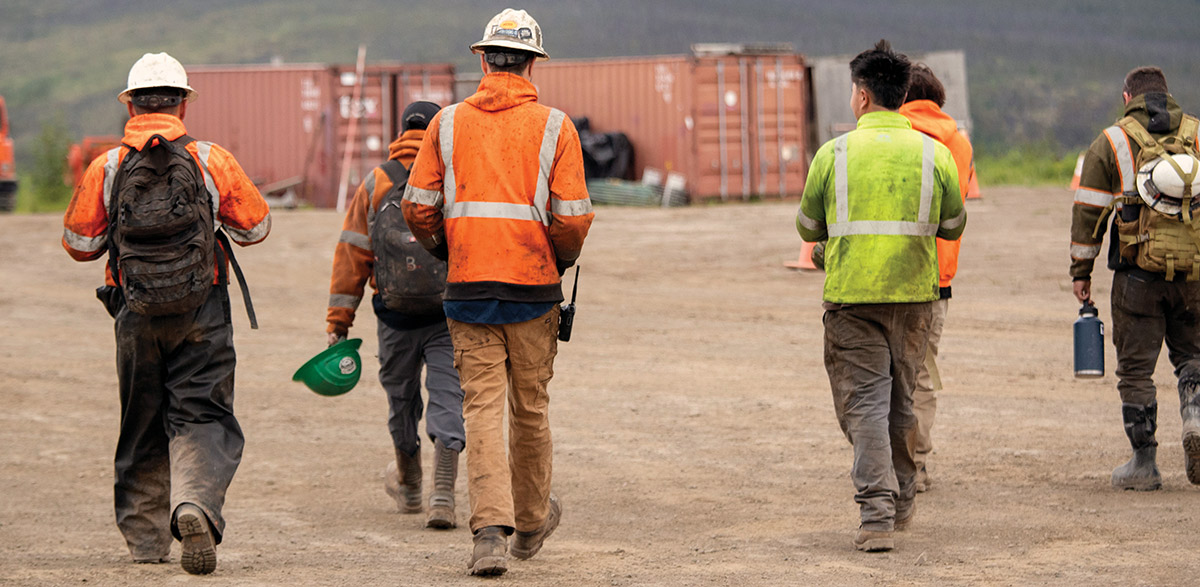
ong before any major mining company set foot in the Yukon-Kuskokwim region—where one of the world’s largest undeveloped gold deposits now sits—the gold was already known. Placer mining had been active in the area for decades, and the elders of the region’s Alaska Native corporations had taken note.
“Our elders specifically selected land in the hills above Crooked Creek because they knew gold was there,” says Andrea Gusty, president and CEO of The Kuskokwim Corporation, the Alaska Native village corporation that stewards the surface lands for ten villages along the middle of the Kuskokwim River’s course. “It was one of the priorities in land selections for the future of both our corporations.”
Beneath those surface lands, the mineral rights belong to Calista Corporation. Thom Aparuk Leonard, vice president of corporate affairs for the Alaska Native regional corporation, underscores the significance of the land claim. “By selecting the lands, the elders ensured that for any potential development, including the Donlin project, there would be direct oversight by the village corporation and the regional corporation,” he says.
Donlin Creek, a tributary of Crooked Creek that ultimately flows into the Kuskokwim River, attracted the attention of prospectors in 1909. Further exploration commissioned by Calista revealed a resource that, nearly a century after the initial discovery, would justify building one of the world’s largest gold mines.
After nearly three decades of exploration, ownership changes, and regulatory milestones, the Donlin Gold project is picking up momentum—driven by new ownership, strong drill results, and a community partnership built over generations.
But Barrick, with many large projects across its global portfolio, decided to exit Donlin Gold and focus elsewhere. That departure, completed in 2025, opened the door to a pivotal ownership restructuring. Hedge fund billionaire John Paulson acquired the majority of Barrick’s stake, while NOVAGOLD purchased the remainder, giving NOVAGOLD 60 percent ownership of the joint venture and Paulson 40 percent. The result is a joint venture unified behind a single objective: advancing the project toward production.
“Paulson has a history of bringing projects to life, taking them from late exploration into production,” says Dahlman. “NOVAGOLD has been the steady hand, keeping the project at the front of people’s radar. Bringing Paulson on at the project level has really shaken things … and pulled us out of the final stages of exploration and put us squarely into the core of developing Donlin Gold.”
From Calista’s perspective, protection of the land is paramount. “The agreements we have in place matters,” Leonard says. “Our priority is going to stay the same—that any development has to be done in a responsible way. We’re very much a subsistence people. We live off the land, the sea, and all of that must be protected.”
“The quantity of gold really does affect the approach you take,” Dahlman explains. “With this one being on schedule for about a twenty-seven-year operation, that supports putting in the infrastructure required to process the ore on site: the power plant, the processing facility, the tailings storage facility. Rather than extraction and transportation, you’re looking at extraction, processing, and a near-final product.”
The capital investment required is substantial, but Dahlman is careful to note that the bankable feasibility study (BFS) now underway will produce improved estimates. What the scale changes immediately, he says, is the nature of the relationship with surrounding communities. “It’s a long-term relationship, and we need to develop a generational workforce. It’s not a three-to-five-year project where you’re in and you’re out.”
Judy Patrick| Donlin Gold
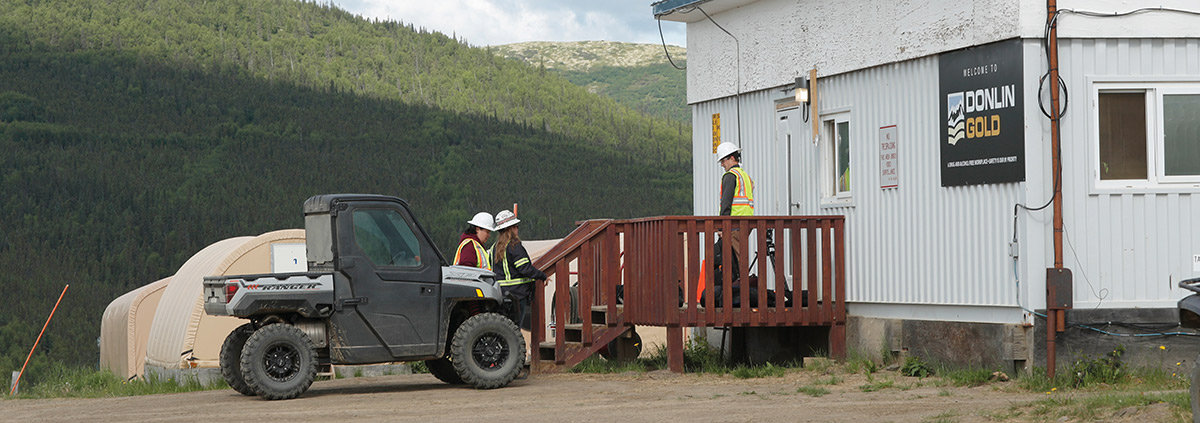
Judy Patrick| Donlin Gold
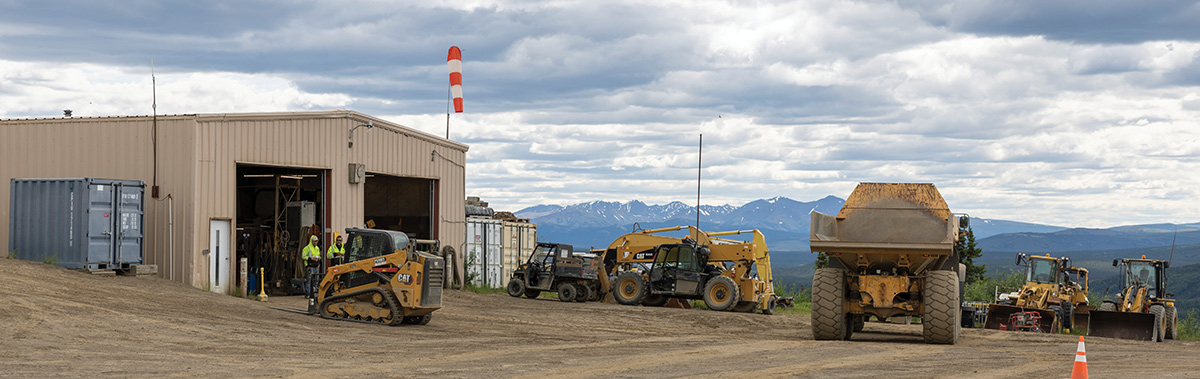
On the feasibility front, project activities are progressing nicely. Fluor has been selected as the primary contractor for the BFS, with four specialty contractors engaged for specific work streams. The BFS is targeted for completion in 2027.
“We looked at their history and experience doing projects of this scale in this remote type of location,” Dahlman says of Fluor. The Texas-based engineering firm is celebrated as the main contractor of Trans Alaska Pipeline System pump stations and the Valdez Marine Terminal. “Access to the site is limited to about 100 to 110 days a year—that’s when we can actually bring in infrastructure. The logistics are equally as complex as the technical aspects. We also interviewed the people they proposed to put on the project. It was a thorough process.”
With the BFS on track and early engineering already being prepared, Dahlman has set a production target of 2031–2032. “It’s an ambitious goal. There’s no doubt about that. It is also an achievable goal.“
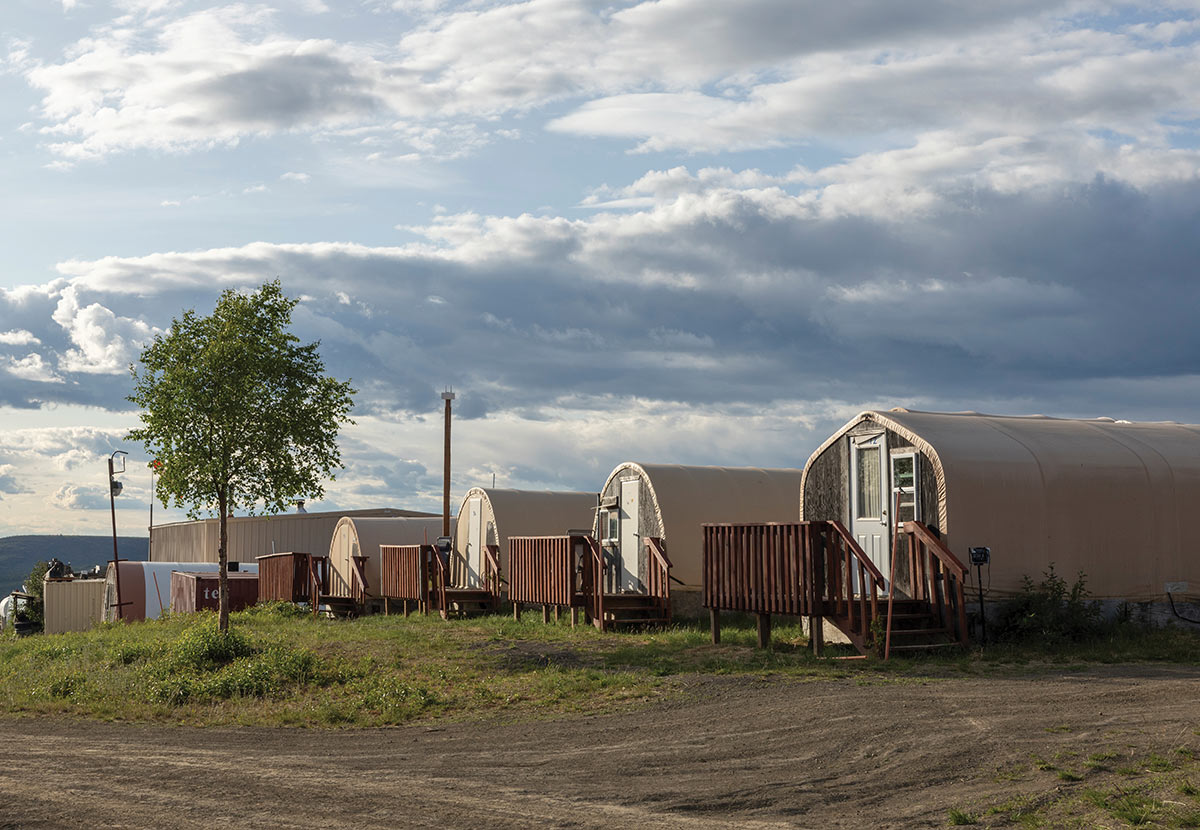
Judy Patrick| Donlin Gold
Dahlman is careful to clarify what FAST-41 is and is not. “It’s not about cutting corners or reducing the work that needs to be done. The process takes all of the agencies that are involved, gets them together, builds a timeframe to do the work that’s required, and then commits them to the schedule. What that gives you is transparency and predictability—and a timeframe you can build around,” he explains.
The one outstanding item is a court-ordered Supplemental Environmental Impact Statement focused on the potential effects of a hypothetical large tailings release, now incorporated into the FAST-41 process with a final decision expected by May 2027.
Furthermore, Donlin Gold is exploring its opportunities with another long-sought megaproject. Donlin Gold recently signed a non-binding Letter of Intent with Glenfarne Alaska LNG, exploring natural gas supply for the mine’s power plant. That would entail a spur from Cook Inlet inland to the Middle Kuskokwim mine site. The pipe would be double the capacity required for the mine itself.
“Imagine going from New York City to Boston—just over 200 miles,” says Leonard. “Now imagine that, but 50 percent more, and with no roads, no gas stations, no stores, no airports. That underlines the real challenges. But it also underlines the generational nature of the thinking. Having that extra room in the pipeline—can we use that to get additional power and heating to other villages nearby?”
Gusty adds a note of caution alongside the optimism. “There’s a feasibility study going on right now, funded by the Denali Commission and spearheaded by the Alaska Department of Natural Resources, looking at whether that excess gas could be generationally transformative for the region. There are no guarantees. But we are definitely looking to maximize any infrastructure built for this project to benefit our communities beyond the mine itself.”
Judy Patrick| Donlin Gold
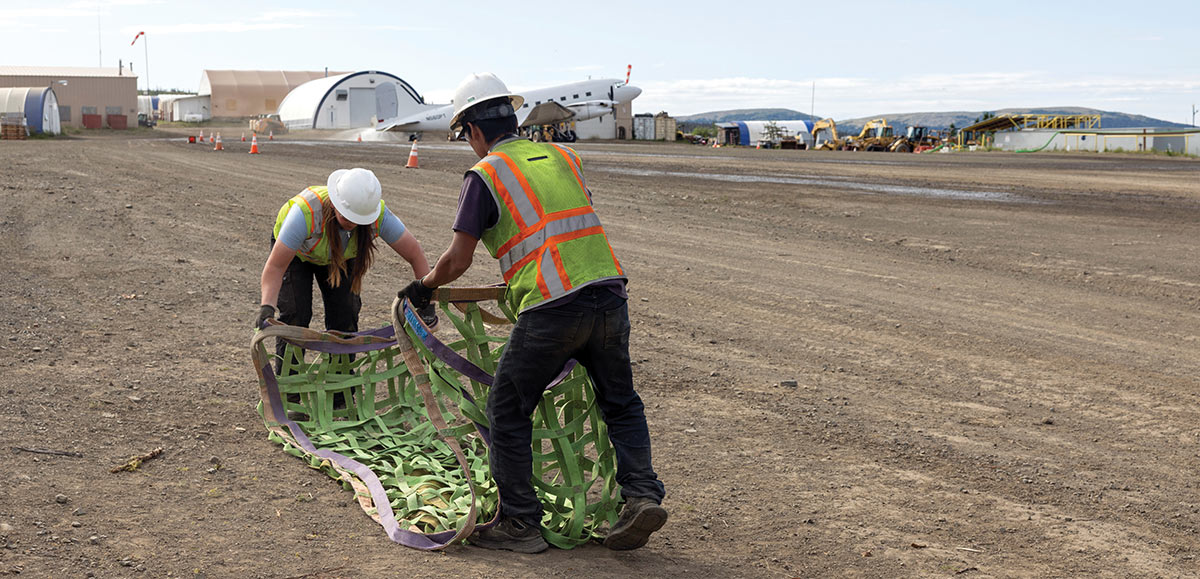
Leonard draws on the examples of Red Dog, the zinc mine near Kotzebue operated in partnership with NANA Regional Corporation, as a benchmark. After twenty-five years of operations, a UAF study found that approximately 60 percent of Red Dog’s employees were Alaska Native corporation shareholders from the region.
But Leonard sees further to go. “When we dove down into it, there weren’t a lot of shareholder managers. That’s been one of my personal focuses—not only having the people who are great with their hands, but we do have a lot of people who have the skilllset to be project managers,” he says.
Gusty offers a perspective that is both supportive and clear-eyed. She states, “This project has the potential of being very positive and creating generational opportunity, but with that level of opportunity also comes great risk. This is our land. This is our gold. These are our families. If this project gets developed, we have a real opportunity—but only if we get it right.”
She is equally direct about what a decision against the project would mean. Gusty says, “If this project isn’t developed, we’re still going to be here. We’re still going to thrive. We’re a strong people with deep cultural values that transcend any development project. This is an opportunity, but it isn’t our only opportunity, and we have a bright future either way.”
What changed to make this the right moment after so many years? Dahlman points not to any single factor but to a convergence. Alaska is a robust legal jurisdiction. “The environment is right for developing projects. We have a favorable regulatory environment, both state and nationally… We have a supportive ownership structure, a strong relationship with our landowners and communities, and the technical and logistical aspects are being well resolved,” he says.
There are still many hurdles ahead, typical of a project nearing reality. Dahlman says, “Everything is coming together at the same time. It just makes this the right time to go forward.”