










In Alaska – CMI, The best sales and product support lineup.
In Your Corner – The Winning Team.
Surface Rigs • Underground Rigs • Drill bits • Steel

Fairbanks
Mining Sales

Juneau
Mining Sales
Juneau (907) 802-4242
Fairbanks (907) 931-8808
Ketchikan (907) 247-2228


Key to Success

Highlights

Junior Achievement



Industry Support Services
About The Cover
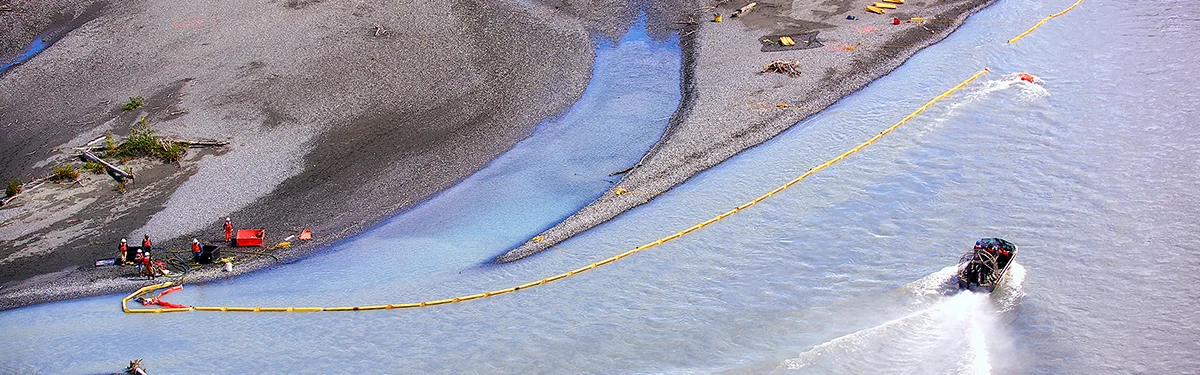
Spill response is one example. Our cover shows Alaska Chadux Corporation teamed up with the US Coast Guard Pacific Strike Team in Utqiaġvik, demonstrating response equipment for North Slope residents. Read more about spill prevention and response in Rachael Kvapil’s article “Remove and Restore.”
This issue also features stories about off-grid energy and mancamp maintenance. These are the jobs that must be done, often without glamor or glory, to hold together the metaphorical bricks of Alaska’s economic foundation.






-
Editorial
Tasha Anderson, Managing Editor
Scott Rhode, Senior Editor
Rindi White, Associate Editor
Emily Olsen, Editorial Assistant -
PRODUCTION
Monica Sterchi-Lowman, Art Director
Fulvia Caldei Lowe, Production Manager
Patricia Morales, Web Manager -
BUSINESS
Billie Martin, President
Jason Martin, VP & General Manager
James Barnhill, Accounting Manager -
Sales
Charles Bell, VP Sales & Marketing
907-257-2909 | cbell@akbizmag.comChelsea Diggs, Account Manager
907-257-2917 | chelsea@akbizmag.comWeston Giliam, Account Manager
907-257-2911 | wgiliam@akbizmag.comTiffany Whited, Marketing & Sales Specialist
907-257-2910 | tiffany@akbizmag.com -
Contact
akbizmag.com | 907-276-4373
Press releases: press@akbizmag.com
Billing: billing@akbizmag.com
Subscriptions: circulation@akbizmag.com
From the Editor
uring proofing for every issue, we edit out at least one reference to Alaska’s challenging weather or terrain. This has held true for the more than 150 issues I’ve worked on. We don’t delete earnest references to Alaska’s extraordinary conditions because they don’t matter but because even Alaskans living in urban areas are confronted with their reality regularly.
Alaska Business’ editing team lives in Alaska. We wake up occasionally on an icy winter day and wonder how we’re going to traverse our driveway safely, much less the roads to work. And considering that minor challenge (that nonetheless may take preparation, care, and specialty equipment), we are aware of the major challenge of transporting say, pre-fabricated walls, armor rock, or steel pipes to locations without roads and with limited or constricted access by air or boat. We may need to plan weeks ahead to order a specialty tool; remote projects may need to order supplies months or even a year ahead to make sure the right parts are on site on time.
hallenges and opportunities influenced by dynamic global markets, shifting energy trends, and ongoing fiscal constraints confront Alaska’s economy heading into 2026. Although oil and gas continue to be the primary sources of state revenue, fluctuating market prices and consistently ho-hum production levels raise concerns regarding long-term budget sustainability. On the bright side, sectors such as tourism, transportation, mining, and renewable energy are demonstrating steady growth, presenting prospects for economic diversification.
“This is going to be a challenging year, as the state continues to wrestle with a lack of revenue to meet its obligations. Federal uncertainty and a shifting landscape have resulted in the loss of grant funding for some municipalities but also for partners within the community,” says Nils Andreassen, executive director at Alaska Municipal League. “Local governments will be expected to make up for gaps elsewhere. Costs are going up, generally, and while consumer spending has stayed steady, that may not remain true this next year.”

laska’s State Small Business Credit Initiative (SSBCI) stands out as a national leader in supporting small businesses, startups, and entrepreneurs throughout the state. In September, the Alaska SSBCI achieved the top ranking in the country for funds deployed as a percentage of its total allocation.
Out of 131 jurisdictions, Alaska had deployed 92.5 percent of its $59.9 million allocation, narrowly surpassing Montana at 92.3 percent and significantly ahead of New Hampshire at 79.8 percent, according to the Alaska Small Business Development Center (SBDC), which leads the program. And the Alaska SSBCI program was operating at a pace six years ahead of schedule.

he moment spring hits, local beauty and hygiene manufacturers like Susan Houlihan of Alpenglow Skin Care head outdoors. Spring is harvest time.
“Our first harvest is cottonwood buds—about six gallons collected before the trees leaf out, which takes roughly 25 hours of wildcrafting,” Houlihan describes.
After that comes horsetail, yarrow, nettles, and fireweed. Alaska’s bounty keeps local beauty manufacturers busy all summer. But the hustle doesn’t stop after harvesting. As co-owner of ArXotica, an Alaska skincare brand, Michelle Sparck says, “Running a small business in Alaska is not for the faint of heart.”

unior Achievement (JA) of Alaska inspires and prepares young people to succeed in a global economy through hands-on programs in financial literacy, entrepreneurship, and career readiness. Reaching 20,000 K–12 students in Alaska annually, JA connects volunteers from the business community with classrooms statewide—helping students build confidence, explore career paths, and develop the skills needed to thrive in work and life.
On January 15, 2026, Alaska’s business community will gather for one of its most anticipated annual traditions: the 38th Annual Alaska Business Hall of Fame, presented by Alaska Business Publishing Company and JA of Alaska. Each year, this signature event honors business leaders whose vision, integrity, and innovation have shaped Alaska’s economic landscape and strengthened its communities.
ive Alaska business leaders joining the Alaska Business Hall of Fame share some odd coincidences. Two of their names sound the same; two run “Delta” companies; two are builders. Business peers selected them for their lifelong support of Alaska’s economy and for commitment to Junior Achievement of Alaska, so only one coincidence is intentional: the two who remain good friends and still work closely together.
Alaska Business magazine partnered with Junior Achievement of Alaska to launch the hall of fame in 1987 to recognize outstanding individuals. The annual Junior Achievement of Alaska celebration in January will induct the new class consisting of Rudi von Imhof, Ed Gohr, Meg Nordale, Carol Gore, and Dean Weidner. Their life stories serve as lessons for Alaskans striving toward success.



hen children think about the future, they dream about a world of possibilities. Whether that’s finding a career they love, owning their own business, or being financially secure in whatever field they choose, there are no limits as to what they believe they can accomplish.
To achieve these goals, they need to start smart—and that’s where Junior Achievement (JA) comes in. JA helps teach children the skills they need to succeed in life—from being ready for the workplace or buying a first car to starting and successfully running a company.
To reach as many children as possible, JA relies on a lot of educators and volunteers; in fact, the program couldn’t run without them. Two Alaskans have been honored this year for going above and beyond for JA and the children it serves.
Come
together



Events | Concerts | Conferences | Conventions | Banquets | Meetings | Trade Shows | Weddings | In-house Catering | Equipment Technology








wanted to take a moment to express my sincere gratitude to Junior Achievement of Alaska for the opportunity to participate in the Alaska Entrepreneurship Week Youth Shark Tank pitch program. Winning the competition was an amazing honor, but what I value most is everything I learned along the way. The process pushed me to think critically about my business plan, from identifying my target audience to refining how I present my ideas with confidence and purpose.
ttending Junior Achievement of Alaska Biz Kids Summer Camp this summer was an incredible experience for me. Before camp, I had the opportunity to participate in JA in a Day at my former elementary school and learned about financial literacy in a fun and engaging way. The camp allowed me to meet with kids my age from other schools across the city and opened our eyes to the world of business.
My idea was called Get Sporty, a unique retail and entertainment experience where you can try on and test out sports gear. From softball and baseball to skiing and snowboarding, my store would offer a variety of products and allow customers to test out their gear and make their purchase.
y name is Rylan, and I went to Junior Achievement of Alaska Biz Kids Summer Camp. When I was at Biz Kids camp, I got to do lots of things like play fun games and learn lots of interesting things about businesses. I learned about debt, taxes, income, money, and how to invest.
I played games to learn about debt and income. One of the games that I played was a game where I owned a hot dog stand, and I would roll a die, and whatever number the die landed on, I would match it with the number on the paper that had a scenario to run your business. You could roll something really good or bad. For example, one of the scenarios was that you would buy the hot dogs for $20 but sell them for $10, resulting in loss of profit.
Judy Patrick | Tatitlek Chenega Chugach
Spill response teams protect Alaska’s land and waters
hirty-six years have passed since the catastrophic Exxon Valdez Oil Spill (EVOS), when 11 million gallons of crude contaminated Prince William Sound (PWS). The memory of the event remains strong, as oil and gas producers maintain close alliances with spill response organizations and companies. Together, they have developed plans, acquired equipment, and maintained training to ensure any hazardous material spilled on land or in water is immediately contained and removed.

Anchorage, AK 99507
www.materialflow.com



very year across Alaska, thousands of workers rotate through micro towns located in some of the coldest, most remote regions of the state to work on projects for the oil and gas, mining, or construction industries. For weeks (sometimes months) at a time, these workers live, sleep, and eat in temporary housing that will disappear once the project is completed, leaving behind minimal evidence of its existence.
Known as mancamps, though they house both men and women, the temporary housing is a necessity, born of the impracticality and astronomical cost of transporting workers to remote worksites on a daily basis. Depending on the project’s size, camps can house anywhere from dozens to hundreds of workers. Making sure these camps are comfortable, well-stocked, and well-run is integral to maintaining a workforce that is happy, productive and, above all else, safe.
“[Mancamps] fulfill a critical need in Alaska’s infrastructure world,” says Seth Church, owner of Fairbanks-based general contractor Jewel Isaac, which offers camp setup, relocation, logistics management, and deconstruction. “From the time of gold being found up here to now, if you don’t have good housing, you’re not safe.”
Setting up the camps and keeping them operational requires an entire crew and paying attention to lots of moving parts.
“There’s a lot going on with these little remote camps,” says James Nunley, general manager of Olgoonik Oilfield Services, a subsidiary of the Alaska Native village corporation for Wainwright, which operates and leases camps in the North Slope.
From preventing equipment breakdowns to serving hot meals to ensuring polar bears don’t crash the camp, it takes knowledge, experience, and a dash of adaptability to ensure a smooth, efficient operation.
Industry Support Services
Backup Solutions
By Christi Foist
emote power comes at a high cost. As a June 2025 funding announcement from the US Department of Energy put it, “Americans living in remote reaches of the country pay some of the highest prices for electricity, yet their service is often below modern standards.”
Nick Lochard, owner and operator of Wasilla-based solar equipment supplier All Off Grid, says one of his clients had been paying almost $50 per gallon for fuel when he did a retrofit on the location, which was only accessible by helicopter. Even slightly more accessible but still diesel-dependent communities can sometimes pay $1 per kilowatt hour (kWh)—several times what urban communities pay.


Visit www.cookinlettug.com


econstruction of the Disadvantaged Business Enterprise (DBE) program began before Donald Trump returned to the presidency, yet the changes align with the administration’s agenda on civil rights. DBE is a certification that federal contractors can obtain for preferential access when bidding on highway, transit, national recreational trails, or transportation technology projects.
The disadvantages, specifically, are defined in the Small Business Act of 1958, which states: “Socially disadvantaged individuals are those who have been subjected to racial or ethnic prejudice or cultural bias because of their identity as a member of a group without regard to their individual qualities.” The law specifically includes Native tribes and, as a class, all women, although the size of a contracting business is capped, for purposes of the program.
n account management, clients may be clear about deliverables and timelines, but their deepest expectations often go unspoken. What they truly want isn’t just a service provider. They want a partner who anticipates their needs before they have to articulate them. They want someone who reads between the lines, understands internal pressures, and brings clarity to the chaos.
Most clients won’t say, “Please make my life easier,” but that is exactly what they expect. They value responsiveness because it creates trust. They appreciate proactive updates because it removes uncertainty. And they remember every moment when you choose to guide them strategically rather than simply follow instructions.

ason, the executive director at a hypothetical organization, drummed his pen. “Your input isn’t needed. My funding decision stands. It’s based on my many years of experience and the policies I’ve created here.”
The junior strategist quietly stepped back. The data undeniably showed a safer, more impactful allocation path for the nonprofit given the clear changes in the market, and the whole planning team agreed. Jason felt a familiar rush from being the sole decision-maker.
Six months later, the results of his under-informed gamble were in: massive failure. He dismissed the setback to his board as “unforeseen volatility,” burying the data and the dissent, costing the organization vital momentum. Far worse than the misspent money, Jason’s towering ego eroded staff morale and trust.

hen I was 12, I had a paper route. Every morning, I’d get up before the crack of dawn, fold newspapers, and deliver them across the neighborhood. At the end of each month, I’d go door to door collecting the $3.75 subscription fee. The newspaper company took its cut, and I kept the rest.
There was one big problem in my business model: I hated collecting. I’d do just enough to pay what I owed the paper company, then stop. Some customers went three or four months without paying. I had a large route and delivered hundreds of papers every week, but I barely made a profit.
I didn’t realize it at the time, but I was the world’s first 12-year-old nonprofit CEO, and I had a revolutionary business model: deliver great service, then never collect payment.
Part 38 of an ongoing video series.

 Denali State Bank selected Ryan Strong to serve as President and CEO upon the retirement in January of Steve Lundgren. Most recently the chief banking officer at First National Bank Alaska, Strong also chaired the board of the Anchorage Economic Development Corporation. Strong is relocating from Anchorage back to Fairbanks, where he previously lived and earned his MBA from UAF.
 Donlin Gold, the company leading Novagold Resources’ development of a gold mine in the Upper Kuskokwim River region, hired Wendy Lindskoog as External Affairs Manager. A veteran of public policy and stakeholder engagement, Lindskoog was previously regional vice president of government relations at Royal Caribbean Group, vice president of communications and external affairs at BP Exploration Alaska, chief administrative officer and corporate board secretary at the Alaska Railroad Corporation, and director of communications at the Alaska Legislature.
Alaska Trends
uonset huts rust at the defunct Naval Arctic Research Laboratory, yet the comfortable confines of Iḷisaġvik College (IC) nearby keep 462 credit-seeking and 717 non-credit-seeking students warm and educated. The school was established in 1996 upon the bones of the North Slope Higher Education Center developed by UAF and the North Slope Borough (NSB) in Barrow, now known as Utqiaġvik. Alaska’s only tribal college offers one bachelor’s degree in business administration and several associate degrees: Iñupiaq studies, Indigenous education, accounting, office management, construction technology, information technology, and allied health, plus endorsement programs in medical coding, heavy equipment operations, and industrial safety.
When North Slope employers promise to hire locally, IC trains that workforce. Does it succeed? To find out, IC commissioned a study by Lightcast, a firm that crunches economic and labor data for educational institutions and regional developers. Based on figures from fiscal year 2022–2023, “The results of this study show that IC creates a positive net impact on the borough economy and generates a return on investment for students, taxpayers, and society,” the authors state.
Rabbit at Rest by John Updike.
What’s your favorite local restaurant?
Arctic Roadrunner.
Dead or alive, who would you see perform in concert?
Tom Petty.
What vacation spot is on your bucket list?
Palm Springs, California.
If you could domesticate a wild animal, what animal would it be?
Has to be an American Eagle.

Rabbit at Rest by John Updike.
What’s your favorite local restaurant?
Arctic Roadrunner.
Dead or alive, who would you see perform in concert?
Tom Petty.
What vacation spot is on your bucket list?
Palm Springs, California.
If you could domesticate a wild animal, what animal would it be?
Has to be an American Eagle.
Off the Cuff
reaking his leg during a childhood soccer game gave Sean McLaughlin spare time to learn computer coding. Software engineering skills took him as high as COO of the American Red Cross, and then he started over in Alaska. First, he bought Craig Taylor Equipment. Next, McLaughlin took further ownership stakes in diverse manufacturing concerns that he unified as Alaska Gear Company.
These days, he spends his time at Flyntlok, maker of the customer relationship management platform his other businesses use. “It’s almost like I’m in the cockpit of the other two companies by working on the software side,” he says.
He still codes for fun, and he runs his life like a program too. “I am a ritualistic guy,” McLaughlin confides. “Every day, I do the same thing. I make a list of the things I’m supposed to accomplish, and I get ‘em done.”
- Airport Equipment Rentals
- Alaska Dreams Inc.
- Alaska Industrial Development and Export Authority (AIDEA)
- Altman, Rogers & Co.
- Anchorage Convention Centers
- Anchorage Sand & Gravel
- ASRC Energy Services, LLC
- Avis Rent-A-Car
- Birch Horton Bittner & Cherot
- Chugach Alaska Corporation
- Conrad-Houston Insurance Agency
- Construction Machinery Industrial
- Cook Inlet Tug & Barge Inc.
- Craig Taylor Equipment
- Crowley Fuels
- Davis Constructors & Engineers Inc.
- Delta Constructors
- Denali Commercial
- Denali Universal Services
- Doyon, Limited
- First National Bank Alaska
- Fountainhead Development
- GCI
- Ghemm Co.
- Great Originals Inc.
- Greer Tank
- Huna Totem Corporation
- Infinity Commercial Real Estate
- JD Steel Co Inc.
- Junior Achievement
- Lynden
- Material Flow & Conveyor Systems, Inc.
- Matson Inc.
- MT Housing Inc.
- N C Machinery
- NANA Regional Corp
- NCB
- Nenana Heating Services, Inc.
- Northern Air Cargo
- Northern Air Cargo
- Northrim Bank
- Oxford Assaying & Refining Inc.
- Personnel Plus Employment Agency
- Port Mackenzie
- Span Alaska Transportation LLC
- T. Rowe Price
- The Odom Corporation
- The Plans Room
- The Wildbirch Hotel
- TOTE Maritime Alaska LLC
- Western Pacific Crane & Equipment