


he moment spring hits, local beauty and hygiene manufacturers like Susan Houlihan of Alpenglow Skin Care head outdoors. Spring is harvest time.
“Our first harvest is cottonwood buds—about six gallons collected before the trees leaf out, which takes roughly 25 hours of wildcrafting,” Houlihan describes.
After that comes horsetail, yarrow, nettles, and fireweed. Alaska’s bounty keeps local beauty manufacturers busy all summer. But the hustle doesn’t stop after harvesting. As co-owner of ArXotica, an Alaska skincare brand, Michelle Sparck says, “Running a small business in Alaska is not for the faint of heart.”
“We called it ‘devil’s club acupuncture,’” Renee recalls with a laugh. “People ask, ‘Why are your devil’s club [products] so expensive?’ Pick it for a week, and we’ll talk about why.”
A common theme among local makers of beauty products is a do-it-yourself mentality familiar to Alaskans. The Behrendts recruit friends and family to help with harvesting ingredients like fireweed and balsam fir, yet they do much of the gathering themselves.
“Stoop labor,” as Sparck calls it, is an unavoidable part of incorporating Alaska’s naturally beneficial plants into beauty products. Like the Behrendts, she does the picking for ArXotica herself, alongside her sisters and co-owners, Cika Sparck and Amy Sparck Dobmeier.
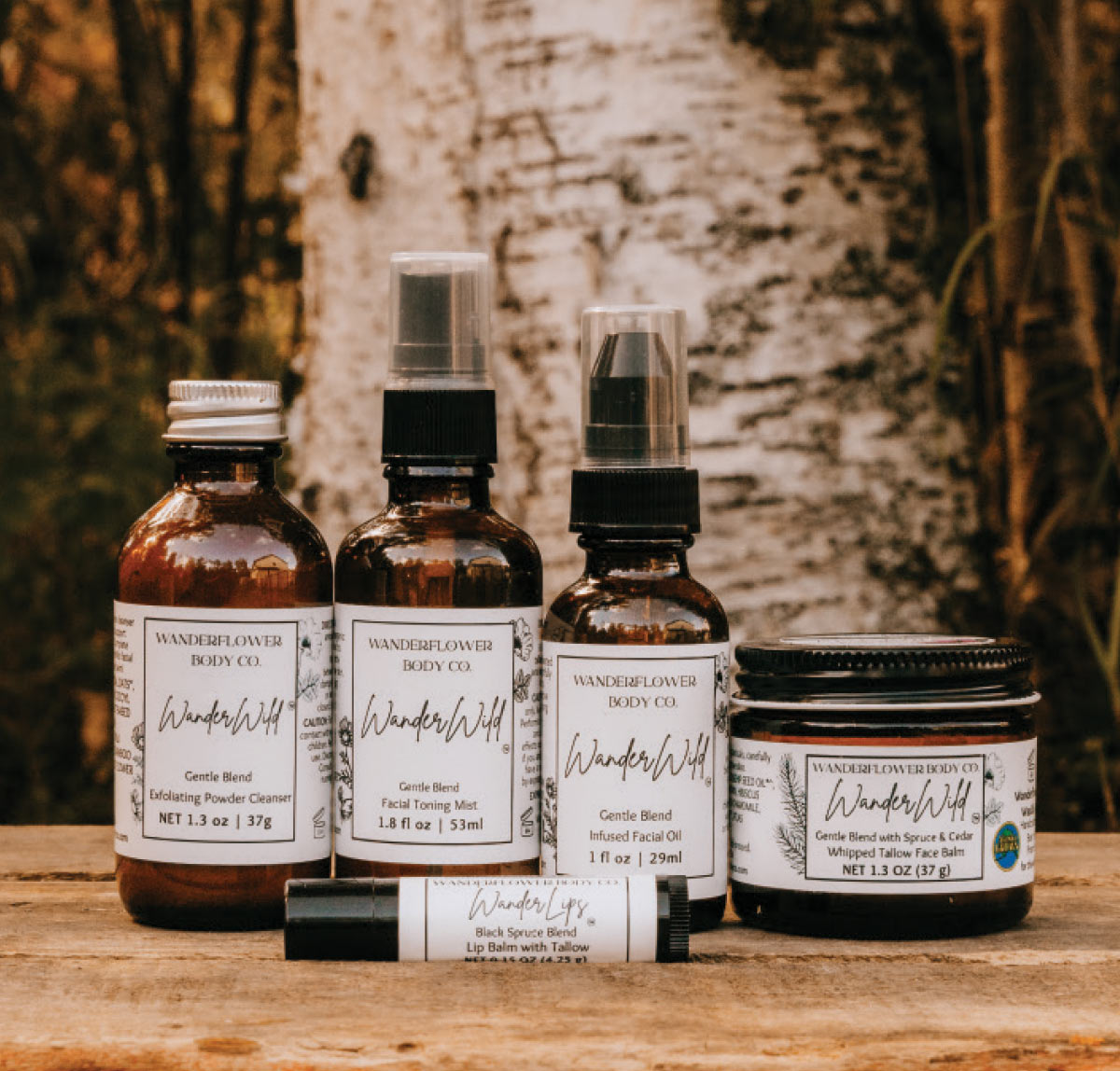
Wanderflower Body Co.
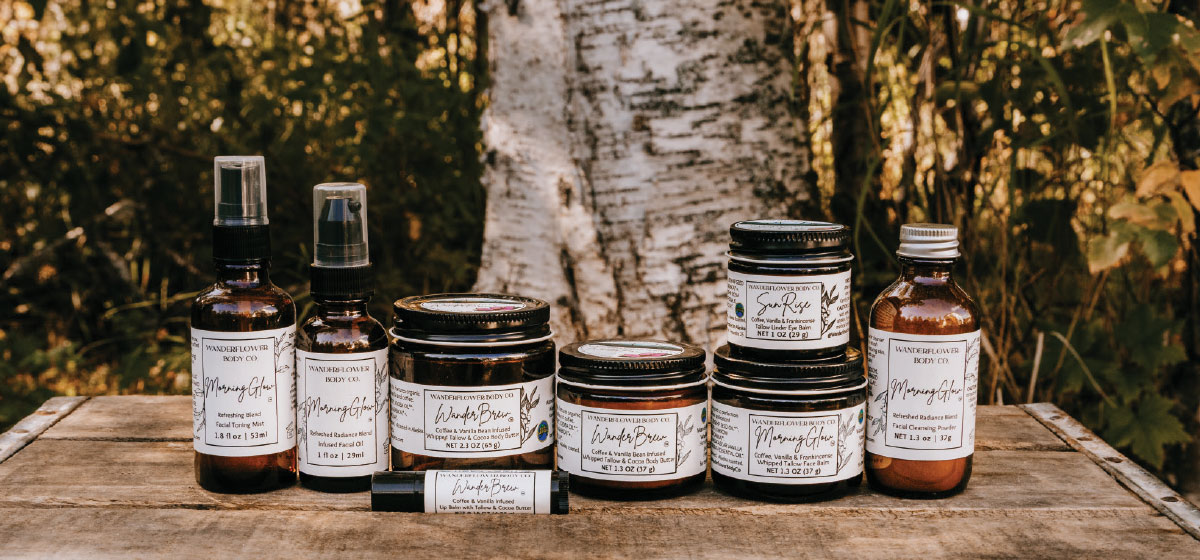
“We’d been picking plants and berries since we could walk, so we went with what we knew,” explains Sparck.
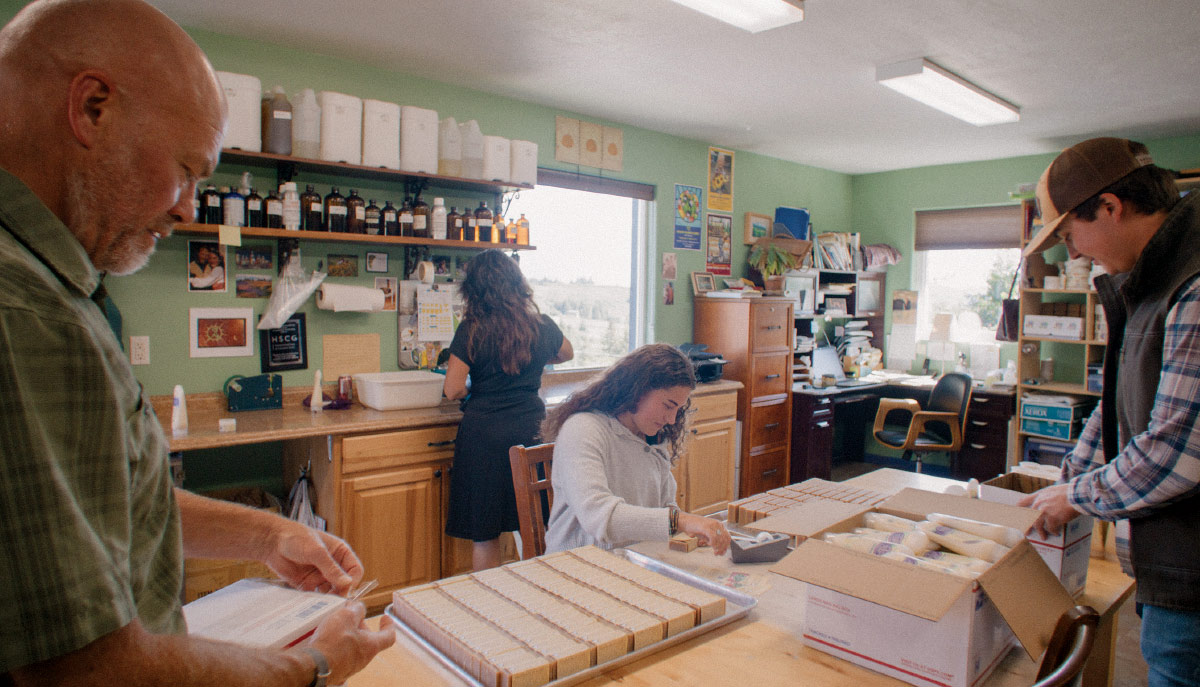
The hands-on labor doesn’t stop with the harvest season. The Behrendts handle almost every aspect of growing, harvesting, manufacturing, packaging, marketing, and shipping their products themselves—most of the time. “When [Renee’s] folks come up, her mom sits in a chair all day, every day, labeling products—and she is a machine,” Jarred says.

Alaska Glacial Essentials Skincare

With the help of cosmetic chemist Charlie Kim, Padawer launched a glacial mud-based skincare line she initially considered marketing to spas—a business plan that led her to an eventual appearance on the ABC TV show Shark Tank. Today, she’s shifted to direct-to-consumer and business-to-business wholesale accounting for 80 percent of her sales.
Rather than bring on additional help or hand over aspects of her business to contractors, Padawer is keeping things close to home.
“A lot of businesses find ways to outsource, but I found a way to ‘insource’ as I grew because I felt like it brought more control and integrity to the brand,” she says. “I’m able to scale up or down according to what I have going on in my life.”
Eliana McKee of Eira Cosmetics, meanwhile, is on the threshold of expanding; her new luxury skincare line, Eirwen, launches soon. What started as a hobby making soap led McKee to pursue a degree in cosmetic chemistry. Soon, she was buying a house—not only to live in, but to operate her business from. Like Padawer, McKee runs every aspect of Eira Cosmetics herself, including researching the properties of her ingredients, such as locally harvested sugar kelp, and conducting monthly microbiological tests to ensure her lab area is safe.

ArXotica
Expenses have gone up recently, with higher shipping costs and increased tariffs on international goods. With each hurdle she’s faced as a business owner, though, McKee says she has advanced a little bit further in her journey.
Alpenglow Skin Care
Today, Houlihan relies on a garden and a high tunnel to provide her with the herbs and flowers that go into her infusions and extracts. She has dug deep into the science of “companion” planting, using local knowledge to understand which plants grow best together.
Even the most independent local business owner can’t do it all. Wanderflower Body Co.’s Caiti Alexander relies on tallow rendered from Alaska-raised beef fat from a supplier in Delta Junction and seaweed from Kachemak Kelp.
Alexander, who worked as a nurse prior to launching Wanderflower Body Co., learned the ropes of running a small business by observing the operations of her suppliers.
“Working with different businesses and farms, I meet a lot of people who understand what my priorities are,” she says. “Building partnerships that are real partnerships… has taught me that I can set the boundaries I need to keep handcrafting my products in small batches to keep the quality high.”
Timing is everything when ingredients are harvested seasonally. Alexander must plan carefully when she orders raw materials. “The kelp farms plant in the fall and harvest in the spring, so they ask me, ‘How many pounds do you want for next year?’ It’s a lot of looking ahead—and then, it’s a farm, so if the weather isn’t ideal, you don’t always get what you think you’re going to get,” she says.
“If I could source everything locally, I’d be thrilled,” Houlihan says. Shipping costs to get ingredients from the Lower 48 and to export her product to her customers are a constant struggle. She has concentrated on budgeting wisely; rather than spend on advertising or “flashy” packaging, she invests her profit into ensuring the quality of her products.

Alaskan Dream Botanicals

Purchase minimums at wholesalers are often much more than some small businesses need, so they either have to “scrimp and save and figure out how to use that huge amount,” Renee says, or they must figure out an alternative.
A co-op might be one approach, but the Behrendts have a different idea: creating a supply company. “We’ve got the storage, and when we’re bringing a pallet at a time, we can take a little bit of a hit on the flat fee for that,” Renee explains, and Alaskan Dream Botanicals can take the delivery at a lower price than fellow small manufacturers.
Helping peers control costs is, the Behrendts believe, one more way to keep things local.
“So many Alaska businesses, once they get to a certain level, they move out of state,” Jarred points out. “We refuse to do that. Some businesses will say, ‘It was born in Alaska.’ But that’s not made in Alaska. It’s not the same thing at all.”