









Prince of Wales, Alaska

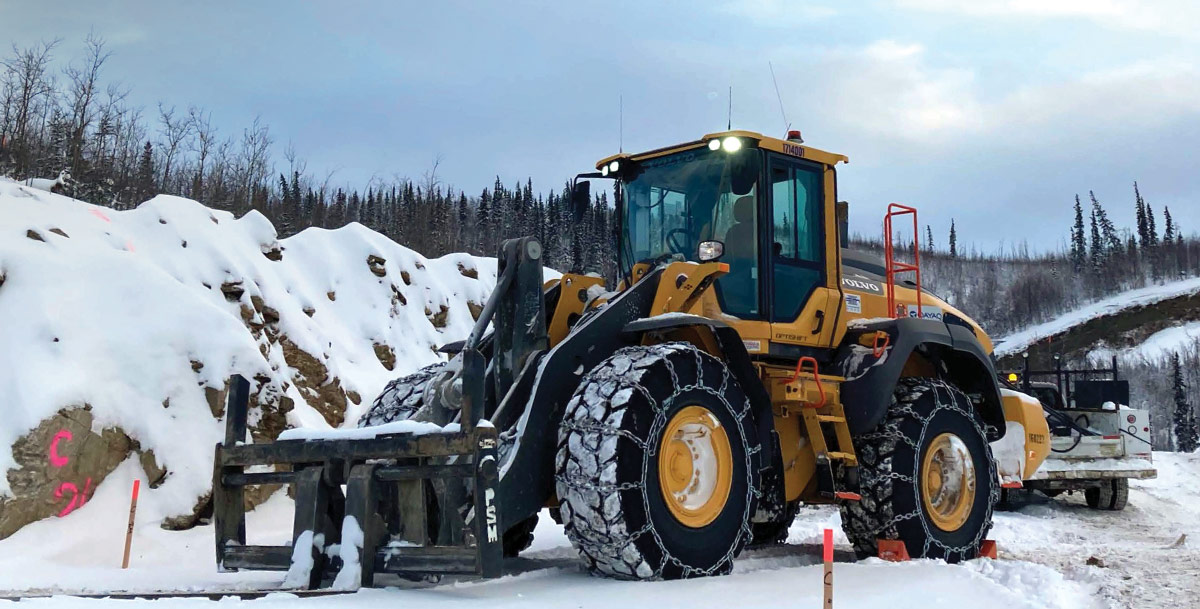
Learn more about what powerful, fuel efficient Volvo haulers can do for your operation.
Tok, Alaska

907.563.3822
Fairbanks
907.931.8808
Juneau
907.802.4242
Ketchikan
907.247.2228

Sales Rep.
Anchorage Branch

Sales Rep.
Anchorage Branch
In Alaska. The best sales and products support lineup.
In your corner. The winning team.
Correction: On page 76 of the July 2025 issue, we misspelled the last name of The Alaska Club’s vice president of sales and marketing; her name is Debbie Cedeno.

Correction: On page 76 of the July 2025 issue, we misspelled the last name of The Alaska Club’s vice president of sales and marketing; her name is Debbie Cedeno.
Highlights


Financing the
Future of Health Care
For Imaging Associates CEO Ward Hinger, driving innovation and providing high-quality patient care starts with the right support. With customized financial solutions and unmatched local expertise from First National Bank Alaska, his team has invested in advanced diagnostic tools – improving accuracy and delivering faster results for Alaskans who need them most.
About The Cover
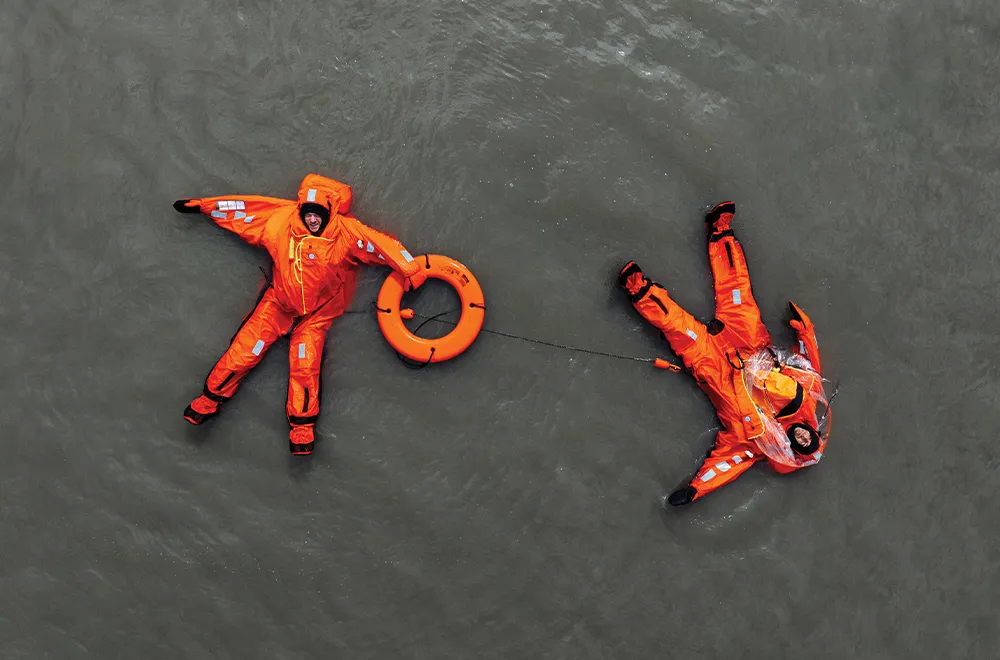
Further solution: an innovative suit that functions more like a person-shaped life raft that extends the time for rescuers to arrive from hours to literal days. This month’s cover story “Not Your Grandfather’s Immersion Suit” by Jamey Bradbury meets the inventor of the Arctic 10+ and the Alaskans testing its capabilities to the extreme. It’s just one part of the state’s entrepreneurial ecosystem.

-
Editorial
Tasha Anderson, Managing Editor
Scott Rhode, Editor/Staff Writer
Rindi White, Associate Editor
Emily Olsen, Editorial Assistant -
PRODUCTION
Monica Sterchi-Lowman, Art Director
Fulvia Caldei Lowe, Production Manager
Patricia Morales, Web Manager -
BUSINESS
Billie Martin, President
Jason Martin, VP & General Manager
James Barnhill, Accounting Manager -
SalesCharles Bell, VP Sales & Marketing907-257-2909 | cbell@akbizmag.comChelsea Diggs, Account Manager907.257.2917 | chelsea@akbizmag.comTiffany Whited, Marketing & Sales Specialist907-257-2910 | tiffany@akbizmag.com
-
Contact
akbizmag.com | (907) 276-4373
Press releases: press@akbizmag.com
Billing: billing@akbizmag.com
Subscriptions: circulation@akbizmag.com
From the Editor
Less often—but often enough—I get to say “yes.” I do have space to feature a relatively new Alaska transporter with a big vision (coming in the December issue); I can help spread the word about a small pet grooming business with a new owner and growth on the horizon (look for it on our website this month); and it is totally appropriate to advocate for strengthening Alaska’s food systems and the businesses operating in them (in the November issue).
My responsibility is to curate the most engaging, accurate, and informative content I can, so while I wouldn’t say I enjoy saying “no,” I do take satisfaction in maintaining the standards of this publication. Saying “no” is what gives me the ability to say “yes.”



Visit unitedwayanc.org.



arr-Gottstein Foods Co. was the first tippy-top Top 49er in 1985, when this magazine began ranking Alaska companies based on their gross revenue. The supermarket chain earned the #1 spot with $335 million in revenue, which equates to a bit more than $1 billion today; on the 2024 list, only five Top 49ers earned more.
The parent company of Carrs Quality Centers was unsurpassed every year except 1990, when Exxon Valdez oil spill cleanup boosted revenues of Veco, until it went out on top in 1992. A sale of public stock put majority ownership out of Alaskan hands, disqualifying the company as a Top 49er under the rules at the time. By 1999, the chain became a wholly owned subsidiary of Safeway, itself acquired in 2015 by Albertsons.







Northbound: 253.449.2112
Southbound: 907.276.5868
 Northbound: 253.449.2112
Southbound: 907.276.5868

n the retail world, the purchase of pre-owned goods, as opposed to newly manufactured items, is referred to as resale shopping. This industry has consumers buying products that have been previously owned and encompasses thrift stores selling donated items, antique or vintage stores, flea markets, and even garage sales. It also includes consignment shops, both brick-and-mortar and online, which sell items on behalf of individuals.
In the consignment business, the item’s previous owner, or consignor, shares the profits (which can be cash or store credit) with the seller, or consignee. Unlike businesses that acquire wholesale inventory outright, if consignment goods are not sold, they are typically returned to the consignor or donated further down the value chain.
ven the most rural corners of the country, including remote villages in Alaska, are feeling the transformative effects of online commerce. Last year, Alaska generated more than $2.16 billion in annual ecommerce revenue, according to Capital One. Ecommerce is evolving from a convenience into a vital option for shoppers who frequent sites like Amazon, eBay, and Walmart.
According to the US Census Bureau, national ecommerce sales surged to $1.19 trillion in 2024, representing more than double the $571 billion recorded just five years earlier. And the growth of digital commerce is showing no signs of slowing. By the end of 2025, total US ecommerce sales are expected to reach $1.2 trillion.
Traditionally, clothing, shoes, and beauty products have been the most popular digital purchases. However, buying trends are shifting. Groceries are forecast to be the largest ecommerce category by 2026 at 19 percent of online sales, according to research firm EMARKETER. The expansion of ecommerce is being fueled, in large part, by technological innovations and shifting consumer behavior and expectations. Key growth drivers are data-driven personalization, mobile and social commerce, and multichannel retailing.
“Often, a quick email outreach can be the beginning of a productive conversation that uncovers additional questions or concerns, and many times leads to the customer completing the purchase,” she says.
laska’s unique geography has sparked creative ecommerce tactics among national and Alaska-based retailers. Some companies have developed distinct shipping practices to facilitate delivery of perishable foods to customers in rural Alaska; others have partnered with local distributors to create hybrid fulfillment models that combine the convenience of online ordering with the reliability of local inventory.
Mike Jones, an economist at UAA’s Institute of Social and Economic Research has focused much of his research on food security and food transportation. Having analyzed aviation supply chains and Alaska ecommerce as part of his state-funded work, Jones has gained some interesting insights into the role of digital commerce, including its impact in remote communities.
ntil recently, the best protection for anyone in a man-overboard situation in Alaska’s frigid ocean waters has been the Gumby suit. Made of thick neoprene fabric, cold-water immersion suits offer a high thermal value that helps prevent hypothermia. In a worst-case scenario, these suits have saved lives when rescue was hours away.
Now there’s a new option that promises not hours but days of warmth and safety for a person awaiting rescue. The Arctic 10+ survival suit, created and manufactured by White Glacier, is marketed as both a cold-water immersion suit and a personal life raft. Where the Gumby suit is temporary protection from hypothermia in cold water, the Arctic 10+ exceeds standards that no other survival suit has attained, says White Glacier CEO Diego Jacobson.
But is it a solution that will catch on in Alaska?
Bridging Marketing and Sales
s the seasons change, one thing remains constant—Alaska Business is committed to helping you grow your brand. This fall, we’re doubling down on that mission with the support of our Sales and Marketing Specialist, Tiffany Whited.
For businesses today, being active online isn’t optional—it’s essential. Social media is no longer just a place to scroll, it’s a powerful tool for brand building. Digital visibility builds trust, enhances awareness, and keeps your business top-of-mind. That’s where Whited’s unique combination of sales expertise and marketing strategy comes in. She collaborates with clients to create integrated campaigns across print, digital, and social media, maximizing exposure and return on investment.


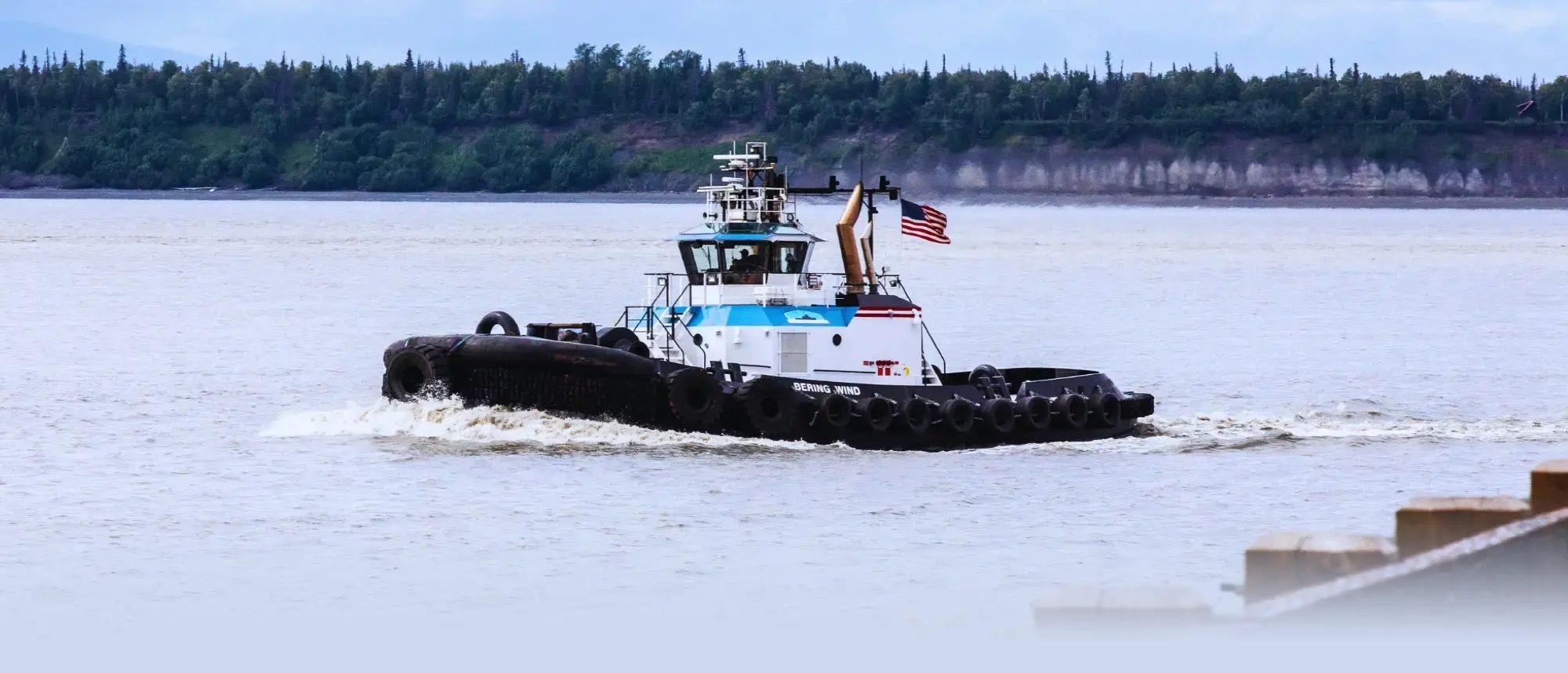
Cook Inlet Tug & Barge delivers essential freight across Alaska’s waters.
Learn More at cookinlettug.com


Startup Accelerators
Alonesbe | Envato
Startup Accelerators
ockets are a common metaphor for startup businesses, even those far removed from the aerospace industry. A different analogy occurs to Margo Fliss, associate director of the University of Alaska Center for Economic Development (UA CED).
“It’s going to be a lot more like a roller coaster ride than a straight line,” she says.
In either case, the payload needs help to reach its zenith, whether that’s a chain lifting a coaster to the crest of its first hill or the boosters strapped to a spacecraft bound for orbit. And when their work is done, those accelerators hang back and watch the payload zoom away.
Business accelerators are a relatively small but rapidly growing part of Alaska’s entrepreneurial ecosystem, offering diverse assistance to startups in various fields.
ousing is in short supply in Alaska, and it’s holding back the broader economy. According to a study by Agnew::Beck Consulting in 2023, the state will need more than 27,000 new housing units in the next ten years to meet rising demand. Construction, however, has yet to match this need. In 2022, just 578 new units were authorized statewide.
The problem has many roots. At the forefront, houses are prohibitively expensive in Alaska. While a new house in the Lower 48 might incur an average hard cost (materials and labor) of $120 per square foot, Anchorage homes see hard costs of $300 per square foot. Outside of urban areas the cost jumps even more: in Bethel, the figure is an astounding $800 per square foot.


ecently, a friend of mine, a certified public accountant (CPA), asked me to join him as a partner to buy a small, popular business. As a mergers and acquisitions (M&A) advisor, I’ve had my share of personal and professional experience with acquisitions. My partner has as well. We felt we’d be a good team.
Fortunately, the deal fell through. I say “fortunately” because, although it was a successful business, it was a bad deal. But it took us a while to accept that. Both my partner and I are driven and goal oriented. Those are useful traits when tackling complicated projects, but they can make it difficult to accept when it’s time to walk away.
We became emotionally invested in making this deal work. This is a common, classic mistake when buying a business—and I could see it happening. We discussed it, but our initial instincts (and, likely, egos) were, “We’re smarter than this; we can figure it out.”
Gratefully, we both had professional muscle memory at play. We kept asking enough of the right questions to eventually kill the deal, in spite of ourselves. The red flags were obvious. The business was completely dependent on the owner who lived there; we didn’t want to live there, so we would need to hire a general manager. More concerning, the owner’s pay—although she worked full-time—wasn’t reflected in the financials. It was listed as profit, and this skewed the valuation she wanted.


An authorized distributor of:








uts. Bones. Heads and tails. An estimated 70 percent of a fish is leftover after filleting. Where some see trash, others see treasure: an opportunity to add value by turning waste into raw material.
Better than being dumped into harbors, rivers, or the ocean. “Environmental concerns associated with dumping of fish wastes into ocean waters include reduced oxygen levels in the seawaters at the ocean bottom; burial or smothering of living organisms; and introduction of disease or non-native and invasive species to the ecosystem of the sea floor,” according to the US Environmental Protection Agency.
Lauren Howard, policy coordinator for the Alaska Longline Fishermen’s Association and Alaska Sustainable Fisheries Trust, says the seafood industry is aware of the problem and is working on it.


rojects require permits, and when they have the potential to affect fish and wildlife, specific permits are required.
To obtain a permit, the activity’s impact on the environment must first be determined through a study. But what does that study entail? What data is gathered? How is it gathered? And how does that vary from project to project? As one might surmise, the answers to those questions depend on a range of factors.
“Depending on the type and location of the project, permitting can include fish and wildlife studies to identify if threatened or endangered species are present and, if they are, what type of impacts to the habitat may occur,” says Susan Childs, regulatory and nontechnical risk director for Fairweather, a support services firm owned by Doyon, Limited. “Biological assessments that describe the species that do occur in the project footprint are also conducted to determine what the impacts to the species may be.”
Specific studies can include essential fish habitat, bird and nest surveys, marine mammal surveys, and specific species studies—for example, a caribou survey.





wo wheels can get visitors pretty far in Alaska, under pedal power.
“Cycling vacations are pretty popular around the world, and Alaska has some unique attractions to offer,” explains Dustin Craney, owner of Sockeye Cycle, which operates in Haines and Skagway. “We have spectacular routes with unbeatable views, great riding roads, and a lot of mountain passes to climb and descend.”
Craney adds that more mountain biking trails are being developed, and the region has a solid scene for bike races and events, so Sockeye Cycle serves both tourists and local residents. “We have something for everybody, whether they prefer long, solo rides, getting into nature on a fat bike, or exploring different communities,” he says.
Come
together



Events | Concerts | Conferences | Conventions | Banquets | Meetings | Trade Shows | Weddings | In-house Catering | Equipment Technology







was ready for the flight. I had my boarding pass and a bottle of water. In my carry-on was my favorite magazine and noise-cancelling headphones. The agents boarded people in groups. I got settled in my seat, and the plane pushed back on time.
Everyone was excited to start the journey. The crew conducted their safety briefing, checked the cabin one last time, and took their seats. And then we waited. And waited.
Finally, the pilot came over the loudspeaker to let us know there was a holdup and we’d be delayed a little longer. So we waited.
Part 34 of an ongoing video series.

 Mark Roberts joined Alaska Regional Hospital as CEO in June. Roberts has been with parent company HCA Healthcare since 2011, most recently as COO of Corpus Christi Medical Center in Texas. Roberts’ career began as a radiologic technologist, and he has led imaging programs at UC Davis Medical Center in California and at King Faisal Hospital in Saudi Arabia. Roberts holds a master’s degree in health administration from Webster University.
 Paul Durkee is the new CFO, a position he previously held with HCA Healthcare’s supply chain and performance improvement organization HealthTrust, managing supply chains at nineteen hospitals across five states. Durkee received bachelor’s and master’s degrees in accounting from Weber State University.
Alaska Trends
s this month’s article “Waste Not” notes, the largest fishing port in North America by volume is Dutch Harbor. This fact is easy to take for granted because it’s been true for twenty-five years straight. New Bedford, Massachusetts, is likewise the longtime champ in terms of value of harvest, but the sheer tonnage of seafood that comes across the docks in Unalaska is second to none in the United States.
In global terms, Dutch Harbor stands among giants but only knee-high, outranked by two dozen port cities. Peru, Chile, Russia, South Korea, and Indonesia claim the top spots, each with more than 450,000 tonnes landed. Anchovy capital Chimbote, Peru, harvested 588,000 tonnes in 2022 compared to Dutch Harbor’s 278,000 tonnes (down from 2021’s 338,000 tonnes).
The Science of Storytelling: Why Stories Make Us Human and How to Tell Them Better by Will Storr.
What charity or cause are you passionate about?
Food Bank of Alaska [currently board treasurer].
What vacation spot is on your bucket list?
Hmm. Maybe Thailand.
Dead or alive, who would you like to see perform live in concert?
Elton John.
If you could domesticate a wild animal, what animal would it be?
My 3-year-old is obsessed with moose and wants a moose to come live with us… Maybe a baby moose.

The Science of Storytelling: Why Stories Make Us Human and How to Tell Them Better by Will Storr.
What charity or cause are you passionate about?
Food Bank of Alaska [currently board treasurer].
What vacation spot is on your bucket list?
Hmm. Maybe Thailand.
Dead or alive, who would you like to see perform live in concert?
Elton John.
If you could domesticate a wild animal, what animal would it be?
My 3-year-old is obsessed with moose and wants a moose to come live with us… Maybe a baby moose.
Off the Cuff
ush communities with Alaska Commercial Company (AC) stores are not nearly as far out as the cosmic mysteries Kyle Hill studied in college. The retail chain’s president majored in math and physics in New Brunswick, Canada, but he sought more down-to-earth applications. “Galactic astrophysics doesn’t have much impact on day-to-day life,” he observes.
Hill earned a master’s degree and PhD in medical physics while trying to augment lung MRI scans with hyperpolarized helium-3, which he says is still too complex for routine clinical use.
Data analysis figures into retail management, too, and Hill’s experience in rural Canada convinced AC’s owner, The North West Company, that he’d be their point man for Alaska. Based in Anchorage, he’s been AC president since 2021.
- Airport Equipment Rentals
- Alaska Air Cargo
- Alaska Native Chamber
- Alaska Pacific University
- Alaska Travel Industry Association
- Altman, Rogers & Co
- Anchorage Convention Centers
- Arctic Slope Telephone Association
- Chugach Alaska Corporation
- Color Art Printing, Inc.
- Conrad-Houston Insurance Agency
- Construction Machinery Industrial
- Cook Inlet Tug & Barge Inc.
- Craig Taylor Equipment
- Denali Commercial
- First National Bank Alaska
- Fountainhead Development
- GCI
- Hotel Captain Cook
- IMA Financial Group
- Lynden
- MICROCOM
- Nenana Heating Services, Inc.
- Northern Air Cargo
- Northern Air Cargo
- Oxford Assaying & Refining Inc.
- Personnel Plus Employment Agency
- Resolve Marine
- Stellar Designs Inc.
- T. Rowe Price
- TOTE Maritime Alaska LLC
- United Way of Anchorage
- Western Pacific Crane & Equipment
- Yukon Equipment Inc.

907.456.2000
907.522.6466
907.659.2000
907.895.9898
907.474.2000
907.335.5466
Fairbanks
907.456.2000
Anchorage
907.522.6466
Prudhoe Bay
907.659.2000
Delta Junction
907.895.9898
The Rental Zone
907.474.2000
Kenai Peninsula
907.335.5466