

Alaska Trends

A

s this month’s article “Waste Not” notes, the largest fishing port in North America by volume is Dutch Harbor. This fact is easy to take for granted because it’s been true for twenty-five years straight. New Bedford, Massachusetts, is likewise the longtime champ in terms of value of harvest, but the sheer tonnage of seafood that comes across the docks in Unalaska is second to none in the United States.

In global terms, Dutch Harbor stands among giants but only knee-high, outranked by two dozen port cities. Peru, Chile, Russia, South Korea, and Indonesia claim the top spots, each with more than 450,000 tonnes landed. Anchovy capital Chimbote, Peru, harvested 588,000 tonnes in 2022 compared to Dutch Harbor’s 278,000 tonnes (down from 2021’s 338,000 tonnes).

Let’s not forget Naknek. The seat of the Bristol Bay Borough was second only to New Bedford in terms of harvest value, landing a record $298.5 million in 2022, while the Massachusetts port declined to $443.2 million.

This edition of Alaska Trends celebrates the success of the state’s marine bounty by referencing the Alaska Seafood Marketing Institute’s latest retail consumer research. Consulting firm Circana surveyed 1,221 respondents nationwide at the end of 2023. Only the opinions of respondents who had purchased salmon to eat at home in the previous three months were included.
SOURCE: “Seafood Success Powered by Alaska: Retail Consumer Research” by Alaska Seafood Marketing Institute
51% of households purchase seafood.
10% of seafood buyers make 45% of purchases.
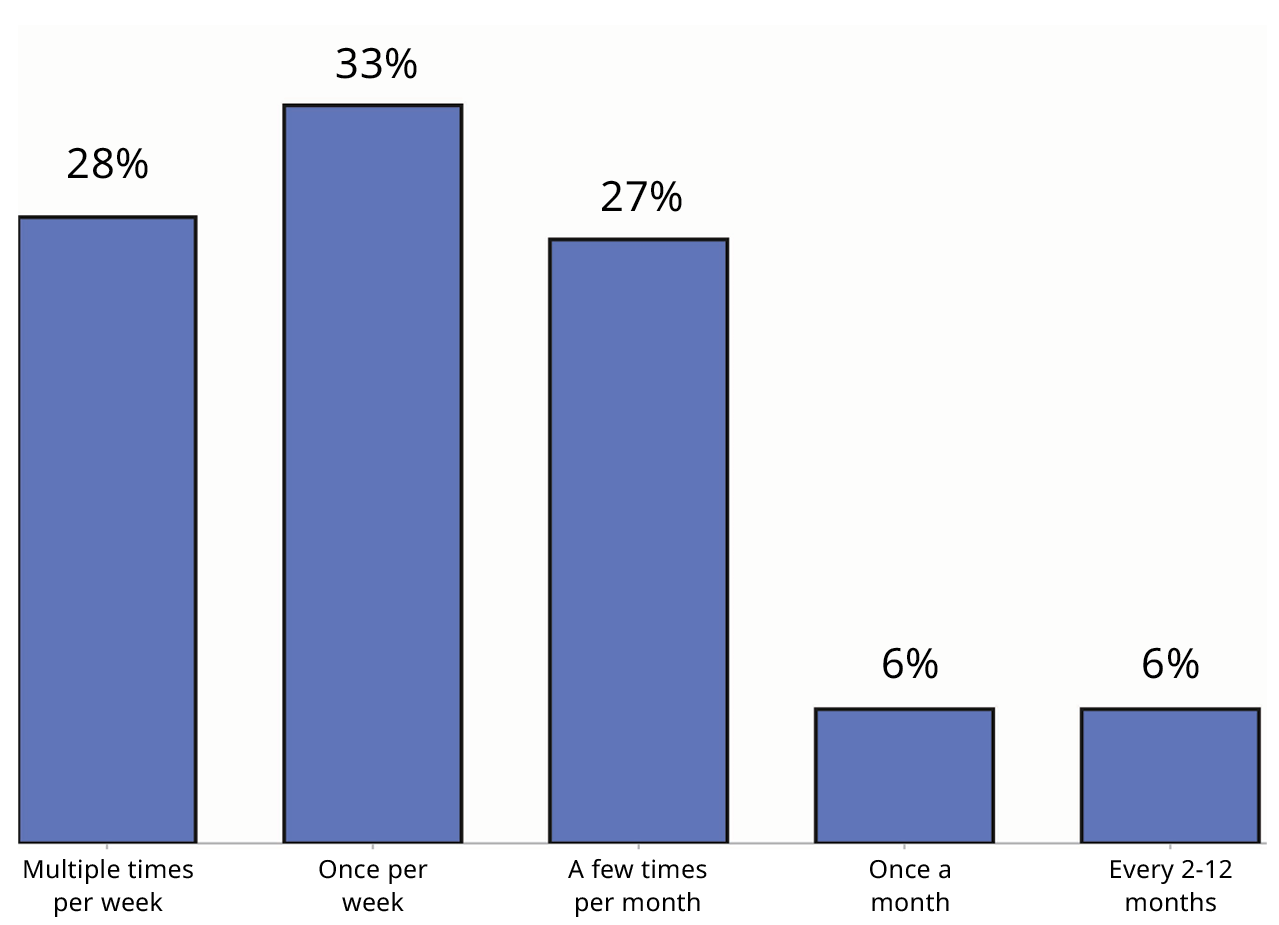
61% of consumers surveyed eat seafood at least once a week.
Bar chart showing dining frequency. Multiple times per week at 28%, once per week at 33%, a few times per month at 27%, once a month at 6%, and every 2–12 months at 6%.
6 out of 10 would like to eat more seafood.
Icon chart of ten stick figures seated at tables, each holding a fork. The chart visually represents a proportion related to dining habits.
In the last 4 years, total store seafood sales increased 30%. By product, sales increases are:

  • 68% – Sushi
  • 36% – Frozen Finfish
  • 35% – Frozen Shellfish
  • 27% – Refrigerated Finfish
  • 14% – Shelf Stable Seafood
  • 10% – Refrigerated Shellfish

Protein Most Often Consumed
Donut chart showing most popular types of meals. Chicken 50%, seafood 26%, beef 15%, pork 4%, and plant-based 5%.
5:1 Seafood from Alaska is preferred to other regions outside of the US.
Consumers report they have increased their seafood consumption for the following reasons:

  • 60% – Healthier
  • 29% – Enjoyment
  • 9% – Cut back on red meat
  • 8% – Preparation
  • 6% – Price
  • 2% – Sustainability concerns

Seafood caught in the wild is preferred 4:1 to farmed seafood.
Sustainable seafood options encourage 1 in 3 consumers to purchase more frozen seafood.
Alaska seafood is the preferred origin nationally and internationally
Two donut charts comparing dining breakdowns. Left chart: chicken 66%, pork 23%, beef 5%, seafood 6%, plant-based 5%. Right chart: chicken 34%, seafood 21%, beef 12%, pork 9%, plant-based 14%, vegetarian 7%, vegan 1%, other 2%.
Frequency of Seafood Purchase
Stacked bar chart showing breakdown of meal choices across categories. Top four bars highlight varied proportions including chicken 33–40%, pork 22–25%, beef 7–19%, seafood 9–15%, and plant-based 11–27%. Bottom two bars show chicken at 59–71%, pork 7–12%, beef 5–12%, seafood 4–6%, and plant-based 14–19%.