

nchorage Memorial Park Cemetery, Saint Patrick’s Catholic Church Columbarium, Fort Richardson National Cemetery, and Angelus Memorial Park: the final resting places for residents of Alaska’s largest city are filling up. Roughly 14,000 people are buried at the city-owned Anchorage Memorial Park Cemetery, which is almost out of space for its traditional burial plots. While the city races to alleviate an above-ground housing shortage, the dearly departed are also in need of alternative abodes for the hereafter.
“Most of the families we serve are looking at what we call simple cremation, immediate cremation. They’re going to do services on their own, celebrations of life on their own. But we have the ability to do viewings and complete funeral services, followed by cremation,” he says.
Hasara says Cremation Society of Alaska representatives have been attending Anchorage Assembly meetings for more than a decade to inform them that the cemetery is running out of space. “I think it is a lack of understanding on the part of people,” Hasara says. “But at the same time, our government and the forces that be are doing nothing about it. They see no priority.”
Hasara says Alaska has a 60 percent cremation rate, meaning the percentage of the population who opt for cremation is greater than traditional burial methods.
“The state rate is a little bit lower [than the national rate] because the Alaska Native population hasn’t really embraced the cremation concept,” Hasara says.
The Cremation Association of North America reports 62.8 percent as the national average in 2025, and 77.4 percent for Canada. Hasara came from Minnesota and says that state had a 20 percent cremation rate at the time. Now, it’s more than 50 percent.
He says the United States cremation rate is rapidly growing and has become more prevalent.
“We are a mobile society, where people don’t grow up and live their whole life in the same place,” Hasara says. “We move around. And with cremation, you can be cremated, and those cremains can be transported to wherever. They can be buried in the hometown cemetery, back where you grew up, or they can be buried here in Alaska—they can be scattered.”
In Alaska, Hasara says people planning their final wishes isn’t as prominent as other states, but it is growing.
“I probably get about ten calls a week just with people inquiring about pre-planning services,” Hasara says. “It could be just a simple call just trying to ask about the price of cremation and they’re thinking about it. And then there’s people that go as far as wanting to get all the wishes written down, everything in order, and being paid for everything in advance.”
“When I came into work one day, I took the stairs, and on the door was a posting for one of [Alaska End-Of-Life Alliance’s] first meetings, and I was like, ‘This is literally a sign. I am going to this meeting by noon that day.’ I signed up for the [University of Vermont’s] doula training, and was like, ‘I am not waiting until I am retired. This is my personal interest, and I want to be more fulfilled that way,’” Corveau says.
She completed the University of Vermont’s doula training program, but she likes to refer to herself as a deathcare educator instead of a doula, a role mostly but not exclusively related to childbirth. Corveau has her own practice, Rest with Radiance, which provides emotional, physical, and spiritual support to Alaskans and families of Alaskans during or after death.
“That’s the part of it that I enjoy the most and what I’ve been asked more to participate in,” Corveau says.
She says there are plenty of free conversation starter guides and resources available, like Five Wishes—a simplified advance directive option—or the Alaska Advance Health Care Directive Form from the state.
Also on the Alaska End-Of-Life Alliance board is Julie Raymond-Yakoubian, a home funeral guide with her own practice, The Ritual Bough in Girdwood, where she offers end-of-life doula services, home funeral guide services, and ritual and ceremony-related services that don’t have to be death or dying related. She works with humans as well as companion animals.
She leads the University of Vermont’s doula training program that Corveau completed, and Raymond-Yakoubian says that there are five D’s that should trigger an updated advance directive: deaths, divorces, disabilities, a new decade of your life, or a new diagnosis.
“A lot of people are just uncomfortable with the conversations,” Raymond-Yakoubian says. “I think Alaska needs to make these conversations more accessible and more available to people to have, and that’s like a lot of what [Corveau] and I do, and some of our colleagues are talking to people all the time. Like, these are the things you need to know. This is what a death doula is.”
Rachel Bernhardt
“I think that there are a lot of options for things that are not available to us in Alaska that are available in other states,” Raymond-Yakoubian says. “We don’t have access to aquamation for humans, natural organic reduction for humans. We don’t have medical aid in dying. You know, there are these things that are available in other places that Alaska is just starting to try and catch up with. And I am a firm believer we should have all the options available to us—and that it is up to us to make the decision about what we want.”
Corveau and Raymond-Yakoubian are also both on the board of directors for End-of-Life Options Alaska, a group of Alaskans who provide education and encourage public discussions about medical aid in dying, also known as assisted suicide or death with dignity. Medical aid in dying allows terminally ill or mentally competent adults with six months or less to live to voluntarily and legally request, receive, and self-administer a medication to accelerate their death in a humane way. Medical aid in dying is authorized in thirteen states and Washington, DC, but not Alaska. In 2001, the Alaska Supreme Court ruled that the privacy clause in the state constitution did not override the state’s interest in prohibiting physicians from harming patients. Legislation to permit physicians to assist patients in ending their lives has been proposed but not passed.
“For Alaskans, we are so independent, and everyone is very focused on, ‘It is my choice to do X Y or Z thing,’ whether it has to do with dying or not,” Raymond-Yakoubian states. “I am optimistic. I don’t know how soon it will happen. You know, there is a lot of grassroots support building that needs to be done, and education that needs to be done about what this actually means.”
Rachel Bernhardt is the founder and board president of Alaska Natural Burial, an Anchorage-based organization honoring the cycles of life and death through environmental conservation and sustainable practices. “There’s nothing non-biodegradable in the ground,” Bernhardt says. “So the human body can go in there. Any kind of joint replacements and stuff—that is going to go in there, too. But the idea is that the clothing that they are wearing doesn’t have zippers or any metal. The shroud or casket that they are in is going to be something that is readily biodegradable.”
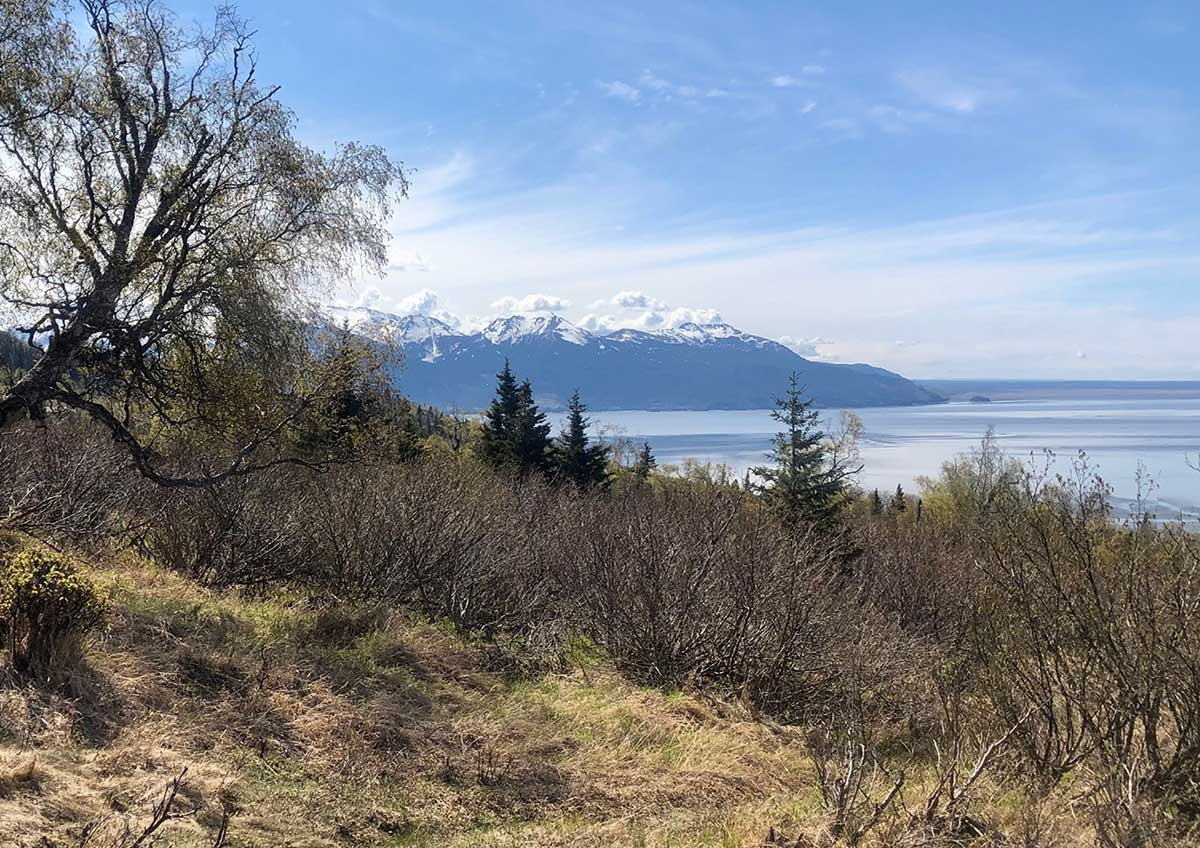
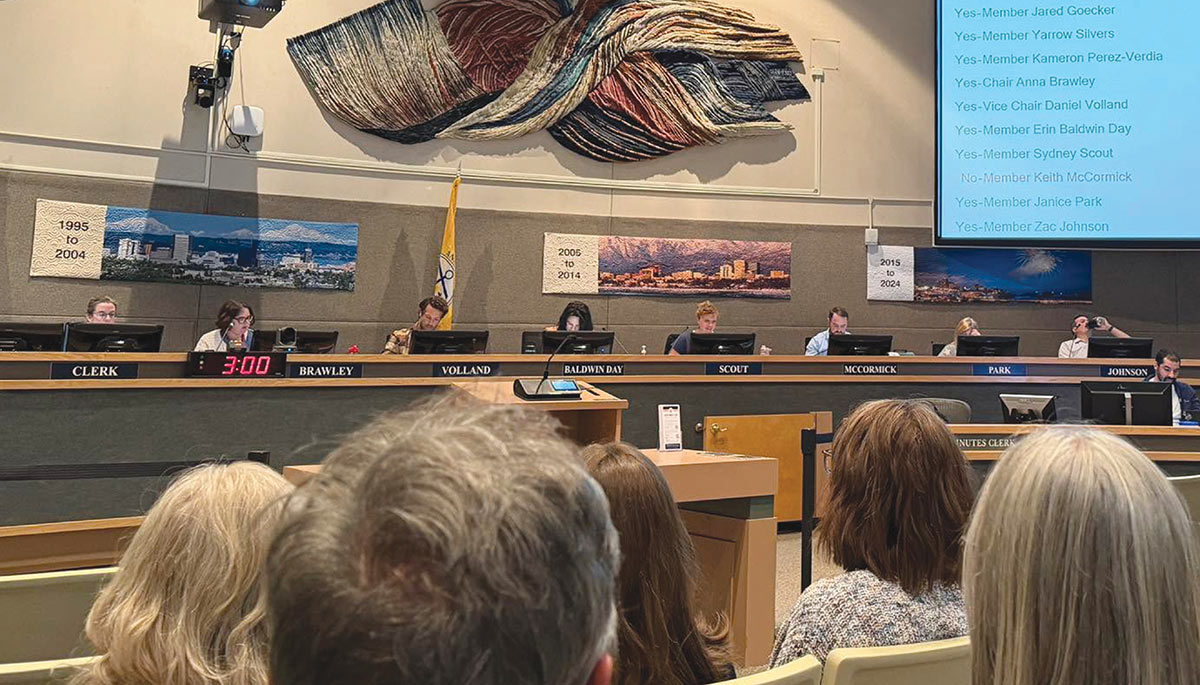
Bernhardt describes it as the first of its kind in the state with an estimated capacity for more than 2,000 natural graves. The nonprofit’s website outlines decades of work relating to the 9.6-acre parcel, which was owned by the Municipality of Anchorage’s Heritage Land Bank. In June, the Anchorage Assembly voted to transfer the land to Alaska Natural Burial, after voters in 2024 rejected a bond proposition to fund development of two new city cemeteries. Bernhardt says Alaska Natural Burial is just waiting on the municipality to draft the deed to move forward on the parcel.
“I think when people hear [about] natural burial, they think it is something drastically different, but it is just burial without all the extra nonsense,” Bernhardt says. “It’s something that’s really still very familiar, but embracing also the idea of letting families be involved, in actively participating with lowering the body into the ground, backfilling the grave, all of that kind of hands-on stuff… It’s really super transformative for families to play a physical role in doing that, whatever that is—if it’s just one shovelful of dirt.”
Rachel Bernhardt
Rachel Bernhardt
In addition to dogs and cats, Bernhardt and her staff have conducted water cremations for pigs, goats, mini horses, and large and exotic pets. She eventually wants to expand the business to include people.
“There’s no kind of clear path forward. It is a little daunting, actually, but the intention is we will just adhere to any regulations that currently exist about running a regular crematory, a flame crematory,” Bernhardt says. “So we need to have a licensed funeral director on staff. We need to be registered as a funeral home. All of those things.”
In addition to her deathcare business and nonprofit, Bernhardt promotes community awareness. She participates in “Death Cafés,” monthly talks at the library to challenge taboos around end-of-life issues and explore burial options. “There is this general phobia that we have of dying in general, but it’s something that we are all going to deal with, and then we don’t,” Bernhardt says. “We are all just kind of dooming ourselves to be in these little segregated cells of grief and misery.”
Bernhardt worked with organ and tissue donation programs for years, which led to her career surrounded by mementos of mortality.
Demystifying death is now her life. She shares, “I was at a family’s house yesterday. I was present for the euthanasia of their animal, and then I was there for another two hours, and there was room for laughter. There is room for joy and all sorts of unexpected emotions to kind of come in.”