

Investments
laska businesses go above and beyond to make a tangible impact through community support. To strengthen the communities they serve, they contribute via major donations, employee-driven volunteerism, or long-term partnerships.
Alaska has a strong culture of charitable giving and community service, a tradition that’s reflected in both formal and informal volunteerism. For more than a decade, the state has consistently ranked fifth in the nation in volunteerism, according to Laurie Wolf, president and CEO of The Foraker Group, a statewide nonprofit support organization. “I think that really speaks to the generosity of Alaskans—and that’s just the formal volunteerism we have captured,” she says. “When we show up as volunteers, which is a form of giving and community investment, it has a huge impact.”
Whether through financial contributions, in-kind donations, or employee volunteerism, it’s important for companies to give back to the communities that support their operations, Wolf says. Philanthropy is also good for business, especially when it comes to employee retention. “We see companies invest in Alaskan communities because that’s what makes their employees feel connected and want to stay and work,” Wolf says.

Alaska Communications
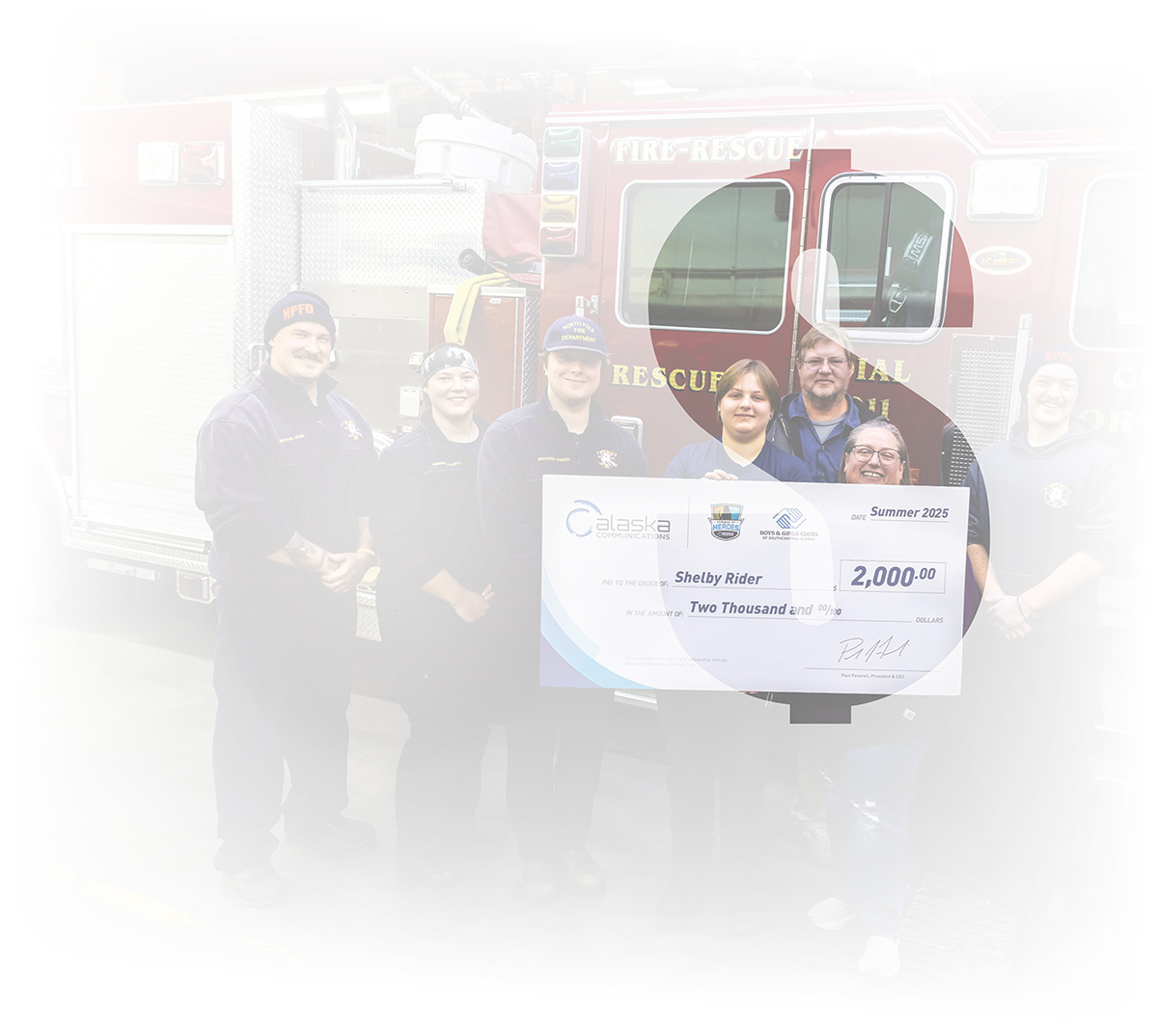
“Now in its sixteenth year, Summer of Heroes has awarded scholarships to ninety-eight outstanding youth representing more than thirty Alaska communities,” Marron says. “Along the way, we’ve received more than 700 nominations and contributed more than $250,000 to youth-focused nonprofits. Our current partner and beneficiary of our donation is Big Brothers Big Sisters of Alaska.”
For the first fifteen years, Summer of Heroes supported Boys & Girls Clubs – Alaska. When the organization reduced its geographic footprint and service levels, Alaska Communications employees again helped guide the program’s future. “Their input led us to partner with Big Brothers Big Sisters of Alaska beginning with the 2026 campaign,” Marron says.

First National Bank Alaska
“These organizations strengthen our communities by addressing critical needs, including affordable housing, homelessness, children’s welfare, and community health,” Lynch says. “Through this partnership, we invested in organizations making a meaningful difference, helping more individuals and families have access to resources and support.”
First National contributes nearly $1 million annually through donations and corporate sponsorships. “These investments reflect more than financial support; they represent the bank’s ongoing dedication to building meaningful relationships and improving the lives of the people we serve,” Lynch says. “As an Alaska-based financial institution, First National remains committed to making thoughtful decisions that support individuals, families, and businesses for the long term.”

Alyeska Pipeline Service Company
Each year, Alyeska Pipeline leads a group of health and wellness providers from partners such as the regional tribal nonprofit Chugachmiut, Providence Alaska, the Alaska Native Tribal Health Consortium, and the communities of Tatitlek and Chenega. Planning begins months in advance, with input from teachers and other community members to ensure the programming fits current needs. When the time comes, they deliver health education on a wide range of topics, hold a traditional health fair, and host a community meal.
To reach the locations, the health providers travel aboard a tugboat chartered by Edison Chouest Offshore. “Getting everyone there and back safely takes real focus,” Dugan says. “It’s truly an all-hands-on-deck event.”

GCI
GCI supports programs focused on prevention, intervention, and post-vention, from building connection and awareness to providing evidence-based training and screenings. Vassar says, “What we’ve learned over the last decade is that connection, education, and training can save lives. That’s why we’ve also worked to make resources like suicide prevention training and 988 [national mental health hotline] information more accessible.”
For many GCI employees, community support is about helping the neighbors, schools, teams, and local organizations that make Alaska feel like home. “Some of our most meaningful community partnerships started because an employee was already involved and wanted to bring others along,” Vassar says. “That’s when giving becomes more than a donation; it becomes neighbors helping neighbors.”
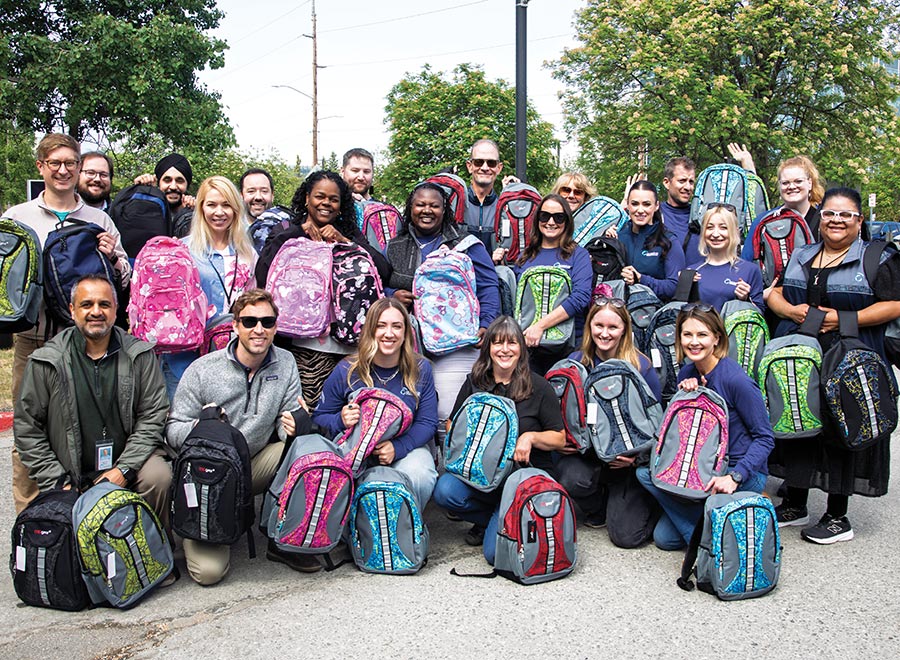
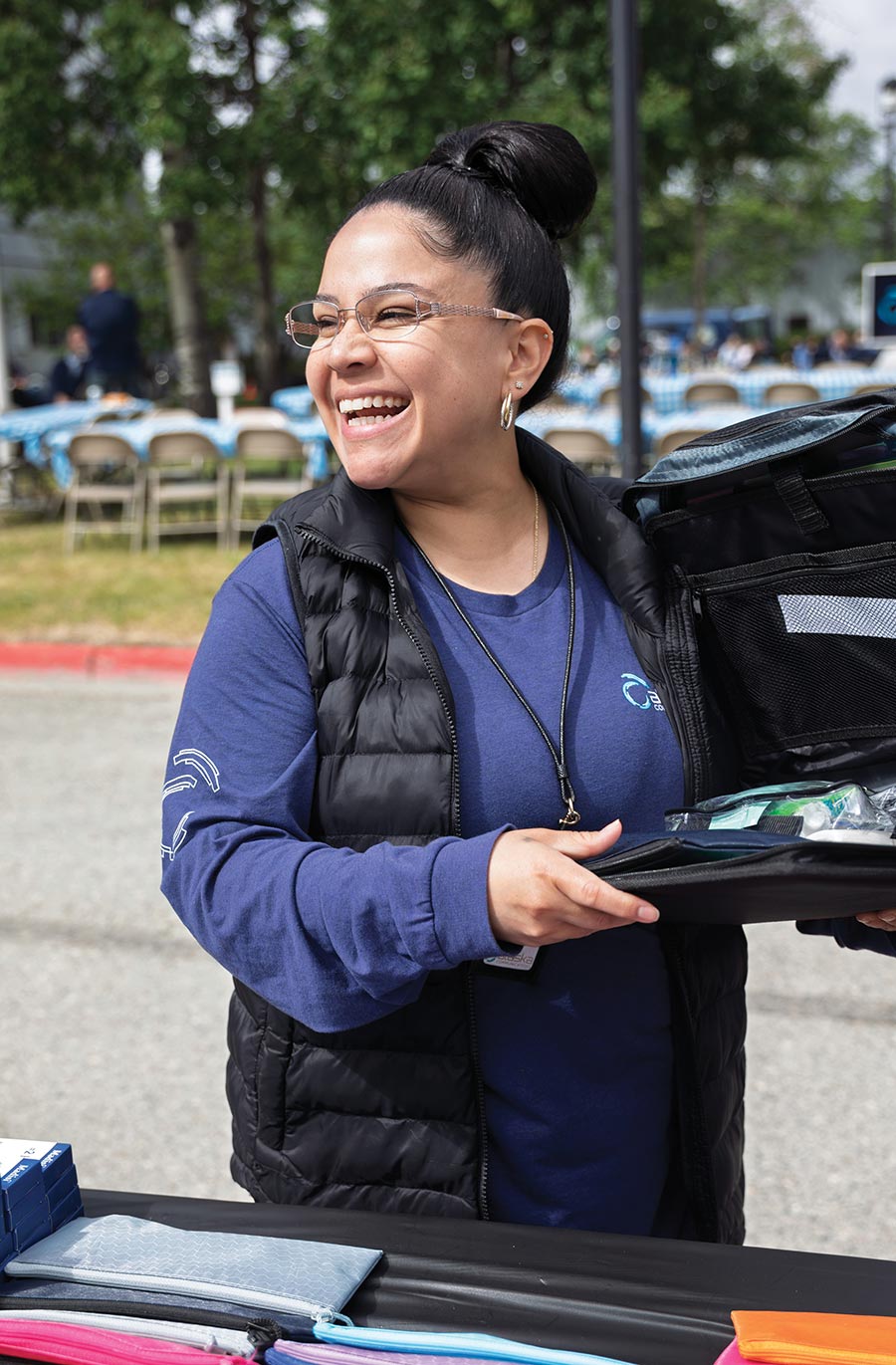
Employee involvement also strengthens Alaska Communications’ community support programs. In fact, it’s one of the reasons these programs have been so successful, according to Marron. Because employees helped shape these programs, they remain actively engaged. Through Summer of Heroes, for instance, employees nominate deserving youth from their personal networks, including family members. “One of the employee benefits of Summer of Heroes is that we hold aside one scholarship for a youth related to an employee,” she notes. “We see strong nominees for this award each year.”
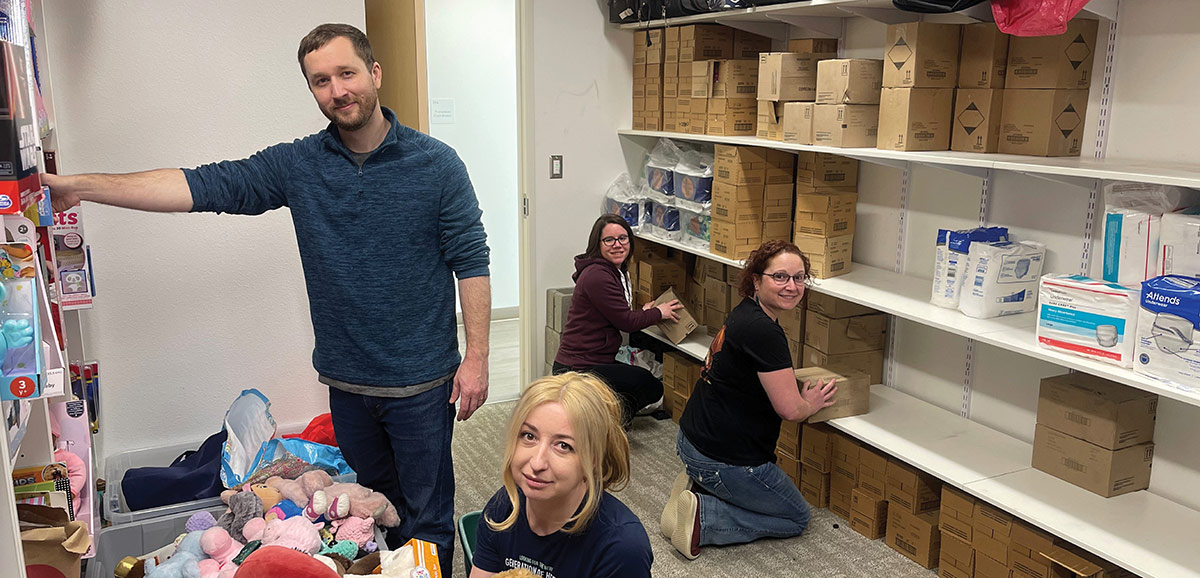
The company also offers paid volunteer time and an Employee Volunteer Grant Program. In 2026 alone, it has distributed more than $10,000 in grants supporting youth development, recreation, arts programs, animal welfare, basic needs services, and preservation of cultural traditions.
First National employees also volunteer extensively throughout Alaska. Many of the organizations the bank supports benefit from the time and leadership of its officers, directors, and employees. “By investing in the causes employees are passionate about, we strengthen community partnerships, foster employee engagements, and help build healthier, more vibrant communities for all Alaskans,” Lynch says.
The bank’s employees use their time and expertise to support a wide range of nonprofit organizations and community causes. They serve on nonprofit boards and participate in community events like Junior Achievement financial literacy classes, the United Way Anchorage’s Day of Caring, the Bean’s Café Empty Bowl Project, and Paint the Town in partnership with NeighborWorks.
“This approach has helped us build programs that are both relevant and sustainable,” she says. “When employees see their ideas reflected in our community investments, they’re more likely to participate, volunteer, and advocate for the programs, which creates a ripple effect.”
First National serves communities statewide through online and mobile banking and a network of locations in nineteen Alaska communities. Consequently, the bank regularly receives donation and sponsorship requests from nonprofits working to improve the quality of life in the communities it serves across the state.
Lynch says the bank reviews requests at both the local and corporate levels to ensure its charitable contributions are “meaningful and responsible.” Branch managers are empowered to support local organizations and community events, while the bank’s Donations Committee evaluates larger statewide or corporate requests.
Alaska Communications
Alaska Communications
Similarly, GCI focuses on areas where it believes it can make the greatest impact for Alaska: healthy communities; education and youth; digital resilience; and culture, community, and connection, Vassar says. Those priorities reflect the things that help communities thrive—strong schools, access to opportunity, support systems that improve well-being, and organizations that bring people together.
“We look for partners who are deeply rooted in Alaska, understand local needs, and are creating meaningful change,” she emphasizes. “At the end of the day, our goal is simple: support the people and organizations that are helping build a stronger, healthier, and more connected Alaska for future generations.”
For Alyeska Pipeline, the decision about which causes to support comes down to a single idea: fueling healthy, vibrant communities where its employees and their families live and work. Dugan says, “We prioritize support for organizations that invest in and serve TAPS [Trans Alaska Pipeline System] communities—especially those targeting health and social services, community enrichment, youth, and the environment.”
The company also sets unique objectives to accomplish each year. “In 2026, we challenged ourselves to receive nominations from at least two communities that had never previously participated in the program’s sixteen-year history, and we’re proud to say we far surpassed that goal,” she says. “We’ve also made a significant impact over time, donating more than $250,000 to youth-focused nonprofits in Alaska.”
Alaska Communications also looks at broader measures of engagement and awareness. Marron explains: “This year, the Summer of Heroes webpage became the fourth most-visited page on the Alaska Communications website during the month of May. While that wasn’t a formal goal, it demonstrated strong community interest and showed the program is helping us connect with Alaskans and create brand awareness.”

GCI
Alyeska Pipeline aims for a mix of qualitative and quantitative measurement. The company tracks program participation and gathers community feedback after events like the Traveling Health Fair. “Beyond the numbers, our staff is in regular contact with key stakeholders around the state,” Dugan says. “And with 94 percent of Alyeska employees living in Alaska, we definitely hear about it when we’re doing things well—and when we miss the mark.”
GCI looks beyond dollars and volunteer hours to outcomes, such as expanded programs or increased access to opportunity. The real measure of success, Vassar says, is whether its support is helping organizations do more for the people they serve. “Did a student gain access to an opportunity they wouldn’t have otherwise had? Did a nonprofit expand a program that meets a critical community need? Did a family receive support during a difficult time? Those are the outcomes that matter,” says Vassar. “When our partners tell us they’re making a greater impact because of our support, that’s how we know we’re moving in the right direction.”
In reflecting on GCI’s commitment to community support, Vassar says the company is “grateful” for its nonprofit partners. “Every day we get to see the difference they’re making in communities across Alaska, and it’s inspiring,” she says. “Alaska has some really extraordinary people working to make their communities stronger, and we’re proud to stand alongside them.”
Ultimately, giving back is more than a corporate responsibility, Wolf says. It’s a shared commitment to Alaska’s economic vitality and overall well-being. No one sector can do it alone—not nonprofits, government, or corporate Alaska. “We truly need one another,” she says. “It’s about creating and sustaining a rising tide together.”