

Whittier’s
Future
improvements for tourists
and locals
hat happens when a city with fewer than 300 residents becomes a major freight and tourism hub, despite being accessible only by boat, plane, or a one-lane highway/railroad tunnel managed on a strict schedule?
If you’re in the City of Whittier, you get busy. The city has two separate transportation planning efforts underway, including a safety action plan under the federal Safe Streets and Roads for All initiative, which focuses on improving safety for pedestrians, cyclists, motorists, and emergency responders. The second is Whittier Moves, the city’s transportation master plan, which serves as the long-term roadmap for growth.
These plans are designed to work in conjunction with the city’s Waterfront and Economic Development Plan, which encompasses the area from the dock on Passage Canal to the airport at the head of that waterway. The Alaska Railroad Corporation (ARRC) also has its own Whittier Terminal Master Plan. City Manager Jackie C. Wilde says that the city has worked closely with ARRC and the Alaska Department of Transportation and Public Facilities (DOT&PF) to ensure these planning efforts complement one another.
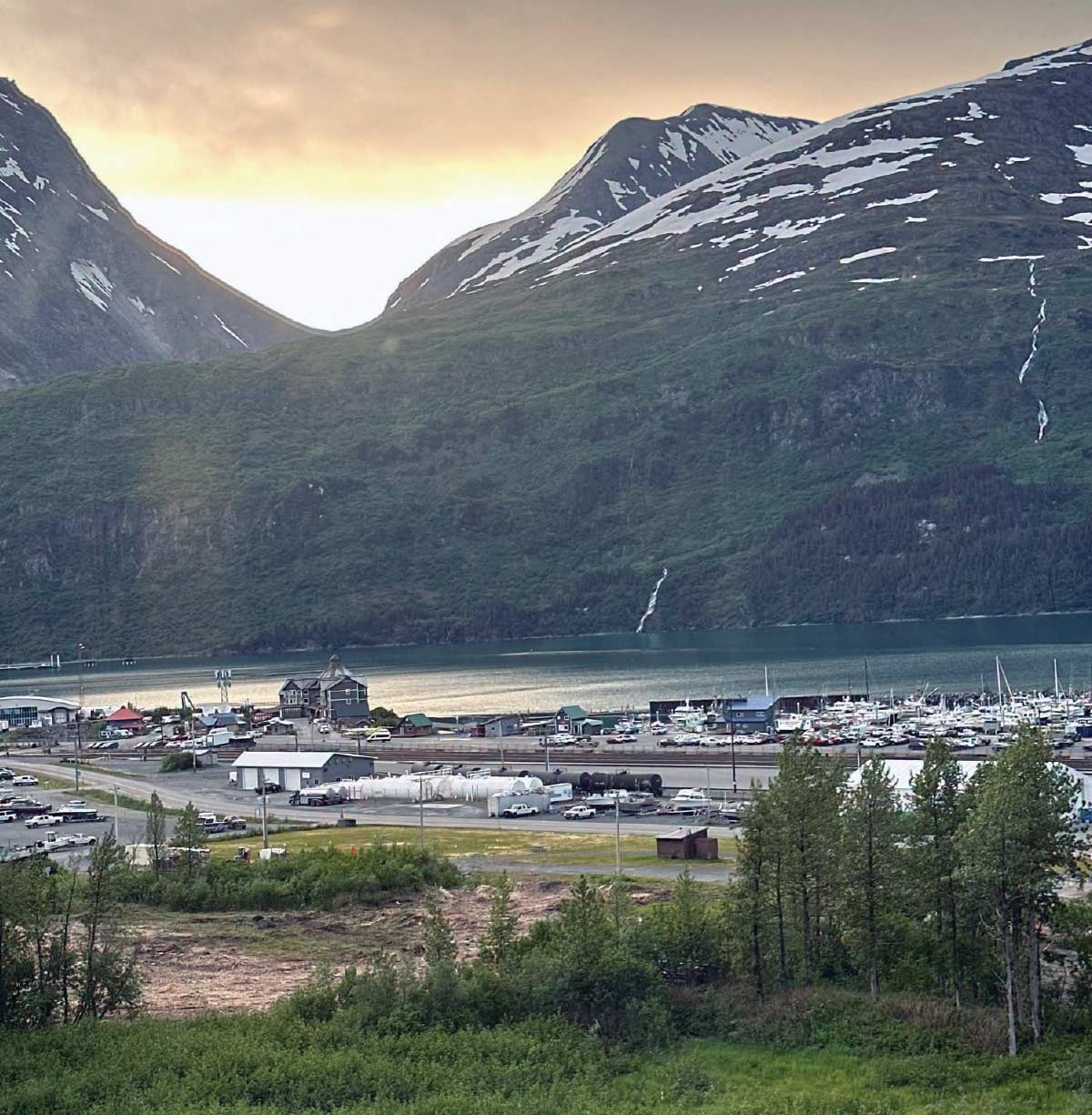
“In a town of 273 people, we have cruise ships, ferries, boats, airplanes, helicopters, trains, and freight coming in, all in a roughly two-mile stretch,” says Wilde. “The question then becomes, how does a city that was not designed to expect 700,000 visitors a year keep all of these people safe?”
Whittier is also nearing completion of its Small Boat Harbor Phase III Replacement Project, supported by approximately $4.5 million in state grant funding and up to $4.5 million through the Alaska Municipal Bond Bank. The project includes new harbor floats, utility upgrades, electrical improvements, and modernized moorage facilities.
“Like many of the city’s infrastructure projects, the harbor replacement has been completed in phases, allowing Whittier to leverage outside funding while modernizing essential public infrastructure and minimizing the financial impact on local taxpayers,” says Wilde.
This July, the City of Whittier and ARRC finalized the transfer of approximately 100 acres of central and waterfront land, which was owned by the railroad. The Alaska Legislature allowed the city to buy the land from the state-owned railroad at fair market value (estimated near $4.9 million) to gain local control over development.
“This first phase of the city’s land purchase and transfer agreement with the railroad includes a little more than 9 acres of waterfront property and approximately 38 acres in the core of Whittier,” says Wilde. “This acquisition creates new opportunities for housing, economic development, public infrastructure, and other long-term community needs.”
Because Whittier’s existing transportation infrastructure is at or near capacity, the city decided that instead of taking on each project piecemeal, it would look at these issues holistically. For example, after receiving federal funding to start abatement on the infamous ghostly Cold War relic—the Buckner Building and the brownfields around it—the city will use concrete rubble from the demolition as fill on the DeLong Dock replacement and the Shotgun Cove Road Extension.
“By tying these projects together, it not only reduces the amounts of debris that needs to be taken out of Whittier but reduces disposal costs, lowers future construction expenses, and maximizes the value of taxpayer investments,” says Wilde.
Whittier is currently using a $4.1 million grant to fund the design portion of the dock, which is being overseen by Solstice Engineering and CRW Engineering Group, and the city is seeking construction funding. A study in 2018 estimated that a replacement dock would cost about $47 million.
The Shotgun Cove Road Extension project will enable Whittier to access federal and state lands, expanding opportunities for residential and commercial development on the 400 acres the city owns adjacent to the road. The project creates a two‐lane gravel road from the end of the existing road to US Forest Service land at Trinity Point.
City of Whittier
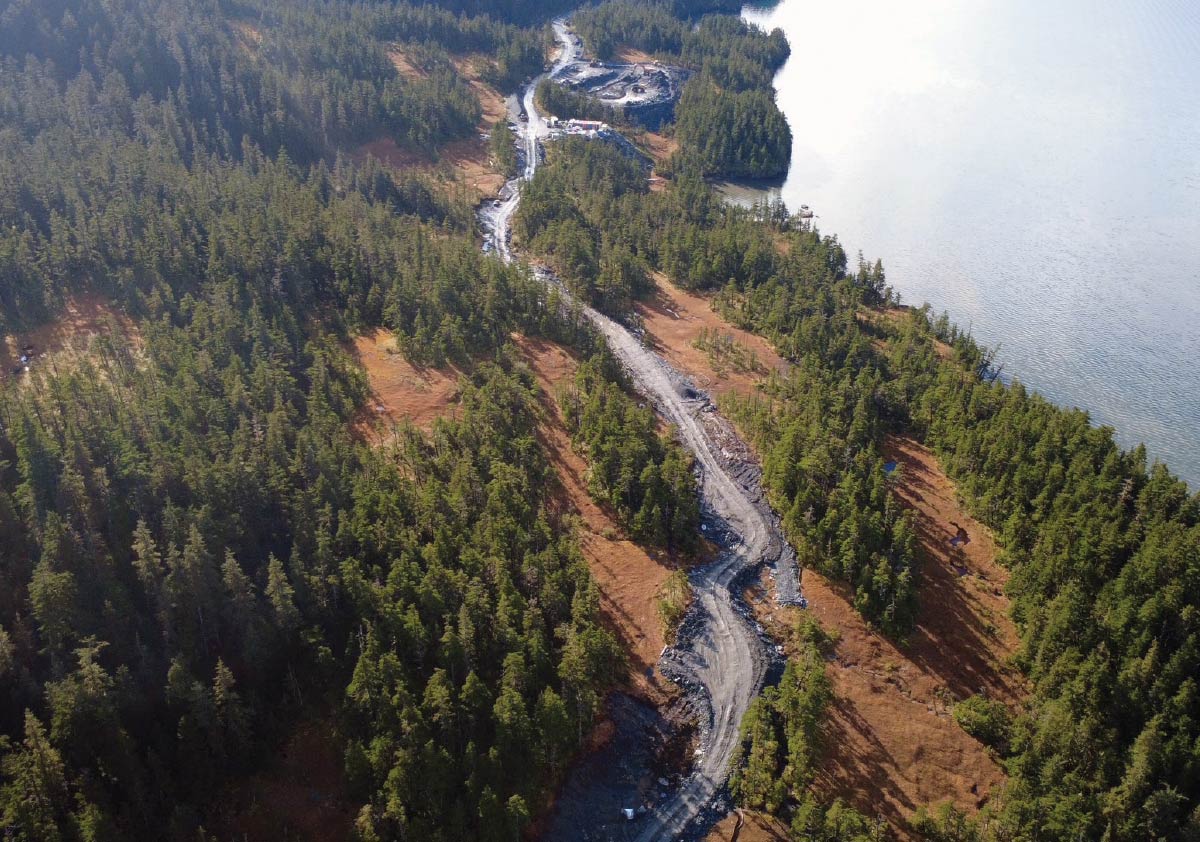
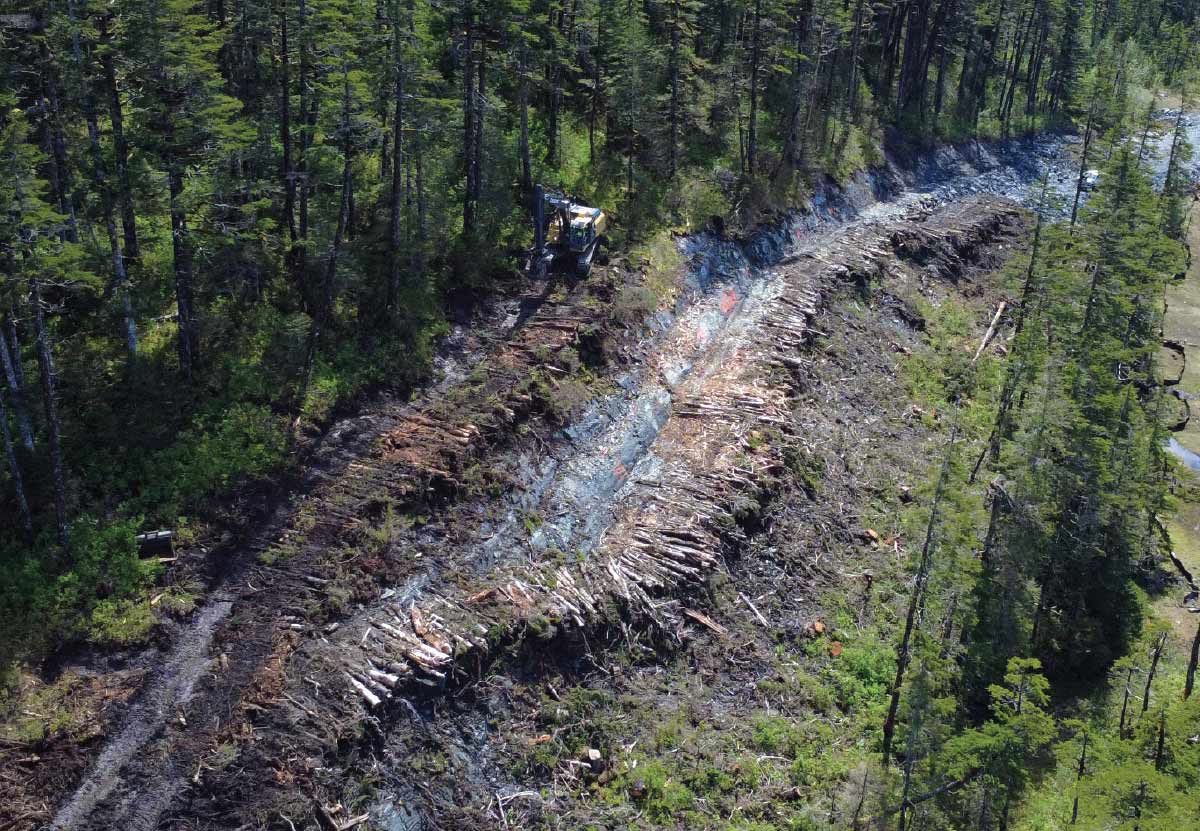
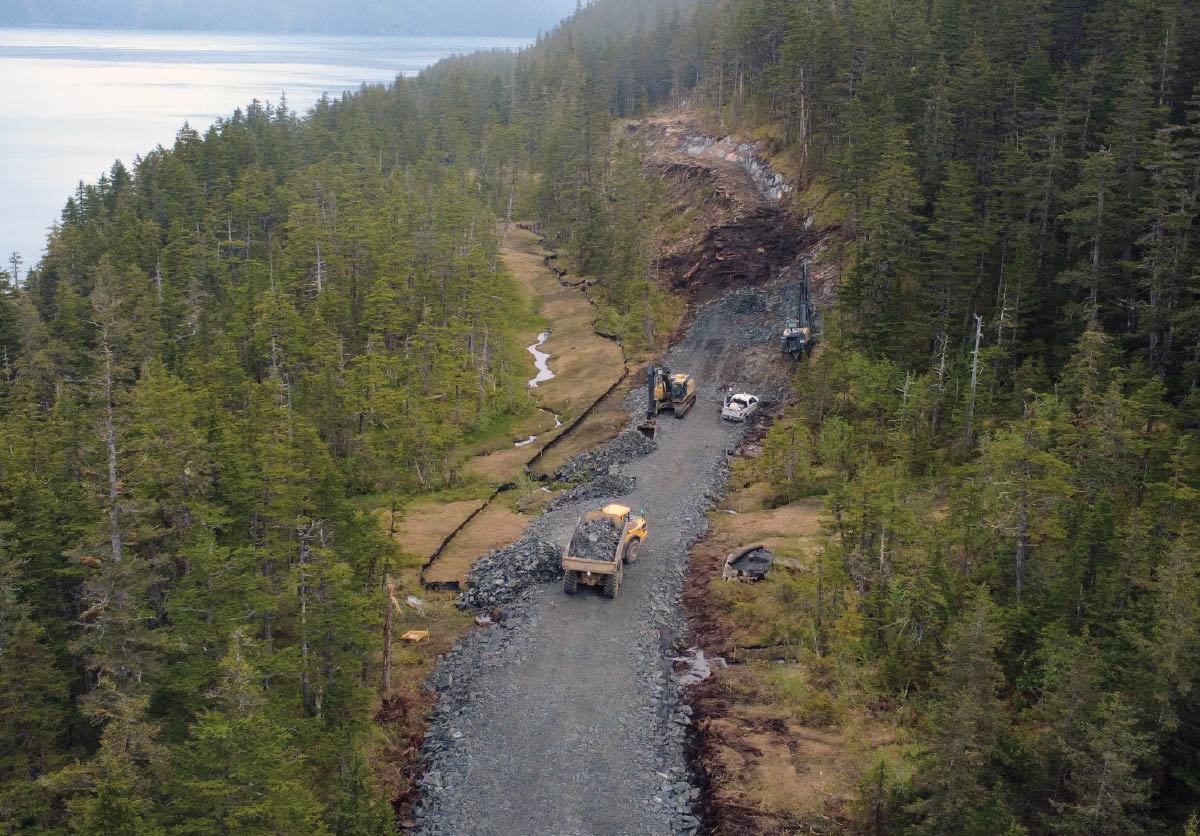
“We’ve intentionally built this project in phases so we can advance construction every time we secure additional funding,” she adds. “The vision for extending Shotgun Cove Road dates back more than forty years, while the current federally funded extension project has been in development since 2017.”
“The Buckner Building has been one of Whittier’s biggest challenges for decades. This project is about protecting public safety, preserving our environment, and responsibly addressing one of Alaska’s largest abandoned military structures,” says Wilde, adding that the building contains hazardous materials that require careful environmental remediation before demolition can occur.
The city recently received an $800,000 grant for the Buckner Building Brownfield Assessment and planned demolition to go with $5 million in combined federal grants and congressionally directed spending secured by Senator Lisa Murkowski.
NORTECH will lead the engineering, environmental assessment, and remediation planning for the project, which is estimated to cost approximately $48 million. Where feasible and environmentally appropriate, the city plans to repurpose salvaged concrete as aggregate for future infrastructure projects.
The city has also started clearing trees for the $3.25 million Well Field Replacement Project that will replace eighty-year-old water infrastructure, improving community water pressure and supply reliability. The construction includes new well pumps, piping, valves, controls, and well building to service Whittier’s residents, harbor operations, businesses, fisheries, and the hundreds of thousands of visitors who come through Whittier each year.
While the Chugach Glacier Gateway Terminal is the city’s newest portal for cruise ship passengers, Whittier has an existing facility that’s due for an upgrade. The Whittier Cruise Ship Terminal Electrification Project is a partnership of the State of Alaska, Chugach Electric Association, and Carnival Corporation to enable ships to shut down their engines and hook up to the local power grid. The project will contribute to Carnival Corporation’s goal of net-zero greenhouse gas emissions by 2050. Terminal electrification began in 2023, and it’s slated for completion next year.
“While these investments certainly benefit tourism and Alaska’s transportation network, every project we pursue is ultimately about creating a stronger future for the people who call Whittier home,” says Wilde. “By aggressively pursuing grants and outside funding, we’re able to invest in housing, infrastructure, public safety, and community amenities while minimizing the financial impact on our local taxpayers. These projects create opportunities not only for today’s residents but for future generations as well.”
“The tunnel was built in a hurry during World War II, and like anything that’s eighty years old, it needs some rehabilitation,” says ARRC Vice President and Chief Engineer Brian Lindamood.
Rehabilitation of the mile-long Portage Tunnel will include cleaning, work on the drainage system, and repair of the tunnel’s heating system which keeps ice from forming during the winter. The project will also raise the height of the tunnel to standard railroad clearances, which will enable the railroad to use double-stack rail cars, a capability the Anton Anderson Memorial Tunnel has had since it was upgraded to a bimodal passage in 2000. The Portage Tunnel has remained a bottleneck.
“Because the tunnel was constructed quickly, it has some issues, including the fact that the ceiling is too short,” says Lindamood. “When DOT did work on the Whittier Tunnel [Anton Anderson Memorial Tunnel] twenty years ago, they increased it to standard railroad clearances. But the Portage Tunnel was never touched.”
In addition to the rehabilitation project, ARRC is planning to purchase thirty double-stack railcars. “Right now, containers are placed side by side, which requires a longer train car,” says Lindamood. “By moving to a double-stack configuration, we’ll reduce the length of the train car by 25 to 30 percent. This will reduce the times we block Whittier Street and make the waterside more efficient.”
City of Whittier
“Unlike construction on a highway, where you can pave a detour or send traffic down another road, we have nowhere else to put traffic,” says Lindamood. “We have a small window to take the railroad out of service and make fixes quickly. We can’t be out of service for three months, so we’re just going to run trains through the middle of it.”
The complexity will be worth the wait. “This is a really good project for the Alaska Railroad, the city of Whittier, and the state,” Lindamood adds. “Anything we can do to make the process more efficient means that savings get passed down the line.”
This fall, Whittier welcomes the US Navy for the commissioning of USS Ted Stevens, an Arleigh Burke-class guided missile destroyer named for the late former US senator.
According to Cherie Curry, board president of the USS Ted Stevens Commissioning Committee, ship commander Captain Mary Katey Hays selected Chugach Glacier Gateway Terminal for the commissioning ceremony after scouting three locations in 2024.
“Huna Totem’s terminal in Whittier has the capacity to host a large group of up to 4,000 persons for the commissioning,” Curry explains. “The water is deep enough at the dock so the ship will not have to be moved daily due to tides as with some other facilities in Southcentral Alaska.”
The date for the ceremony was pending completion of final ship trials in July. If approved by the Secretary of the Navy, the ship may make other Alaska stops before it is homeported in Norfolk, Virginia.
“We appreciate the support of the Department of Transportation [and Public Facilities], the Alaska State Troopers, the Alaska National Guard, Anchorage and Whittier Police departments, and of course all of our donors to make this historic week of events a success,” says Curry. “A big thank you to Huna Totem Corporation for adjusting their cruise ship schedule to accommodate the USS Ted Stevens.”