

Materials Response
and Planning
an incident
or companies that store, transport, or use hazardous materials—commonly known as hazmat—the most important response decisions are often made long before a spill, leak, or accident happens.
“Mobilizing response resources in Alaska presents unique challenges due to limited road access, reliance on air and marine transport, extreme weather conditions, and the need to transport and stage specialized equipment in remote areas,” says Matt Melton, Alaska general manager at Republic Services. “These factors can impact timing, safety, and overall logistics, particularly when disposal capacity for certain waste streams is limited.”
Hazardous materials include flammable products, such as gasoline and propane; corrosives, such as strong acids; toxic substances like pesticides and industrial chemicals; reactive or explosive materials; and radioactive substances used in medical or industrial settings. In business operations, these materials may appear in bulk tanks, drums, laboratories, maintenance shops, construction sites, transportation fleets, or legacy properties being redeveloped.

Alaska Department of Environmental Conservation
According to Melton, Alaska’s most common and significant hazmat incidents include fuel and petroleum spills from transportation or bulk storage facility incidents; weather-related impacts on residential and commercial areas; industrial chemical releases; remote-site events involving established facilities or construction activity; and legacy contamination uncovered during excavation, construction, or development. “These incidents are often made more difficult by limited transportation access and the fact that they frequently occur in remote, environmentally sensitive areas,” he says.
Pre-incident planning plays a critical role in improving response outcomes by identifying potential risks in advance, establishing communication and coordination protocols, and pre-selecting response, transportation, and disposal options, Melton says. “This preparation enables faster mobilization, more informed decision-making, and ultimately reduces downtime, liability, and environmental impact for our customers.” he notes.

Fairbanks North Star Borough
Iain Miller, emergency services manager for the Fairbanks North Star Borough (FNSB), says life safety comes first. People must be moved away from the hazard and protected before responders turn their attention to the material itself. Whenever possible, responders prefer a defensive strategy: isolate the release, keep it from spreading, and allow the responsible party and specialists to manage cleanup. Some incidents, however, require an aggressive intervention, in which trained responders enter the hazard area to stop or contain a leak. “There are lots of different tactics, lots of different tasks we can do to make it safer,” Miller says.

Fairbanks North Star Borough
Practical experience matters because Alaska responders must often decide quickly whether a situation can be handled locally or requires regional, state, federal, military, or private-sector support. The final decision depends on the size and nature of the incident. Miller explains, “A major pipeline issue would likely require larger regional or state support, while something like a rolled-over highway cargo tank may be manageable locally with fire departments, the hazmat team, emergency management, and DEC.”

Shannon & Wilson
Fortunately, the Fairbanks hazmat team rarely faces large-scale, high-risk releases. But it stands ready. Alaska’s emergency-response community is relatively close-knit, which enhances coordination in the state’s hazmat response system, Bones says. This helps DEC, local responders, and industry partners work together more smoothly during hazmat response incidents. Ultimately, effective local coordination comes from bringing the right people together ahead of time, maintaining relationships, and planning for unexpected events before they occur.
For owners, operators, and developers, hazmat planning also means understanding what contamination may already exist. Early contaminant investigation helps avoid surprise costs, reduce uncertainty, and prevent exposure risks, says Chris Darrah, who has worked primarily in the field of contaminated site assessment and remediation since 1992.
“Delineating the nature and extent of contamination early is critical to an effective and timely response,” says Darrah, vice president, Alaska Region manager, and Fairbanks office manager at Shannon & Wilson, an engineering and environmental consulting firm. “Knowing what type of contamination is present, what media are impacted, and how far the contamination has spread are all essential to understanding who is at risk of exposure to that contamination. It is this exposure risk—defined using a process called a Conceptual Site Model—that is the main driver of remediation decisions.”
Failing to define contamination can create new problems, Darrah says. For instance, if contaminated soil is excavated and reused as fill somewhere else, a company may unintentionally create a second contaminated site. If a leaking tank remains in service or a floor drain continues to send oily water into soil or groundwater, the response problem grows while the owner is deciding what to do. His straightforward advice: “If a release is ongoing, stop it; if exposure is ongoing, stop it.”
Site owners or operators should notify DEC promptly after discovering contamination, a spill, or release. Responsible parties will eventually need DEC review and approval of remediation plans. “DEC staff are knowledgeable, helpful, and provide important support to ensure appropriate and effective site investigation and remediation that lead to site closure,” Darrah says.
Beyond the required reporting, DEC encourages businesses that handle oil and hazardous substances to post a spill-reporting placard in a visible location and to use secondary containment for tanks, drums, and other containers. The agency also stresses everyday housekeeping. “Keeping your business clean and tidy with good operational practices saves money and can prevent small spills from becoming a big issue,” Wood explains.
To help navigate these issues, Republic Services deploys an integrated approach to hazmat response. The process includes emergency response, containment, waste characterization, profiling, transportation logistics, treatment, recycling or disposal at permitted facilities, and regulatory documentation. “This approach reduces complexity, risk, and downtime for our customers,” Melton says.
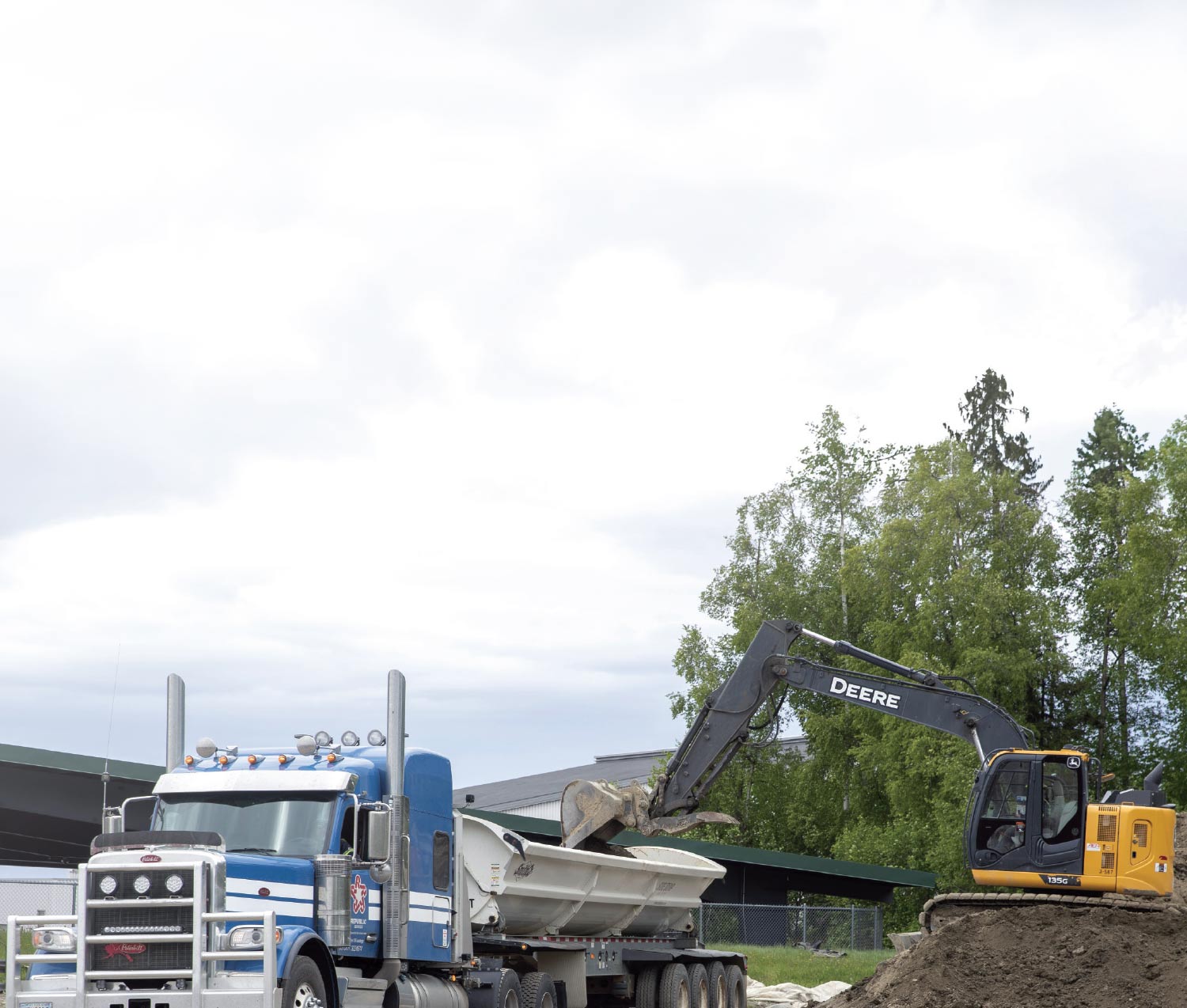
When a spill or accident happens, the company’s trained response teams use a combination of vacuum trucks, drums, and containers for liquids and solids, along with absorbents, manual labor, and heavy equipment like excavators and loaders to safely collect contaminated materials and prevent further spread. Then they evaluate and route the collected materials to the appropriate treatment or disposal path based on their composition and regulatory requirements.
“Whenever possible, waste is managed in-state: petroleum- and PFAS-impacted soils are transported to the Moose Creek Facility near Fairbanks for thermal treatment (heat-based processing), while liquids and mixed wastes are handled at the Viking [Drive] facility in Anchorage, where they are separated, recycled, or stabilized through processes like solidification,” Melton says.
And the rest? Melton explains, “Materials that cannot be safely treated in Alaska are properly packaged, documented, and shipped to permitted Republic Services facilities in the Lower 48, such as Grand View, Idaho and Beatty, Nevada. This approach ensures spills are cleaned up efficiently while protecting people, communities, and the environment through compliant management.”
Recent improvements have included better exercise planning, online scheduling, earlier notification of industry-led exercises, and more effective virtual participation. “Using exercises to improve virtual participation will also improve the early hours of a response to a real incident where the interagency response team is likely to not yet be co-located,” Wood says.
For business leaders, exercises can reveal gaps that routine compliance reviews may overlook, including outdated contacts, unclear authority, missing spill supplies, untested communications, unrealistic transportation assumptions, and uncertainty about who can authorize spending. They also help businesses build important relationships among facility personnel, responders, regulators, contractors, and community representatives before a crisis requires them to work together. Miller says, “The more communities, industries, and the public do up front to prevent incidents and prepare for them, the better everyone will be protected.”
The program establishes requirements governing the generation, transportation, treatment, storage, and disposal of hazardous waste. The Alaska Department of Environmental Conservation (DEC) assumes responsibility for many day-to-day program functions, including permitting, inspections, compliance assistance, and enforcement. EPA continues federal oversight and retains authority under federal law.
Alaska lacked its own regulatory framework until this year, when DEC finally applied to EPA to take over the regulatory reins. Final approval gives DEC direct authority to permit and oversee treatment, storage, and disposal facilities within state borders.