

Alaska Trends
s the saying goes, Alaska is an hour’s drive from Anchorage. North or south of the state’s most populous city are two very different neighbors. Across Knik River, there’s the Matanuska-Susitna Borough, twin watersheds the size of West Virginia with a population smaller than the Charleston-Huntington metropolitan area. And through the continent’s longest highway tunnel, there’s Whittier, the Town Under One Roof. This issue highlights these places with Vanessa Orr’s article “Mapping Whittier’s Future” and Rindi White’s “In the Valley of Luxury.”
Whereas the Mat-Su population is notably growing fast, at more than 112,000, little Whittier boasts barely 400 residents. According to US Census figures, 34.5 percent of Whittier workers commute by car while an equal portion walk. In the Mat-Su, by contrast, 71 percent commute by car, and 11.7 percent work from home.
Those homes are worth more, with a median property value in the Matanuska-Susitna Borough of $346,000 while Whittier’s is $83,000. More than 77 percent of Mat-Su residents own homes, whereas nearly 60 percent of Whittier folks are renters. Thus, Whittier’s median property tax payment is $56, the average Mat-Su taxpayer owes $3,437.
To pay those bills, the 39,900 households in the Mat-Su earn a median income of $94,031, while Whittier’s 138 households get by with a median income of $62,500. The Mat-Su also counts an average of two cars per household while Whittier averages just one.
Those cars can only leave town via the Alaska Marine Highway System ferry or, by land, through the Anton Anderson Memorial Tunnel. This edition of Alaska Trends elaborates upon the engineering details of that subterranean monument.

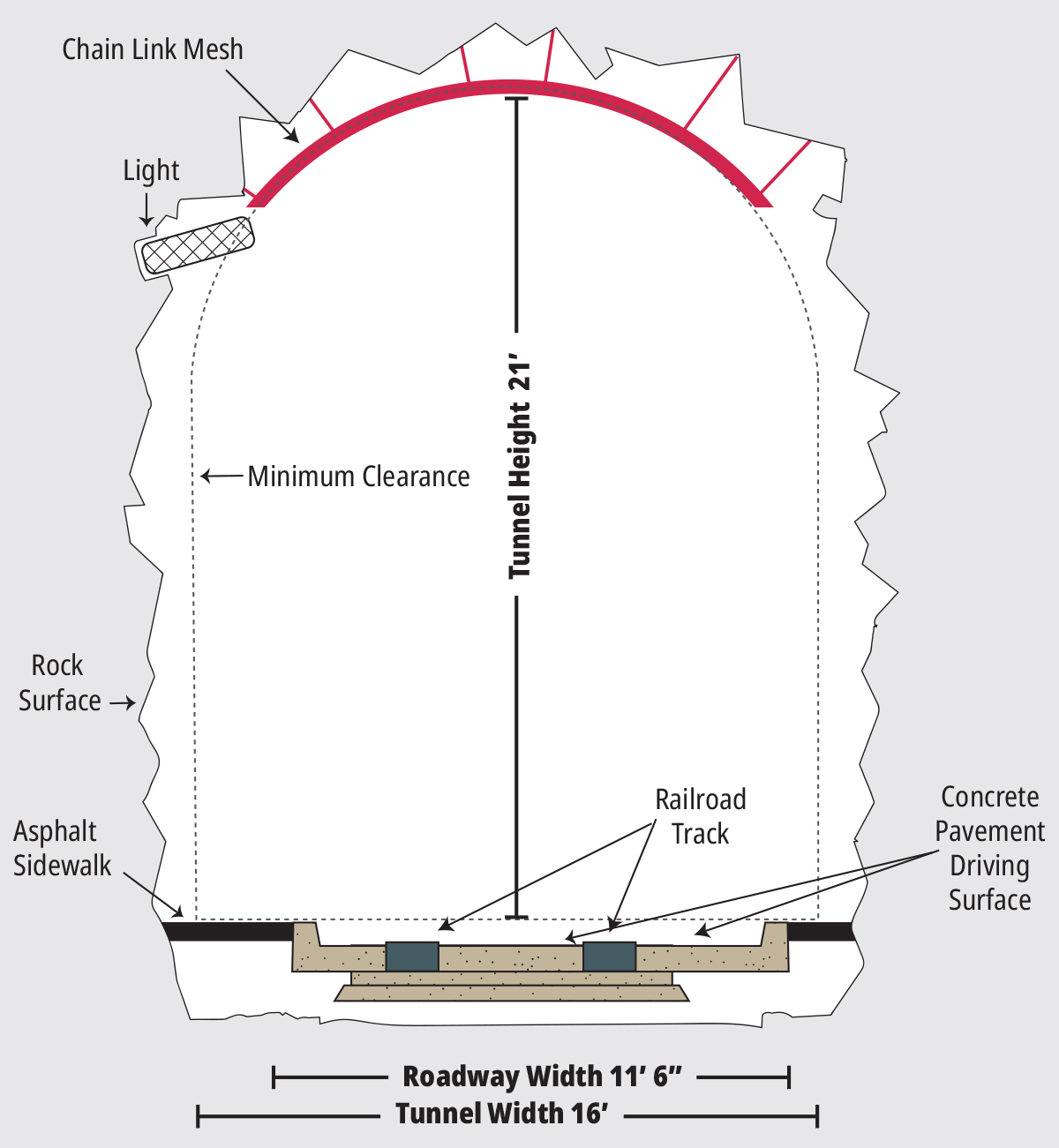
The panels have a concrete textured driving surface, allowing trains to use the same surface. These panels are concrete to reduce long-term maintenance costs.
Asphalt was placed adjacent to the rail to allow the removal of the rails for maintenance or replacement.
The majority of the tunnel walls remain natural rock. The ceiling is lined with a wire mesh, catching loose rocks that could work out over time.
In areas where the rock is less competent, the tunnel is lined with a steel plates.
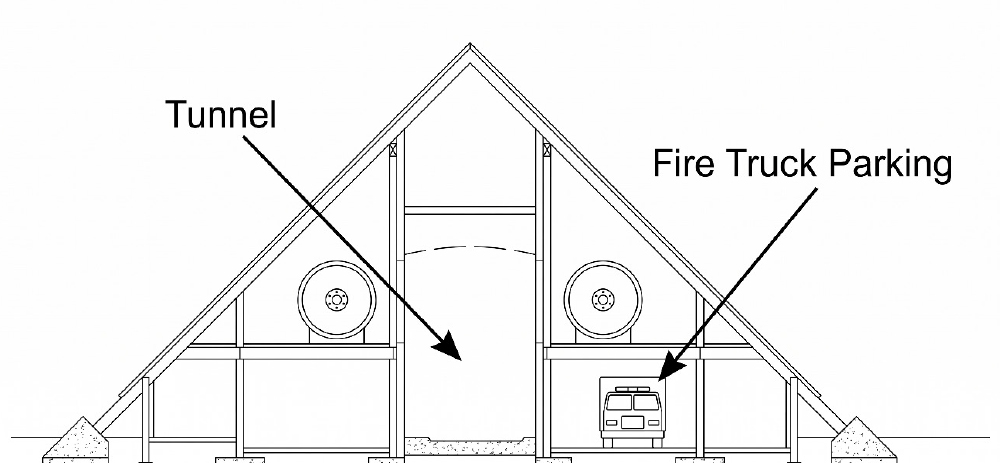
At the entrance on the Bear Valley side, the roof is designed to withstand forces of 220 lbs per square foot.
