

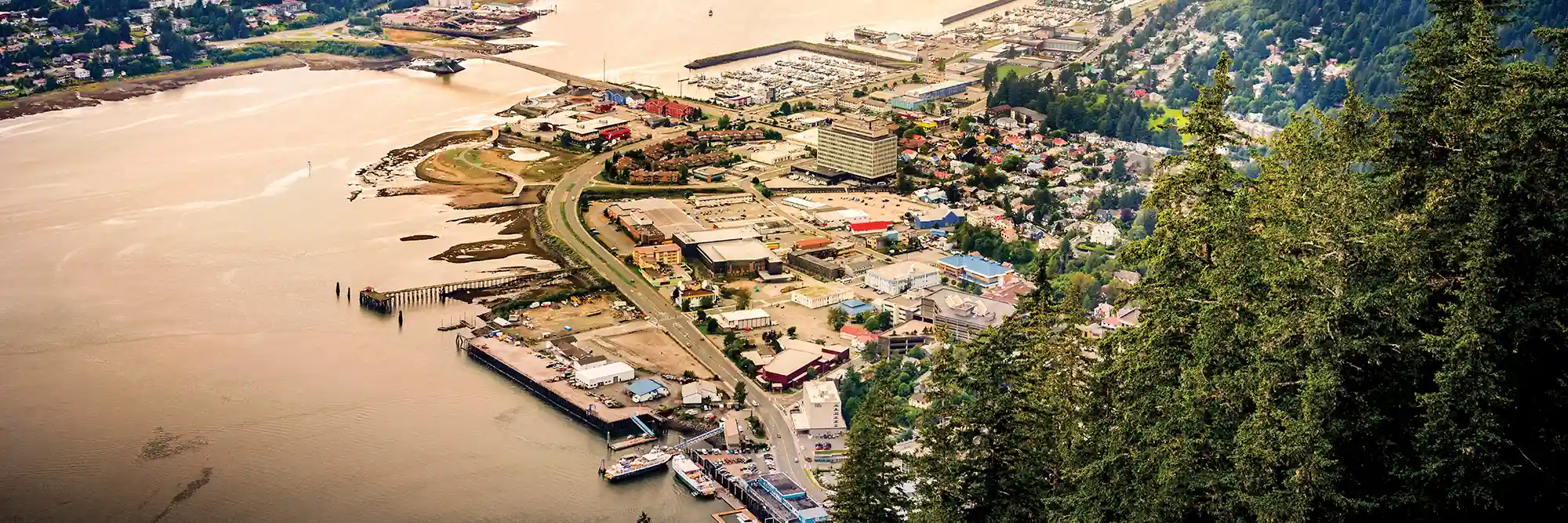
laska’s operating environment shapes nearly every legal issue.
“Just the other week, I was talking with an out-of-state attorney about a voyage between two locations in Alaska,” shares Schwabe associate William Wright. “That attorney simply had no idea that the voyage he was discussing was farther than the entire Eastern Seaboard, from the northernmost point in Maine to Key West. Once he realized the scope of the undertaking, the conversation completely shifted. Having legal counsel who appreciates the unique practical difficulties experienced by the transportation industry in Alaska can make all the difference.”
Safety, environmental stewardship, and operational success go hand in hand in Alaska’s transportation sector. “The alternatives are injured workers or third parties, damaged equipment, environmental liability, and government enforcement actions,” says Wright. “Also, the regulations governing the transportation industry generally require high standards for safety and environmental precautions. Thus, clients are able to ensure safe and environmentally conscious operations without sacrificing a competitive advantage. I help my clients ensure their operations comply with the existing federal and state regulations, while keeping an eye on the horizon for changes that may affect their operations.”
For these reasons, Alaska-based counsel is especially important: clients need advisors who understand both the legal requirements and the practical realities faced by businesses operating in these industries.
“Alaska’s transportation network is unlike any other in the United States,” says Michael Schechter, a shareholder at Anchorage-based Ashburn & Mason. Before he joined the firm in 2020, he served as an Assistant Attorney General for the State of Alaska, where he represented the Ted Stevens Anchorage International (ANC) and Fairbanks International Airports. Schechter notes, “My work representing clients like Ted Stevens Anchorage International Airport presents more opportunities than challenges because Alaska has access to the world. We often tout that we are located within eight hours of 80 to 90 percent of the developed world by air. We sit at a geographic crossroads that presents immense opportunities for Alaska to provide goods and services and export them across the world.”
He has also navigated regulations administered by the Committee on Foreign Investment in the United States, an interagency federal panel chaired by the Secretary of the Treasury which oversees sensitive real estate, critical infrastructure, and technology transactions. As the busiest international cargo airport in the country, ANC is often scrutinized to ensure compliance with these regulations. “If someone wants to have a business at the airport, it is my job to help them understand and navigate the process because it is a highly regulated environment,” says Schechter. “There are different concerns of what they have to account for and translating between government speak and business speak helps to ensure the client is getting not only what they want initially but is also off to a good relationship with government folks they’re going to be interacting with.”
Another difference pertains to oil spill preparedness. “Vessels operating in Alaska have to comply with overlapping regulatory requirements for oil spill response and preparedness that are different than anywhere else in the country,” says Wright. “First, Alaska has unique state-level requirements for oil spill response and preparedness that differ from the federal requirements. Second, given the extreme weather and remote nature of Western Alaska, vessels operating in much of Alaska are simply unable to comply with federal-level vessel oil spill response plans that apply throughout the rest of the country, in large part because the weather conditions, remoteness, and extreme distances in Alaska prevent them from being able to guarantee that the significant oil spill response assets within the state can be on site in the event of a spill within the time frames required by federal law. Those significant oil spill response assets far exceed the national criteria in most cases and are stored at strategically located hubs throughout the state.”
Volodymyr Shevchuk | Adobe Stock
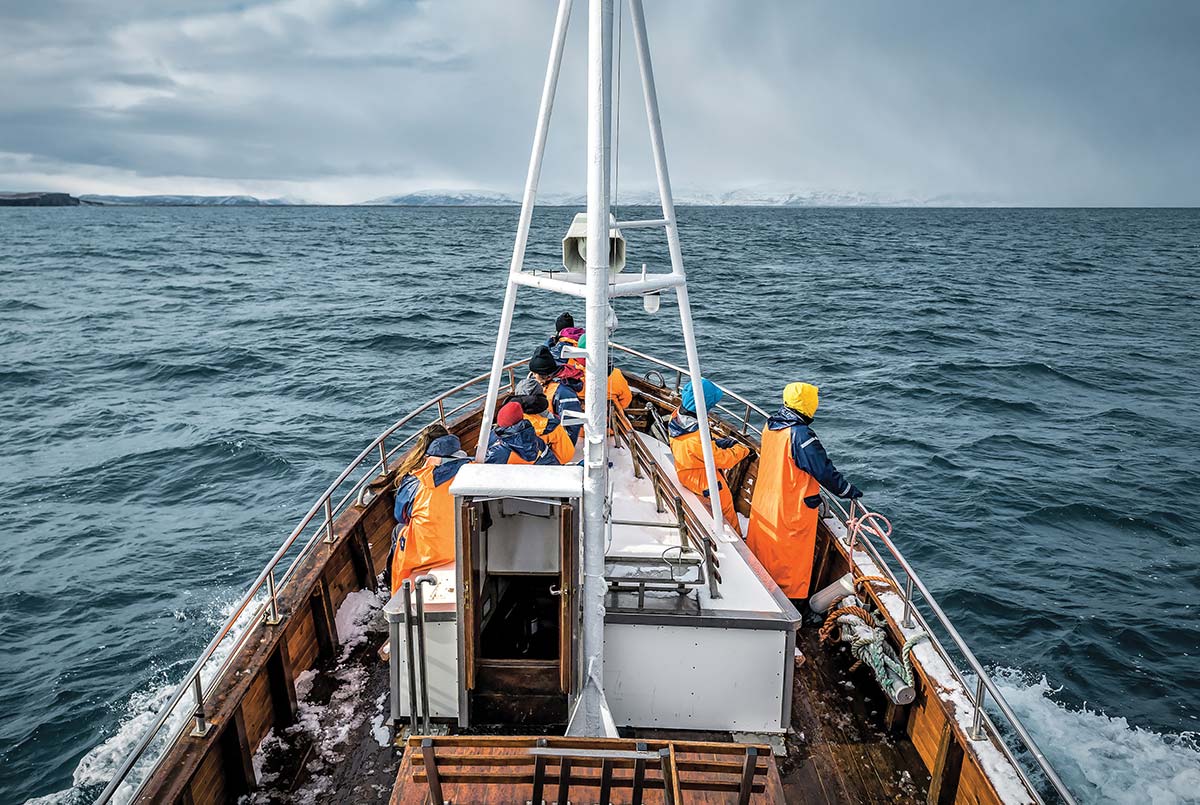
In the absence of final regulations, the US Coast Guard has granted waivers to vessels operating in waters of Western Alaska, allowing them to use alternative planning criteria to satisfy their obligations under the Oil Pollution Act of 1990. These alternative planning criteria place greater emphasis on preventive measures designed to reduce the likelihood of an incident before it occurs.
“These challenges call for practical solutions and legal guidance tailored to Alaska’s operating environment, rather than assumptions drawn from other jurisdictions,” notes Wright.
Moreover, before entering the legal profession, Poulson worked aboard tugboats on the Yukon River system and throughout Southeast, giving him firsthand knowledge of the maritime industry he now serves. Poulson’s extensive maritime credentials distinguish him in the legal community. He earned a US Coast Guard Inland Operator License for Uninspected Towing Vessels and held a US Merchant Mariner’s Document, experiences that provide practical insight into vessel operations and maritime safety. He has also been designated a Proctor in Admiralty by the Maritime Law Association of the United States, a recognition among the most respected available to practicing maritime attorneys.
“My cases have taken me to remote locations throughout Alaska. From iced-up crab boats rolling over in the Bering Sea to at-sea vessel collisions, man overboard situations, salvage operations, and winch entanglements. Even a maritime claim for a bear mauling death,” shares Poulson.
Some of Robert Richmond’s clients are notable for appearing in TV shows, as Richmond has defended crab vessels featured on Deadliest Catch and aviation operations featured on Flying Wild Alaska. Richmond, founder of the law office of Richmond & Quinn, maintains an active litigation practice and tries cases throughout Alaska. His work focuses primarily on the defense of admiralty, aviation, and catastrophic injury claims. The term “admiralty law” is often synonymous with maritime law, but some experts treat admiralty law as a subset of the field dealing specifically with on-board matters, setting aside insurance or labor matters.
Richmond’s trial experience spans a broad civil practice, with a particular emphasis on aviation claims. He has tried cases in many remote Alaska communities and has successfully defended aviation operators, product manufacturers, and fishing vessel owners.
With an amphibious practice covering water and air transport, Richmond has witnessed improvements in Alaska’s aircraft safety over the years. He recalls, “When I first started doing this over thirty-five years ago, the air taxis and Part 135 carriers had nowhere near the training they do today. The pilots, the directors of operations, even the aircraft owners, are all really focused on the safety of all our passengers.”
Maritime law issues cover a broad spectrum of subject matter: regulatory, transactional, contracts, casualties, fisheries, salvage, environmental, and more. “The legal landscape has become more complex. Disputes often result in litigation,” shares Poulson. “A major evolution I have experienced over my career is the increased use of alternative dispute resolution instead of or in conjunction with lawsuits before they proceed to trial in court. Mediation and arbitration have largely supplanted trials. Advances in technology have also impacted the industry and the legal practice.”
Over the next decade, changing environmental regulations, increased Arctic shipping, and evolving commercial activity in Alaska waters will likely drive legal trends that affect transportation businesses. “The legal changes will follow and evolve to conform to the changing needs of the industries involved,” notes Poulson. “Surely the opening of Arctic waters will have a significant impact.”
Every upward tick in transportation activity corresponds to greater need for legal assistance. “The increased investment into Alaska’s ports, America’s domestic maritime industry, and development projects in remote parts of the state all provide opportunities for businesses working in this sector,” says Wright. “Attorneys play an important role by helping clients anticipate regulatory changes, navigate funding opportunities, manage risk, and position their businesses to capitalize on emerging opportunities.”