

ven the most rural corners of the country, including remote villages in Alaska, are feeling the transformative effects of online commerce. Last year, Alaska generated more than $2.16 billion in annual ecommerce revenue, according to Capital One. Ecommerce is evolving from a convenience into a vital option for shoppers who frequent sites like Amazon, eBay, and Walmart.
According to the US Census Bureau, national ecommerce sales surged to $1.19 trillion in 2024, representing more than double the $571 billion recorded just five years earlier. And the growth of digital commerce is showing no signs of slowing. By the end of 2025, total US ecommerce sales are expected to reach $1.2 trillion.
Traditionally, clothing, shoes, and beauty products have been the most popular digital purchases. However, buying trends are shifting. Groceries are forecast to be the largest ecommerce category by 2026 at 19 percent of online sales, according to research firm EMARKETER. The expansion of ecommerce is being fueled, in large part, by technological innovations and shifting consumer behavior and expectations. Key growth drivers are data-driven personalization, mobile and social commerce, and multichannel retailing.
“Often, a quick email outreach can be the beginning of a productive conversation that uncovers additional questions or concerns, and many times leads to the customer completing the purchase,” she says.

Voyij
In its ongoing pursuit of personalization, Voyij is redesigning its platform to further accommodate travelers’ specific needs. A new itinerary feature will enable users to input their cruise ship name and departure date, and Voyij will build a full itinerary, including port stops and times. Then travelers can browse local activities and excursions that match their itinerary. There will also be a “send a hint” feature that allows people to share a favorite product with a friend, family member, or colleague as a gift suggestion for an upcoming special occasion.
TheRosieFinn, a craft boutique in Petersburg, has a mobile-friendly website that features “vivid and conversational” jewelry that’s “handcrafted for everyday adventures.” The website displays colorful jewelry collections—mainly earrings—with Alaska-inspired names like Gold Rush, Chinook Tales, and Midnight Sun. It also sells items related to the company’s signature enameling technique, which involves adding powdered glass to metal to create intricately layered designs.
Maintaining a mobile-optimized website is essential to TheRosieFinn, which generates 30 percent to 40 percent of its sales through smartphones, according to owner and artist Ashley Lohr. The company primarily sells its products offline to galleries and other shops, but Lohr also uses Etsy to build its brand. “It just gives us a wider audience,” says Lohr, who has a master’s degree in painting and has been an artist all her adult life.
Launching TheRosieFinn (named for Lohr’s children) was a natural progression for Lohr, who teaches a jewelry class at the high school in Petersburg. During the COVID-19 pandemic, remote teaching gave her the confidence to offer jewelry-making classes and products online. “I was like, ‘I can do this; I’m already doing it,’” she says. “So I developed a website and have been online ever since.”
Since 2019, Voyij has enabled small businesses in Alaska to reach a broad audience beyond their hometown. “As the largest website dedicated to Alaska businesses (350+ artisans and small businesses selling online from fifty-plus communities across the state) and with a special emphasis on connecting locals—including Indigenous artists—with travelers before, during, and after vacation, ecommerce is central to Voyij’s mission and vision,” Klupar says. Currently, about 30 percent of Voyij sellers are new to ecommerce.
Lena Lee Alaska Brand Photography


Lena Lee Alaska Brand Photography
To engage in social commerce, Lohr decided to narrow her efforts instead of trying to capitalize on every platform. “I’ve been most dedicated to my Instagram presence,” she says. “I don’t do well spreading myself too thin on social media platforms, so I’m going to stick to what I’m comfortable doing.”

Greatland Laser
On the mainland, Greatland Laser of Willow sells a variety of safety and rescue products through authorized dealers worldwide and government contracts. Its signature product is a handheld 5 milliwatt green laser that does the job of a signal flare. About 6 percent of the company’s business comes directly from consumers through its online store, according to CEO Kim Erickson.
Gaining traction with ecommerce has been challenging for Greatland Laser, Erickson says. One of the biggest issues is attracting users to its website. But the company is employing diverse tactics to encourage online sales. “Social media posts to Facebook and Instagram, email campaigns through Mailchimp to our retail customers list, and a quarterly newsletter are all some of the strategies we have used to drive traffic to the online store,” she says.
Lena Lee Alaska Brand Photography
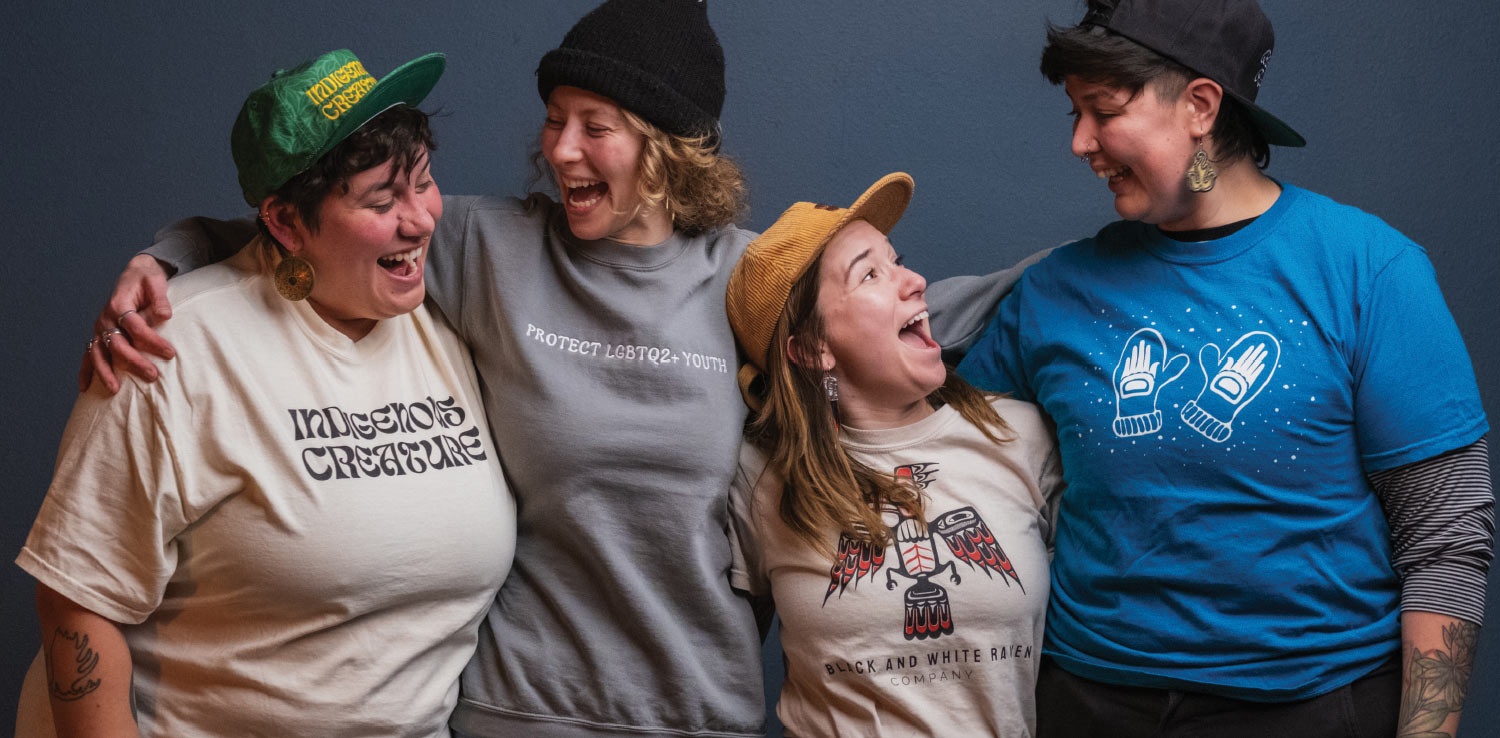
Black and White Raven Company uses its website as a hub where clients can learn about its services, request quotes, and schedule consultations. The company offers digital booking and payment options through its mobile-friendly site and uses social media platforms to stimulate business. “Social media, especially Instagram, plays a significant role in building relationships, sharing updates, showcasing projects, and driving traffic to our website,” Cavanaugh says.
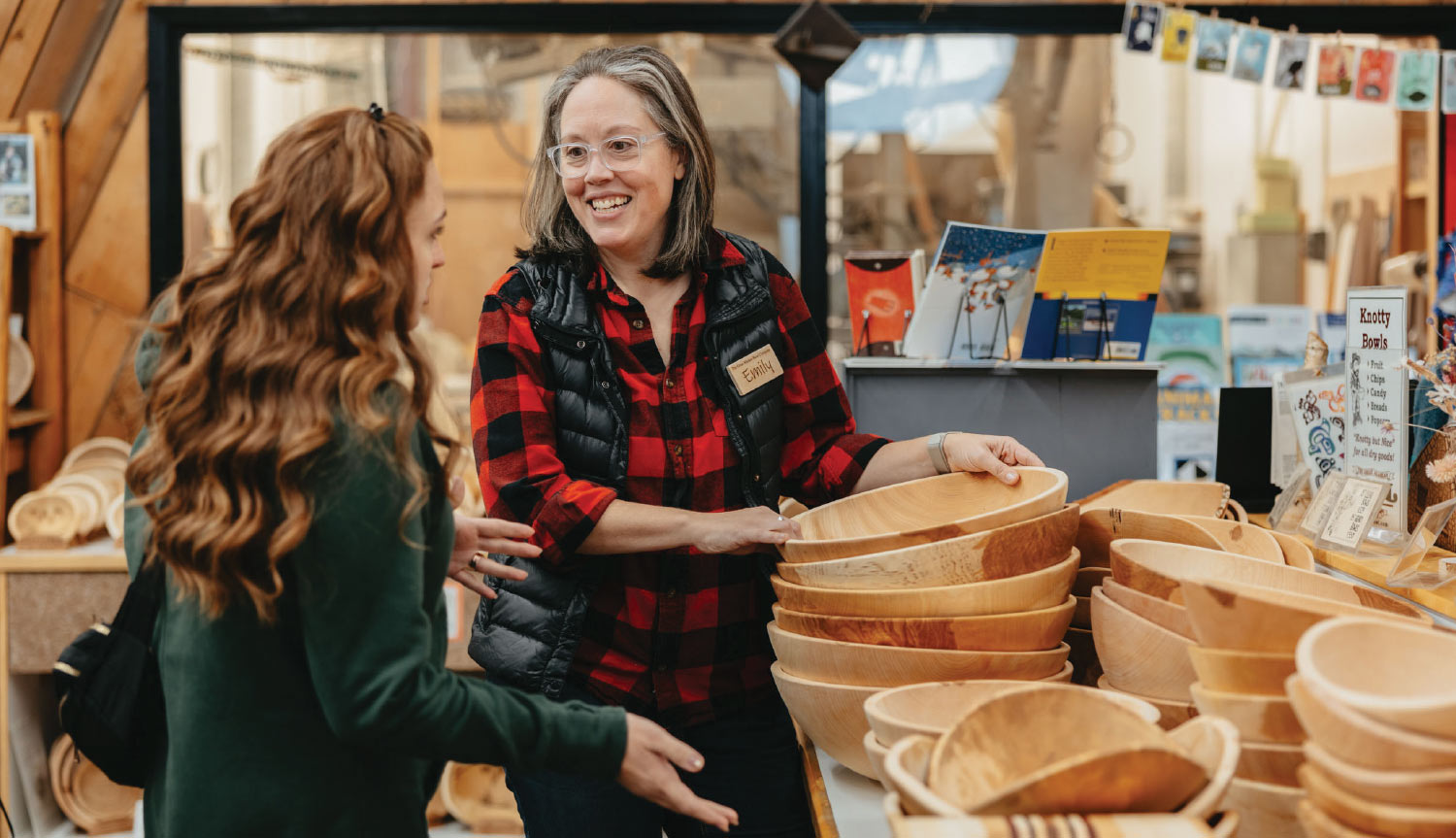
In Fairbanks, The Great Alaskan Bowl Company has had an active online presence for more than twenty-five of its thirty-four years in business. The mobile-optimized website at www.woodbowl.com sells distinctive birch bowls. The company also leverages multiple channels to cater to consumers. “We offer a local pickup option for items purchased online and promote the convenience to our local shoppers to do so,” says Retail Operations Manager Emily Berriochoa.
The Great Alaskan Bowl Company uses a combination of social media (Facebook and Instagram), email blasts, and print materials to steer people to its website. Berriochoa attributes 15 percent of the company’s overall sales to online purchases.
“We feel that we are just scraping the surface of our online store’s ability to contribute to our annual sales,” Berriochoa says. “Our biggest challenge is the time it takes to add new items to our website as they come into our store. The same can be said for email blasts, as that comes down to staff availability. We have worked with a great contractor for the last few years, though, who is making sure we have content on our social media channels regularly, which is a huge benefit.”
At Voyij, products are commonly shipped to customers, but the company also offers in-store pickup for travelers who want to buy items online and pick them where their cruise ship docks. “Finding opportunities to be closer to the customer—whether closer physically, like marketing onboard the ship, or closer experientially, like offering an online shopping experience with in-store pickup—has helped to differentiate Voyij’s offerings by tying the shopping experience directly to a current trip itinerary,” Klupar says.
Klupar says customers are looking for products and services on their terms—their preferred timing, price, payment option, delivery method, and language—and tailored to their browsing habits. She emphasizes, “The more we can be where our customers already are, the more likely we can earn the trust needed to build a lasting connection.”
For example, Klupar recently connected with a Voyij customer who found the company through LinkedIn, which has not traditionally been a customer acquisition channel for Voyij. “This customer interaction reminded me that brand presence is not always one big marketing campaign that reaches millions but rather thousands of little efforts across many channels that work in unison to deliver a strong brand promise in a personalized, authentic way,” she says.
For Black and White Raven Company, ecommerce has opened doors that geography once closed. “As a business rooted in Juneau, where there are no roads in or out, the ability to connect, share, and sell online allows us to reach broader audiences while staying true to our place-based values,” says Cavanaugh. “It’s allowed us to grow without leaving home, build partnerships beyond state lines, and support other Indigenous makers and small businesses along the way.”
Cavanaugh continues: “Ecommerce isn’t just a tool. It’s part of how we continue our traditions of trade, storytelling, and connection in a digital world.”