

in Steel
what they’re used for
he August special sessions in Juneau this year involved much talk of volume and contracts, costs and taxes. It’s too soon to say if Alaska LNG will ever break ground. But now is as good a time as any to look at how pipelines get built.
A continuous tube replaces its predecessors in fluid transport, namely road and rail. Pipelines are “the most cost-efficient, cost-effective way to move hydrocarbons,” says Mark Slaughter, chief commercial officer for HEX. Greg Campbell, president of ASRC Energy Services subsidiary AES Houston Contracting, adds, “They’re a much safer way to transport commodities from point A to point B.”
The pipes themselves are usually about a half-inch thick, Campbell says, but some environments might require a thicker wall. The total diameter can range from two to sixty inches. Slaughter says most Cook Inlet transmission lines range from maybe six to eight inches to about twenty inches at the widest. Lengthwise, pipelines in Alaska can run as short as a mile or up to the 800-mile-long Trans Alaska Pipeline System (TAPS). The world’s longest pipeline carries natural gas more than 5,400 miles across the east-west breadth of China. The longest crude oil pipeline has been under construction in Russia since 2006: the 3,000-mile Eastern Siberia-Pacific Ocean Oil Pipeline, or ESPOOP.
Except for a 6.25-mile “test leg” of the Kenai Peninsula’s North Fork Pipeline made with Fiberspar, a composite of plastic and glass fibers, Slaughter says Alaska pipeline projects always use steel. Campbell says the type of steel depends on what the pipe will transport, as well as environmental factors. “A lot of times, you have to have… low-temperature steel that requires it to be a much stronger steel than you may have in the Lower 48,” he says. Slaughter says Alaska pipelines must be made to “arctic design standards,” which requires special engineering training.
But customers don’t want to sign contracts until they have proof of a product they can count on. “That’s this challenge that’s always been around for decades,” Slaughter says, comparing it to the chicken-egg dilemma. “In the gas world, having firm offtake agreements [i.e., customer contracts] is critical to financing a project.”
Once a project gets funded, Kennedy says it moves to detailed engineering. Campbell says projects usually need “a lot of regulatory compliance things that have to be done prior to the project getting the green light to move forward.” Kennedy says these projects must comply with a combination of federal, state, and local laws; safety regulations; environmental requirements; and industry engineering standards.
After the project owner gets all needed approvals, the company can choose a construction firm, obtain materials, and arrange shipment. Main components, generally, are built outside Alaska and sometimes outside the United States. Slaughter says project timelines must allow for months to years of lead time.
Finished materials then get transported via a combination of barge, rail, and truck, depending on the project site. Campbell says pipes, which usually come in forty-foot lengths, may get barged to the state and then go by train to Fairbanks. There, a contractor such as Flowline Alaska gets the pipe lengths double-jointed, coated, and insulated.
Both Slaughter and Campbell say trucking to the project site can involve ice road construction. “We’ve gotta have ice roads built to access the tundra,” Campbell says. Work on these roads might start in late November or December. Houston Contracting’s main work season usually runs from January to early April. By mid-April, Campbell says they must be off the ice roads before they melt.
Once everything’s in place, construction starts, followed by thorough testing and commissioning, Kennedy says, noting “a high level of coordination” and “robust planning.”
Natural gas pipelines such as those HEX uses in Cook Inlet work differently. Slaughter says, “It’s better to bury a pipeline than have it above ground… also from a security perspective.” He says buried pipes have less risk of damage and tampering.
“Each approach has trade-offs,” Kennedy says. “Buried pipelines may reduce exposure to weather while above-ground offer easier access for inspection and maintenance. Every project location has different sets of challenges and requirements.”
The most prominent yet-to-be built gas pipeline, lately developed by Glenfarne Group as the Alaska LNG project, would be mostly underground. While the name indicates a liquified natural gas pipeline, Glenfarne’s proposal would transport chilled, pressurized methane from the North Slope to a terminal at Nikiski, where it would be supercooled into -260°F liquid. Slaughter says LNG occupies far less volume than natural gas for shipping on board tankers, greatly reducing transport costs. However, insulating a supercold pipeline along more than 700 miles is too great an engineering hurdle.
Pipeline design also has to account for seismic activity. Kennedy says “design and construction have evolved significantly since TAPS was built in the 1970s.” Modern projects have “a stronger emphasis on environmental planning and mitigation, quality assurance, and testing,” he says. Newer projects also put a greater priority on “community and stakeholder engagement” and involve “more rigorous risk management and documentation.”
For above-ground pipelines or sections, Campbell says work usually starts with the “vertical support members” (VSMs). These eighteen-inch diameter pipes get “sunk about forty feet in the ground,” Campbell says, with horizontal supports connecting them and holding the actual pipe. To install VSMs, workers drill a hole in the ground and fill it with a mixture of sand and water that solidifies around the upright supports.
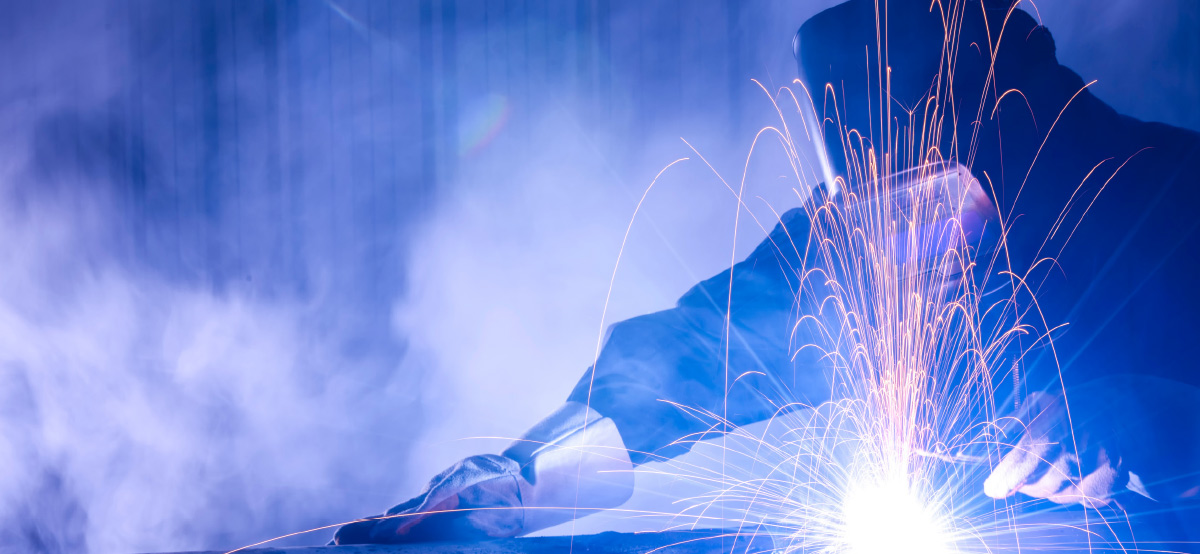
Once pipe lengths get transported to the site and positioned on the ground, the pipe gang starts assembly and welding. “The pipe gang is the front end… of the ballet, really,” Campbell says. This crew assembles the pipe in eighty-foot sections supported by wood skids. For each connection point, workers join the pipe pieces through a series of repeated welding steps, each known as a “pass.” Depending on the thickness of the pipes, “a weld will probably have anywhere between four and six passes on it,” Campbell says.
When the pipe gang moves onto the next join, “the firing line behind them comes in and fills and caps the weld,” Campbell explains. A third crew follows these teams, usually at night, to x-ray everything and check for any issues with the joins.
The next day, workers coat the pipes and insulate the joints. At this point, connected pipe sections get lifted onto the VSMs and connected to what’s already been assembled. “Normally, when we’ve got the pipe gang firing line going, we can do about a mile a day,” Campbell says. In a typical season, depending on the project and pipe diameter, Houston Contracting can build thirty to forty miles of pipeline.
Once construction’s complete, a pipeline goes through pressure testing, usually done with water. Slaughter says this hydrostatic testing helps identify leaks in the welds. It also involves having the pipeline hold a set pressure for twenty-four to forty-eight hours. Depending on the pipeline length, Slaughter says this testing can take several days.
Campbell says the hydrostatic testing process, normally done in the summer, also involves shooting disks known as “pigs” through the line. This step, which might be repeated ten to twelve times, helps push contaminants out. The material used to make the “pigs” depends on the kind of commodity flowing through the pipe. Foam pigs wouldn’t work in gasoline, Campbell says, but they do in other contexts.
“The majority of pipelines these days are checked by smart pigs,” Campbell says. This type of “pig” carries instruments with a long battery life through the pipeline, checking things like corrosion, wall thickness, and deformations.
Slaughter says the inline inspections required for transmission lines use magnets to check for corrosion. Caliper pigs also check for “deflection”—for example, if an above-ground pipe gets dented because someone banged it.
Another concern involves maintaining pressure. Slaughter observes that if a supplier puts less gas into the pipeline than customers expect and withdraw, “the pressure falls because your ins don’t match your outs.” This drop can set other events in motion. Some systems can automatically adjust, but that can create other problems.
To keep things flowing smoothly, “every day, every hour, people are talking to each other back and forth,” Slaughter says. “It’s just a constant dance, just nobody sees it.” The same could be said of much that goes into building a pipeline.