


very company included in this year’s group of Top 49ers excels in their respective sectors. To find a spot on the list, they’d have to. This year, for the first time, eight of those companies make up an elite group, having generated more than $1 billion in gross annual revenue. Arctic Slope Regional Corporation (ASRC), Bristol Bay Native Corporation (BBNC), NANA Regional Corporation, Chenega Corporation, Lynden, Calista Corporation, Bering Straits Native Corporation (BSNC), and Ukpeaġvik Iñupiat Corporation (UIC) all were in the ten-digit club in 2025.
Some companies surpassed $1 billion years ago and, for the most part, never looked back; for others, the milestone is brand new. And while every company in this elite class has its own priorities and business lines, what each has in common is a focus on disciplined expansion, strategic investments, and diversification in the pursuit of sustainable growth.
Never before have so many Alaska-based companies earned $1 billion in one year. Even adjusting for inflation, the richest cohort was seven companies in the 2012 Top 49ers whose gross revenue in 2011 would’ve been worth $1 billion of today’s dollars. What happened in 2025 to lift so many to new heights? Some of these Elite Eight shared what they believe contributed to their billion-dollar success and just how much further they hope to rise.
“ASRC’s success over the last fifty-four years reflects a disciplined approach to growth, one that honors the long-term vision of ASRC’s early leaders, who set the foundation for building a resilient enterprise that has endured for generations,” says President and CEO Rex A. Rock Sr. “Their vision was clear but profound: create long-term stability while reinvesting in future generations of ASRC shareholders.”
That foresight helped ASRC expand from three small businesses in Utqiaġvik to a portfolio of companies with a footprint in all fifty states and select international markets. Today, ASRC includes more than 110 businesses spread across six core business segments—government services, industrial services, financial solutions, petroleum refining and marketing, energy support services, and construction—plus its North Slope operations.
The financial solutions business segment began in February 2026 with the acquisition of Coinstar, a move Rock describes as a monumental step forward in the corporation’s history. “The acquisition built on several years of strategic effort that serves as a foundation for the financial solutions business line,” he explains. “The addition of Coinstar to ASRC’s family of companies aligns with ASRC’s progress toward diversified earnings, long-term stability, and value for the corporation.”
Ukpeaġvik Iñupiat Corporation
“Revenue generated nationally flows back to support shareholder dividends, philanthropic contributions to entities that support the community and cultural wellbeing of our shareholders, and investment in Alaska-based operations,” Rock says. “ASRC’s companies operate under a unified strategic direction anchored in long-term value. When one sector softens, another often strengthens, helping us maintain steady earnings and deliver sustainable benefits to our Iñupiaq shareholders.”
ASRC’s most recent strategic plan, completed in 2025, calls for the corporation to continue to diversify opportunities and investments to ensure meaningful, durable returns for its more than 14,000 shareholders.
“We remain committed to continued business growth and creating lasting value for our shareholders,” Rock says. “We continue to refine our corporation’s diversification strategy while staying true to our core principles: invest with purpose, evaluate opportunities for long-term value, and balance the portfolio to ensure resilience.”
Vice President of Communications Carmell Engebretson says there is no single reason for BBNC’s continued growth and success. “BBNC’s performance is a result of a consistent series of strategic decisions,” she explains. “BBNC has worked over the last couple of decades to diversify its revenue stream. We’ve invested in five different lines of business that have allowed the corporation to withstand market fluctuations that may have an impact in any one area.”
Those business lines encompass industrial services, construction, government services, seafood, and tourism, and they collectively manage more than eighty subsidiary companies and serve clients across Alaska, the Lower 48, and overseas.

Devan Otton | Bering Straits Native Corporation
BBNC’s 2025 activities were more on the administrative side. A decade’s worth of acquisitions prompted BBNC to integrate and streamline back-office operations, Engebretson says, and the corporation spent a considerable portion of 2025 consolidating platform-level systems to maximize the effectiveness and success of its business operations. BBNC shareholders also voted at their annual meeting last October to open enrollment to descendants of original shareholders and missed enrollees, and Engebretson says the corporation has been working to enroll and welcome new enrollees over the past year.
Long-term, BBNC is guided by priorities the board identified in 2023. Those include balancing the responsible development and protection of Bristol Bay lands, fisheries, and resources; generating sufficient earnings to fund dividends and shareholder benefits; and growing the company’s financial strength to ensure its long-term viability through the development of economic opportunities throughout the Bristol Bay region.
“Reaching more than $1 billion in annual revenue was the result of years of disciplined planning, strategic investments, and a steadfast focus on sustainable growth,” she says. “This achievement reflects our commitment to pursuing the right opportunities, operating with excellence, investing in our employees, fostering a strong workplace culture, and responsibly stewarding our lands and resources.”
BSNC’s diversified business model allows it to compete in broader markets, manage risk, and build a stronger, more resilient corporation, Massie says. Its suite of companies supports infrastructure development, government services, national security missions, disaster response, commercial supply, and in-region operations throughout Alaska, the United States, and internationally.


“The acquisition [is] an important milestone that expands our capabilities, strengthens our position in the federal marketplace, broadens our customer base, and creates new opportunities for long-term growth,” Massie says.
It also allows BSNC to provide meaningful benefits to shareholders and descendants. “BSNC was founded not only to participate in the modern economy but to serve our shareholders, descendants, communities, lands, and culture,” Massie says. “Record performance enabled BSNC to provide its highest-ever dividend and Elder distributions while continuing to invest in scholarships, workforce development, cultural initiatives, and other shareholder programs.”
The number of shareholders BSNC serves is likely to increase; like BBNC, BSNC shareholders voted in 2025 to open enrollment to lineal descendants of original shareholders and missed enrollees.
“We don’t measure success by how quickly we grow but by how responsibly we grow,” Massie says. “As BSNC looks toward the future, we remain committed to ensuring our corporation continues to reflect the values upon which it was founded. We will continue our mission to improve the quality of life of our people through economic development while protecting our land and preserving our culture and heritage.”
But the number doesn’t matter to her as much as what that number represents. “UIC exists for our shareholders,” says Brower. “Growth gives a greater capacity to create jobs, support education and workforce development, provide shareholder benefits, invest in Utqiaġvik and the North Slope, and create opportunities for future generations.”
UIC’s recent focus has been both organic growth of its existing businesses and strategic acquisitions and opportunities that complement its capabilities and align with its long-term goals.
“Our team begins with a strategic fit,” Brower explains. “An opportunity has to make sense within UIC’s broader portfolio, strengthen or complement capabilities we already have, provide access to markets where we see long-term potential, or help us diversify risk.”
Financial performance, management strength, market conditions, competitive advantages, and the opportunity for sustainable growth are other factors UIC considers when determining fit. So, too, does whether the opportunity will further UIC’s responsibility to shareholders.
“Financial returns are essential, but so are the opportunities that growth can create through employment, workforce development, scholarships, shareholder benefits, and investment in our communities,” she says.
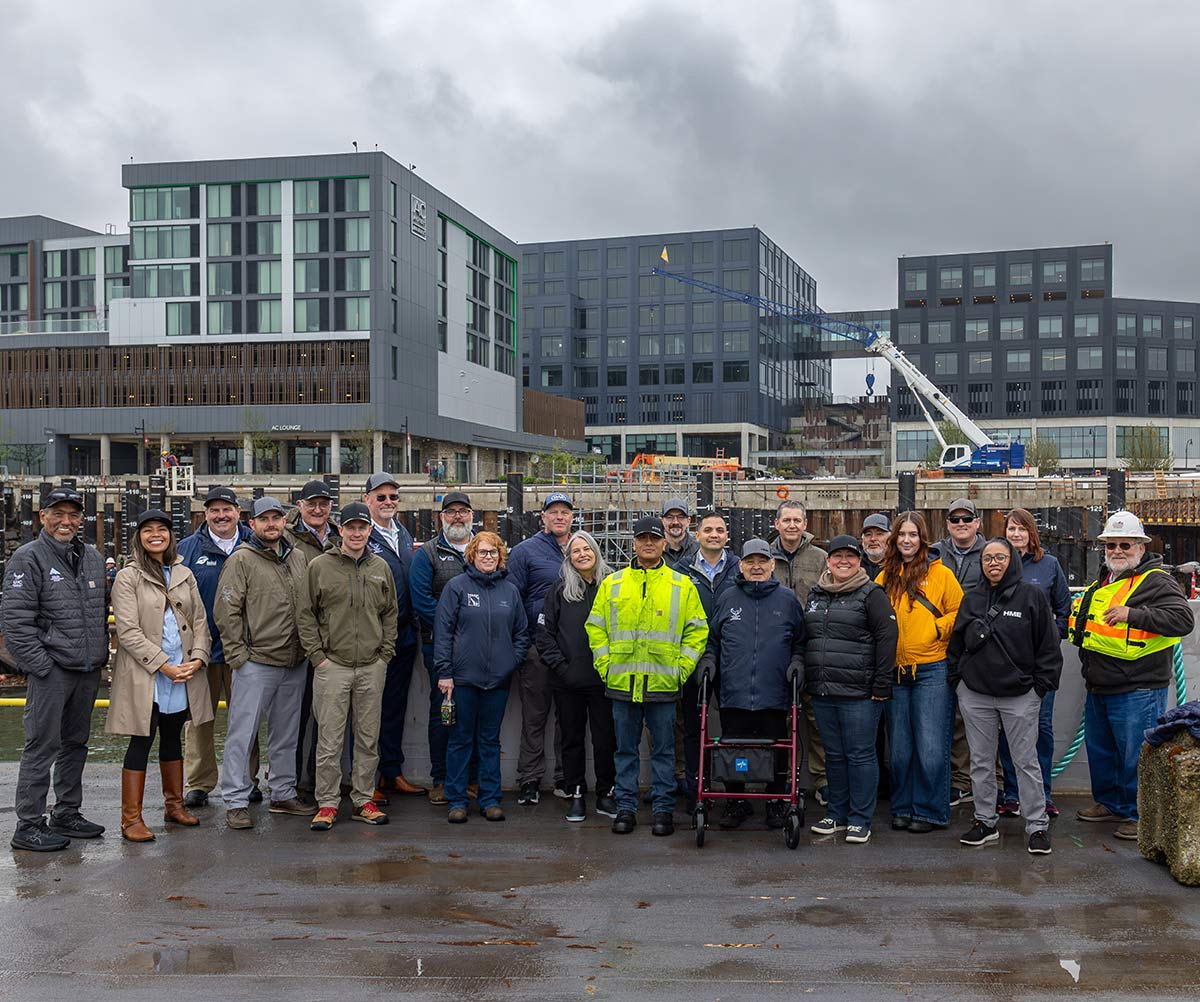
This philosophy has guided UIC’s recent expansions and acquisitions. In 2025 UIC acquired a majority interest in Vancouver, Washington-based Northbank Civil and Marine, which further strengthened its civil, maritime, and infrastructure capabilities, Brower says, and UIC played a key role in supporting development of the new AC Stuaqpak supermarket as landlord of Utqiaġvik’s largest retail building. In 2026, its subsidiary UIC Arctic Operations & Developments established Tundra Timber and purchased more than 750,000 pounds of lumber for delivery to Utqiaġvik; UIC also finalized a land sale agreement with Iḷisaġvik College in 2026 that supports the college’s plans for a future campus, Brower adds.
UIC’s strong financial performance in 2025 allowed the corporation to provide shareholders with a regular and special trust distribution and continue its investment in scholarships, workforce development, medical and funeral assistance, community programs, and other shareholder priorities.
Long-term, UIC’s financial objective is to reach $2 billion in annual revenue by 2030. It’s an ambitious goal but one Brower believes is achievable if UIC remains disciplined in executing its current strategy.
“We have built considerable momentum, but we are also mindful that growth becomes more challenging as the company becomes larger,” Brower says. “The goal is not to reach a particular ranking at the expense of sound business decisions. It is to build a company with the scale, strength, and resilience to serve our shareholders for generations.”