

ne out of every eight women will develop breast cancer in their lifetimes. With early detection, the disease is easier to treat, surgeries are less invasive, patients can take less medication, and patients experience better outcomes overall.
In Alaska, the American Cancer Society estimates that 520 new female breast cancer cases will be diagnosed in 2023, and 60 women will die of the disease.
One of the best ways to intercept the disease in its earliest stages, however, is through mammography, which detects breast cancers, benign tumors, and cysts before they can be felt by touch. In fact, early detection with screening mammography can decrease mortality from 30 percent to 15 percent.

Breast Cancer Detection Center of Alaska
DeBaun adds that, since COVID-19, there has been a decline in the number of people getting back in to see their physicians for standard well-checks, where they might also be encouraged to get the screening done.
Alaska faces an additional issue: finding a place to get a mammogram in a remote area. One of the biggest hurdles is geography, with the nearest mammography unit sometimes hundreds of miles away.
“To get a mammogram, you have to have the physical mammography unit to provide images,” explains Dr. Heather Tauschek, medical director at Providence Imaging Center. “While places like Kotzebue and Nome have their own mammography units, getting patients in far-flung villages to those locations is very challenging, creating both a cost and geography barrier.”
The Providence Imaging Center Mobile Mammography coach, in partnership with Providence Cancer Center and Providence Alaska Foundation, is centered in Anchorage and serves people at a combination of local sites. It also takes breast cancer screening to more distant locations, including those accessed by the Alaska Marine Highway System.
“We may be parked locally at ConocoPhillips [in Downtown Anchorage] so that women working in businesses around the area can get mammograms in the parking lot,” says Tauschek. “Our broader route takes us to places like Glennallen, Valdez, Cordova, and other small villages and towns across the state.”

Providence Imaging Center
The BCDC unit, a 34-foot Freightliner built specifically to be a medical facility on wheels, travels all across the state, including twenty-one communities that would not have access to mammography without it. In addition to its clinic in Fairbanks, the BCDC serves areas north of the city, as well as Tok in the eastern Interior, parts of the Kenai Peninsula, as far southwest as Dutch Harbor, and numerous cities in Southeast.
“We partner with other health agencies such as the Southcentral Foundation, Southeast Alaska Regional Health Consortium, and the Metlakatla Clinic, and we also have contracts with large Native associations and foundations and work with local clinics,” says DeBaun. “We usually park our truck in their parking lots, which enables them to let patients know that we’re coming so they can book appointments, and we’ve also found that aligning with community resources that patients are familiar with makes them more comfortable and more willing to come in and get a screening done.”
After a year-and-a-half of fundraising, BCDC is in the process of getting a brand-new mobile unit, which should be ready to roll next spring.
“We’re retiring our first mobile unit, which we’ve had for twelve years,” says DeBaun. “Alaska terrain is hard on vehicles, especially where we go. Our new unit will feature a more appropriately sized motor, all-wheel drive, a smaller yet more powerful power system, and just be all-around more comfortable and inviting.”
Technology has changed since 1995, when mobile mammography was introduced to Interior Alaska. “Back then, it was just a 2D mammography machine that folded in half that was put in a 12-seater van or flown to rural communities. It wasn’t until 2011 that we got the first full mobile mammography truck,” DeBaun recalls.
Providence Imaging Center is now on its third mammography coach, which provides the same high-tech 3D mammography used in larger imaging centers, just in a much smaller space. “It just happens to be in a unit that can move,” says Tauschek.
Screening mammography is usually covered by insurance and does not require doctors’ orders. In addition to taking all forms of insurance, BCDC also has its own in-house Mammography Assistance program that helps cover the costs and co-pays for those who can’t afford it.
“We don’t want not having the ability to pay to be a hindrance,” says DeBaun. “They don’t have to apply for this help; they just check a box that says ‘don’t bill me,’ and we’ll cover it through money raised through nonprofits and from fundraising. We also work with Alaska Breast and Cervical Screening Assistance Program [ABCSAP], a Medicaid program for Alaska women.”
Providence Imaging Center also works with ABCSAP, and the Providence Alaska Foundation may be able to cover screening mammography costs for patients who do not qualify financially for other breast and cervical services.
After a visit, BCDC sends a letter to patients with their results so that patients can work with their primary care physicians if care is needed.
“One of our requirements is that patients do need to have a primary care provider [PCP]; if they don’t, we work with some doctors that will see patients at Chena Health in Fairbanks and at Interior Community Health Clinic. We also work through Southeast Alaska Regional Health Consortium to get them connected to a PCP so that, if we find something, we know that they have a PCP to follow up with them to get them the care they need.”
Providence Imaging Center


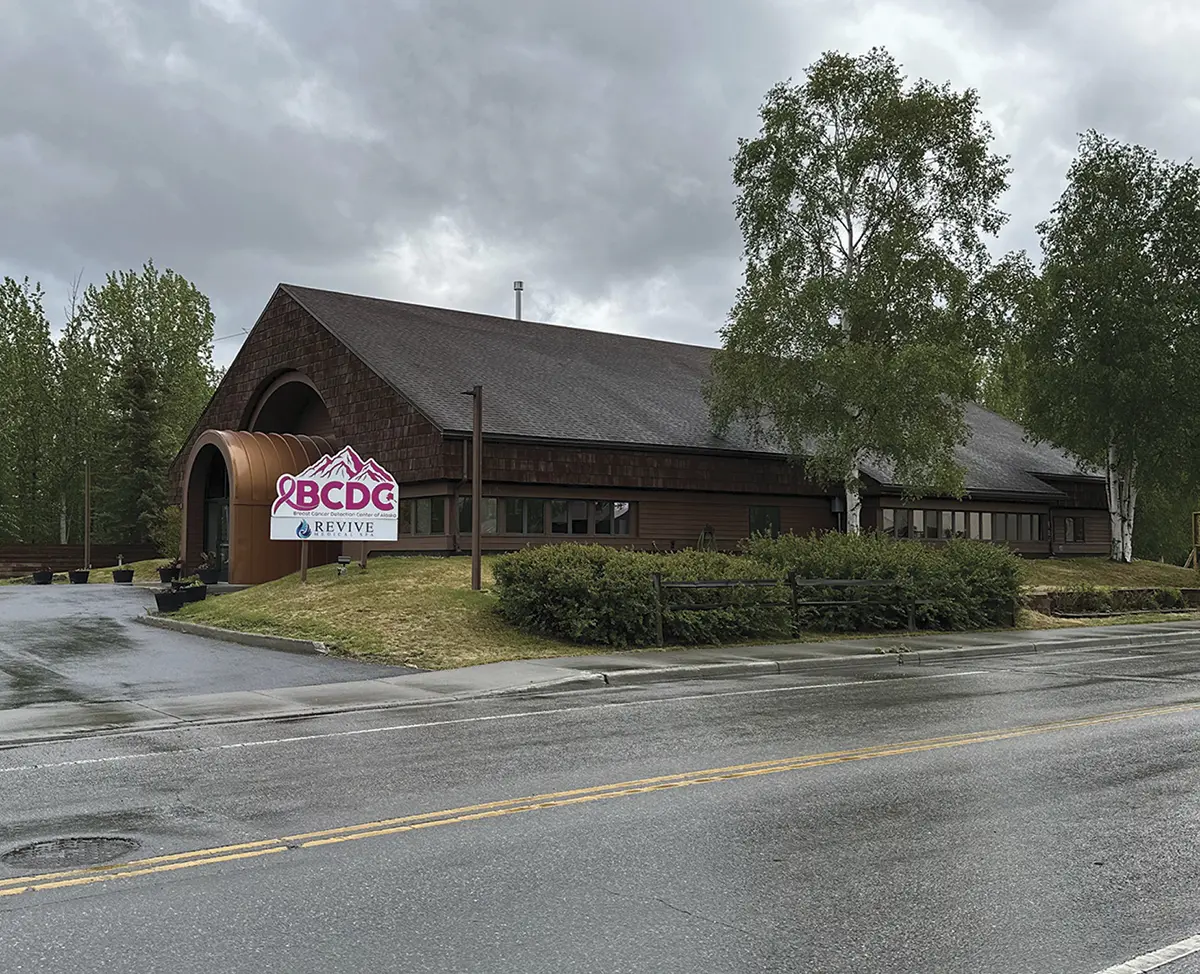
Breast Cancer Detection Center of Alaska
“We’ve definitely had technical challenges—sometimes the generator goes out, and being able to transfer images depends on the bandwidth in an area, so sometimes techs have to wait to download images until they’re back in Anchorage or Valdez or Seward,” she says.
She notes that there are also a lot of wear-and-tear issues, like those caused by frost heaves in Tok, and mobile units also require a technician who is comfortable driving a large truck, backing the vehicle up, getting it on the ferry, and squeezing into some pretty small places.
“We do this because of its impact on patient lives,” Tauschek says. “We want to improve breast cancer survival rates.”
While the rates of women diagnosed with breast cancer in Alaska are similar to rates in the rest of the country, certain populations are at higher risk. Approximately 10 percent of women across the country are at elevated risk because of family histories and genetic mutations.
“While I can’t quote research to this effect, anecdotally I think we see more advanced breast cancer cases here because of the geographical constraints,” she adds. “Patients, including our large immigrant populations, are not getting the screenings they need.”
She adds that if patients need more serious follow-up treatment, such as a lumpectomy, they must travel to a critical access hospital in Fairbanks, Anchorage, the Matanuska-Susitna Borough, or another urban hub. “Similar to chemotherapy, they need to go to a larger population center just because of the availability of specialists, and that can be a barrier to care as well,” she notes.
Eli Duke

“The mobile unit is utilized, for sure. And patients appreciate not having to come into Anchorage,” says Tauschek. “The handful of patients that get called back for extra imaging because they had a change in their mammogram or because we find something do find it frustrating to have to come to Anchorage for a follow-up. But, at the same time, they appreciate that they are getting a service they wouldn’t have had otherwise.”
The BCDC, which was started in 1976 as an Alaska nonprofit by women for women, provides approximately 2,700 women with mammography screenings each year through their clinic on Cowles Street and the mobile mammography unit.
“We really do get a good response,” says DeBaun of the roughly 800 women a year who use the mobile service. “These people are living in a healthcare desert, so anytime someone is willing to come in and offer these types of services, they get a warm reception.”
She says the welcome is especially heartfelt in ferry-accessible places. “Sometimes we can’t be there for more than a day or two because of the ferry schedule, so our techs and support staff will stay open until 11 p.m., knowing that they have to leave the next day,” she adds. “If women need to come in after work or after dinner, or however we can see them, we will be there as long as they keep coming.”
DeBaun is an especially strong proponent of screening and early detection because of her personal ordeal. At the age of 36—four years before the suggested age for a mammogram—she found a lump and got screened. Diagnosed with Stage 3 invasive ductal carcinoma, she says that today she is alive and thriving because of that screening and the quick care of her Fairbanks physician.
She says, “I am passionate about this mission and consider myself very fortunate to work at BCDC and to connect with Alaska women and cancer survivors.”