

Judy Patrick | Tatitlek Chenega Chugach
Spill response teams protect Alaska’s land and waters
hirty-six years have passed since the catastrophic Exxon Valdez Oil Spill (EVOS), when 11 million gallons of crude contaminated Prince William Sound (PWS). The memory of the event remains strong, as oil and gas producers maintain close alliances with spill response organizations and companies. Together, they have developed plans, acquired equipment, and maintained training to ensure any hazardous material spilled on land or in water is immediately contained and removed.
EVOS was an extreme event that has not been repeated in Alaska; however, on average, approximately 2,000 oil and hazardous substance spills are reported to the Alaska Department of Environmental Conservation each year. These incidents are generally small and quickly contained, and the substances are removed before any major impact can occur. This is due to careful planning among spill response teams, private companies, and dedicated community involvement.
“People tend to focus on big oil spills,” says David Owings, general manager of SEAPRO, “but in my opinion, there is no such thing as a small oil spill. People are very alert to oil in the water.”
Owings says SEAPRO typically receive several spill notifications a year. Once notified, it begins a safety assessment that includes identifying the type of product spilled, the amount, the location, and the current weather forecast. He says this assessment occurs quickly and involves many people looking at different facets of the equation.
PRACs work with private spill response companies under the incident command system (ICS), a national standard for emergency response. This framework brings together multiple agencies, including local, state, and federal representatives; response and remediation teams; and any responsible parties into a unified command structure for better planning, communication, and resource management. For SEAPRO, this structure may also include representatives from Canada. Owings says SEAPRO has maintained an incredible working relationship with its counterparts in Canada, including collaborating on the equipment and vessels used for response and remediation.
“What they use, we use,” says Owings. “We train so that either side can step on each other’s vessels and automatically know how to run them and the equipment on them.”
Other important relationships factor into a successful response, Owings adds. The National Oceanic and Atmospheric Administration generates site-specific forecasts that help response teams move people and equipment safely on water or land. Likewise, representatives from the State Historic Preservation Office will identify culturally sensitive areas that may be off limits or require special requirements. Owings says honoring and respecting those boundaries is just as important as completing response and remediation.

During Alyeska’s Fishing Vessel Training program, TCC crews deploy oil spill response equipment, ensuring local mariners are ready to protect Alaska’s coastline if called upon.
Tatitlek Chenega Chugach
“TCC has stood guard over Prince William Sound for more than three decades,” says Chugach Alaska COO Peter Andersen. “Our mission is stewardship in action: Honoring our lands and communities, maintaining an exceptional performance and safety record, and ensuring Alaska’s most critical waters are protected by people who know them best.”
Andersen says prevention is the priority. Through rigorous planning, maintenance, and monitoring, TCC minimizes the risk of spills and contamination. However, when rare events threaten Alaska’s waters, lands, and communities, TCC is fully prepared to respond swiftly and effectively.
Several types of events require spill response and remediation. Andersen cites triggers such as vessel groundings, where marine accidents risk fuel or cargo release; pipeline leaks caused by failures along the Trans Alaska Pipeline System or related infrastructure; industrial accidents such as chemical or petroleum releases at refineries, tank farms, or transport hubs; transportation incidents via rail, truck, or air involving hazardous materials; natural disasters such as earthquakes, floods, or severe weather that compromise containment systems; and legacy contamination at sites with historical pollution requiring long-term cleanup.
Much like other PRACs, TCC tailors its response within the ICS framework. After an initial assessment, it deploys measures to contain the spill to prevent further spread; removes spilled material and protects sensitive areas; segregates, transports, and documents waste for compliance; addresses residual contamination and monitors recovery; prepares regulatory reports and reviews actions taken; and restores the impacted area and updates plans based on lessons learned during the event.
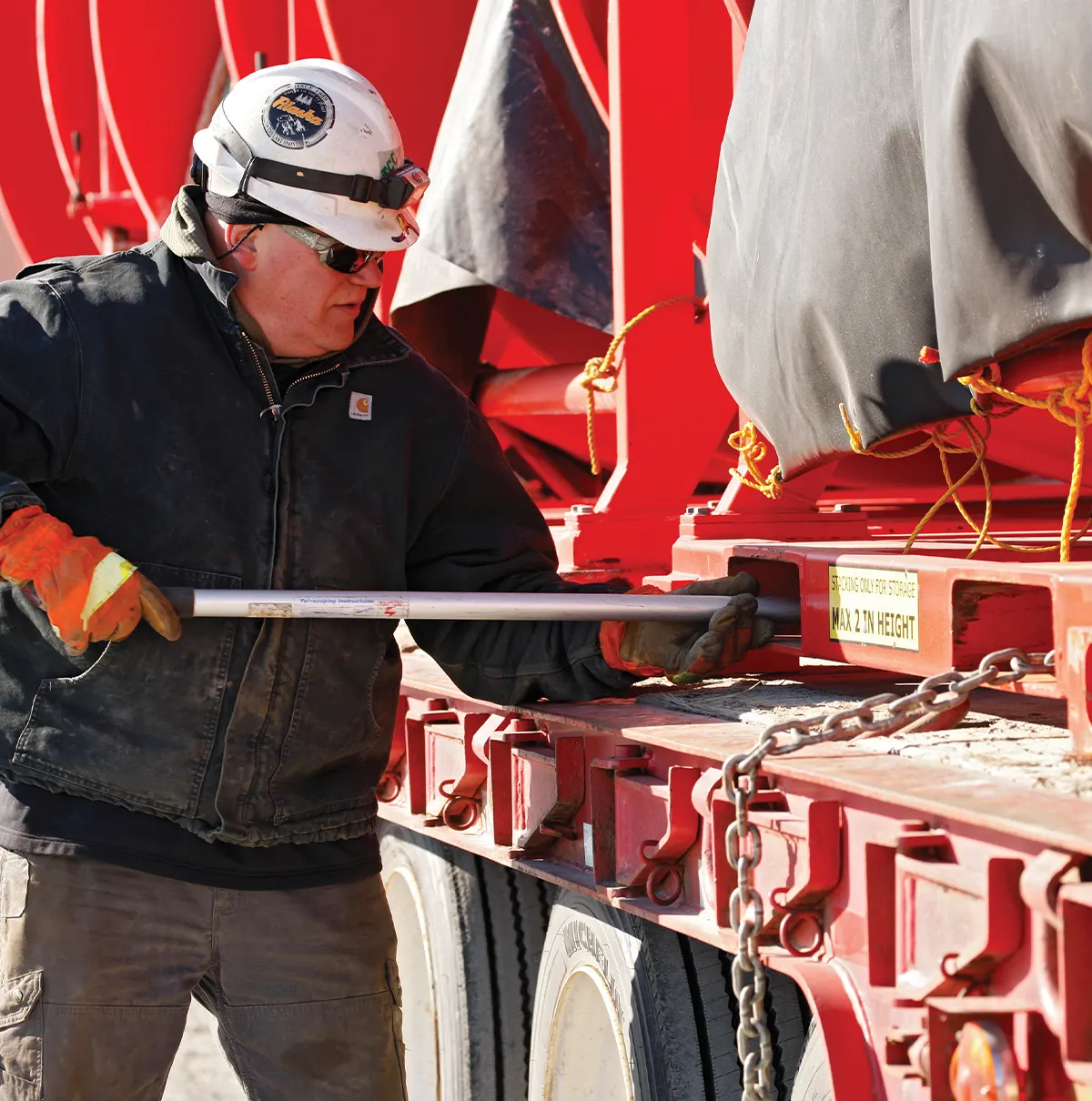
Judy Patrick | Tatitlek Chenega Chugach
“Our playbook blends traditional ecological knowledge, regulatory standards, and decades of hard-earned experience,” says Andersen. “We tailor each response to local conditions because what works in Prince William Sound is informed by us, the people who live there.”
Tatitlek Chenega Chugach

Todd Paxton, general manager of CISPRI, says the variety of equipment is necessary because not all oil products are the same. For instance, crude oil has a different viscosity and different properties than refined oil, and those characteristics affect how contamination is contained and recovered.
During the recovery process, solid waste is often removed, along with oil, making it necessary to segregate the different contaminants before they are transported to certified treatment and disposal facilities. When possible, responders try to recover and recycle “weathered” oil, crude, or refined product. However, Paxton says this only occurs if the weathered oil is recovered before significant evaporation, emulsification, oxidation, or biodegradation.
“It depends on how long weathered oil floats around,” says Paxton. “The longer it’s exposed, the more it starts retaining more water, and the characteristics of oil change from viscous to tar balls. If we pick it up soon enough, the product could be returned instead of being disposed of as hazardous waste.”
Weathered oil that can’t be recycled and returned to the owner will be treated biologically or chemically at a regulated site.
Responders must complete Hazardous Waste Operations and Emergency Response training and attend annual refresher programs, in addition to learning ICS protocols. Depending on their experience, skill acquisition is progressive and hands-on, given that PRACs conduct spill response training regularly.
“Regular training not only ensures that crews know the location of every piece of equipment and how to deploy it but it also allows crews to develop contingency plans for different situations,” says Paxton. “This means crews are ready 24/7, 365 days a year, should a spill occur.”
In his fifteen years with CISPRI, Paxton says he hasn’t had to respond to a major spill in the Cook Inlet. Given the organization’s success, Paxton says he plans to expand CISPRI’s reach to other parts of Alaska. In the next year, he plans to reorganize as a 501(c)(4) nonprofit social welfare group to rebrand several of its services.
SEAPRO


“We also have the capability to treat low levels of PFAS in soil and water,” says Matt Melton, Republic Services general manager for Alaska. “Additionally, our facility is equipped with an advanced wet scrubber on the exhaust stack, ensuring that air emissions consistently meet stringent state air quality regulations.”
Republic Services staff operate a dedicated call center to provide comprehensive support. Every call is routed directly to a Spill Project Manager, an experienced specialist who quickly assesses the scope and scale of the incident, the materials involved, and any nearby sensitive areas to ensure the right response from the state. Teams are outfitted with vacuum trucks, boom and skimmers, pumps, and portable tanks for product recovery, as well as heavy equipment to excavate soil and haul it to a treatment facility.
When conditions dictate, liquids are transported by vacuum truck, tanker, or standardized portable tanks mounted on trailers. Smaller volumes may be packaged and shipped in drums or intermediate bulk containers. Soil and solid materials are loaded into dump trucks, side-dump trailers, or intermodal open-top containers, which can be hauled by chassis, rail, or barge. All materials are packaged in regulatory-compliant containers appropriate for their specific classification and transport requirements.
“Our treatment facilities are capable of handling all types of contaminated materials, including water and soil,” says Melton. “Recovered fuels are recycled, and thermally treated soils may be beneficially reused in accordance with State regulations.”
For hazardous wastes requiring off-site management, Republic Services provides compliant solutions that include shipment to US Environmental Protection Agency-permitted treatment, storage, and disposal facilities in the Lower 48 for further treatment and secure landfill disposal, as required by regulation. Through effective cleanup and remediation, Melton says these sites are restored and no longer present a threat to human health or ecological well-being.