

hen Typhoon Halong swept through western Alaska in 2025, the damage it left behind seeped underground. Home heating oil tanks were dislodged, ruptured, or submerged. Communities were flooded. And, somewhere in the chaos, oil started leaking from tanks.
Within days, crews from 1-Call Alaska, a division of Resolve Marine, were in Nightmute, recovering fuel and managing contaminated materials. “We responded in the wake of severe weather to remote villages to recover home heating oil tanks, village oil tanks, and other oil spilled during flooding,” says Chris Svencer, Preparedness Response Manager at 1-Call Alaska/Resolve Marine.
The US Coast Guard (USCG) also contracted Alaska Chadux̂ Network to conduct oil spill recovery operations in Kipnuk, where responders recovered contaminated materials, restored usable fuel to the community, and helped mitigate environmental impacts following the storm.
These responses offer a glimpse into what oil spill management looks like in Alaska—less Hollywood disaster movie, more logistical puzzle played out across one of the most unforgiving geographies on earth.
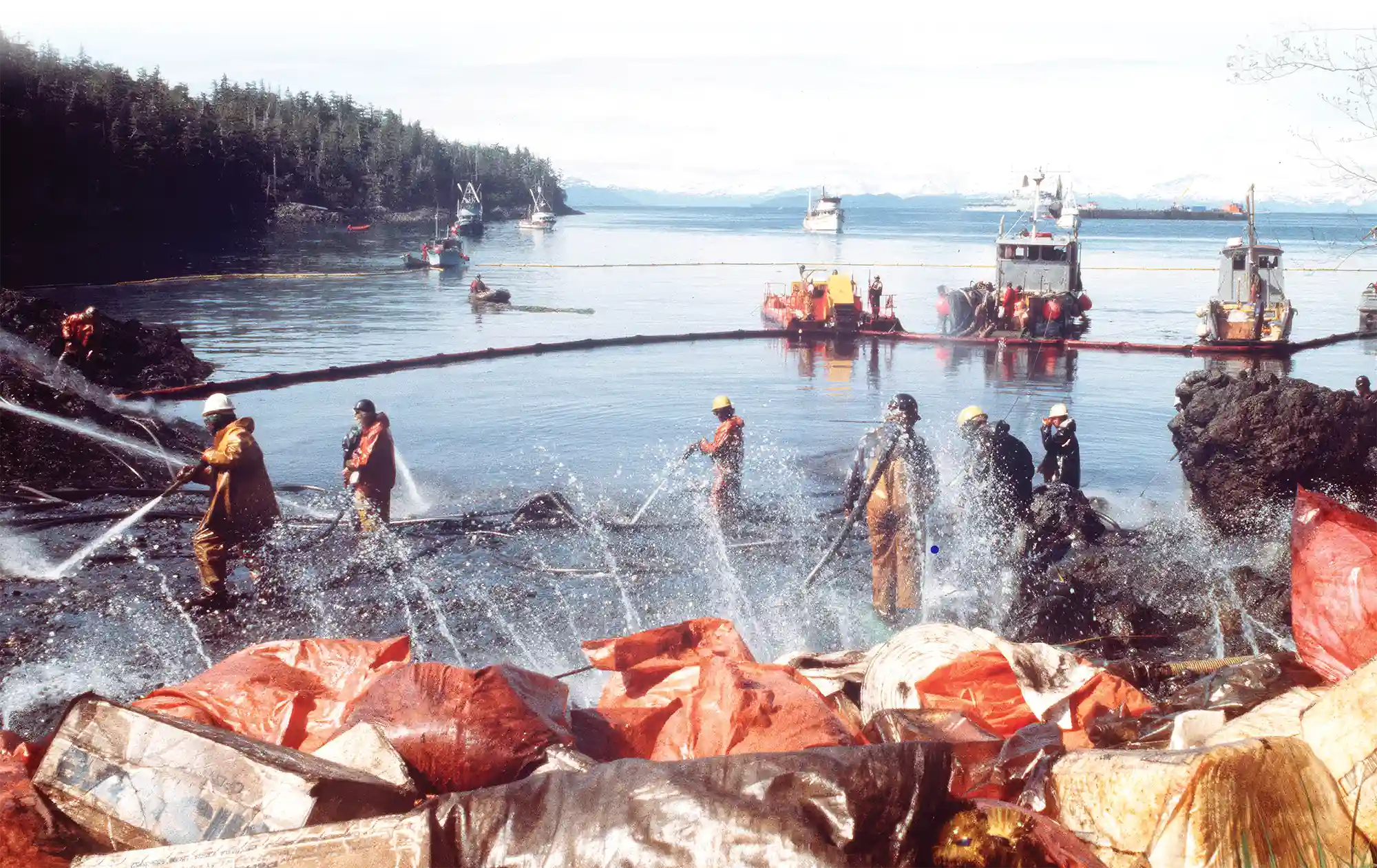
“After the Exxon Valdez, OPA 90 was enacted—that was a seminal piece of legislation that changed how oil spill prevention and response is managed and regulated in the US at both the federal and state levels,” says Buddy Custard, president and CEO of Alaska Chadux̂ Network, an oil spill removal organization founded in 1993 by five companies that transport oil throughout Alaska. Today, the network supports more than 650 companies operating in or transiting through Alaska waters.
Under OPA 90, facilities and vessels are required to contract with a qualified oil spill removal organization to meet their cleanup obligations. 1-Call Alaska/Resolve Marine holds USCG ratings covering Prince William Sound, Cook Inlet, Kodiak, the Aleutian Islands, Western Alaska, and Bristol Bay.
Southeast Alaska has its own dedicated response organization. Southeast Alaska Petroleum Response Organization (SEAPRO), a nonprofit, member-supported cooperative, has covered the region from Dixon Entrance north to Yakutat since 1991. “We are not the regulator, and we are not the responsible party,” says David Owings, SEAPRO’s general manager. “We are a response organization that helps ensure oil spill response capability is local, maintained, trained, and deployable when needed.” The region’s geography drives a heavily marine-based response model, with vessels, boom, skimmers, and pre-positioned caches built around steep shorelines, strong currents, and long transit distances.
Todd Duke, general manager of compliance services at 1-Call Alaska/Resolve Marine, describes OPA 90 as a genuine success story. “Vessel Response Plans are written, contracts with response organizations are in place. Drills and training are conducted; equipment is secured and maintained,” he says.
1-Call Alaska/Resolve Marine
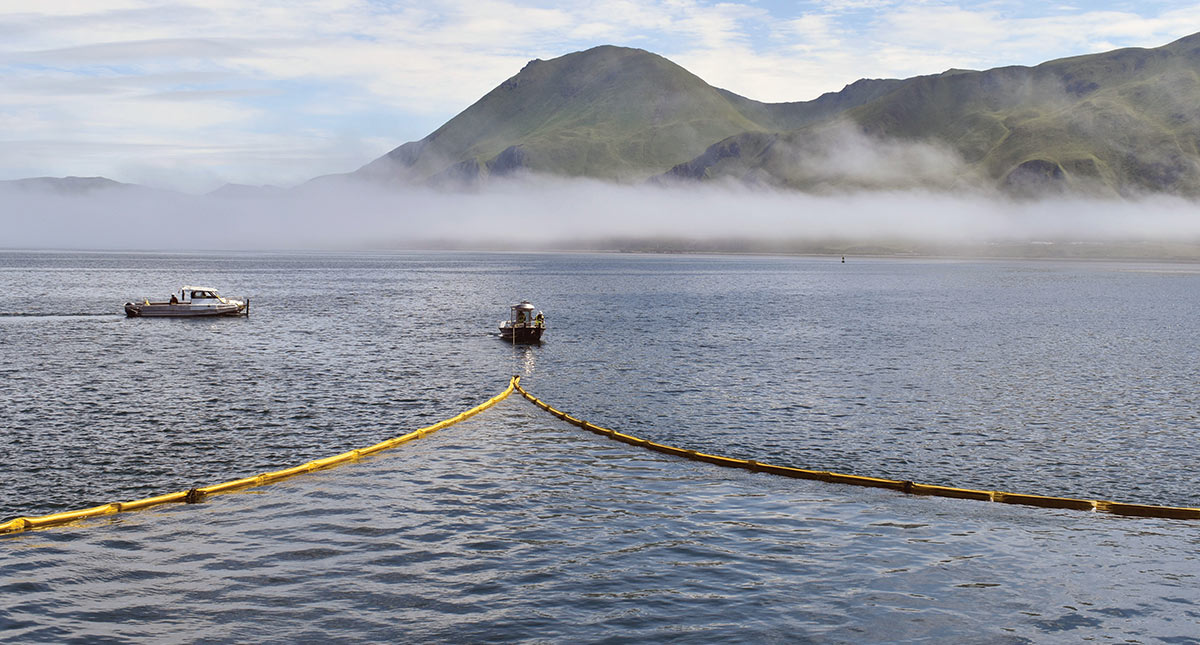
When a report comes in, the immediate priority is information gathering: what type of oil, where is it, how did it happen? The Alaska Department of Environmental Conservation (ADEC) and the USCG receive calls immediately, with the US Environmental Protection Agency joining the picture for spills on land.
“We have to understand the spill, where it is, how it happened,” Custard says. “In the winter, there are storms and cold weather. The best way to respond to all of these places is by aircraft. In western Alaska, there’s only one major road and no highways.”
1-Call Alaska/Resolve Marine maintains immediate response capability from its Anchorage warehouse and Dutch Harbor facility. “Our immediate response capability can cover the initial 72 hours of a response and will be backfilled or expanded as needed,” Svencer says.
Alaska Chadux̂ Network keeps eight full-time responders on call around the clock, with contracts for additional labor on large-scale incidents.
Alaska Chadux̂ Network takes a similarly broad view of readiness. Responders are certified in wildlife hazing, aerial observation, drone operations, and enhanced first aid—because in a remote village with no hospital, the ability to stabilize an injured worker until an aircraft arrives isn’t optional. “The number one goal of any oil spill response is the safety of responders and the public,” Custard says. “That is always number one.”
Custard describes a similarly resourceful approach at Alaska Chadux̂ Network. Recovered oil is separated into liquids and solids, and some is incinerated locally with permission while the rest is shipped to larger incinerators.
In Kipnuk, another storm-damaged village, filtered fuel from damaged tanks could be cleaned and returned to the community. “We have filters and fuel cleaners, and we can give it back to the community to be reused,” Custard says.
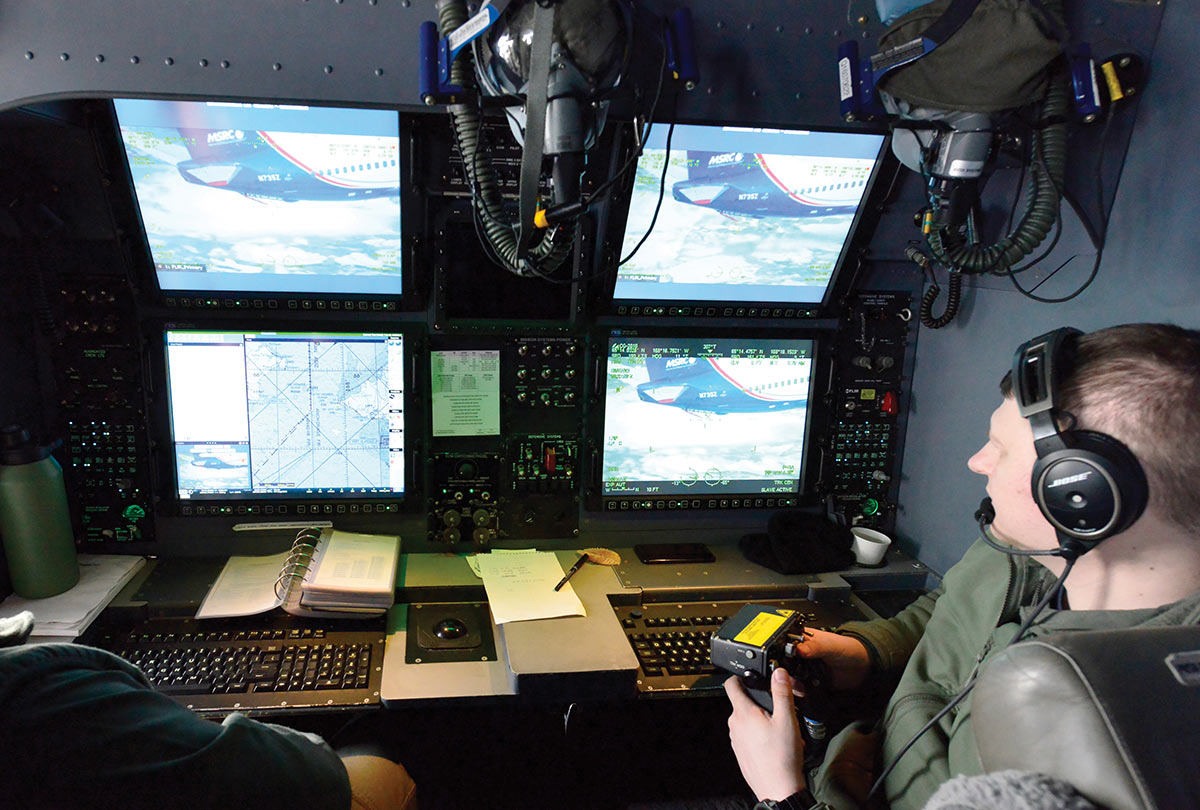
Petty Officer 1st Class Melissa E. F. McKenzie | DVIDS
The bigger shift, all three responders observe, has been upstream: preventing spills before they happen.
Following the Exxon Valdez grounding and passage of OPA 90, the US Coast Guard established the Prince William Sound Vessel Traffic Service, which continuously monitors and manages crude oil tanker traffic through Prince William Sound and can help identify abnormal vessel movements and emerging risks. It is a critical component of the region’s spill prevention system.
Svencer says, “Tracking like this would have identified the Exxon Valdez as being off course,” and may have allowed for intervention from onshore, potentially saving the vessel from Bligh Reef.
Alaska Chadux̂ Network requires member vessels to stay at least 50 miles offshore and steps in with salvage support after a breakdown becomes a grounding. The Don Young Coast Guard Authorization Act of 2022 codified some of this Alaska-specific thinking federally. “The down-south model doesn’t work in Alaska,” Custard says. “Our time-distance equation is huge.”
Owings offers a similarly clear-eyed accounting: more dedicated equipment, more formalized organizations, larger inventories, and far more regular exercises than existed in 1989. “By almost any practical measure, Alaska’s spill response capability has improved substantially since 1989,” he says—but then he adds a caution: “Improved does not mean risk has been eliminated. Weather, distance, darkness, ice, and limited infrastructures can overwhelm even a good plan.” Part of that risk traces back to aging infrastructure built largely in the ‘70s.
“The best spill response is prevention,” Owings adds. “Cleanup should never be viewed as a substitute for prevention, maintenance, inspection, and risk reduction.”
Owings is also careful not to let Alaska’s progress curdle into complacency. He considers the state a leader in planning for remote, high-consequence environments, but not the only one. “Norway, Canada, and other Arctic and sub-Arctic nations have deep experience with cold-water operations, offshore planning, ice conditions, and government-industry coordination,” he says. “Alaska is a leader, but not the only leader.”
Custard frames it similarly. Natural weathering and dispersion can handle 75 percent or more of a spill, depending on conditions. “If you see a 1,000-barrel spill, and the public is expecting we’re going to pick up that 1,000 barrels, that’s not going to happen,” he says.
Owings pushes further against the misconception, into what “recovery” actually means. “Recovery means ecological function is returning, not just that the oil is no longer visible,” he says. “Are fish returning? Are birds nesting successfully? Are subsistence uses restored? Those are harder questions, and they require monitoring over time.” A rocky shoreline recovers differently than a marsh, an eelgrass bed, or a seabird colony. “Some resources may recover within months, while others can take years or even decades,” he says.
That uncertainty extends to the tools themselves. Dispersants, for instance, break surface oil into droplets and move it into the water column rather than letting it reach shore, buying shoreline protection at the price of greater risk to fish and shellfish. “That decision should not be made casually,” Owings says.
Most skimmers fall into one of three categories: oleophilic skimmers, which use oil-attracting discs, belts, or drums to draw oil away from water before scraping it off into a collection tank; weir skimmers, which let oil flow over a submerged barrier; and vacuum skimmers, which use suction to pull oil directly off the surface. Mechanical recovery remains the preferred option when it’s safe and effective, but ice-covered water remains one of the toughest scenarios of all. Oil can travel beneath the ice or resurface elsewhere entirely, rendering boom-and-skimmer systems less effective than in open water.
Duke flags this transition as perhaps the most significant emerging challenge for spill prevention and response: among those alternatives, OPA 90 only applies to biodiesel, and the rest of the regulatory framework hasn’t caught up. “The US Coast Guard Research and Development Center issued a critical warning [that] without adequate awareness, training, and preparation, alternative fuel spillage in US waterways can pose serious risks,” Duke says. “Congress needs to work to provide the same regulatory guidance and safety net that OPA 90 provides.”
Custard sees technology as the other side of that coin: a tool for better response, not just new risk. He says advances in technology are creating new opportunities to improve oil spill prevention and response. Emerging capabilities—including improved vessel monitoring, unmanned systems, enhanced detection technologies, artificial intelligence, and other decision-support tools—have the potential to improve situational awareness, response effectiveness, and responder safety, particularly in Alaska’s challenging operating environment. “It’s exploding and starting to become a game changer in oil spill response,” he says.
Some observers outside the established response industry argue that the pace of adoption hasn’t been fast enough. Kevin Kennedy, founder and owner of Pacific Petroleum Recovery Alaska, has spent years developing vacuum-based skimming technology he contends outperforms conventional equipment, even in cold water and slush conditions. He believes regulatory inertia has kept more effective tools from being adopted. “Until the regs change and they demand innovation, no one has the incentive to change what they’re doing,” Kennedy says.
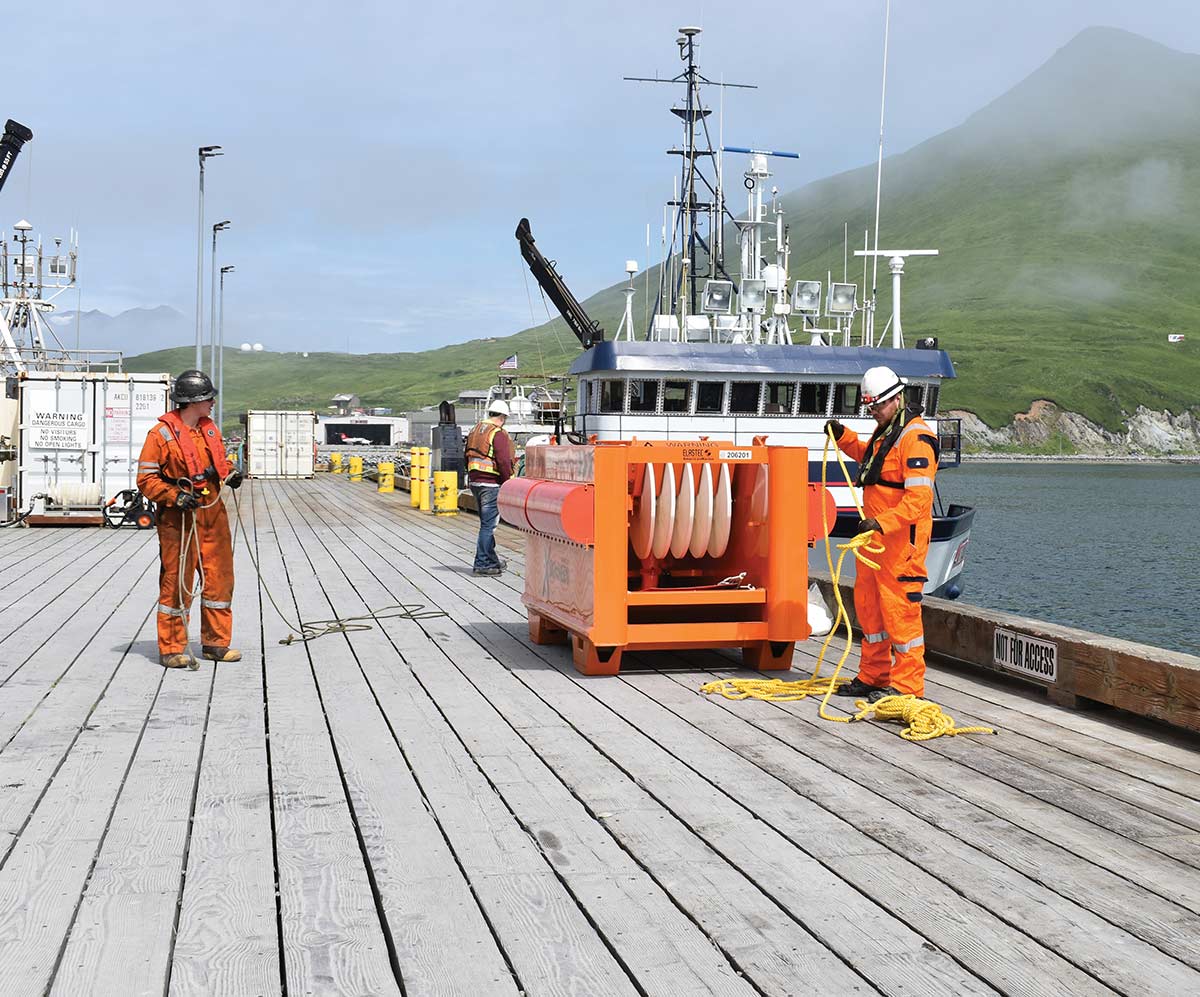
1-Call Alaska/Resolve Marine
For Owings, the fix isn’t a single piece of equipment or regulation; it’s sustained investment in the whole system before a spill happens. “In Alaska, the challenge is rarely one missing piece of equipment,” he says. “It is the whole chain: people, equipment, transportation, weather, communications, storage, waste handling, permits, and decision-making. It is much cheaper and much more effective to maintain capability than to try to build it during an emergency.”
Thirty-seven years after Exxon Valdez ran aground on Bligh Reef, Alaska’s oil spill response system is meaningfully better: more equipment, more hubs, better monitoring, and organizations that have built real institutional knowledge.
Organizations such as Alaska Chadux̂ Network, SEAPRO, and 1-Call Alaska/Resolve Marine have expanded equipment, training, prevention technologies, and operational readiness, creating one of the world’s most capable oil spill response systems.
Yet the people closest to that system are also its most clear-eyed critics. The geography hasn’t changed. The remoteness hasn’t changed. And as the shipping industry transforms its fuel supply and Arctic traffic increases, the regulatory framework that has guided spill response for more than three decades will need to continue to evolve right along with it.
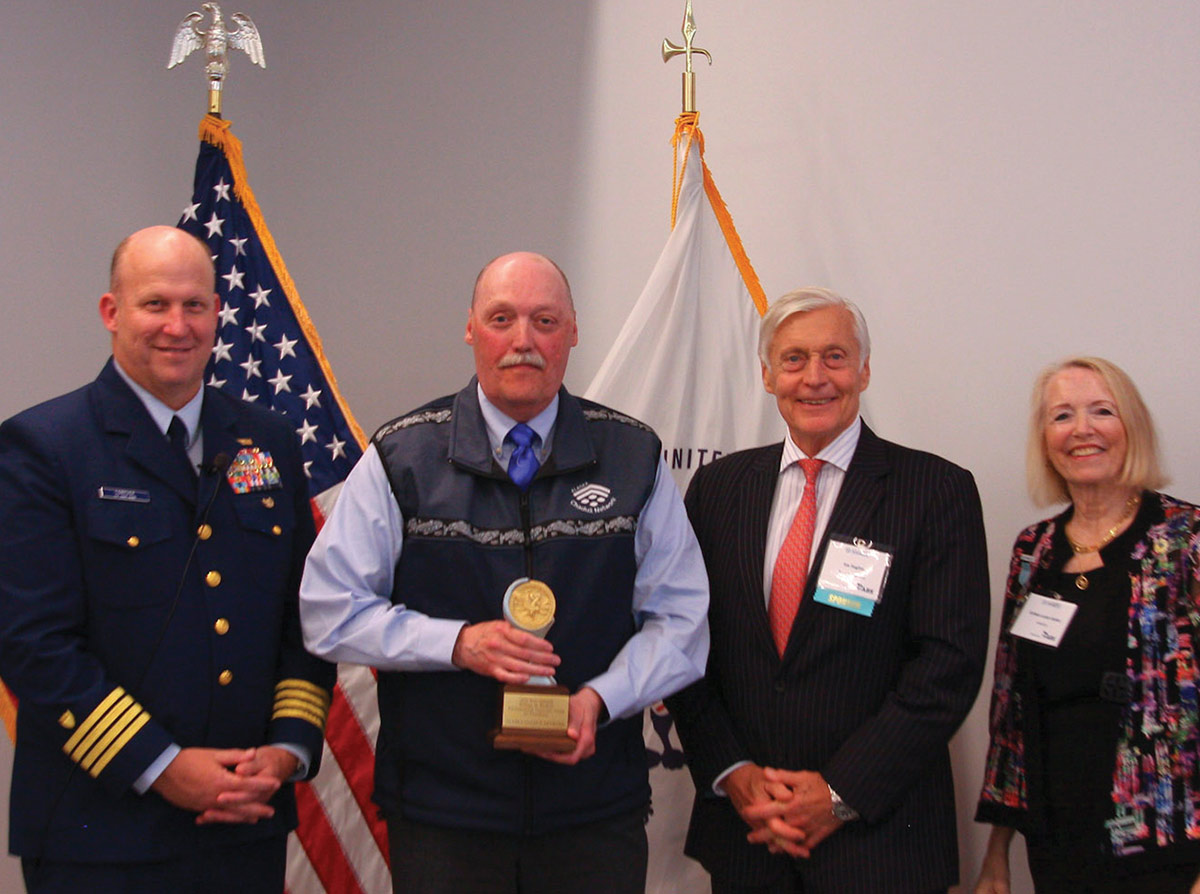
The Benkert Awards, named in honor of Rear Admiral William M. Benkert, whose US Coast Guard career spanned thirty-eight years, recognize organizations that demonstrate exceptional commitment to protecting the marine environment and advancing safe and responsible maritime operations.
The award was presented to Alaska Chadux̂ Network during the North American Marine Environment Protection Association Safety at Sea Seminar, and it represents the highest level of recognition awarded for excellence in marine environmental protection, operational readiness, and safety leadership.
At the time of the award, Alaska Chadux̂ Network President and CEO Buddy Custard stated: “Protecting Alaska’s coastal waters and communities is at the center of everything we do. The companies we support believe that environmental protection and responsible commerce are not competing interests—they are inseparable responsibilities.”