

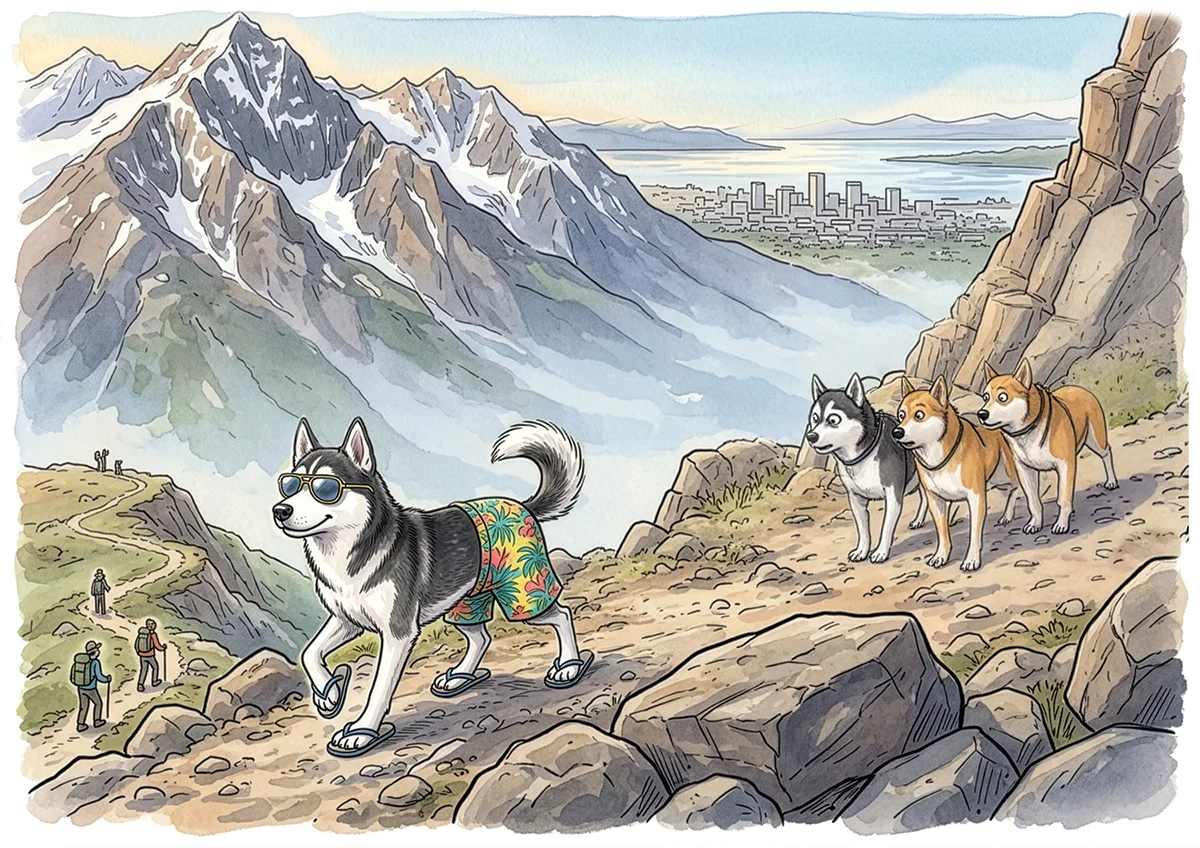
any view incompetence as an individual problem—some combination of lack of skill, judgment, or motivation. But the greater threat is organizational: a corporate culture that rewards appearances, relationships, or politics over capability.
“Failing up” is one of the most enduring paradoxes in business. This occurs when individuals receive promotions, expanded authority, or prestigious appointments despite a track record of poor performance. Classic examples range from executives who leave struggling organizations only to land influential board positions elsewhere to managers who consistently miss targets yet are moved into more senior roles rather than held accountable.
At first glance, incompetence appears to be a training or motivation issue. In reality, organizations often enable it through incentives and culture. When leaders avoid difficult personnel decisions, poor performers can be transferred, promoted, or otherwise repositioned instead of being developed or removed. Doing so can send a powerful message about what the organization truly values.
Canadian sociologist Laurence J. Peter notably observed in his book The Peter Principle (1969) that employees are often promoted based on success in their current role until they reach a position where they are no longer effective. His observation remains relevant today: organizations that equate advancement exclusively with management responsibility are at risk of placing talented specialists into roles that don’t match their strengths.
For Alaska employers, where specialized expertise is often difficult to replace, one solution is the dual-career ladder. By creating advancement paths for both technical experts and people leaders, organizations can reward excellence without forcing top performers into management roles that may not suit their skills.
- Unconscious incompetence: You don’t know what you don’t know, also known as blind spot or blissful ignorance.
- Conscious incompetence: You know what you don’t know and recognize your knowledge gap.
- Conscious competence: You can do the task, but it requires focus and heavy lifting.
- Unconscious competence: You are “in the zone,” and mastery becomes second nature.
Each stage presents different leadership challenges. Employees who don’t recognize their limitations need feedback and accountability; those who acknowledge gaps need psychological safety to learn; those developing expertise need opportunities to practice; and seasoned experts need continuous learning to avoid complacency. The challenge for organizations is recognizing where people are on that spectrum and creating systems that help them progress rather than stagnate or stall out.
Q: What goes into building an organizational culture that tolerates creative, high-risk failure while maintaining a zero-tolerance policy for technical carelessness and operational incompetence?
Barrett: My goal was always to create and sustain a high-performance culture as a path to organization success.
I think culture is more important to success than strategy and plans. Of course, leaders have to provide clear goals and model desired organizational values—people watch you—but the role of a leader in some ways is the simplest job in the company. I would joke that you just have to light fires or put them out. But leading is really about helping the people you work with excel. In a high-performance organization, everyone understands they earn respect by adhering to high standards, demonstrating strong professional skills, building good personal relationships, and acting with integrity. And respect builds pride.
Peers know who excels at their craft; people respect people who can be depended on to get the job done, and done well, irrespective of position or title. Business is always changing. Both the business and employees need to keep growing and learning. You don’t want average. You don’t want to just be OK at your job. TAPS is an engineering-heavy company that moves oil. Solid skills drive system safety and reliability. Lives and the environment can’t tolerate mediocrity.
People respect those who care about those who they work with. People respect leaders who are skilled, caring, build authentic relationships, and support the local community where employees live. And the best time to make a friend is before you need one.
Personal and organizational integrity is foundational to a high-performance culture. Doing the right thing in situations with competing interests can be complex, with a lot of gray area. Good leaders have to honor a point at which they are simply not going to do something that compromises their own or the organization’s integrity.
In the naval services, they call your long-sleeved outer jacket a blouse; its insignia reflect command position and authority. In a position of authority, one should know the point where you will take off your blouse. Meaning, give up the career before [compromising integrity]. If people sense you are serious on integrity, you are less likely to be pushed. Establishing that line isn’t to be taken lightly.
Start with those three respect-building ideas. But even with that, fixing culture and being innovative is challenging. Pressures can be subtle, and finances are always a consideration. You don’t want to spend more money than you need to, and you have to look at a whole risk profile to fully understand a problem.
I learned early on to never just walk past someone who is working. I remember stopping to talk to a young tech and asking, “What are you doing?” To which he responded, “I’m fixing this #$@&%*!? stupid radio again, swapping a part from one aircraft to another.” A genuine operational readiness risk. I followed up and learned that a supply depot was sending replacement parts to Alaska via ground shipping to save money, which delayed receipt. They were switched to air shipping. Had I not stopped to speak with the airman who did not fear speaking up to me, we might not have fixed the issue. Sunshine cures a lot of problems. I think one has to be always curious about people, systems, and risk.
If you’re in a room where decisions are being made, you’re there for a reason, and different voices help shape better decisions. In a decision brief, I tried to draw people into conversation so more voices and perspectives would contribute.
A leader’s currency is trust, built by listening, getting out of the office, and being active, which is harder the higher up you get in an organization. It reminds me of the motto at the US Merchant Marine Academy, “Acta Non Verba,” which means “Deeds Not Words.”
Barrett: First, do you have the data? Even when you do, have you drilled down and really understood the fundamental drivers? Second, realizing that, with only one perspective, it is hard to tell if someone is blowing smoke. Get other views; take your time to get it right.
At a luncheon I attended, Colin Powell, then Chief of Staff of the Army, observed that in a decision space, your timing needs to be “as decisive as the situation demands.” When operating, you might not have time to pause, but in a policy discussion, be comfortable saying, “I’m going to think more about this,” or talk to others about this before deciding.
I sometimes liked expert panel advice. You surface more information and insight. Yes, there may be challenges with this, but you get more diversity of thinking, different knowledgeable perspectives, and insights improve your decision-making. You’re still accountable as a leader, but sometimes you can kick the tires harder using an expert panel.
Barrett: It starts with building a culture of trust so people know you won’t “shoot the messenger,” a “speak-up-and-step-up” culture where people are not afraid to voice ways to improve things. And if someone sees a problem, they are obligated and not afraid to step up. That climate is critical to a high-performance culture.
It takes different skills to be an amazing engineer than to supervise twenty of them. Highly technical organizations do well to create a path for individuals to advance in their careers without having to shift from being a subject expert to a leader of others. The organization has goals, but people do, too, and they should have a say in those.
When I visited ships, I went first to the engine room. How people care for areas out of sight says something. On one Coast Guard vessel, the crew had a brass plaque on the engine room bulkhead: “Courage. Fortitude. Tenacity.” One word was misspelled. When someone wanted to correct and replace it, I cautioned, “Don’t do it. They own it.”
Mission ownership matters. You may have to let some little things go if people have ownership pride and are doing the job well. Those engines ran flawlessly, even if crew spelling wasn’t perfect.
Q: At what point does a leader’s empathy for an under-performer become a betrayal of the high performers?
Barrett: Peers know who is cutting corners. A leader may be the last one to know. When brought up and a leader acts decisively, you may well hear, “It’s about time.” A cluster of negative people is corrosive. Leaders can’t let it fester. Set high standards; be clear about goals and what success looks like.
At TAPS we had Atigun awards. Atigun is the highest pass the line crosses, so the award represents the highest praise. What made this special was that it was not top-down driven. Anyone could nominate people for recognition. Praise has to be authentic and visible. That’s what people react to.
And, yes, sometimes people self-select out. They decide that it is not the right place for them. That’s OK.
Join us next month as we explore corruption.
Throughout 2026, Garrick’s leadership series is exploring different ways for leaders to align their values with ethical conduct and create lasting positive impact.