

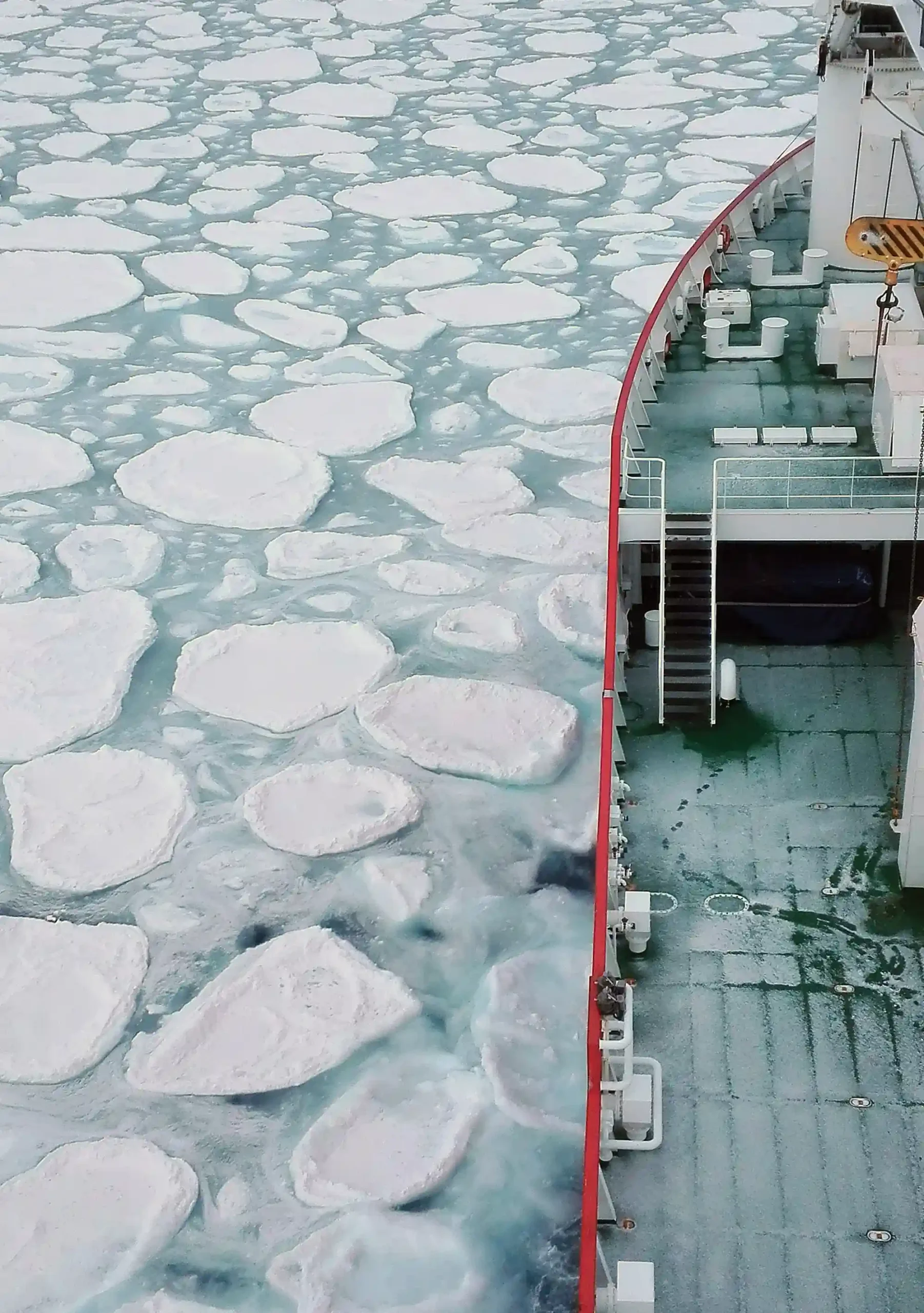
ouses in Kodiak are pawns in a global chess match. The US Coast Guard (USCG) awarded task orders in May to build fifteen duplexes, a childcare center, and a playground to accommodate new personnel on the island. The projects are the final phase of the Nemetz Park housing initiative, which already brought fifty new housing units for USCG families at Base Kodiak.
Construction is set to finish by 2028, when two new icebreakers arrive in Kodiak. The homeporting is an economic stimulus for the community, valued at $81.1 million for the new duplexes and $61.6 million for the childcare center to be built by California-based Tutor Perini Corporation—but local investment is not the prime motivation. Icebreakers coming to Alaska, and homes for the crew, are strategic moves in the contest to control the Arctic region.
According to the National Oceanic and Atmospheric Administration, the extent of Arctic Ocean ice cover reached its lowest point in nearly a half-century of records in March 2025. The agency further observes that the Arctic region is warming faster than the global average. Despite attempts to limit greenhouse gas emissions, 2025 saw the largest ever total, more than 60 billion tons from human activity, and about two-thirds were attributed to fossil fuels.
Nations are positioning strategic assets to control those resources. Development of Arctic oil and gas by commercial players is a proxy for high-stakes maneuvering, as governments balance their need to dominate the Arctic against the challenges of operating in the region.
US Coast Guard | DVIDS
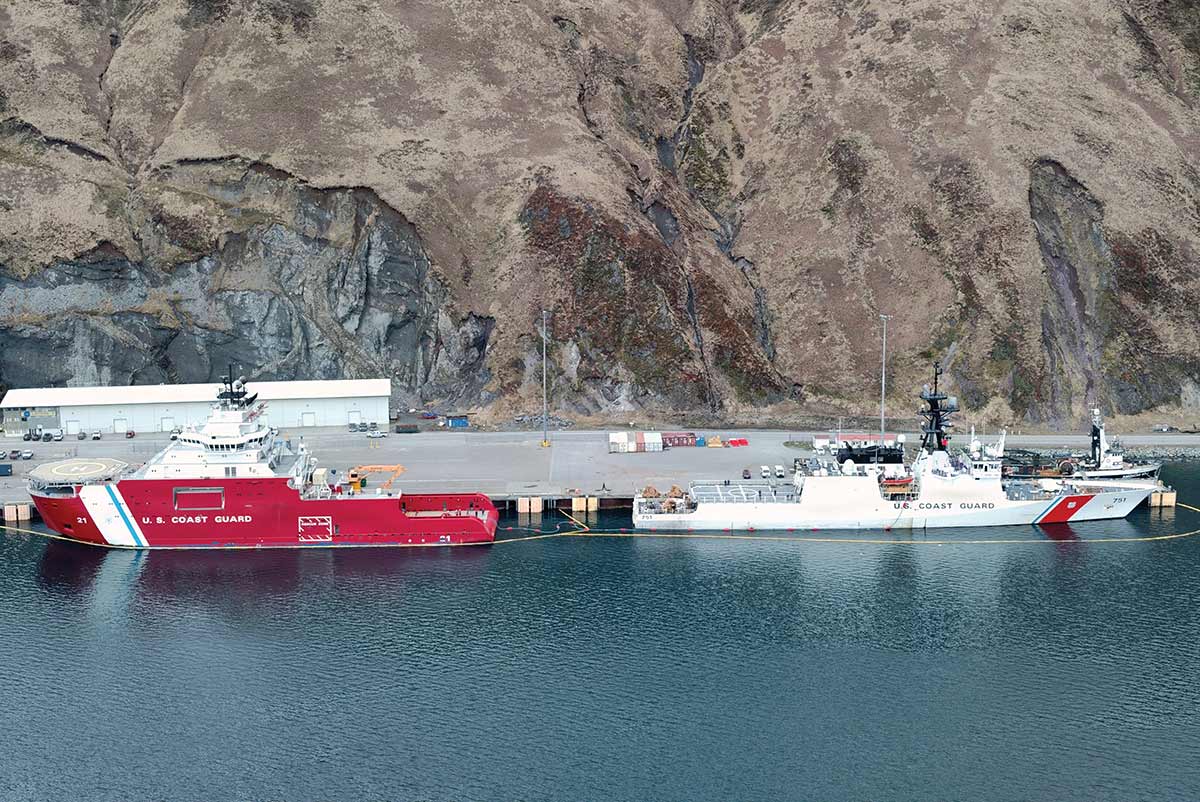
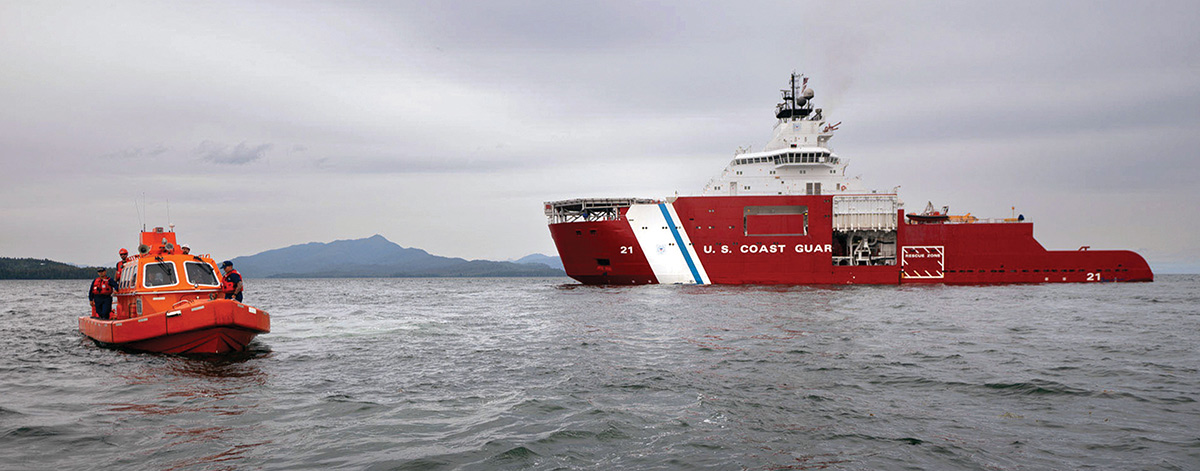
Thus, adding two icebreakers to Kodiak, plus another slated for duty in Seward, is a significant expansion of the fleet. Those three vessels are among eleven medium icebreakers that Congress authorized in 2025, allocating $8.6 billion to build them. Home ports for the other eight icebreakers, part of a new class of Arctic Security Cutters, have not yet been announced.
Arctic allies are aiding the construction of the new USCG assets. The first four ships are being built in Finland, a global leader in icebreakers, and Finnish experts will assist US shipyards in fulfilling the remainder of the order. The third member of the Icebreaker Collaboration Effort, or ICE Pact, is Canada, which is supplying proven hull designs. Quebec-based Chantier Davie is also designing next-generation cutters, and it is responsible for a billion-dollar shipyard upgrade in Texas to facilitate domestic fabrication.
The Canadian Coast Guard is itself acquiring two polar icebreakers for delivery within the next decade. Although a US ally, Canada is protective of its claim to the Northwest Passage as internal waters, allowing the country to regulate or tax foreign shipping. The US argues that historical use for travel between the North Atlantic Ocean and the Arctic Ocean has established the passage as an international route under traditions codified by the United Nations Convention on the Law of the Sea, although the United States has never ratified that treaty.
The North American neighbors also contend in the global oil market, with each government enlarging the portfolio of lands and waters available for oil and gas development. Last year, Canadian Prime Minister Mark Carney advocated for Arctic pipelines to deepwater ports, to avoid dependence on US routes. However, new routes are not yet economically feasible, and instead of more Arctic production, Canada’s focus remains on its Alberta oil sands and maritime oil fields.
Despite lying entirely outside the Arctic Circle, China has asserted itself as a “near-Arctic state.” Last September, two Chinese research vessels entered the US Extended Continental Shelf off Alaska, prompting USCGC Healy to monitor their activities, supported by aircraft from the nearest US base in Kodiak. Under the United Nations Convention on the Law of the Sea, marine scientific research in the 200-mile extension of the continental shelf requires consent from the coastal state.
China has declared its ambitions for a Polar Silk Road, with a year-round regional presence. Five Chinese vessels currently operate during the open-water season, collecting oceanographic data with strategic potential. China National Petroleum Corporation has also invested in Russian energy projects to gain a further foothold in the Far North.
Sanctions triggered by Russia’s 2022 invasion of Ukraine have prompted closer ties between China and Russia. Chinese companies hold 30 percent of Yamal LNG and 20 percent of Arctic LNG 2, two major liquified natural gas terminals on opposite sides of the Gulf of Ob. Shipping from Arctic LNG 2 commenced in 2025, despite sanctions, with the first delivery to a Chinese port.
By giving Russia a customer for its new LNG project, China bolsters its northern neighbor’s Arctic bulwark, even as the market for Russian crude oil withers. Russia has all but ceased offshore exploration, with no new discoveries since sanctions were imposed. The Vostok Oil project—a collection of fields on the Taymyr Peninsula, the northernmost extent of the Eurasian mainland—is falling behind schedule. Russian energy conglomerate Rosneft was ramping up from 600,000 barrels per day in 2024 to 2 million by 2030, but construction has been sluggish. Limited terminal capacity has capped output to about 500,000 barrels per day—a bit more than the Trans Alaska Pipeline System, but far short of expectations. Due to international sanctions, Russian shipyards cannot build enough tankers with specialized hulls to meet the delivery targets. Thus, Rosneft is stretching the Vostok Oil development timeline by an extra five to seven years.
Petty Officer 3rd Class Ashly Murphy | DVIDS
Norway has another record breaker in store, but a final investment decision slipped into next year on Wisting, the country’s largest undeveloped Arctic oil field. The national oil company Equinor is committed to advancing the project; it’s just a question of when. Worldwide inflation delayed an initial 2022 greenlight, so Equinor is biding its time until finances pencil out. If approved, Wisting would take the crown as northernmost producer at 73.4° N, about halfway between the mainland and Norway’s island territory of Svalbard.
The Barents Sea also saw natural gas production commence last year from the Askeladd West field, sending gas ashore to Europe’s largest LNG facility at Hammerfest. Near-field and wildcat exploration has also gained momentum, with four discoveries last year totaling more than 50 million barrels of oil equivalent, not far from Goliat and Johan Castberg.
Nordic neighbor Denmark is a negligible offshore oil producer at about 72,000 barrels per day, and the country has committed to end all production by 2050. Denmark’s autonomous territory of Greenland likewise decided in 2021 to ban oil and gas exploration. However, a pre-2021 license will enable Texas-based Greenland Energy, known until recently as March GL, to drill a pair of onshore exploration wells targeting an anticipated 1.2 billion barrels beneath the Jameson Land basin. The company is procuring equipment this summer for a drilling campaign in October.
However, the Greenland government has only issued permits for exploration. Permits for infrastructure to develop, produce, and transport Jameson Land oil might be politically unpopular. The territory is instead focused on development of rare earth elements; however, these deposits are often co-located with uranium, and the 2021 moratorium on oil also forbids uranium extraction.
Science Source
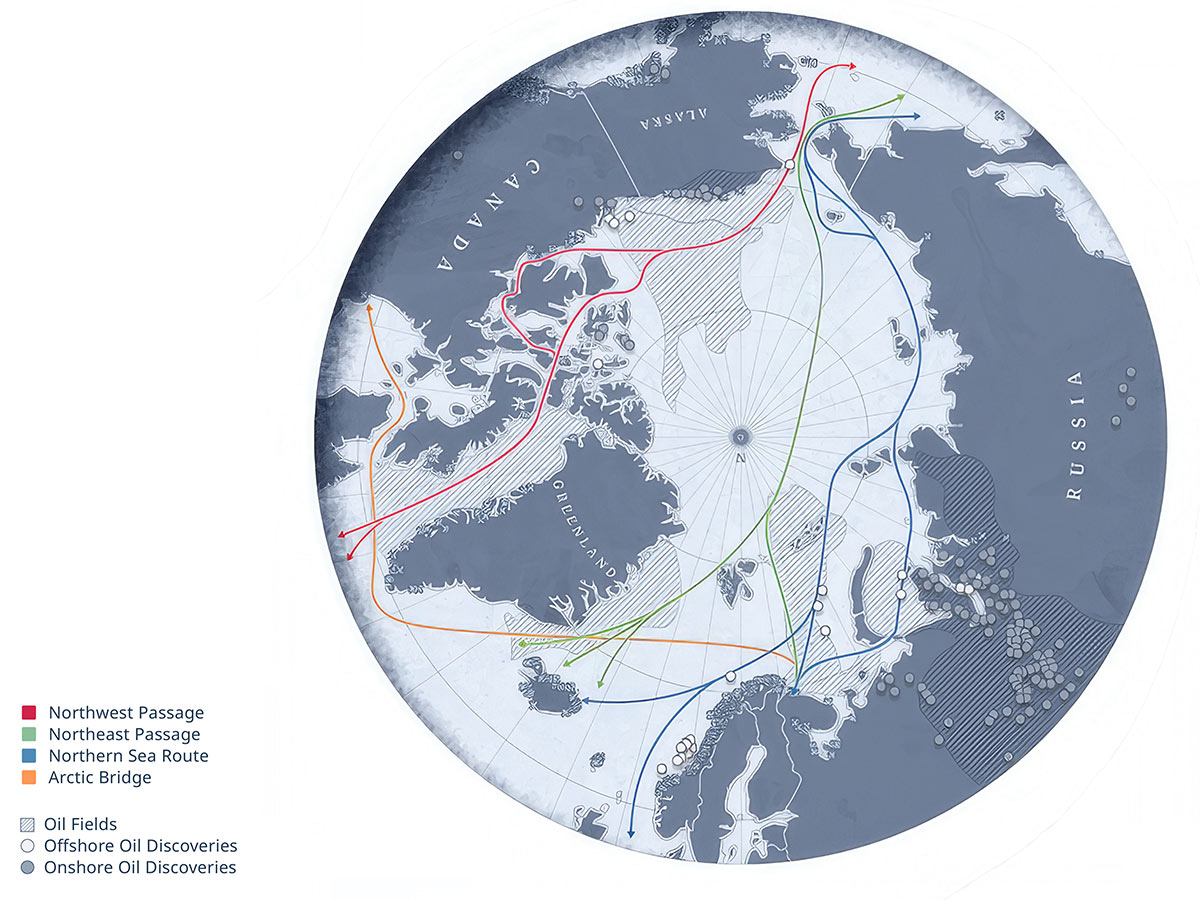
The Trump administration is also encouraging offshore drilling in the Arctic. The US Department of the Interior is preparing a five-year offshore leasing plan for a newly designated High Arctic region, farther from North Slope infrastructure than previous exploration ever attempted.
Other nations are also looking to Alaska to advance their own Arctic strategies. As Glenfarne assembles the pieces of an Alaska LNG pipeline project, agreements from export customers form an essential foundation, and those customers are mainly in East Asia. South Korean firm POSCO International signed on to supply much of the steel for the project and to eventually buy gas from the pipeline. In May, the company further committed to Alaska by signing a framework for collaboration on other megaprojects, including the dormant Knik Arm Crossing.
Why would a Korean company help Alaska build a Knik Arm Crossing? Because, according to POSCO International President and CEO Lee Kye-in, the company would like to “explore these projects responsibly and create meaningful opportunities that can help strengthen supply chains and support sustainable growth for both parties.”
A desire for regional dominance by political leaders can help push commercial ventures in the Arctic, but projects will only pay off in the long term when private-sector developers can overcome economic obstacles, operational costs, and volatile global markets. In turn, those companies advance national interests in the pursuit of profits for their shareholders and, along the way, benefits for the Arctic communities that sit on top of the resource bonanza.