


laska-grown beef could, in the future, receive supplemental minerals from kelp and be fattened up on a diet that includes day-old pastries.
“In animal nutrition, one man’s trash is another man’s treasure,” says UAF Matanuska Experiment Farm and Extension Center Livestock Nutritionist Jim Vinyard. His research includes testing how a small herd of cattle at the Experiment Farm off Trunk Road in the Mat-Su, which operates under the UAF Institute of Agriculture, Natural Resources and Extension, responds to various additions to their diet.
There are a lot of nutritional “waste” products available in Alaska. Spent grains from local breweries, for example, still carry significant nutritional value. So does much of the edible waste from grocery stores.
“All the stuff that goes past the sell-by date in a grocery store has to go somewhere. If it’s some sort of bakery product, veggie, or fruit, we can feed that to livestock,” Vinyard says.
Past-date meat is a different issue, he notes. Cows won’t eat it, but it can be fed to pigs or chickens.
“I’ve seen folks feed a whole caribou carcass to their chickens,” he explains. “They got called on the roadkill list, but there was a popped gut and [the meat] wasn’t usable.”
It’s estimated that Alaska produces about 5 percent of the food it consumes, which quickly becomes a problem if established shipping lines are down, a possibility during an earthquake or other significant disaster. Governor Mike Dunleavy created a food security task force in 2022 to help Alaska become more self-reliant when it comes to food production. Vinyard says part of that effort is securing access to high-quality livestock feed at a more affordable rate.
That’s where his study comes in: the focus is not on how cattle respond to a diet of day-old donuts but on what can easily be grown or used in Alaska specifically for local livestock, beyond the obvious possibilities of brome grass, alfalfa, and other hay products.
A less obvious possibility is bird vetch, he says. The invasive plant with purple flowers and sawtooth vines observed all over Southcentral Alaska was first brought to the state as a possible livestock feed by UAF researchers. “It failed because it doesn’t grow quick enough to get multiple cuttings in a season,” he says.
But, after a little was grown here, it proved to really like Alaska’s climate. Now bird vetch grows uncontrollably as an invasive species. Vinyard observes, “It actually outcompetes a lot of our native plants.”
Perhaps feeding it to animals would be a good use for the plant—but Vinyard warns that planting fields of vetch could be dangerous, and there could be problems using it as feed if its seeds spread in manure.
But vetch isn’t where Vinyard’s supplemental livestock feed focus is right now; it’s on kelp. “Our kelp industry is skyrocketing,” he says.
Kelp as an export product slams into entrenched overseas markets, and kelp as livestock feed is too low value to transport far from Alaska. But in-state use has possibilities. “We have an industry that is growing and looking for a market, and we have another industry that we want to grow and has a potential market,” Vinyard explains, referring to kelp as the former and the Alaska cattle industry as the latter. “We’ve just got to figure out all the pieces in between.”
He calls them his rumen fluid donors: he can pull a portion of the contents of their stomachs out via pump and incubate the specimen in the lab with different food products or supplements and then estimate how the cow might react to dietary changes. That allows researchers to test some ideas without risk to the cattle.
“It’s really good for preliminary data, a quick evaluation of things,” Vinyard explains.
Companies making kelp-based biostimulant sprays for crop or soil amendments inevitably have byproduct from creating the spray, so they have asked if the byproduct can be used as cattle feed, he says.
“So that’s something I’m going to do a preliminary test with,” says Vinyard. Other possibilities include testing which Alaska-grown variety of barley is likely to have the best nutritional outcomes when fed to cattle.
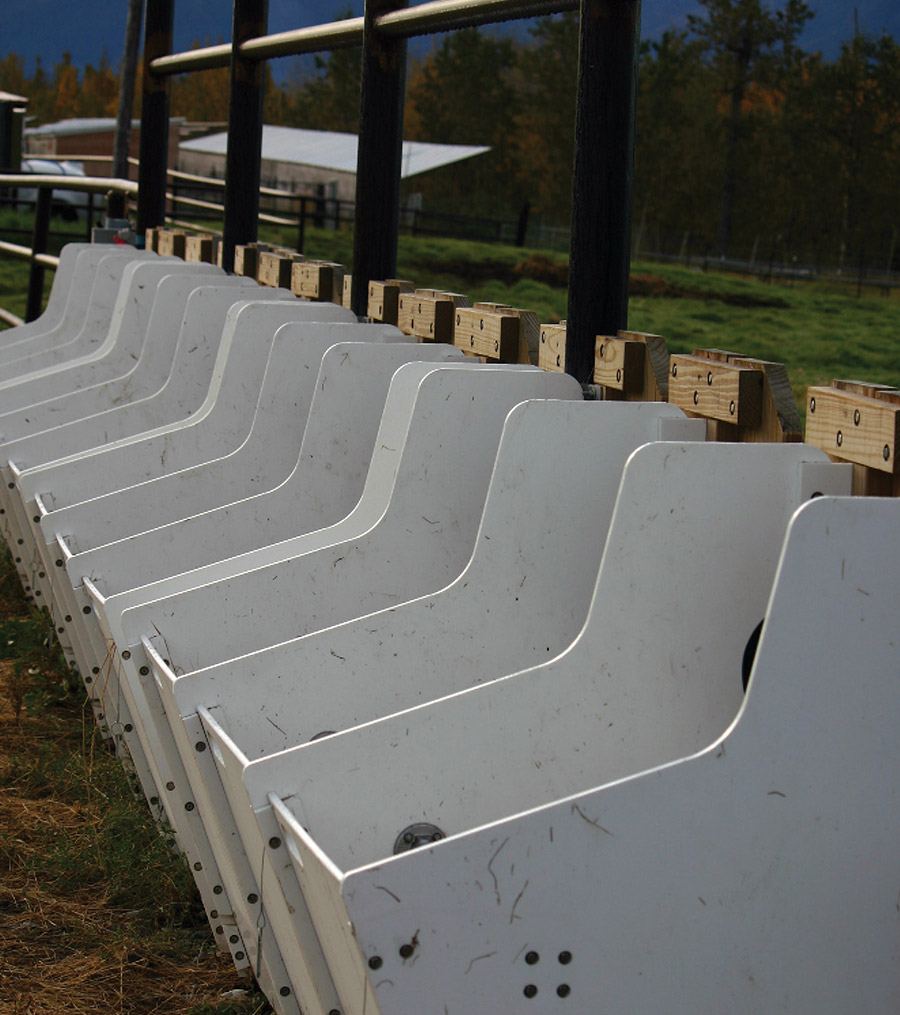
Along with the three “pasture pets,” the farm in July became the temporary home of a dozen additional cattle, on loan from Mugrage Hay and Cattle in Delta Junction. The cattle will be part of Vinyard’s kelp study. Each was fitted with a collar that includes a special magnetized key that unlocks the gate to its personal food tub, a setup called a Calan gate system. Using it lets Vinyard track precisely what and how much each cow or steer is given and how much of their ration each actually eats.

Blue Evolution
Rindi White | Alaska Business

The Experiment Farm used to operate a dairy, he explains. One study in the ‘70s involved feeding crab meal to the dairy cows. “They found that it improved milk production, but the cows stopped liking it at a certain concentration,” he explains. “Dairy cows are notoriously picky. Beef cows, sheep, and goats are not. So I’m going to kind of copy that research and do it with beef cows.”
He’s also interested in researching how his herd responds to salmon meal supplements, in hopes of providing another logical option for processing waste, but that’ll come after the kelp testing.
Also a concern: does adding marine-based supplements affect how the meat tastes? With the dairy cows, adding crab meal—at least in the proportion the cattle ate readily—reportedly did not affect the flavor of the milk, Vinyard says. But whether kelp supplements result in fishy steaks has not yet been tested.
The study doesn’t stop with the food intake; there’s also the output. Vinyard explains, “We can pull stomach contents and look at fermentation. We can collect poop and look at digestibility. We can pull urine and look at nitrogen balance and see how much protein is being retained in that animal. We can just take weights and see how they’re growing—maybe they’ll grow faster with kelp as a more organic source of mineral.”
This first portion of the study is preliminary, focusing more on proof of concept: twelve cattle fitted with collars, six of which are getting mineral supplements commonly available, six of which are getting kelp supplements instead. They’ll be studied for two months, and halfway through the six getting kelp will have their supplement switched to regular mineral supplements, and the mineral-supplemented cattle will be switched to kelp. “We can more or less create twenty-four cattle out of twelve,” Vinyard explains.
If the study shows kelp is useful as a supplement, then the discussion can shift to how best to process it while maintaining nutrient value, how to get it to a marketable product, and how to get it into feed stores. He points out that kelp meal is currently available in some farm supply stores; sourced from Canada, it was available for $99 per 55-pound bag.
Rindi White | Alaska Business
The most recent kelp farming effort took off after the Alaska Fisheries Development Foundation received a National Oceanic and Atmospheric Administration grant for the Alaska Mariculture Initiative to accelerate development of a mariculture industry over the next thirty years. The initiative gained traction in 2015 and 2016, when the state partnered with UAF to develop seaweed mariculture permitting protocols and issued permits for the first commercial seaweed hatcheries and farms.
The first commercial kelp harvest happened in 2017. Two years later, Alaska kelp farmers produced more than 112,000 pounds of kelp, triple the initial 2017 harvest. The initiative got a further boost in 2022 when the industry received $49 million in funding through a Build Back Better Regional Challenge grant under the American Rescue Plan Act of 2021, providing support for workforce training, local business loans, marketing, and research and innovation. Seaweed production reached a record of 872,000 pounds harvested that year.
A McKinley Research Group update from June reports that 344,166 pounds of kelp were harvested in 2025, and the forecast for this year is a harvest of between 650,000 and 850,000 pounds, enough to secure second place for North American kelp farming regions by highest reported landings, or pounds harvested, behind only the Gulf of Maine.
All that harvested kelp is fantastic, if there’s a sustainable market for it. According to the McKinley Research Group report, about 57 percent of the 2025 harvest was sold. The rest was donated, stored, or discarded.
Vinyard says a cattle supplement might be a viable use for the kelp. The trick, he says, is that there’s a window of 24 to 48 hours after harvesting before the kelp turns to mush. How does one preserve it so it can be used elsewhere in Alaska, or even shipped Outside?
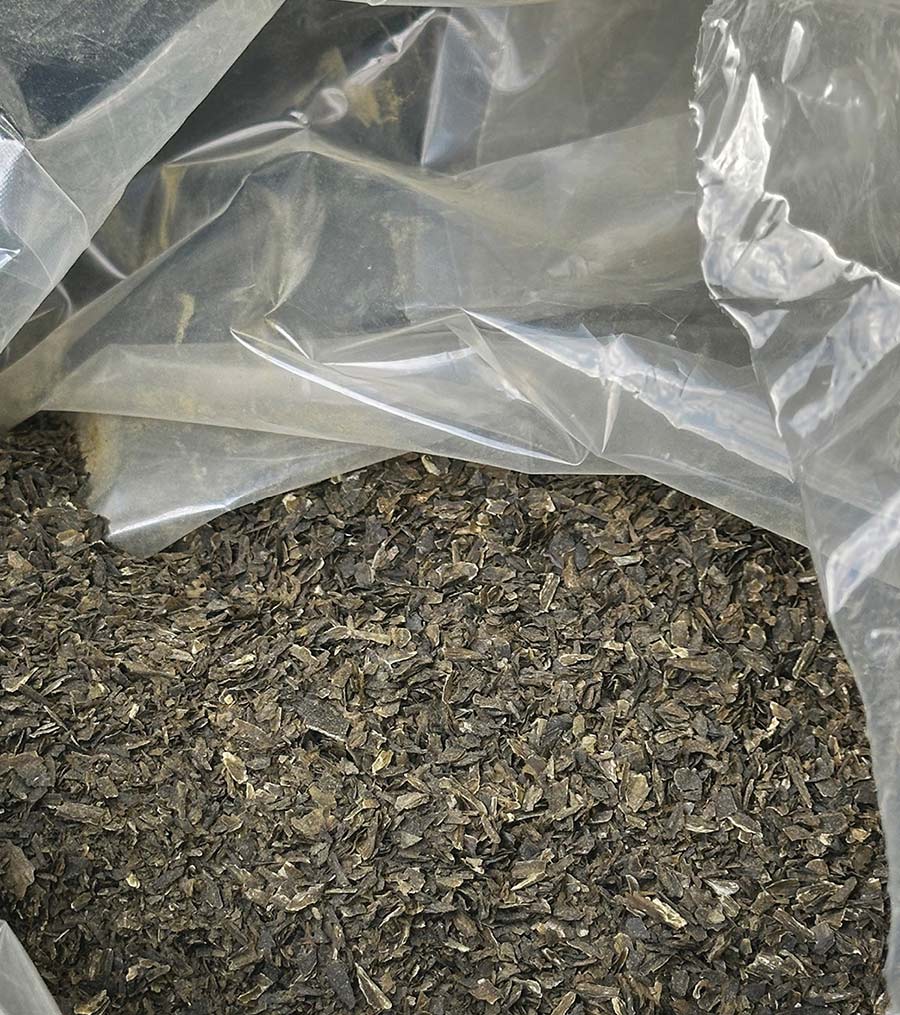
Right now, a lot of Alaska kelp is being harvested, rinsed, dried, and ground into a powder. Some of it has been freeze-dried, he says. Silage might be an option, Vinyard says: “We’re talking about maybe even ensiling it—fermenting it—and then maybe even drying it then.”
Part of the issue, he explains, is that the Alaska kelp industry is young. The eastern US and northern Europe have commercial driers and other processing equipment in place already. Here, the infrastructure is still growing.

Rindi White| Alaska Business
Nick Mangini, one of Alaska’s first kelp farmers and the general manager of Blue Evolution’s Alaska operations, says the company has, over the past decade, invested more than $10 million in the Alaska kelp market, working to help create local markets and promote the product. The Kodiak Ocean Growers Cooperative, Alaska’s only kelp farmers’ cooperative, was formed with help from Blue Evolution. Supporting product development is a big part of the company’s focus.
“Blue Evolution has really been a key partner in the kelp market throughout the state,” Mangini says.
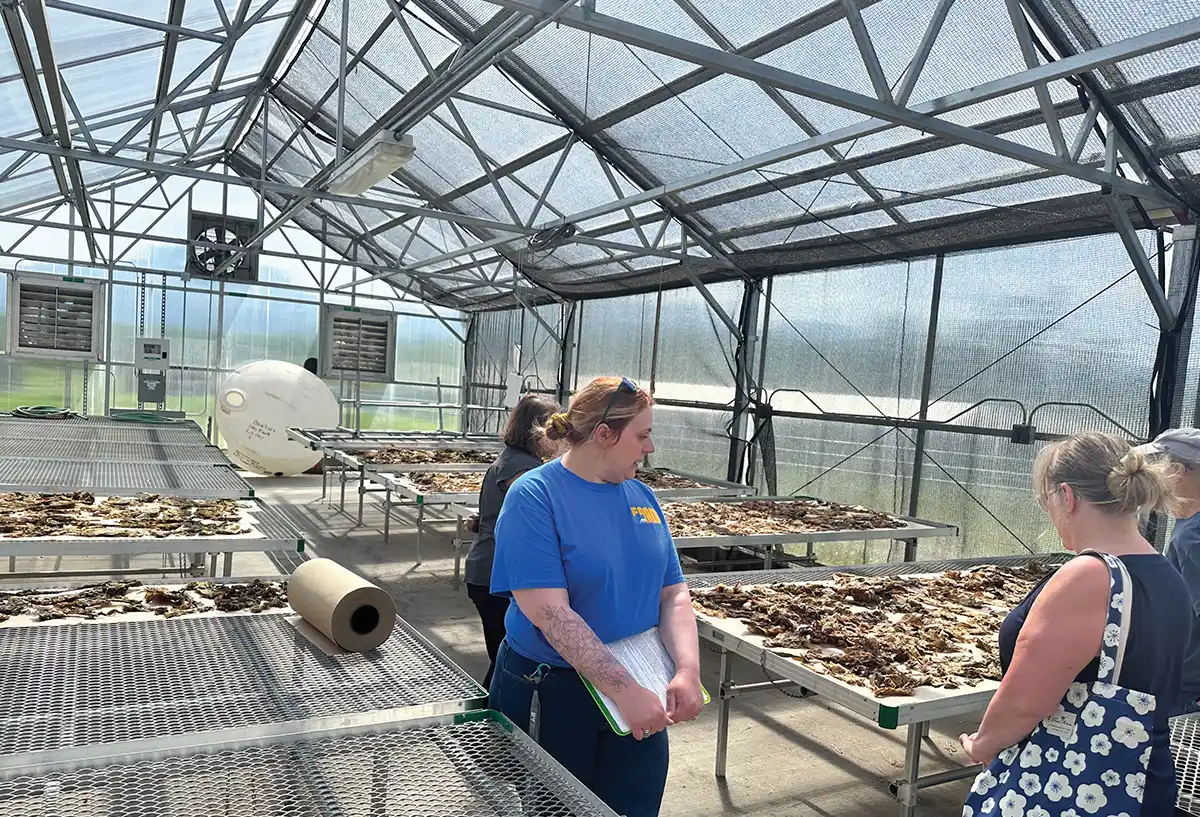
Drying the formerly frozen sugar kelp and ribbon kelp the company donated took longer than expected. The Alaska Mariculture Research and Training Center can dry about 75 pounds of wet kelp each day. The center had to hire a part-time worker to help with the drying process.
“We underestimated the amount of time and effort needed to dry this amount of kelp with the equipment we had available,” Vinyard says, “which further highlights the need for the development of commercial drying infrastructure.”
Is dried kelp as nutrient dense as raw kelp? Vinyard says that’s part of what will be studied. He plans to compare the nutrient content and digestibility of different species of Alaska-grown kelp, with the goal of using it as a replacement mineral supplement.
Vinyard notes, “Some samples this year have come back with high iodine content, compared to recent years. That’s a research project down the line, looking at changes in composition in kelp over the years.”
Further research might also look into how different processing methods affect the product. Vinyard says he and his collaborator at Alaska Mariculture Research and Training Center are considering treating the harvested kelp like corn silage—putting it in what’s called an “ag bag,” a heavy-duty polyethylene tube about the size of a Connex trailer, and allowing it to ferment. Maybe cattle will eat dried kelp, but will they eat fermented kelp or turn their noses up at the slimy stuff? Those are questions Vinyard hopes to answer through his studies.
And he hopes to resolve other market concerns as well. “We can’t ship wet seaweed up to Delta Junction where all the livestock is because it’s just going to freeze and be unusable in the winter,” he says. “But we do know, anecdotally, from folks in Homer and Kenai that are on the water and who raise cattle, that they love it.”
Vinyard expects to have the first chunk of results available from his test by the end of the year, but he says some results may take a little longer to complete sample analysis. Study results, along with the results of many other research studies conducted at the UAF Matanuska Experiment Farm and Extension Center, will be available at the Palmer office off Trunk Road.