


n a sea of flannel, denim, hard hats, and fluorescent vests, Maggy Desmond-Layral’s pink Merrell trail shoes raised eyebrows. One subcontractor took her aside.
“I remember he was like, ‘Do you need me to show you where things are?’ He was a little surprised when I handed him one of my cards and said, ‘Great. I need your numbers on the 14th, though,’” recalls Desmond-Layral, who was, in fact, paying a pre-bid visit to the site on behalf of Western Mechanical, Inc.
Her pink Merrells weren’t the only thing that stood out on the construction site at the time. Simply being female, and in charge, was an aberration.
In many ways, it still is. Just 14 percent of Alaska’s construction workforce is female. According to the June 2024 issue of Alaska Economic Trends, roughly half of the women in the industry are concentrated in office jobs, holding positions like bookkeeper, office administrator, and secretary. While the largest number of women in the industry can be found in the field as construction laborers, the disparity in pay between male and female workers in non-office jobs is significant: women in field positions make 75 percent of men in the same roles.
But things are changing—and even improving—for women in construction. This month, in honor of Women in Construction Week, five women working in Alaska’s construction industry reflect on the challenges, opportunities, and lessons they’ve learned from navigating a male-dominated field.
“There were only a few of us girls in there, and in AutoCAD and construction technology. But I just was like, I know this is what I want to do. And it really didn’t intimidate me because I watched my mom go through the same thing with her career,” Carlson explains.
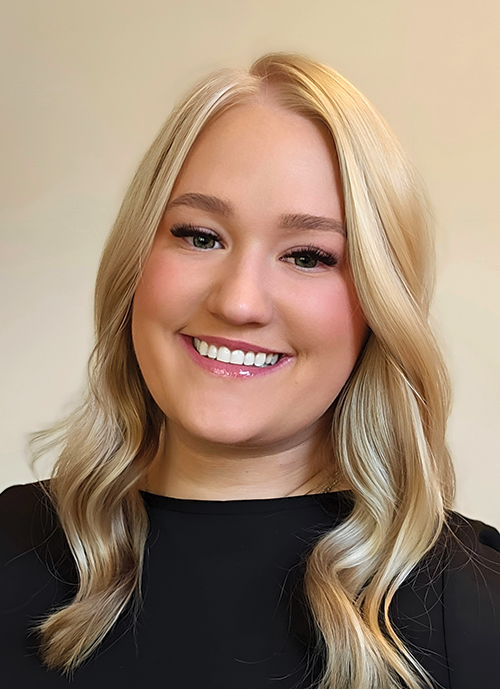
Today, Carlson is a project engineer with UIC Nappairit; in April, she’ll become project manager. While she was inspired by the men in her family, and by a male teacher, to go into construction, she’s been gratified to see more and more women entering the industry.
“I have seen more women in leadership roles and out in the field and in the trades, and I think that’s great. When I first moved [to Alaska], I didn’t really see that. Now that I work here, half of our team is women, and there’s more women upstairs in our other construction division,” Carlson says.
She points out that, even at 14 percent, the portion of Alaska’s construction professionals who are women is still greater than the national average, which is only 10 percent.
As co-chair for Women in Construction week, she’s hoping the event inspires more women to explore careers in construction and related fields. One of the ways to defy stereotypes and establish credibility, she says, is for women to rely on the networks they create to keep learning and growing.
“Continuing my education and joining the National Association of Women in Construction [NAWIC] has really helped me advance in my career, especially networking,” she says. “I feel like there’s this perception that women can be catty, but that’s not my experience in construction at all. We’re all here to support each other.”
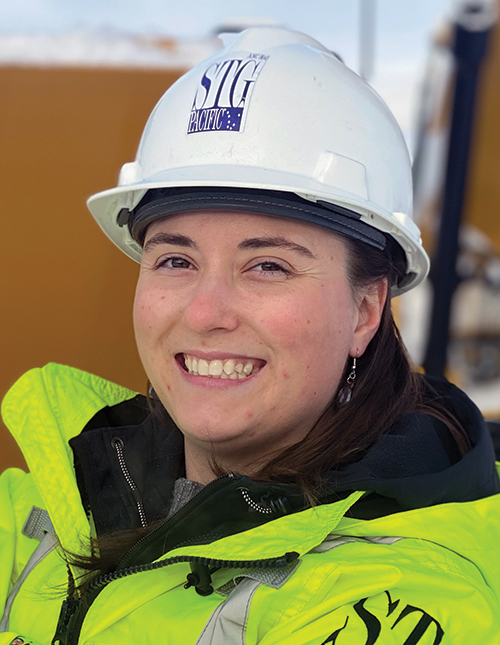
“Each project is different, and so I learn new things all the time,” DelReal says.
In the beginning of her career, she says, finding a balance between work and personal time was a challenge. DelReal recalls, “It was just work, work, work, all the time. It can be stressful at the beginning, as you’re getting your career going.”
This is especially true for women balancing the demands of family with career—and it’s one of the barriers that can keep women from considering entering the construction field. Women acting as the primary caretakers for children or other relatives can’t always square the needs of their families with working long shifts or being away from home for extended periods on remote work sites.
As Alaska faces a growing need for construction workers, one possible solution to the tight labor market is to make the field more attractive to female workers. Companies could explore ways to make work more flexible—a benefit for all workers, not just women—in addition to providing protective gear designed for women and creating environments protected from harassment.
DelReal also encourages women to pursue the parts of their work that excite them, as she did while working on the Long Range Discrimination Radar foundation at Clear Space Force Station, one of her earliest projects. She says, “I really grew from that project and learned a lot about concrete and reinforcement and testing. Focusing on the work alone will get you far.”
These days, the senior project engineer for R&M Consultants spends a lot of time in villages across the state, doing quality assurance on airport projects for the Alaska Department of Transportation and Public Facilities.
To this day, she’s not exactly what people expect to see on construction sites in remote Alaska.
“Especially being a Black woman, they’re not used to seeing that. I still get, ‘Are you the secretary?’ I’ve had to prove myself over and over,” she says.
Smith came up during a time when she simply didn’t see women, especially women of color, in the construction industry. Her early mentors were men, like the engineer in charge of interns at the US Army Corps of Engineers, where she first got exposed to construction as a potential career path.
“He was another Black engineer, and older, too, so he had gone through a lot of stuff and always had my back,” she recalls.
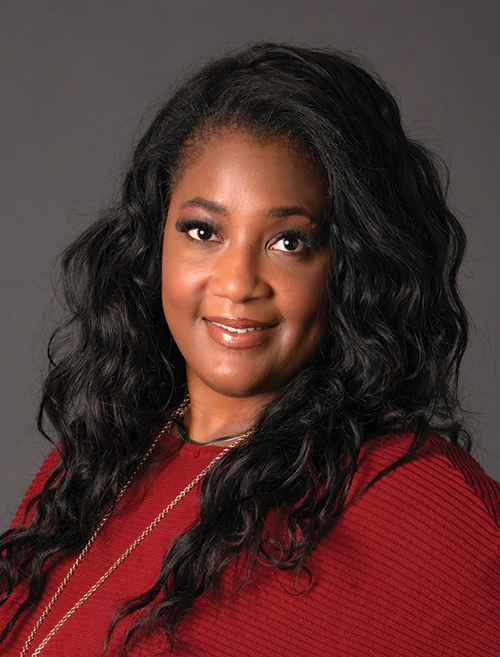
In fact, better technology is steadily making construction a more woman-friendly industry. According to the June Alaska Economic Trends article, women are “more likely to use assistive tools rather than rely on strength,” resulting in fewer injuries for women on the job.
Smith sees evidence of women taking advantage of the tools available on job sites, observing that younger women are getting into the field as laborers and equipment operators. “I wish I could have learned how to operate the equipment as a younger worker,” she says. “It’s cool to see. I tell interns, just learn all the tools you can and have a broad range that you can use. The more tools you have, the better off you’re going to be.”
“There was some lead time, so they were like, ‘We can load this rock truck up and teach you how to drive it,’” she remembers. “They started training me in the heavy equipment, and from there we got into office work, and I collectively started taking on different duties.”
While seasonal work and remote locations can be a challenge for some workers, Hughes was attracted to the lifestyle. Traveling to different villages throughout the state, she was able to partake in the traditional gathering activities she was used to from her upbringing in Teller.
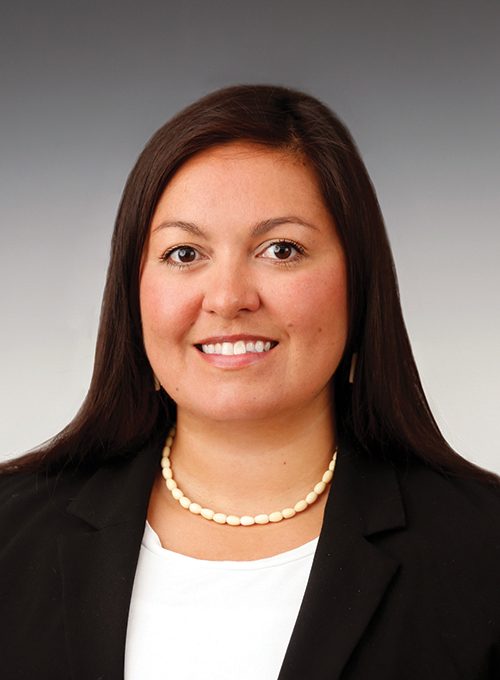
Her work primarily takes her to Yup’ik communities, where she’s become a familiar face doing safety audits and hands-on training at job sites. As the health and safety manager for Knik Construction, Hughes has a knack for zeroing in on people’s preferred learning styles, tailoring her instructions and trainings to their needs.
She’s been gratified to work on projects important to her, like the emergency storm repairs Knik Construction completed in Nome after a “mega-storm” caused massive destruction to the community in 2022. “Being from there and seeing the damage firsthand and helping repair things was pretty special,” she says.
Near the beginning of her career, she set herself a goal: work for Knik Construction for ten years. Now in her seventeenth year with the company, she’s become a leader whom other women in the industry can look up to as they forge their own careers.
“For a long time, I was our token Fairbanks person, and that seemed odd. We have so many women in construction up here!” she says.
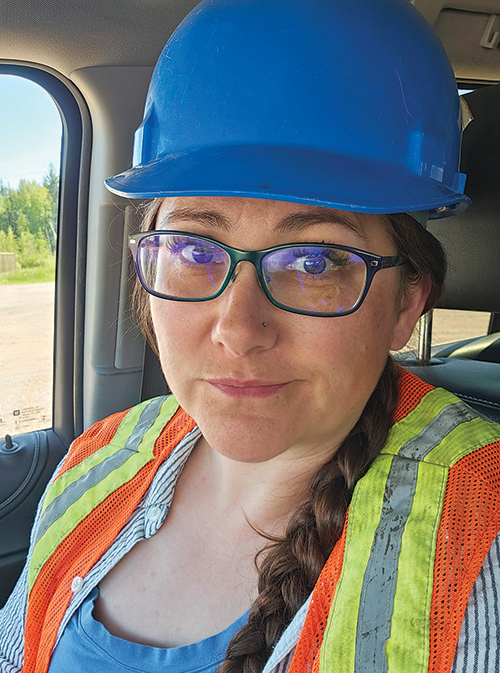
That wasn’t always the plan. Though she grew up sweeping, doing inventory, and learning to run the forklift at her dad’s shop, she went to school for wildlife biology. But on a break from university, she returned to the family business.
“I got a lot of those questions. ‘Are you supposed to be here? Do you know where you’re going?’ Understandably—it’s like seeing an alien coming into your community. It’s so weird for a lot of them to have a female come in,” she says.
One of the reasons Desmond-Layral joined NAWIC was to grow her sense of community. “When you’re in any sort of male-dominated industry, it’s very isolating. Having that group from NAWIC, they all get it. Or going to a job site and finding there’s a female project manager—which means at least one of the porta-potties is surprisingly clean!”
Finding tampons in a porta-potty, she adds, may sound like a silly thing to focus on. But it’s emblematic of a gradual change in culture within the construction industry in Alaska. For Desmond-Layral, it’s not about blending in or hiding who she is in order to be accepted on the job. Rather, she emphasizes that women in construction should embrace their role and allow their knowledge and experience to speak for itself.
“Wear the pink shoes!” she says. “You don’t have to wear more masculine clothes as armor. It’s not about what I’m wearing. It’s about what I know, and once I had enough confidence in that, the shoes didn’t matter. It’s about the confidence you have in your abilities.”