

tarting a successful business takes a lot of know-how, hard work, and tenacity. In many cases, it also requires making connections that can help entrepreneurs find the resources they need to grow. Numerous organizations in Alaska work to help small business owners connect with more seasoned companies and individuals to expand their professional networks.
The Anchorage Chamber of Commerce, for example, provides its members with opportunities to meet mentors, advisors, and even future customers. The largest business organization in Alaska, the chamber has served as a resource to help members gain business savvy for more than 100 years.
Brooklynn Spooner, the Anchorage Chamber’s events manager, says “Our members receive special pricing on events and sponsorships—which are free to attend, in many cases—that can easily translate to meaningful introductions and future ROI [return on investment].”
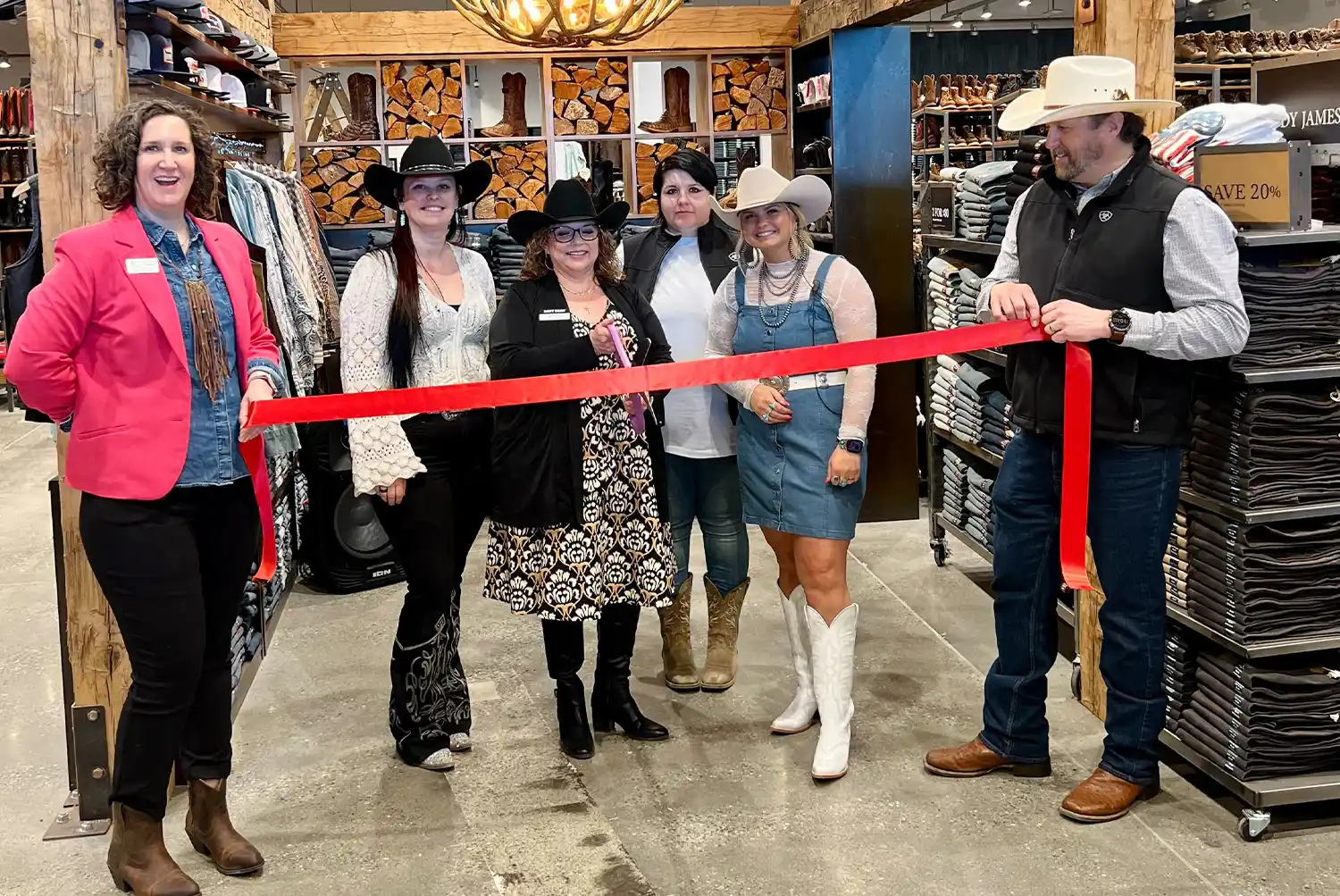
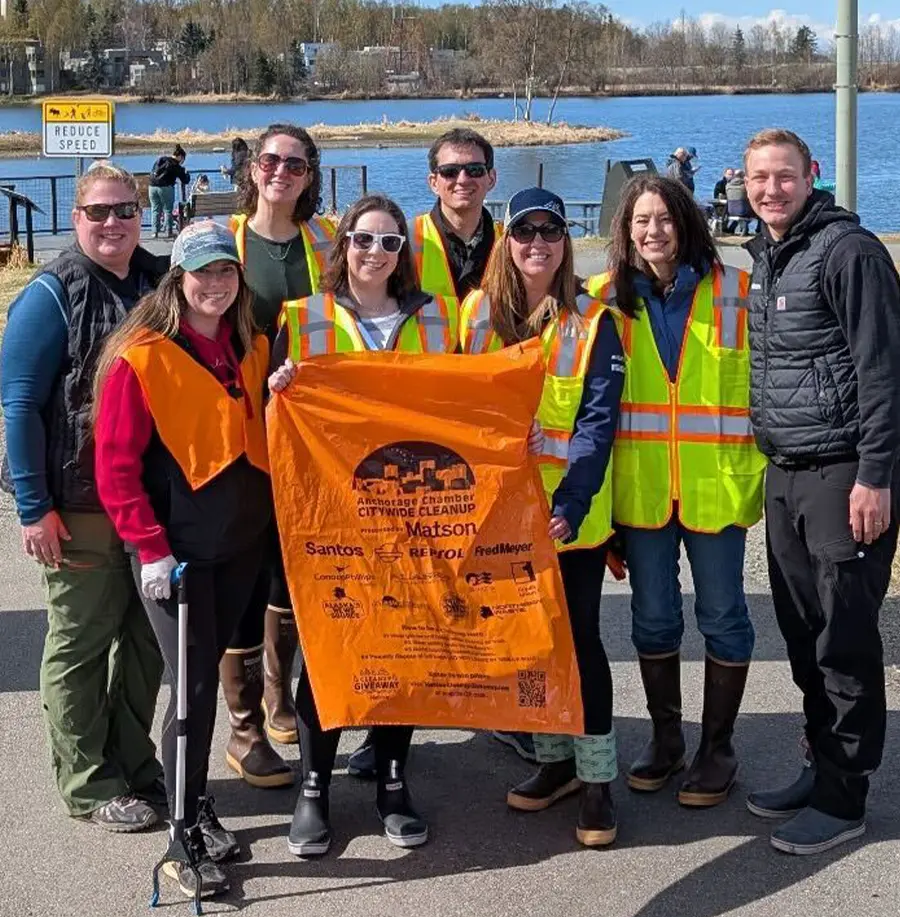
The chamber’s extremely busy events calendar includes everything from ribbon-cuttings to the citywide cleanup each May, sponsored by local partners.
“Ribbon cuttings are a time-honored tradition,” says Spooner, noting that they provide an excellent opportunity for new businesses to publicly thank and recognize partners and patrons and to show the progress achieved by working together. Further, “Our Citywide Cleanup is community- and volunteer-driven and encourages environmental awareness and the importance and economic impact of keeping our community a beautiful place to live and work.”
Chamber members can share their voices with the organization’s Advocacy Committee, Ambassador Council, Diversity Committee, and Military Committee, partnering with community groups and elected officials around the chamber’s mission. The chamber’s weekly Make It Monday luncheon forums showcase industry reports, economic trends, upcoming events, and panels for political figures.
“The forum is a platform to shine a light on the expertise of our members, either as the main presenter or with a brief three-to-five-minute introduction,” says Spooner.
The chamber’s Business After Hours events draw up to 150 professionals for networking and door prizes. The chamber facilitates events hosted by a sponsoring business or organization, which gives recognition and exposure to the host.
“All of these events are aimed at connecting the young professionals of our community, strengthening their ties to Anchorage, and maintaining a robust pipeline of leaders for tomorrow,” says Spooner.
A chamber program aimed at encouraging the potential of women in the business community is the Anchorage ATHENA Society, which inducts female business leaders annually through a competitive nomination process by their peers. The society also raises funds for scholarships to send female high school seniors to entrepreneurship camp.
To support the armed services, the chamber holds a Military Fundraiser Bowl-A-Thon and Military Appreciation Picnic to honor service members and their families. Chamber members sponsor the Bowl-A-Thon, and attendance is free for local servicemen and women. Proceeds of the bowling fundraiser pay for the June picnic at Joint Base Elmendorf-Richardson.
“While the cost-benefit ratio for events hosted by the Anchorage Chamber of Commerce can vary based on the event type, audience size, and the goals of participants (networking, culture-building, brand exposure, or learning), these events are great ways for members to share information, increase visibility, gain new clients, and participate in community events,” says Spooner. “People like doing business with those they know and trust.”


Anchorage Chamber of Commerce

“There is no formal organization behind it; we’re a group of volunteers who put the event together to help the community,” says Pascual Reig-Munoz, owner of the AK Coffee Company. Reig-Munoz is also the founder and leader of multiple initiatives, including the Alaska Startups Group on Facebook, and he also serves as an advisor at the Alaska Small Business Development Center.
“We have a core team of between 4 to 15 people that put the event together and about 25 sponsors,” he adds. “Overall, we have more than 200 people involved in making Alaska Entrepreneurship Week happen.”
AKEW, which started as a grant program in 2013 but was rebranded entirely last year, takes place in September. This year’s event is being held September 29 to October 3.
“There is a tremendous need for a week like this,” says Reig-Munoz. “Some people say that Alaska doesn’t provide the kind of support that new businesses need, but it does, and entrepreneurs need to know what resources are available.”
AKEW is designed as a showcase for all the state’s entrepreneurial resources, especially organizations that might not have enough outreach on their own. The event is also designed to help those with a business idea determine if the idea is viable or if it needs to be changed or reevaluated to warrant spending the time and effort on further development.
“While some participants may be encouraged by this week to make a business happen, we also see people who attend the workshops and do the exercises and realize that it is not a good idea to start the business they had in mind,” he says. “It’s definitely better to find that out now than when you’re $50,000 in the hole.”
Or success can strike immediately. Reig-Munoz recalls an attendee who went to an AI workshop and learned enough to finish a project and deploy it for her business. “We all measure success in a different manner,” says Reig-Munoz. “Sometimes that’s opening a business, closing a business, or moving it to the next stage.”
“Each day has a different theme that follows the five stages of a business,” says Reig-Munoz. “For example, Monday hosts ‘idea-related’ events that are designed to help people who may have an idea but do not yet have a formal business entity formed. Events include a judged idea competition, workshops, and more.”
Tuesday’s events are geared toward entrepreneurs with a legally formed entity, but whose business is still operating in the red. Wednesday’s events are for business owners who have stable, profit-making businesses, and Thursday’s events are geared toward business growth and planning the next move. Friday’s events are focused on the significant decrease in the original founder ownership, such as when a person sells, closes their company, or the ownership percentage becomes less than 5 percent.
Most of the events are free to attend, though some may require a nominal fee.
“We try really hard to make all of the events free so that they are accessible to everybody,” says Reig-Munoz. “Last year, approximately 90 percent were free, while some cost $15 or $20.”
Last year’s AKEW had upwards of fifty events happening during five days, with an average of twenty to thirty participants attending each one.

Anchorage Chamber of Commerce
The city’s economic development director says finding the right time to hold the event was difficult because many Valdez businesses close until summer. “We’d been trying to do this for a couple of years, but it hadn’t worked out,” says Barberio. “But we bit the bullet and did it, pulling it together in six weeks.”
The two-day conference at Prince William Sound College featured hands-on workshops, free coaching sessions, and networking opportunities tailored to the needs of local small business owners. There was also a roundtable where successful business owners in Valdez shared their know-how.
“We wanted to give entrepreneurs a chance to network with companies that had been in business for five or fifty years and encourage those currently in business to mentor those people just starting out,” says Barberio, adding that organizers also held a whiteboard session to ask people for suggestions on how the city could help businesses succeed.
“We believe that it’s super-important for municipalities to collaborate with small businesses in general, as it helps the community and helps everyone grow,” she says. “It’s good for all involved.”
As a result of the conference, the Valdez Economic Development Department decided to hold a three-hour class this fall/winter, focusing on the conference’s most discussed topics. The department also plans to host a second small business conference in May 2026.
“We got a lot of positive feedback and also sent a follow-up survey to everyone who attended, to find out what they’d like to see in the future,” says Barberio. “Even though the surveys were anonymous, we didn’t receive a single negative response.”
“With everybody, it’s about money—how do you get through your first year? Your second year? We’re trying to hone in on the tools people need to succeed,” says Barberio.
This focus on nurturing small businesses in Valdez has been so successful that the Association of Women’s Business Centers recently selected Valdez as a featured community for its national Media Spotlight Tour, highlighting the outstanding work, innovation, and community impact of the Alaska Women’s Business Center in partnership with the City of Valdez.
Celeste Addison, owner of The Gift Shop in Valdez, attended the Small Business Conference with the goal of making her life easier as a business owner. “I’m always looking to better my practice, and I also hoped to connect with other businesses who might provide coaching or share information that I didn’t know,” she says.
Addison attended workshops on marketing, financial planning, exit strategies, and more. She also attended a panel of business owners discussing their experiences.
“I learned a lot about the importance of an exit strategy. Though I had one when I started my business—because I know that I don’t want to do this forever—I didn’t realize how much I was missing from that strategy,” she explains. “Now when I do things, I think, ‘Will this make future Celeste happy when she sells the business?’ I think a lot more about that than I did before.”
Addison also appreciated the chance to connect with other business owners. “Most small business people are pretty antisocial because they are such workaholics,” she says with a laugh. “It was really nice to connect with other like-minded people and to understand that they were going through the same types of things.”