

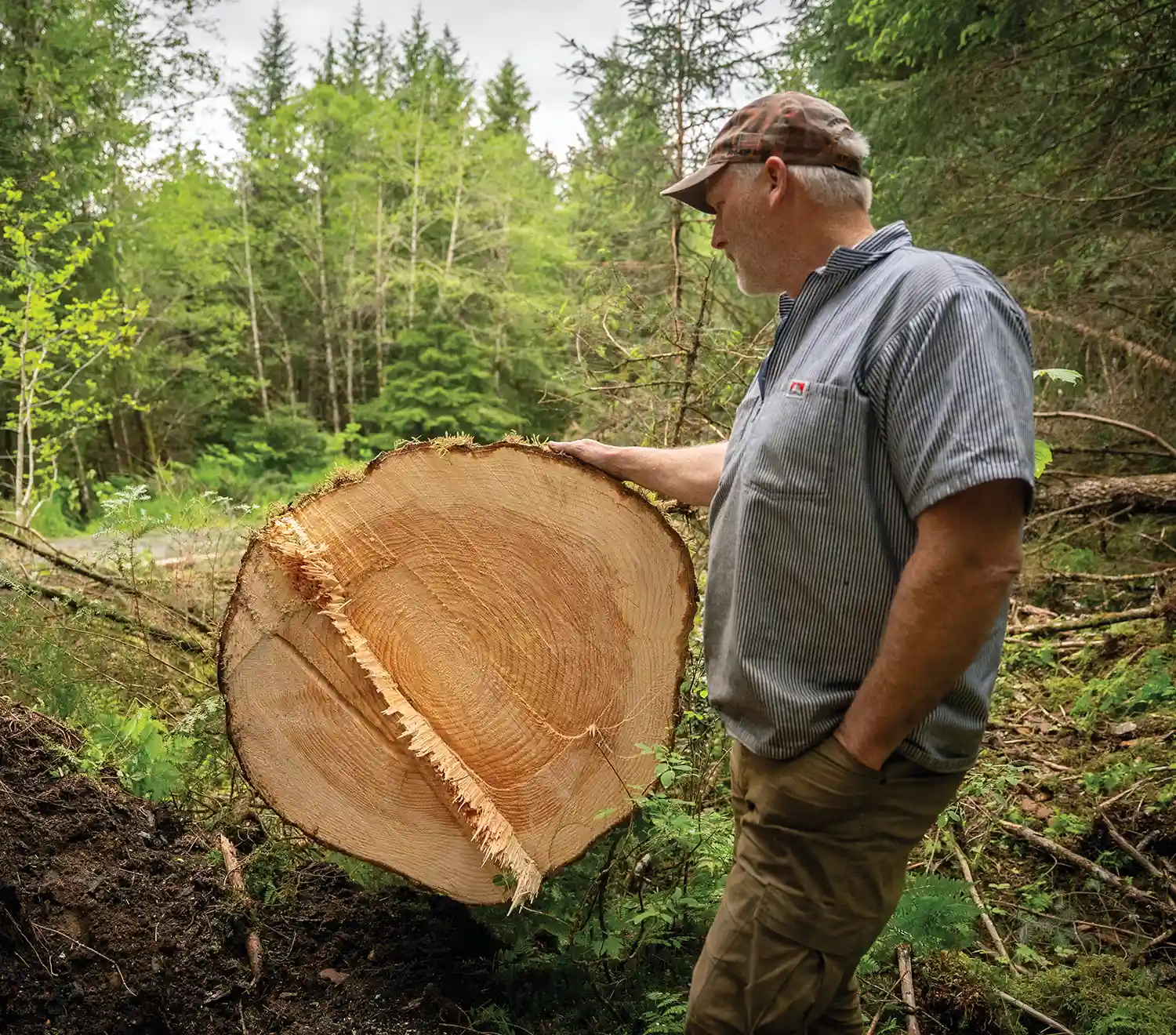
he Tongass National Forest, recognized as the world’s largest contiguous temperate rainforest and the largest national forest in the United States, features old-growth Sitka spruce, rugged mountainous landscapes, and extensive coastlines. Its ecosystem supports a variety of fish and wildlife species. The lands and waters of the forest also play a vital role in supporting the livelihoods and cultural practices of thirty-one communities and nineteen federally recognized tribes.
Southeast communities are intertwined with the forest, beyond the trees, according to Andrew Thoms, executive director of the Sitka Conservation Society.
“One of our top industries is commercial fishing, and our fishermen know they have to take care of those fish and the ocean because it’s what fuels their business. It puts food on their tables and money in their pockets. Finding that balance between how much fish to catch and how much to leave so that the business perpetuates year after year is necessary for continued success,” says Thoms. “The second biggest sector is tourism. People come here to experience our natural environment. They are not coming here to see big clearcuts, pollution, and smokestacks. They’re coming here to see our mountains, our whales, our volcanoes, our coastline, and our forests. We have to take care of that so that it remains a long-term attraction.”
Sitka Conservation Society was formed in 1967, at the height of logging activity, especially extensive clear-cutting of old-growth timber. The US Forest Service bolstered logging efforts by permitting the sale of public lands to private entities, which facilitated widespread clear-cutting and influenced local economic dynamics.
Nancy Ricketts, in her 1997 history of the Sitka Conservation Society, recounts how several Sitkans recognized the need to protect the natural environment of Southeast. The society’s founders rallied around the goal of designating 380,000 acres of West Chichagof and Yakobi Islands as Alaska’s first wilderness area under the Wilderness Act of 1964. Despite initial denial by the Forest Service, persistent appeals helped drive the effort to Congress. That willingness to fight all the way to Congress stayed with the society through the intervening decades, and it paid off in 1980 with the passage of the Alaska National Interest Lands Conservation Act and the formal creation of the West Chichagof-Yakobi Wilderness.
Today, large-scale old-growth timber harvesting remains a subject of ongoing debate and policy discussion.
Sitka Conservation Society
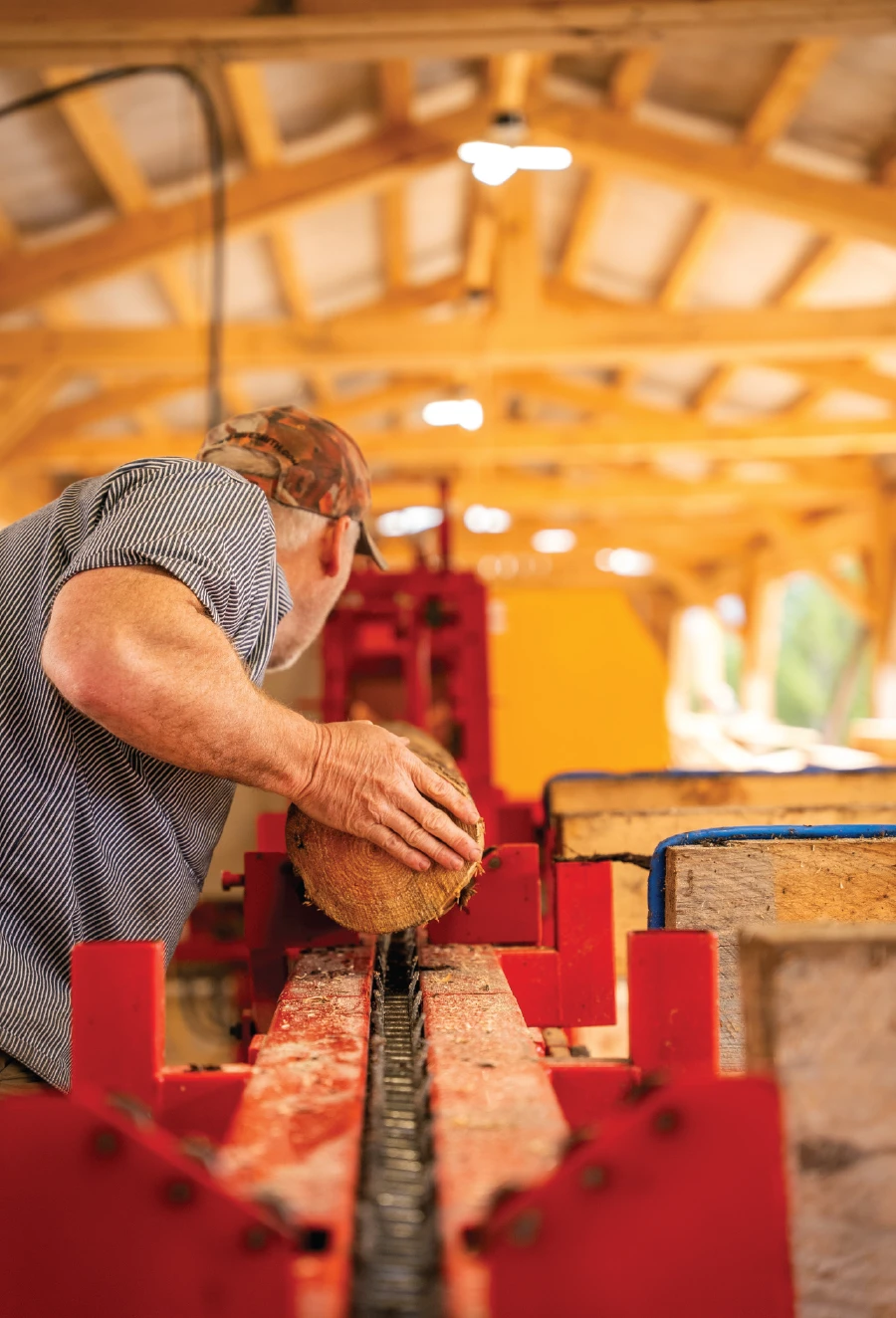
In tree terms, “young” is an extremely relative concept. The youngest young growth might’ve been saplings during the Apollo lunar landings, planted in areas previously logged. Of the nearly 17 million acres the Tongass National Forest encompasses, an estimated 450,000 acres are considered young-growth, also known as secondary-growth forest. The Forest Service is encouraging the selective harvesting of these younger trees to preserve the old-growth forest and support habitat restoration.
Although the use of young-growth lumber is commercially viable, there are challenges to the switch from old-growth lumber. “The young-growth product is very different than the old-growth product,” explains Thoms. “How we work with that, what we do with that, and how we make the business competitive using that product is really the challenge we’re dealing with right now.”
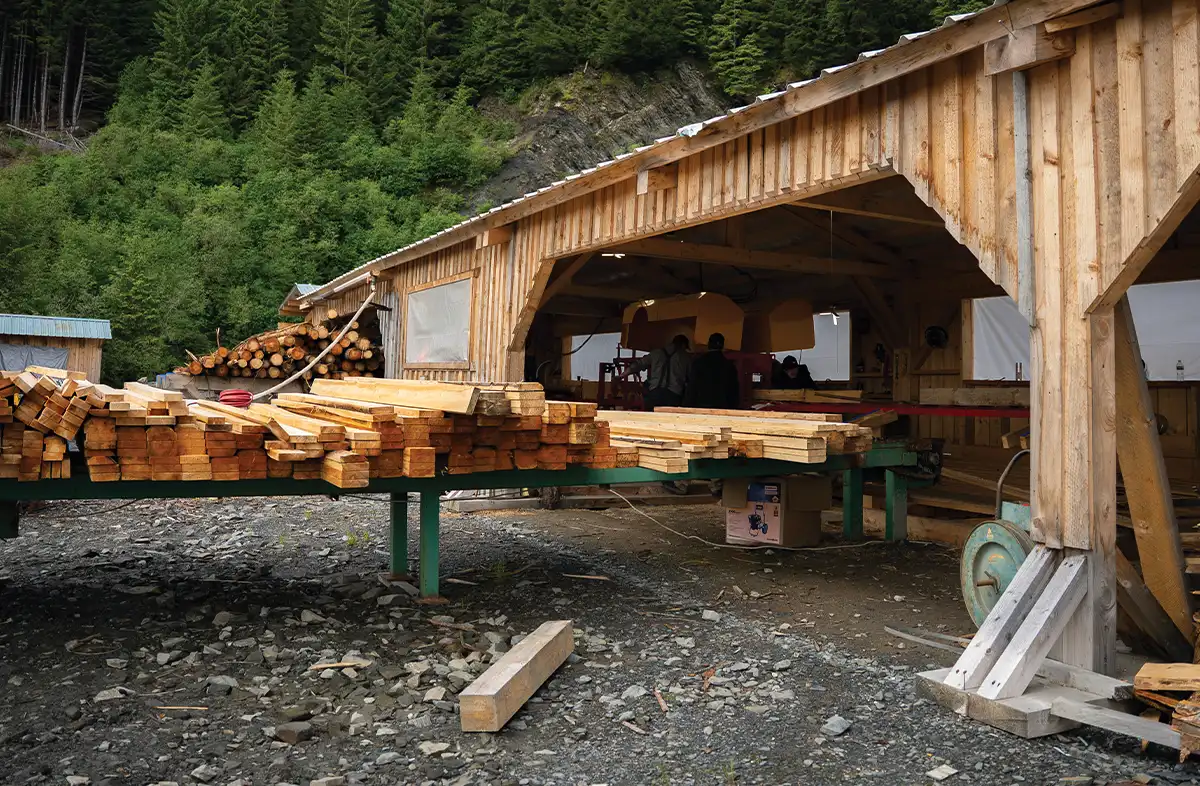
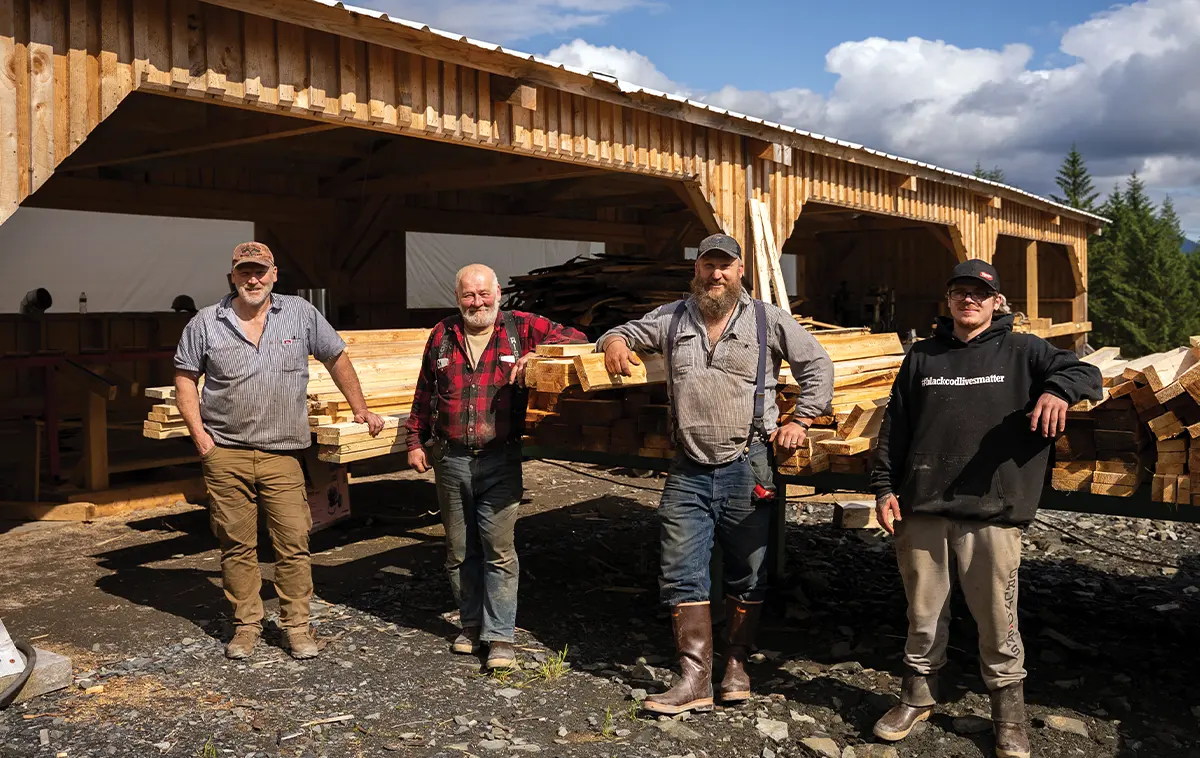
The society has partnered with Alaska Timber and Truss in Petersburg to use young-growth timber and promote the development of a sustainable, locally based timber industry in Southeast.
“Our mission as an organization is to protect the natural environment of the Tongass National Forest and support sustainable community development,” says Thoms. “What we do as an organization is a blend of community development and conservation work.”
By focusing on young-growth timber, both parties are working to reduce reliance on old-growth forests while supporting the region’s communities through job creation and innovation in timber products.
“The structure will be a 12-by-12 post-and-beam construction, a really beautiful structure built out of a locally sourced material,” says Thoms. “We’re experimenting with building techniques using what we can grow or produce locally in a way that is sustainable and a way that we feel good about.”
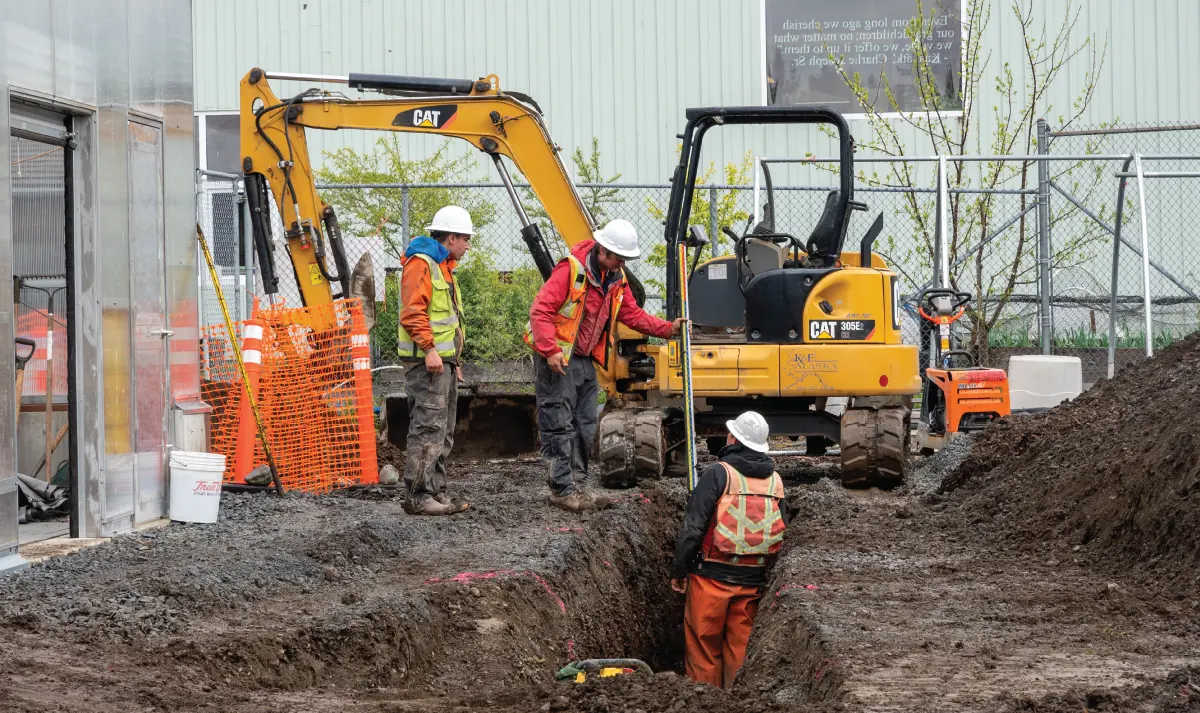
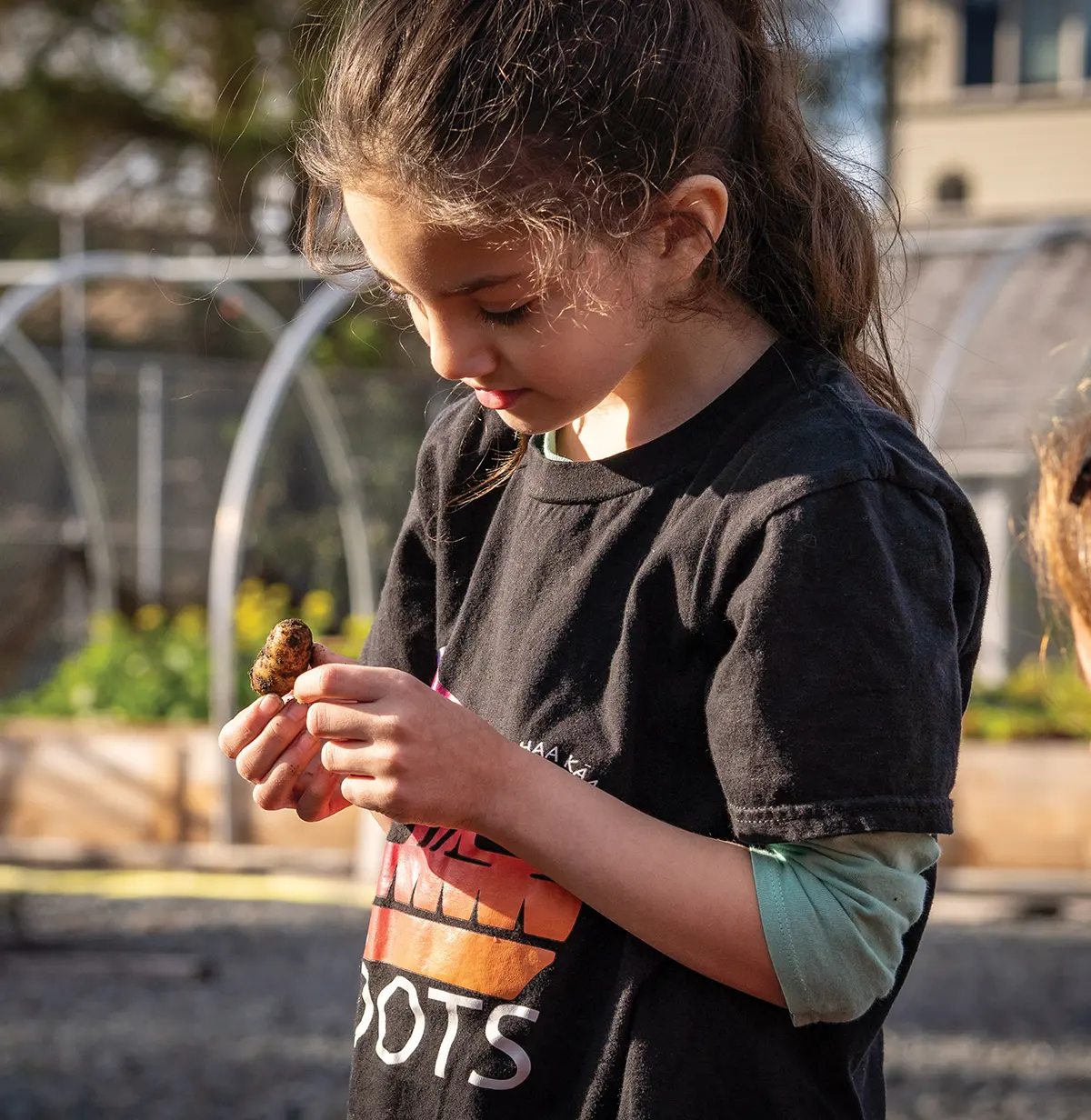
The Pacific High School learning shelter will be constructed within the school garden facility, which was developed in partnership with the Sitka School District over the past six years. The site features a greenhouse, raised bed gardens, a salmon smokehouse, and fruit trees, and it is situated adjacent to the school kitchen. Pacific High School’s program focuses on hands-on learning for students who thrive outside traditional classrooms. The garden serves as an outdoor classroom where students gain practical experience through gardening and related tasks, while academic subjects such as math, health, civics, and science are integrated into garden activities.
The construction of the Pacific High School learning shelter serves not only to maintain the society’s mission of conserving the natural environment but also to demonstrate a commitment to community development.
Sitka Conservation Society
Sitka Conservation Society

The 2001 Roadless Rule established in the waning days of the Clinton administration prohibited road construction and timber harvesting on nearly 60 million acres of national forest lands that had no roads. Whether the road ban applies to the Tongass National Forest, which had its own management plan, has led to several rounds of removal and reinstatement of the Roadless Rule. Throughout those challenges, the public processes recorded overwhelming support for maintaining the protections.
Under the current administration, the US Department of Agriculture announced its intent to rescind the Roadless Rule nationwide, ending the debate about whether the Tongass should’ve been included or not. Rescinding the Roadless Rule would open almost 190,000 acres of timber land in the Tongass.
Agriculture Secretary Brooke L. Rollins says the recission would restore local decision-making. “It is vital that we properly manage our federal lands to create healthy, resilient, and productive forests for generations to come,” she says.
US Forest Service Chief Tom Schultz adds, “It’s time to return land management decisions where they belong: with local Forest Service experts who best understand their forests and communities. We encourage participation in the upcoming public process.”