


presents possibilities beyond mining
ome hotels welcome camera crews shooting Bering Sea Gold, the Discovery Channel series about dredging the glittering sands of Norton Sound. The series debuted in 2012 and drew an average of 3 million viewers in its first season. Gold sustains the families who hunt for it underwater and, indirectly, stimulates the economic activity of TV production, local hospitality, and so on.
Discovery Channel also airs Gold Rush (titled Gold Rush: Alaska in the first season), which follows the placer gold mining efforts of various family-run mining companies in Alaska and the Klondike region of Canada. As of 2024, the show had run for 15 seasons and more than 170 episodes. It has also spawned various spin-offs, including Gold Rush: White Water, which features miners diving and suction dredging in the icy waters of McKinley Creek and Porcupine Creek near Haines. More than 2 million viewers tuned in for that show’s debut.
Television is the modern echo of newspaper bulletins that lured fortune-seekers North to the Future during the original Gold Rush days. And the ancillary economic activities the metal inspires are just the outer ripples of resource development that shows no sign of fading into Alaska’s history.
According to “Panning for Profits in the Interior’s Golden Relics,” an article by Philip Deisher that ran in Alaska Business in July 1987, two of the hottest spots for visitors that year included the Chena Pump House & Saloon and Gold Dredge No. 8 in Fairbanks. At the time, the Pump House had been in business for ten years and the gold dredge for three.
Permits require Coeur Alaska to monitor wastewater from the Kensington Mine, which involves sampling from nearby streams such as Sherman Creek.
Coeur Alaska
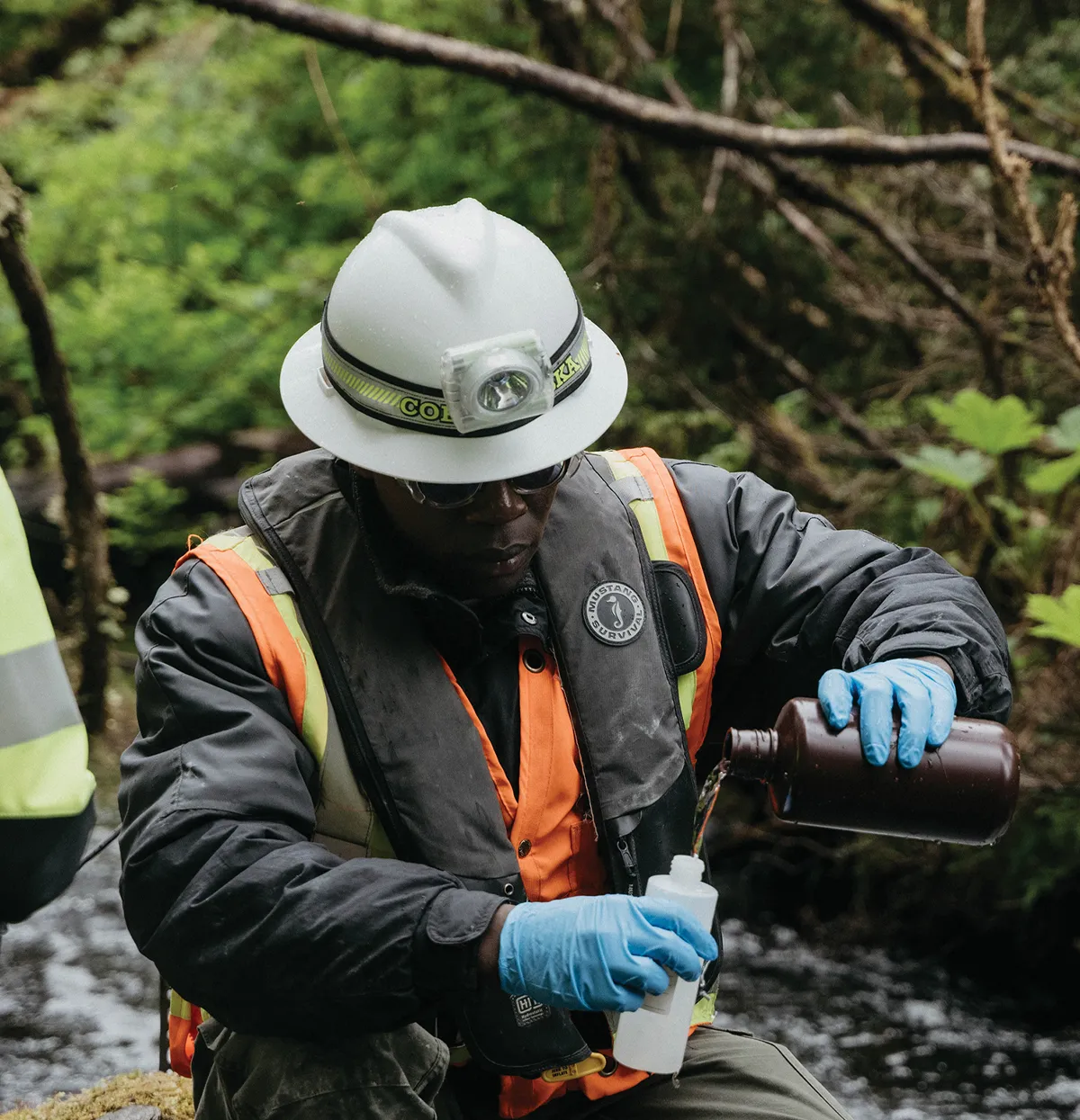
Coeur Alaska
Heading south from Anchorage proper, Girdwood was established in the mid-1890s as the first gold strikes were made along Turnagain Arm, and tourists experience that history at Crow Creek Gold Mine. Visitors can pan for gold, take a guided tour of historical buildings, or watch miners work the gold-bearing creek.
Skagway is home to the most visited national park in the state, Klondike Gold Rush National Historical Park, as well as the Trail of ‘98 Museum and Gold Rush Cemetery. Visitors can also ride the White Pass and Yukon Route Railway, which was built in 1898 during the Gold Rush.
To fully immerse oneself in the Gold Rush, visitors can take an eight-day trip to its more famous sites. The trip begins in Juneau, where prospectors Richard Harris and Joe Juneau helped jump-start the settlement of Alaska with their 1880 find. Travelers can live that history at the Alaska State Museum, the Juneau-Douglas City Museum, and the Last Chance Mining Museum, which is located in a building associated with the original Alaska-Juneau Gold Mining Co., which operated from 1912 to 1944.
Where hopeful cheechakoes once arrived in their thousands seeking gold in Alaska, tourists now throng by the millions to see the imprint the mining industry left behind. Businesses that serve those tourists are still striking it rich thanks to gold’s long-lasting luster.
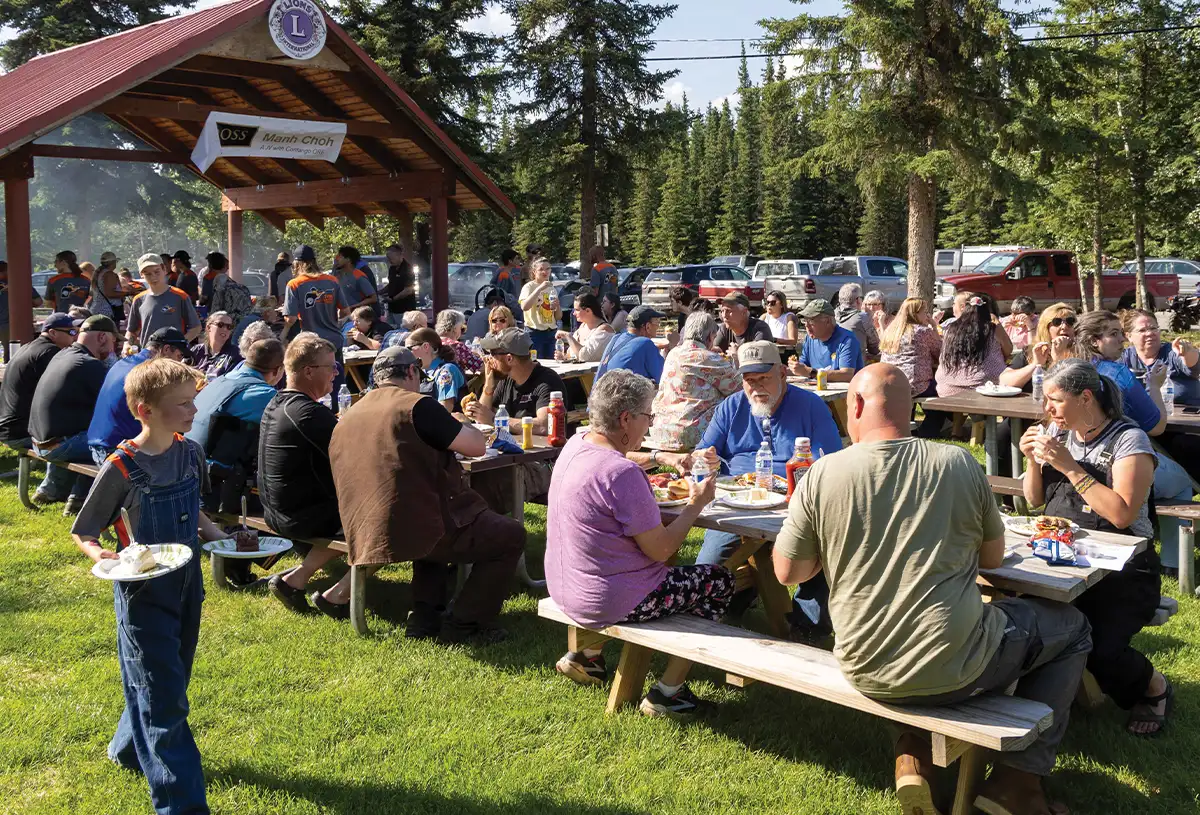
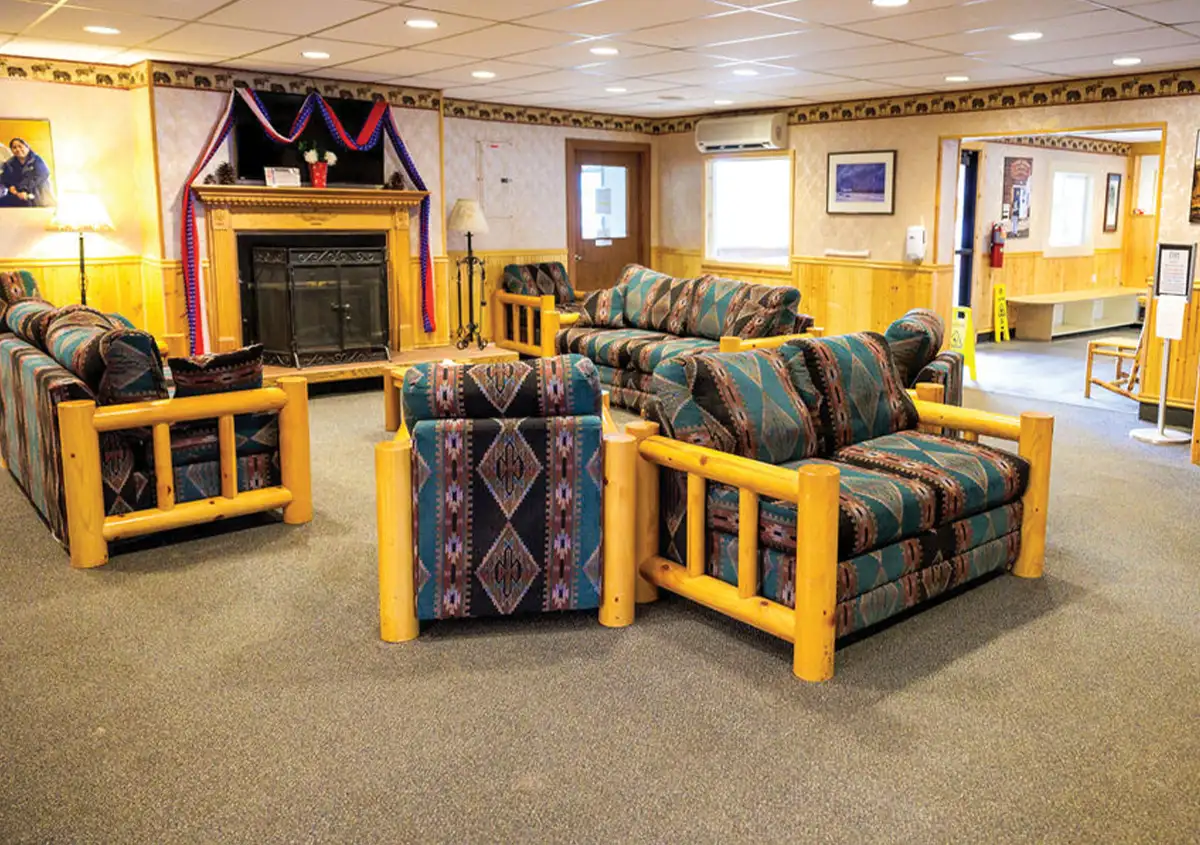
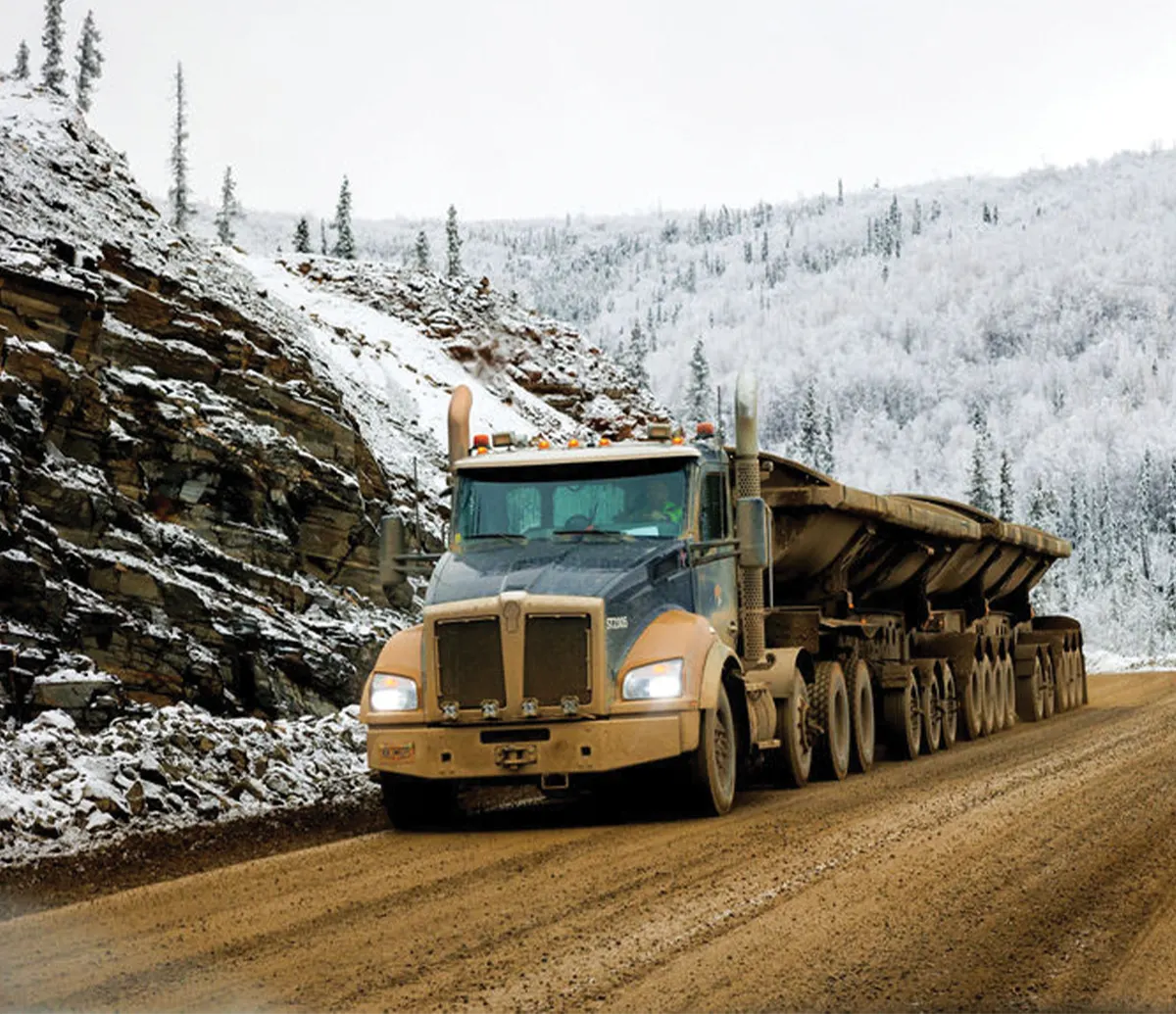
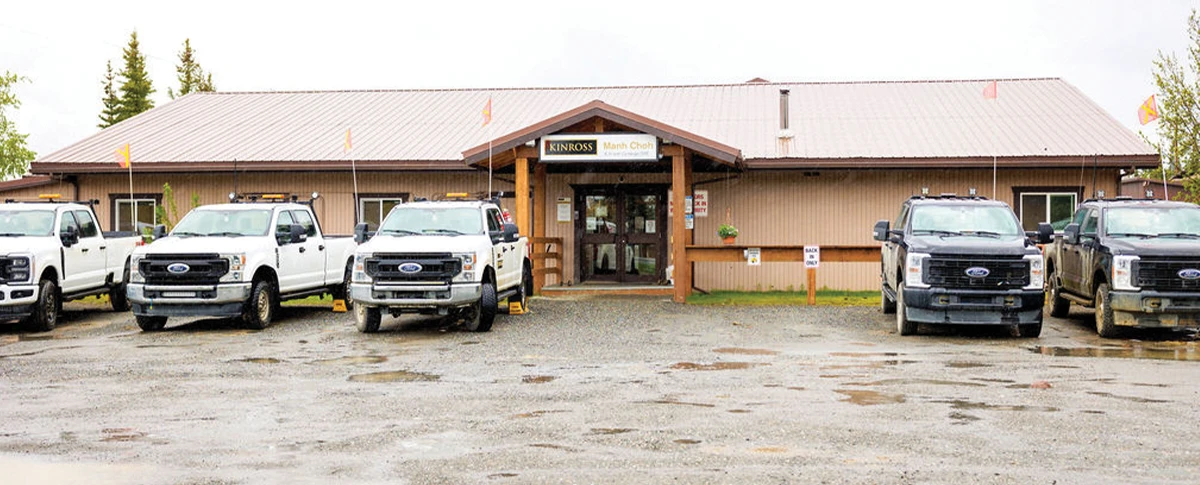
Mining activity reaches from the Fort Knox mill north of Fairbanks as far as Tok, where Kinross co-hosted a barbecue. The Manh Choh campus (right) is a community asset for the Native Village of Tetlin, made possible by ore mined from tribal lands and transported to Fort Knox via Black Gold Express trucks.
Kinross
All placer mines together, though, cannot equal the output of just one of Alaska’s major gold mines.
“Since production began in 2010, Kensington has averaged 105,000 ounces per year,” says Steve Ball, general manager of Coeur Alaska Kensington Mine. “We finished mining our high-grade Jualin deposit in 2022, which resulted in a short-term drop in production while we ramped up production in other areas of our Kensington main deposit.”
Owned and operated by Coeur Alaska, Kensington Mine is both the second largest private employer and second largest property taxpayer in the City and Borough of Juneau.
Hope was high for the reopening of Kensington Mine back in 1989, when Alaska Business published “Assaying the Kensington Mine” by Chuck Kleeschulte. Echo Bay Exploration was the lead partner in the concept of reopening the historic mine, which first began production in 1899. Coeur Alaska bought into the project in 1987 and acquired 100 percent interest of the mine in 1995. The Kensington mine began commercial production in 2010 with ten years of anticipated mine life. Today it is in its fifteenth year of production.
Kensington produced 95,671 ounces of gold last year, which was a 13 percent increase over 2023 production. As of December 31, 2024, the mine reported 501,000 ounces of gold in proven and probable reserves, which equates to approximately five years of mine life. With Coeur Alaska’s Multi-Year Exploration and Development Plan, completed at the end of 2024, the mine saw a 240,000-ounce increase in reserves from end of year 2021 to end of year 2024.
Ball says, “In addition to maintaining the current mine life, the team is positioned to commence scout drilling to build the pipeline of targets for future growth. Our focus is on organic growth which sets us apart by generating multiple new discoveries and consistent reserve and resource increases.”
“As our business is tied to commodity pricing, the current gold prices have had a positive effect on our operations from the sales side, as well as significant inputs on our operations including supplies, diesel fuel, and concentrate,” says Ball.
“We are well positioned with five years of reserves and an active exploration program aimed to replace our annual reserve depletion,” he adds.
In that same 1987 article, Kleeschulte reported the planned opening in 1989 of Greens Creek Mine on Admiralty Island. That silver mine, owned solely by Hecla Mining Company, surpasses Kensington as Juneau’s largest employer and taxpayer. In 2024 it generated record sales of $929.9 million and became the largest silver producer in both the United States and Canada. Its gold output is respectable too: Hecla Greens Creek mined 55,275 ounces of gold in 2024 and holds current proven and probable reserves of 880,000 ounces of gold.
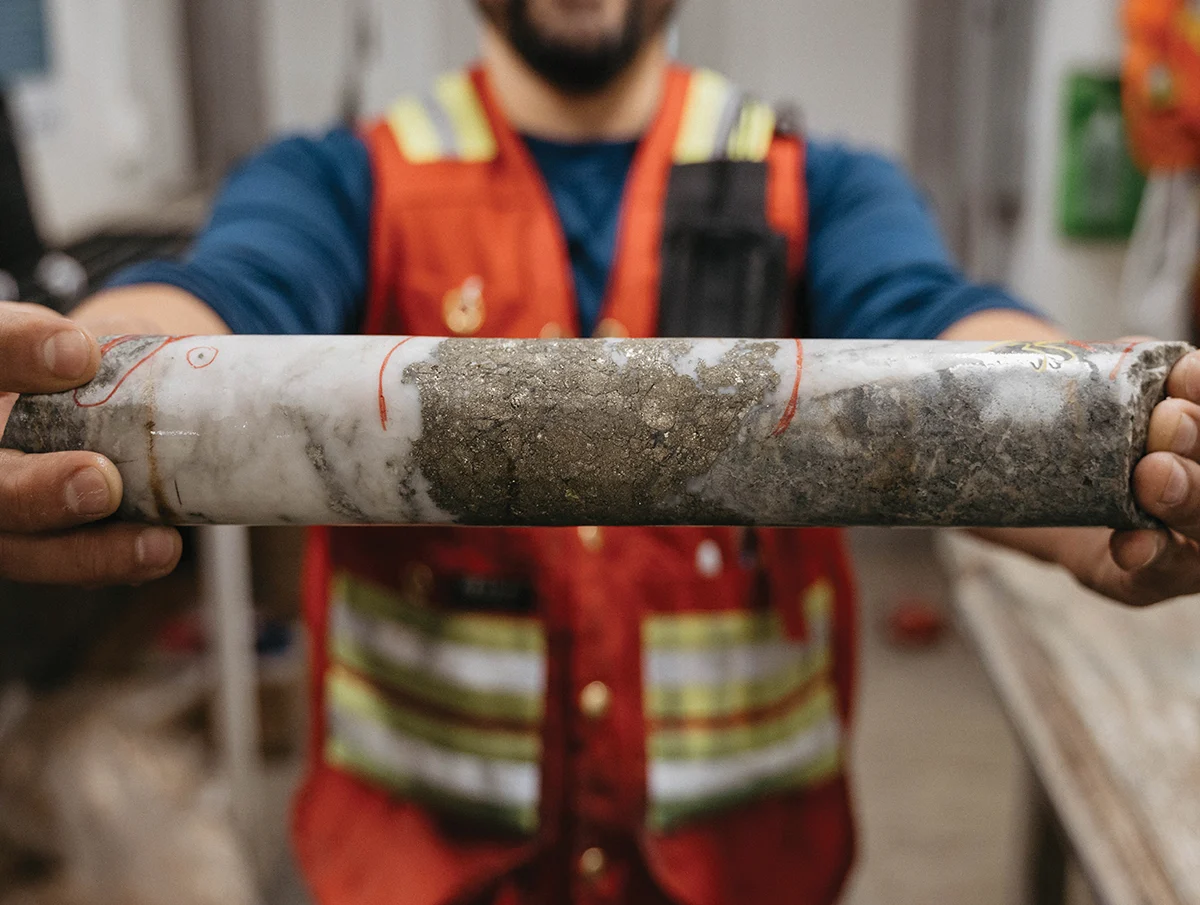
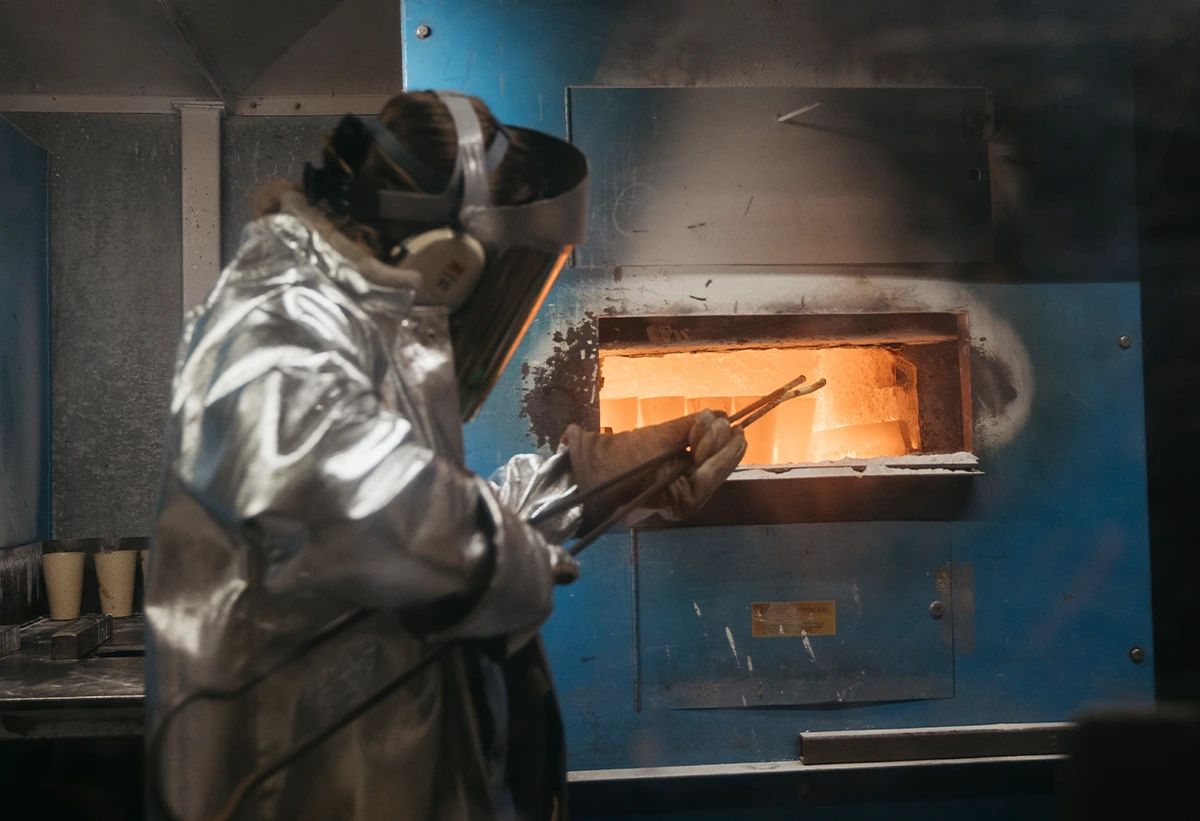
Fire assay analysis would’ve been familiar to the gold industry a century ago. Coeur Alaska determines the precious metal content of ore mined from Kensington by heating the rock with lead and flux to create a metallic prill, or pellet.
Coeur Alaska
The company has begun work on two portals to access the Central Lodes and Goodpaster systems to the north of Pogo Mine. According to the company’s May calculation, Pogo hosts 9.13 million metric tons of proven and probable reserves averaging 7.2 grams of gold per tonne (2.13 million ounces)—roughly enough to feed the mill at current rates until 2031, which would be Pogo’s 25th anniversary.
North of Fairbanks, the Fort Knox mine will celebrate its 30th year of operation next year. Kinross Gold Corporation has been operating the open pit mine since 1996, when Fort Knox poured its first gold bar.
In 2024, Fort Knox produced 334,519 attributable gold equivalent ounces in 2024, up about 15 percent from 2023. The increase reflects the addition of higher-grade, higher-recovery ore from the Manh Choh mine to the Fort Knox mill during the year.
“By transporting ore to the Fort Knox mill, we’re able to use existing infrastructure rather than building a new processing facility,” says Meadow Riedel, external affairs manager of Kinross Alaska. “This approach reduces the project footprint while maximizing recovery.”
In 2024, Manh Choh contributed about 42,700 gold equivalent ounces in its first partial year of production. Manh Choh has an expected mine life of four to five years, ending in 2028 or 2029, but gold production and reclamation will continue into 2030.
Based on current mine plans, Kinross expects Fort Knox to continue mining into 2028, though exploration continues both at Fort Knox and Manh Choh.
“We expect steady production at Fort Knox, supported by strong contributions from Manh Choh,” Riedel says. “We continue to see encouraging results through our exploration program, which could extend mine life beyond that.”
Just as important as geology, though, is commodity pricing. “The fundamentals for a continued strong gold price are there, but of course this is a cyclical business,” Riedel says. “We’ve benefitted from the positive movement in commodity pricing but remain focused on optimizing our operations and delivering high performance in all gold price environments.”
Riedel adds that improvements at the Fort Knox mill to process Manh Choh ore, optimizing heap leach operations, and introducing data-driven approaches to mine planning and maintenance have increased recovery, efficiency, and safety.
Projects in Permitting
The Pebble Project, considered to be a world-class deposit of copper, gold, molybdenum, and silver, has been undergoing ongoing exploration, engineering, and environmental studies since 2002. The current resource estimate includes 6.5 billion tonnes in the measured and indicated categories and 4.5 billion tonnes in the inferred category, containing billions of pounds of copper and molybdenum and millions of ounces of gold and silver.
The Pebble Project is currently on hold, however, as a legal case brought by the Pebble Partnership against the US Environmental Protection Agency continues. Pebble is seeking to overturn the 2023 decision that effectively blocked the proposed mine in January 2023 under Section 404(c) of the Clean Water Act. With a new presidential administration, the agency signaled in July that it was open to negotiating a settlement.
Kensington Mine had a projected lifetime of ten years when production started in 2010. Careful maintenance and exploration of new resources have prolonged its useful life into the foreseeable future.
Coeur Alaska
On September 8, NOVAGOLD reported multiple high-grade gold intercepts in the first batch of assays from its 2025 resource upgrade and expansion drill program. According to the most recent calculation, Donlin hosts 541.3 million tonnes of measured and indicated resources. Those resources are enough to produce 1.1 million ounces of gold annually for twenty-seven years, according to a 2011 feasibility study completed.
Barrick exited the venture in April 2025, and hedge fund billionaire John Paulson of Paulson Advisors bought Barrick’s 50 percent interest. Donlin Gold is now focused on a new bankable feasibility study and ultimately a development decision.
Donlin Gold would become Alaska’s largest open-pit gold mine, surpassing the workforce at Fort Knox by employing nearly 1,000 workers. Its economic impact would have further repercussions throughout the Middle Kuskokwim region. Infrastructure to support the mine would include a marine cargo port near Bethel and an upriver port near Jungjuk Creek. Ocean and river barge operators would support the mine, and truckers would drive on an access road.
Developers are proposing to build a buried natural gas pipeline to serve as the energy source for on-site power generation. The permanent camp would also include an airstrip, fuel storage facilities, water management facilities, and all the personnel needed to operate them.
The initial capital cost estimate from a 2021 technical report was $7.4 billion. Operating costs are expected to total approximately $8.4 billion over the life of the Donlin Mine, counting everything from fuel and labor to processing chemicals and truck tires, plus consulting and contracting services.
All of those for just one mine, yet to be built.
The gold industry also provides a huge number of jobs within the state, ranging from gold miners and assayers to wholesale traders and retail salespeople.
Like the Gold Rush prospectors, today’s Alaskans have found a way to use the rare metal to make their own fortunes. While gold has a notable history in Alaska, it has a bright future too.