

atersheds are areas that share a common drainage for rain and snow. Viewsheds are the line-of-sight from a particular point encompassing all the visible scenery. By analogy, energysheds are the totality of energy (usually electricity) produced and consumed within an area.
The Alaska Energyshed project is an initiative to identify and secure funding for clean energy projects in Northwest and Southeast Alaska by 2026. Twelve Alaska communities were chosen to participate in the project, which is backed by the US Department of Energy (DOE) and supported by Launch Alaska, Southeast Conference, DeerStone Consulting, and the Alaska Municipal League.
“The Alaska Energyshed Project aims to identify and develop clean energy projects across the Northwest Arctic and Southeast Alaska with the intention of saving money, reducing energy costs, and improving environmental impacts that help these communities,” says Launch Alaska chief deployment officer Ottar Mobley. “We’re right at the mid-point of the project now, and the work that’s been done already included selecting the communities.”
Six of the selected communities are in the Northwest Arctic: Ambler, Buckland, Deering, Kotzebue, Selawik, and Shungnak. The remaining six are in Southeast Alaska: Angoon, Haines, Hoonah, Kake, Metlakatla, and Yakutat.
Kartorium

Alaska Energyshed provides an opportunity to connect portfolio partners with community needs.
Launch Alaska’s primary partner on this initiative is the Alaska Municipal League, a membership organization for 165 local governments. “For the communities in the Northwest Arctic, we worked with both the boroughs and DeerStone Consulting, and then in Southeast Alaska we worked with Southeast Conference to present the opportunity to all the communities,” the league’s executive director, Nils Andreassen, explains. “It was a group approach to identify which communities had the right makeup and opportunity for improvements where we could make the most impact.”
Making sure tools are in place to ensure energy affordability, reliability, and security are the overall goals of Alaska Energyshed. “Those are all goals that are consistent with outcomes from the governor’s energy security task force,” says Andreassen. “It could be available to other communities in the future as a process that gets you to a project that’s fundable. I also think there’s a lot to be said for how we’ve structured some of the stakeholder engagement. We’re working with local tribal governments and utilities to move these projects forward. There’s a lot to be said for the collaborative environment that’s been created as a result.”
Beyond serving the twelve selected communities, Alaska Energyshed is modeling a process for long-term change. “By packaging individual projects into a larger, unified effort, we can reduce development costs, increase investor interest, leverage diverse resource, and build a broadly replicable process to support clean energy development across Alaska,” says Launch Alaska CEO Isaac Vanderburg. “We’re excited to work with so many Alaska communities dedicated to creating more sustainable energy systems, and we look forward to the economic momentum this initiative can bring to our state.”
Kartorium

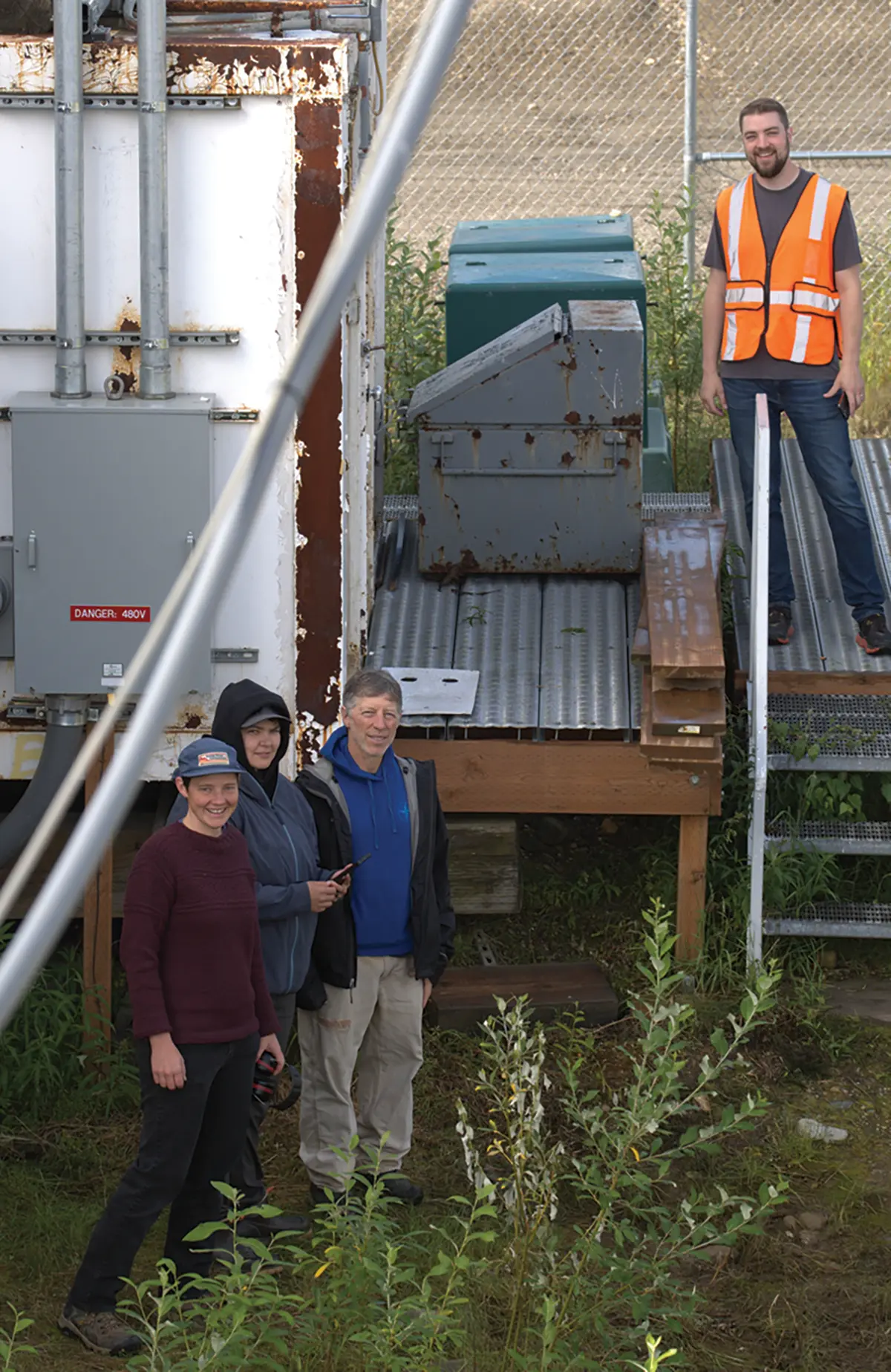
“Essentially, there was a great need for asset documentation, specifically for the power systems in remote Alaska. If there is documentation, it is typically really old, but the vast majority of the communities have no documentation at all,” explains Kartorium founder and CEO Jay Byam. “Our job is to document the high-detail version of exactly what’s out there to determine what the current power system can support.”
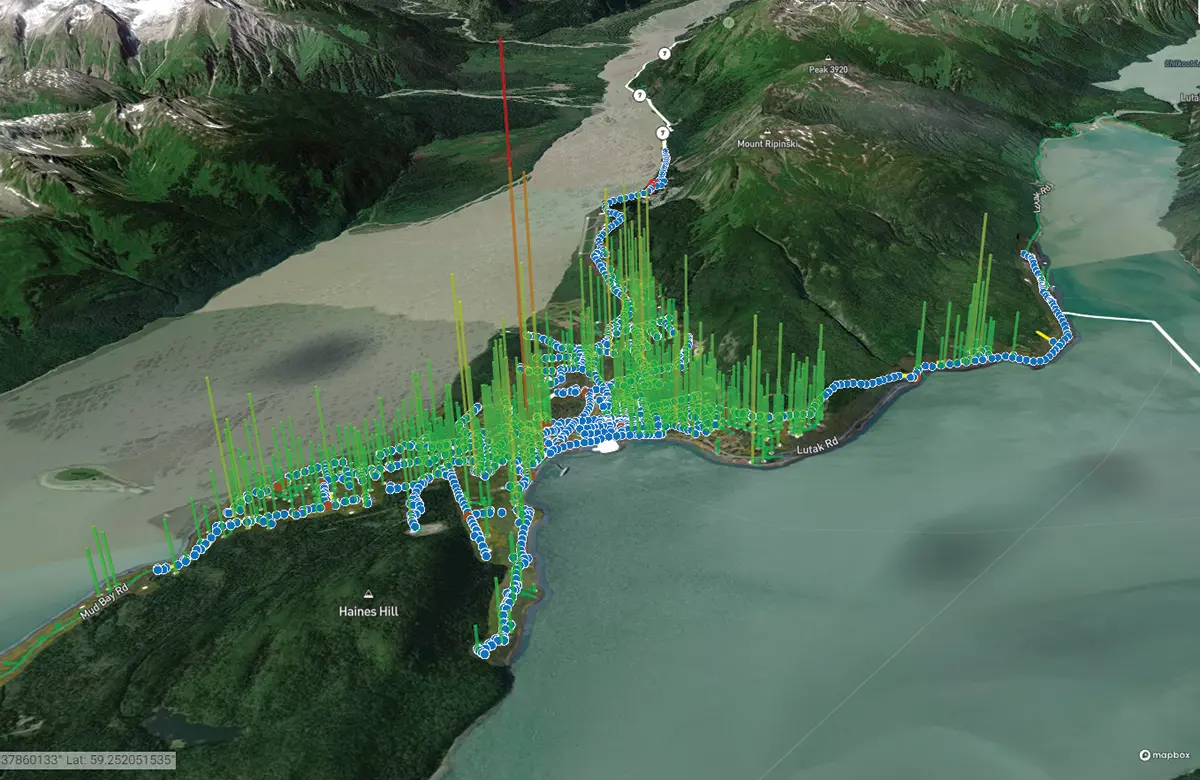
The Kartorium team scanned the communities with drones. “We documented every power pole, every transformer, generators, and diesel engines,” Byam says. “We used our images as base data for all of the maps.”
The data collection was highly successful. “Over this past fall and winter, we’ve taken that data and digital tools that basically create digital analogs for these communities and their infrastructure with the eventual purpose of using those tools to identify specific projects that basically have the most bang for the buck,” explains Mobley. “Communities can invest or spearhead projects that have the greatest potential impact.”
Just having the data is already a win for Alaska Energyshed. Byam believes the fieldwork has value even if no new energy infrastructure is built. “Whether outside projects get funded or not is kind of secondary in this case,” he says. “The communities now have modern 3D documentation for all their assets, which can be used for remote training by meeting with utilities and showing the results of these projects.”
Kartorium continues to host the data, with recommended projects viewable on the platform. Byam says, “As the team goes forward and gathers more recommendations, all of the updated data will also be viewable.”
The information also provides insights as to where there are opportunities to partner with other communities to build interties to share energy resources.
Kartorium

Kartorium
Kartorium
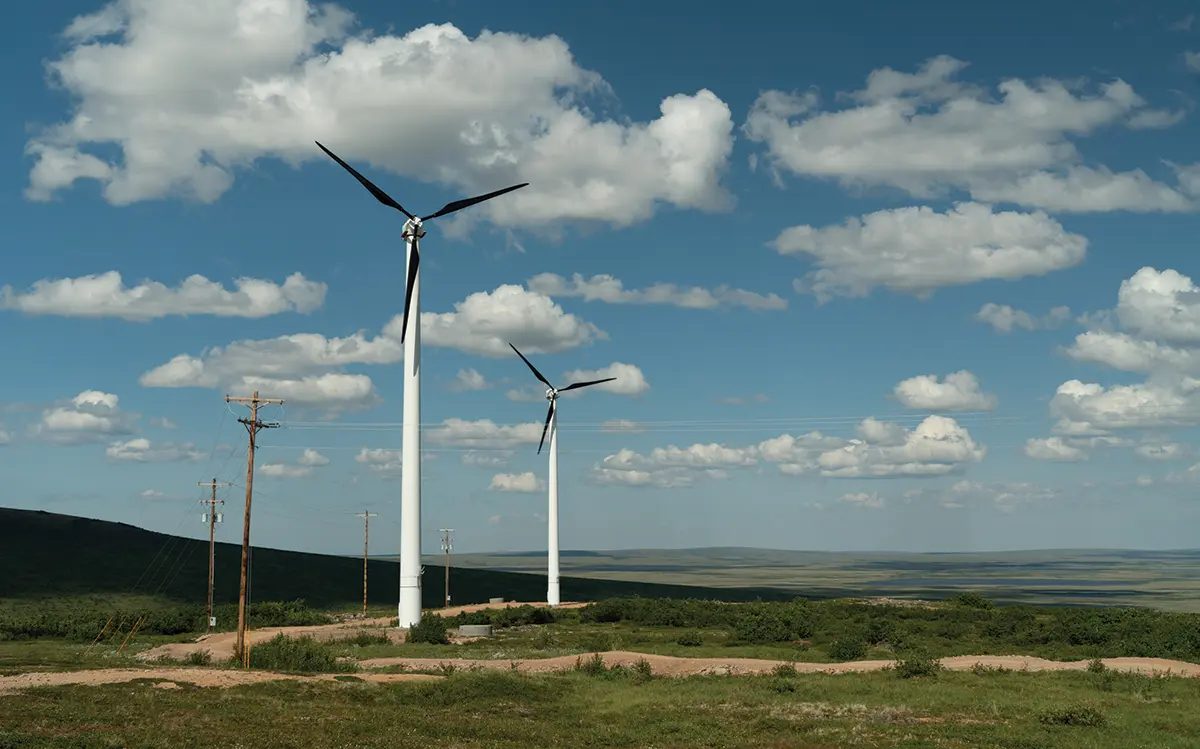
The type of clean energy projects is community specific. “It’s all about what’s available and what can be locally sourced within that community,” says Andreassen. “The Northwest Arctic is going to look very different than Southeast Alaska. Each community is going to be looking at available resources and how they plug into their respective base loads. For example, in the Northwest Arctic communities, that base load is probably coming from diesel generators. There’s a lot of interest in the Arctic for a large project for heat pumps; there’s also a lot of solar and wind energy possibilities. In Southeast Alaska, hydro energy is a resource that many communities have available, but it’s really the combination of these sources that make up a viable project.”
Launch Alaska partners are responsible for the community engagement part of the work. Once that’s complete, Launch Alaska will work with the National Renewable Energy Laboratory to analyze all the data. Upon completion they will produce new data that suggests which projects can be done most efficiently.
Launch Alaska has a goal of funding a minimum of three projects, totaling at least $10 million, through a mix of private and public dollars. Once those projects are plugged in, the Energyshed will stand as a model for other communities to follow.