

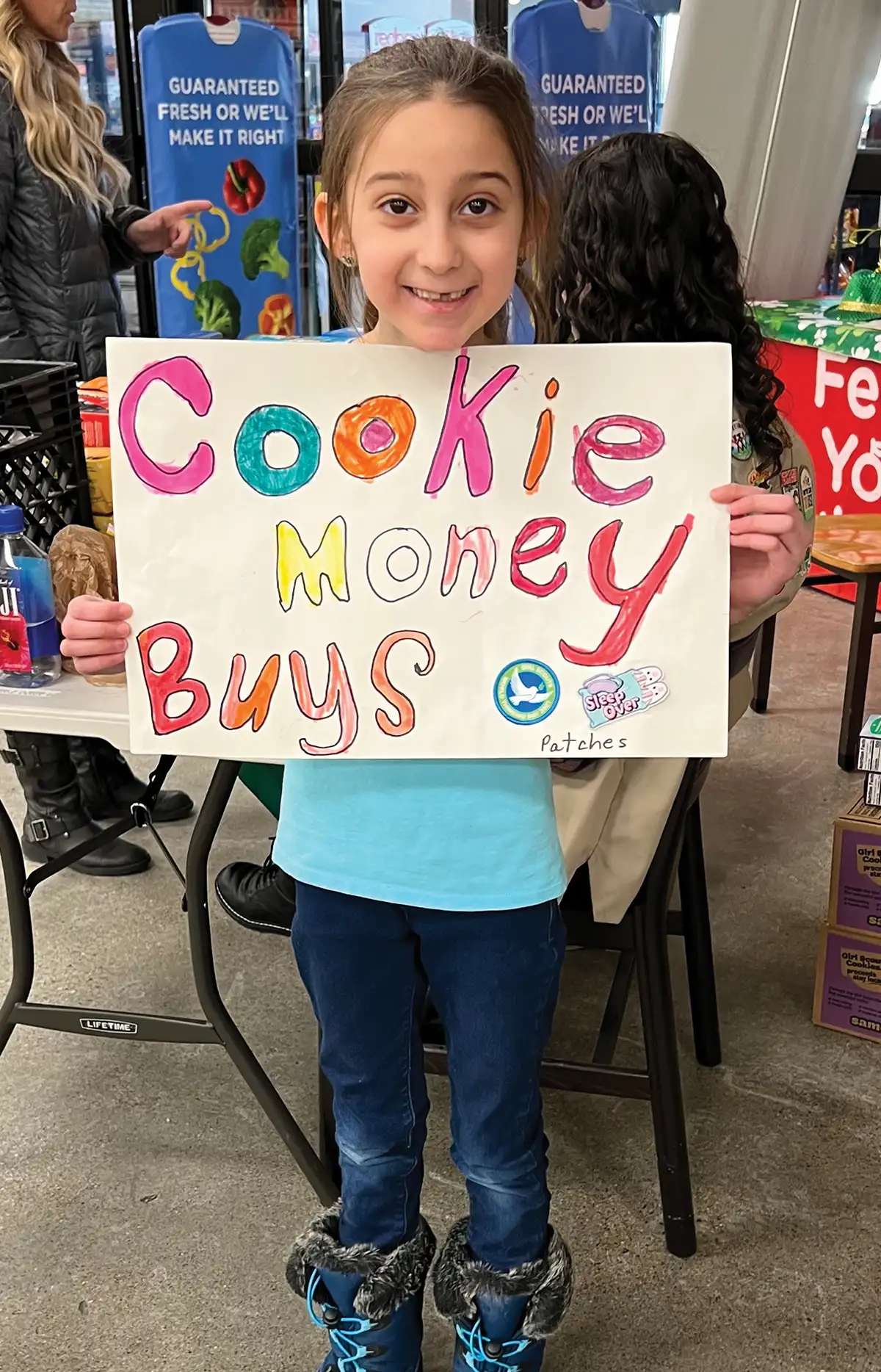
yen joined Girl Scouts as a Daisy in kindergarten. Now, in the 4th grade and entering Girl Scout cookie season, she is an experienced cookie saleswoman with a goal and a plan.
Last year Ryen sold 430 boxes of cookies. This year the Fairbanks scout plans to sell 500 boxes, a challenge in the Farthest North Girl Scout Council (FNGSC), where winter temperatures drop well below 0°F during cookie season—which starts with presales in January and continues into April with booth sales.
Ryen follows a tradition of cookie sales that goes back to the 1910s with bake sales held by early Girl Scout troops.
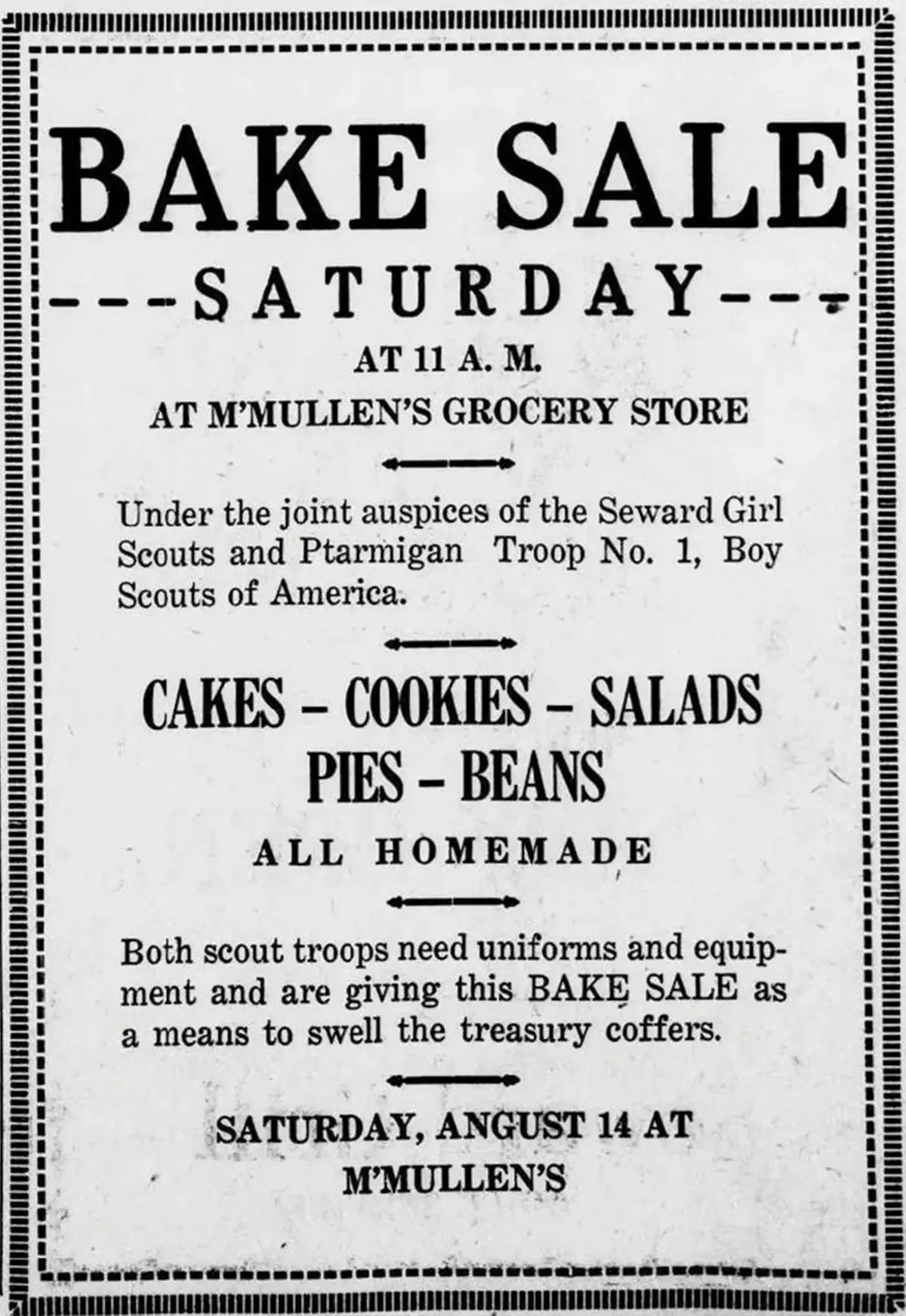
By the ‘30s, local councils started working with commercial bakers.
During World War II, Girl Scouts turned to selling calendars instead of cookies as the country dealt with shortages of butter, flour, and sugar. But by 1948, Girl Scouts of the USA had twenty-nine bakers licensed to produce Girl Scout cookies. Three cookies made the first lineup with shortbread (Trefoils), sandwich, and chocolate mints (Thin Mints).
These days, two baking companies supply the trademark cookies to councils: ABC Bakers and Little Brownie Bakers (LBB), once owned by Kellogg’s, now part of Italian confectionary conglomerate Ferrero. Both companies use the official Girl Scout packaging.
The bakers provide a variety of Girl Scout cookie products, but the core requirements are Thin Mints, Peanut Butter Sandwich/Do-si-dos, and shortbread Trefoils. The popular Samoas from LBB are called Caramel DeLites at ABC. Peanut Butter Patties from ABC are also known as Tagalongs from LBB. Both bakers have offered gluten-free, sugar-free, and vegan options over the years. All cookies are kosher and halal certified.
Both Alaska councils purchase cookies from LBB.
LLB bakes cookies year-round and ships them across the nation from December through April. LBB ships nearly 77 million packages of cookies to the fifty-nine Girl Scout Councils they supply.
“Little Brownie Bakers ships cookies via land, sea, and air to best support the needs of our Girl Scout Councils,” says Christine Dhondt, LLB director of marketing communications.

Farthest North Girl Scout Council

Farthest North Girl Scout Council
Last year the council sold 303,173 packages. GSAK CEO Hilary Patterson says the goal for the 2026 cookie sale is 360,000, an increase of nearly 19 percent over 2025.
Each box sells for $6 with all proceeds staying in the council. GSAK troops earn $0.75 per box and another $0.05 to $0.10 if they participate in early registration and the Troop Readiness program. In some cases, girls choose to forgo proffered incentive packages so they or their troop can earn as much as $1 per box. GSAK receives $3.62 per box before the council’s cost of incentives.
Setting its own rates, troops in the FNGSC earn $0.85 per box.
The incentives that the councils offer vary and may include patches, accessories, sweatshirts, fun kits, and credit toward camp or in the Girl Scout store through the Cookie Dough incentive.
Farthest North Girl Scout Council

Farthest North Girl Scout Council
Lynden Transport arranges for cookies to get to Southcentral and Southwest addresses. “We unload their trucks, put the cookies on pallets, and transfer them to our trailers,” says Jeff Denney, Lynden Transport regional sales manager.
Lynden takes their trailers over to their shipping partner, TOTE Maritime Alaska. Trailers are barged across the Gulf of Alaska to Anchorage, arriving at the Don Young Port of Alaska. There, Denney says, “We bring our trucks from our service center in Anchorage down to the Port of Anchorage, hook onto our trailers from the ship, and bring them back to the service center.”
Once at the Anchorage service center, Lynden employees sort cases based on “pick tickets” or an invoice from Ferrero onto new pallets headed for different destinations within the GSAK council area. GSAK has distribution venues in Mat-Su, South Anchorage, Eagle River, Kenai, Juneau, Bethel, and Togiak. Lynden arranges transportation to each distribution spot.
Each location has a one-day window for troops and service units to pick up cookies. GSAK calls the effort a “cookie toss” involving volunteers and staff who help pick and load up the orders for each troop.
Cookies come in cases of twelve boxes. The heaviest cookie package weighs nine ounces, making the case weight just shy of seven pounds. The cost of shipping such large cargo could dig into profits, so TOTE ships the cookies as an in-kind donation. According to Lisa Simmons, marketing and communications manager for TOTE, the ocean portion of the trip donated by TOTE to GSAK includes five to seven 53-foot trailers of cookies each year.
Cookies going to Southeast (a part of GSAK) travel via a Lynden family company, Alaska Marine Lines, directly from the Port of Seattle. In Juneau, the cookies are sorted by volunteers and disseminated to troops and service units in the region.
GSAK operates Cookie Cupboards out of its main offices in Anchorage and in Juneau. These serve as the depot where troops can order additional cookies and trade unopened cases.
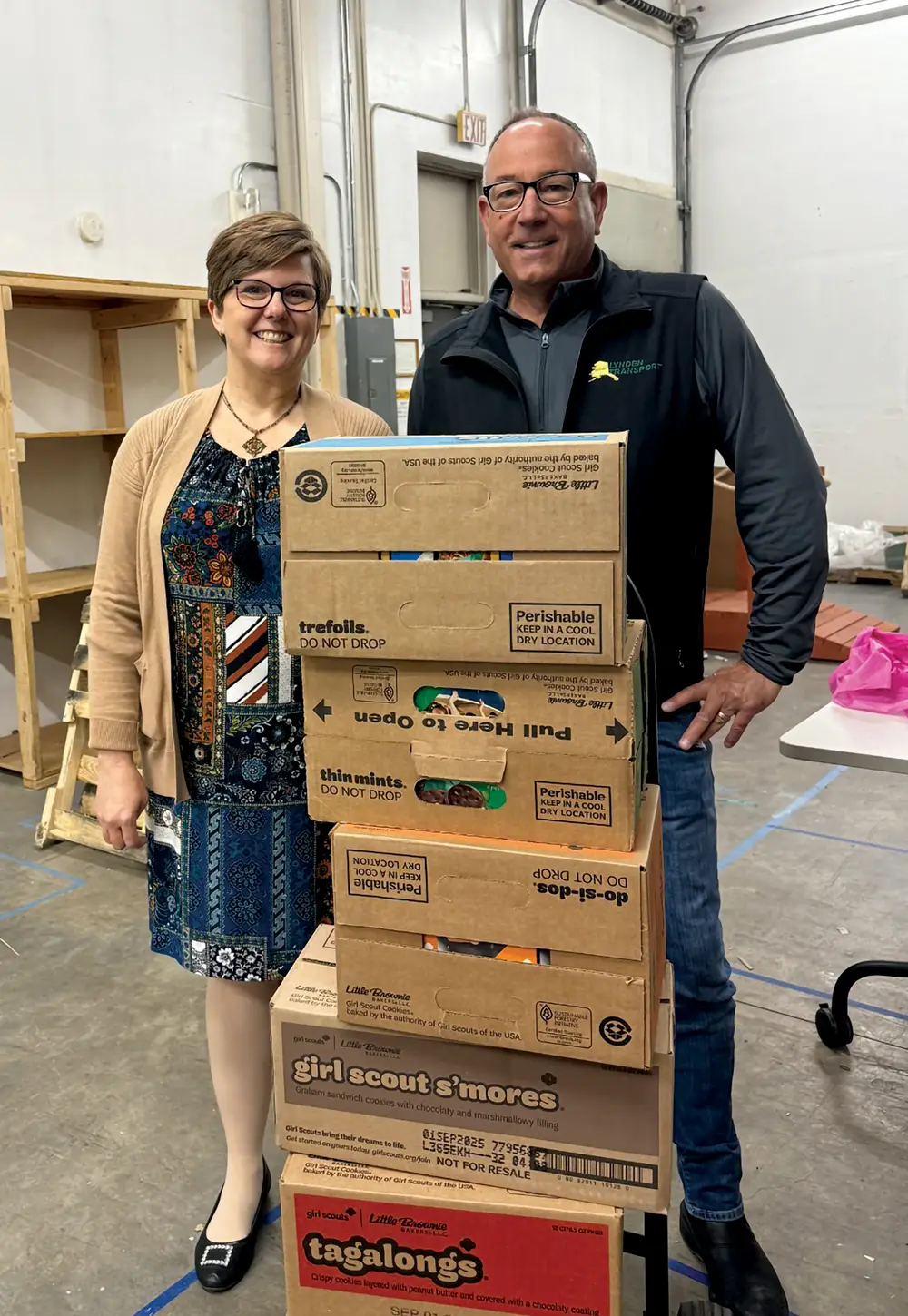
This year’s flavors for GSAK include Thin Mints, Samoas, Tagalongs, Lemon-Ups, Toffee-tastic, Trefoils, Do-si-dos, Adventurefuls, and new this year, Exploremores.

Farthest North Girl Scout Council
Girl Scouts of Alaska
Farthest North Girl Scout Council
Farthest North Girl Scout Council
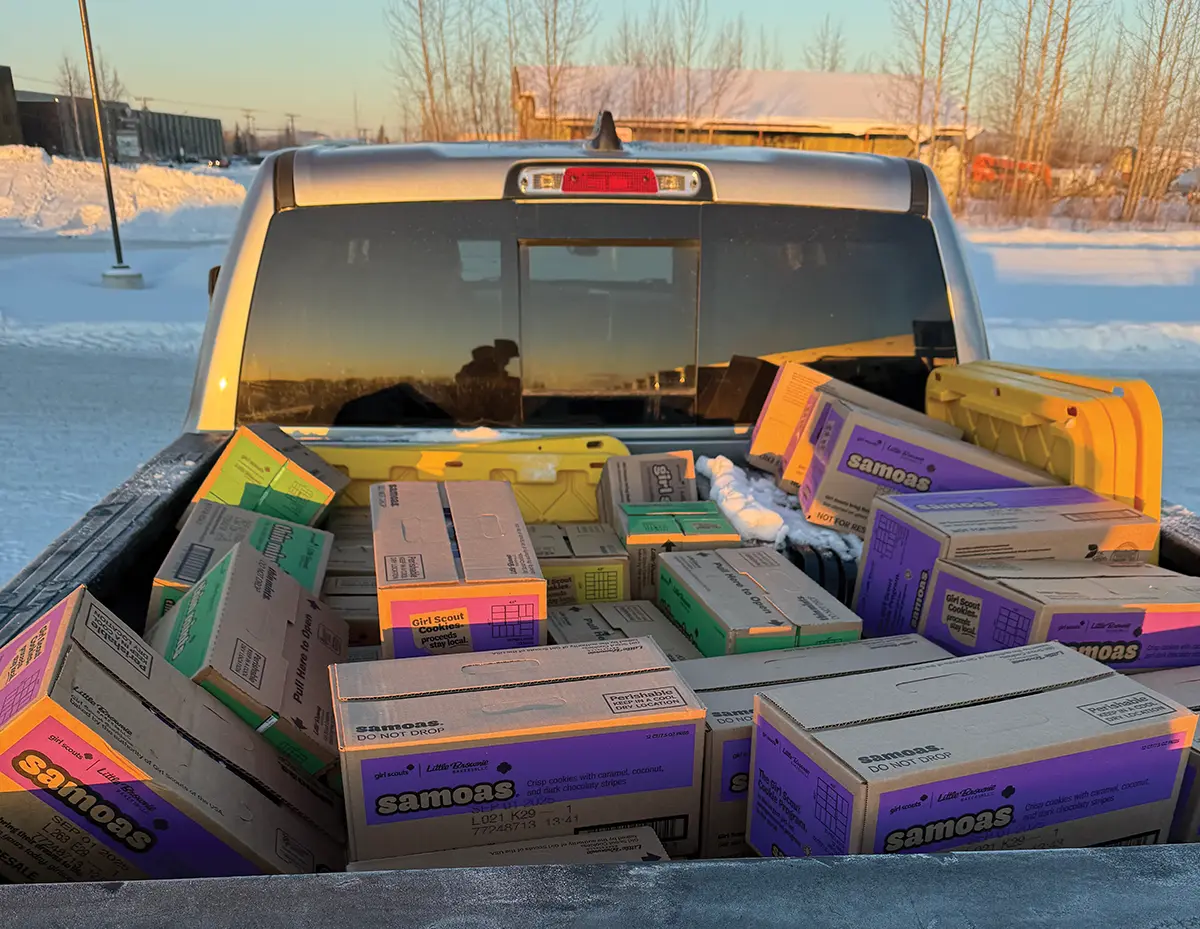
Ferrero delivers cookies bound for FNGSC to Span Alaska in Washington, which arranges for shipping from the Port of Tacoma to Anchorage.
“From Anchorage they get parceled out depending where they’re going,” says FNGSC Director of Operations René Cornelius. “The bulk of our membership is in the greater Fairbanks area, Fairbanks and North Pole.”
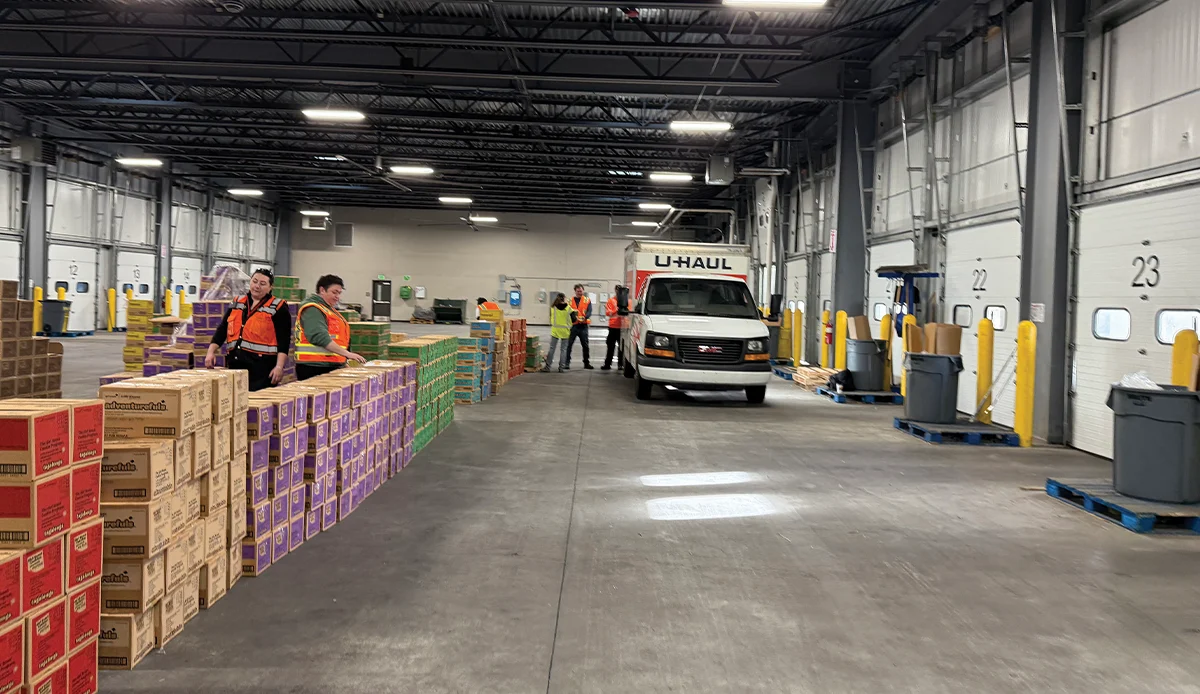
Cookies bound for Nome and Utqiaġvik leave Anchorage via air, cookies for delivery along the Richardson and Alaska Highways travel via truck, and the remainder of the shipment is unloaded in the SPAN Alaska warehouse in Fairbanks.
Cookie distribution happens in a matter of hours as troops and service units drive through the warehouse while volunteers and staff check off the orders and help load vehicles.
Troops begin presales in early January. By January 31, the council places their order. FNGSC expects this year’s shipment at the end of February. Flavors offered in FNGSC this year are Thin Mints, Samoas, Tagalongs, Lemon-Ups, Toffee-tastic, Trefoils, Do-si-dos, Adventurefuls, and Girl Scout S’mores.

Farthest North Girl Scout Council
Ryen has a choice of incentives to inspire her to sell. In addition to the annual incentive products, troops use cookie funds for troop projects and trips. For example, a 6th-grade troop is saving money to fund a trip to one of the World Association of Girl Guides and Girl Scouts’ five international World Centers: Nuestra Cabaña (also known as Our Cabaña) in Cuernavaca, Mexico.
Ryen’s preference is the sleepover kit. It includes a comfy pillow and a sleep mask. She knows she will use the mask when camping in the summer.
Girls who sell 500 or more boxes become part of the 500 Club in FNGSC, and those girls vote on next year’s incentives.
Both Alaska councils assist troops with arranging booth sales at locations such as Carrs, Fred Meyer, Lowes, and Walmart stores. Several troops in Anchorage, Eagle River, and Mat-Su have established drive-up booths in key locations.
Troop leaders and scouts attend online and in-person training before embarking on sales. Councils and service units hold Cookie Rallies in January. FNGSC offered a Cookie CEO training where girls who are in fourth grade and up make a sales pitch to local business leaders. Through product sales, girls learn business ethics, goal setting, money management, and people skills.
According to a report by the Girl Scout Research Institute, “Today’s girls are already thinking like entrepreneurs. They possess many traits we know are linked to entrepreneurial success and are socially conscious problem-solvers.”
The study also states, “Although girls express confidence in their ability to be entrepreneurs, they also identify key challenges to getting started, including a fear of risk and gender stereotypes.”
As girls get older, their interest in being an entrepreneur decrease slightly (85 percent of girls between the ages of 14 and 17 versus 91 percent of girls between the ages of 8 and 10) and they are less likely to feel like society supports women in entrepreneurship. The study found that while six out of ten girls had an entrepreneurial mindset, three in four girls believe they would have to work harder to succeed in entrepreneurship roles because of their gender.
Providing these entrepreneurial opportunities is important.
Cookie sales fund the program at the troop level, with the girls setting the budget.
“Our troops are earning their own way to travel overseas. They’re earning their own money to buy their badges. They’re earning their own money to do community service projects. They’re earning their own money to do all of these things. They’re very self-sufficient. And we’re very proud of that work,” says Cornelius.
Cornelius continues, “We are here to provide opportunities for girls in communities that may not have lots of opportunities. So, we have Girl Scouts who live in rural villages to Girl Scouts who live in town. We try to provide something for them that they can learn real life skills, something for them where they can build their courage and have a safe place.”
“I think now more than ever, it’s very important for girls to have a safe space to be girls and on the flip side, I think it’s incredibly important for our older girls to have a place where they can be vulnerable and be themselves,” says Cornelius.
As for Ryen, she’ll be selling cookies for years to come. She’s looking forward to growing with Girl Scouts. Her troop meets every Wednesday, and some of her favorite things to do with Girl Scouts are camping, getting out on the lake, and archery—but right now, she has 500 boxes of cookies to sell and deliver.