

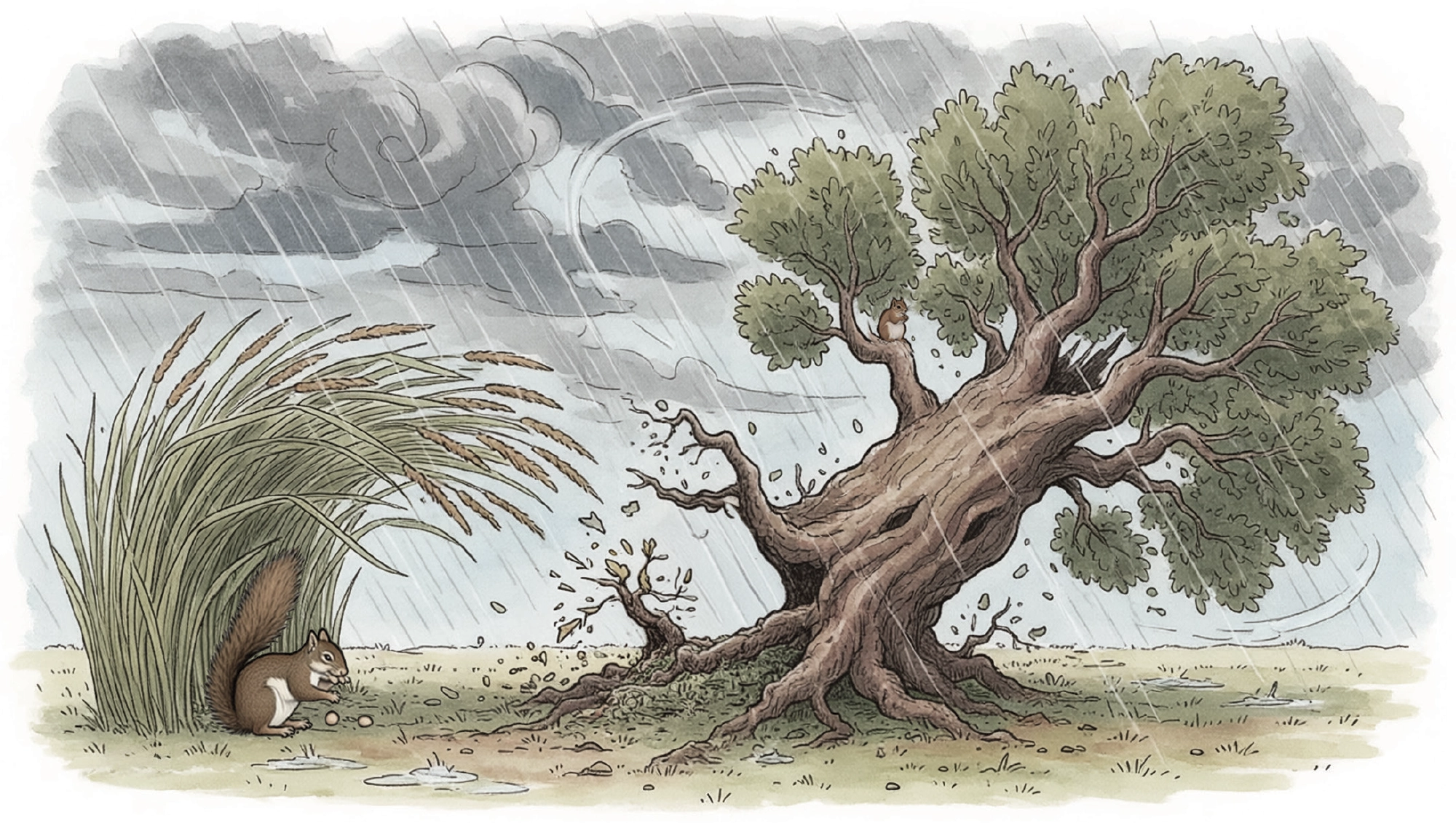
very Alaskan knows that a bush pilot who’s “rigid” about their destination—regardless of incoming fog or shifting winds—is a dangerous one. Clinging to a predetermined course in the face of clear warning signs isn’t just stubborn, it is reckless disregard, inviting catastrophe. This same survival logic applies in the boardroom. As savvy leaders navigate the “economic weather” of 2026—marked by volatile interest rates, labor shortages, and uncertain global economics—the stakes have never been higher. Leaders should not mistake blind stubbornness for strength; they should embrace agile and flexible leadership.
Hindsight is 20/20, and it’s easy to criticize Kodak for being deeply wrong about digital cameras because the company was too entrenched in its hugely profitable film and photo-chemical business at the time, unwilling to commit to a new technology. This is the risk of rigidity: becoming too ingrained in “that’s the way we’ve always done it” thinking. It leads to not rewarding employee innovation as courageous and therefore missing opportunities. This generally happens in organizations that focus on cumbersome approval processes and siloed budgets, with the belief that experiments are not efficient.
Rigidity does not necessarily have to exist in highly regulated or policy-informed organizations. It sprouts from a mix of 1) individual leader bias, 2) an organization with a culture of fear, and 3) market pressures indicating a need for adaptation. A leader’s past successes can create a blind spot. Instead of watching the horizon, leaders often cling to familiar routes and ignore warning signs of market shifts. This personal resistance can then be amplified when a corporate culture of fear and micromanagement prevails, as that stifles innovation. Finally, when faced with external threats, the organization retreats into “threat rigidity”—responding with command-and-control tactics, doubling down on inflexible routines rather than choosing innovation and adapting to a new reality. Organizations that do not invest in creativity and flexibility will find that innovation is no longer a strategic option when they need it.
In the Lower 48, a rigid business leader may be viewed as an annoyance—a bottleneck that is irritating but survivable within an organization that has resources to work around them. However, in Alaska, rigidity comes with a significantly higher price tag. Alaska’s small economy is especially sensitive to forces that are often entirely beyond its borders, ranging from global oil prices and environmental shifts affecting fishing to federal land management to global trade policies. In this landscape, a leader who refuses to pivot isn’t showing strength; they are failing to read the terrain.
To achieve this balance, a leader must be like glacier ice: presenting a visible, steady surface that provides the organization with a vital sense of security. While this solid exterior offers predictable values and clear direction, the leader remains strategically fluid beneath the surface, adapting to the shifting currents of a volatile economy. By acting as a “malleable solid,” they remain firm enough to inspire trust yet agile enough to pivot whenever internal or external conditions change.
Q: Let’s get right to the meat of it. How do you stay flexible as a business leader?
Hegna: First comes fostering an organizational culture where flexibility is celebrated. Change is constant in business, from the market and the customers to the competition and the regulatory environment. I look for ways to do things differently to respond to that change, and I look for people who think differently from me to get that additional perspective. It doesn’t mean it all gets adopted, but that alternative thinking informs my decision-making.
Q: What organizational traits, structures, or pressures have you seen that make leaders more rigid?
Hegna: Hands down, it’s bureaucracy. Overreliance on policies and procedures prevents innovation and limits growth. People tend to become more rigid when there’s a lack of trust at any level of the company. A strong organization, where your employees trust each other and leadership, is a collaborative, flexible, and innovative place able to meet challenges when they inevitably pop up.
At Koniag, we have adopted six core values that define us: Sharing the catch, being open and honest, having pride in our work, honoring our heritage and culture, embracing diversity, and planning for the long term. When we adopted these, everyone in the organization, from front-line staff on up, developed the behaviors we expect of ourselves and others to reflect these values.
Q: How do you challenge a deeply ingrained, but failing, “This is the way we’ve always done it” view?
Hegna: We practice this in a lot of ways at Koniag. One of my favorite approaches is to bring everyone together to map out our existing processes step-by-step. We honor our past by learning how past practices shaped today’s methods, while identifying how to incorporate new tools, people, and influences. By removing unneeded steps from the process, we “right-size” our operations to fit the modern moment, ensuring that every team member has a voice in setting the new standard. This transparency creates a space where creativity can flourish. Ultimately, cultivating tolerance for change requires resilience and a commitment to leading with core values.
Q: What steps do you take to foster a culture where teams are comfortable suggesting and running low-risk experiments (prototypes), even if they might fail?
Hegna: I tell people all the time we employ humans. As humans, we make mistakes. Growth comes from learning from missteps, developing plans to fix them, and moving on.
One way we have incorporated a tolerance for smart risks is through team debriefs following project completions. Because we focus on learning instead of where to assign blame, missteps are opportunities to gather new information and insights. By keeping communication open, the dynamic develops where it is not just safe to share ideas without expectation of judgment, but errors can be discussed without expecting reprimand.
Q: What do you think about the agile leadership style?
Hegna: The ability to adapt depends on agility. One of the ways we remain focused on solutions is by not allowing arbitrary boundaries to limit us from finding the right response to the present challenge. One of the benefits of having a relatively lean corporate staff size is that it allows us to challenge ourselves to think outside of rigid roles and try different combinations of ideas and approaches that meet employees at the intersection where their talent, interest, and need come together.
Modern Alaskan leaders may benefit by transitioning away from command-and-control models toward a more fluid, agile, and flexible leadership approach. Hold on to your core values with a vise grip, but keep your tactics as flexible as a bush pilot’s flight plan.
Join us next month as we explore disconnectedness.

Throughout 2026, Garrick’s leadership series is exploring different ways for leaders to align their values with ethical conduct and create lasting positive impact.