

ears in the making, construction of the first deepwater port in the US Arctic starts this spring. Last August, the US Army Corps of Engineers–Alaska District (USACE) awarded a $400 million Phase 1A contract to Kiewit Infrastructure West Co. for the Port of Nome Modification Project.
“There’s been a great deal of effort by a large number of people and agencies and project development team members to get us to this point,” says Port of Nome Director Joy Baker. “We are ecstatic.”
Baker is understandably excited. She was Nome’s harbormaster from 1993 to 2013, then became the city’s port director in 2015. She announced her intent to retire in 2023—a decision that coincided with the ramp-up to the Port of Nome Modification Project. The city kept her on as project manager through May 2024, when she officially retired. But the city lured her back in September 2024, and she is once again port director.
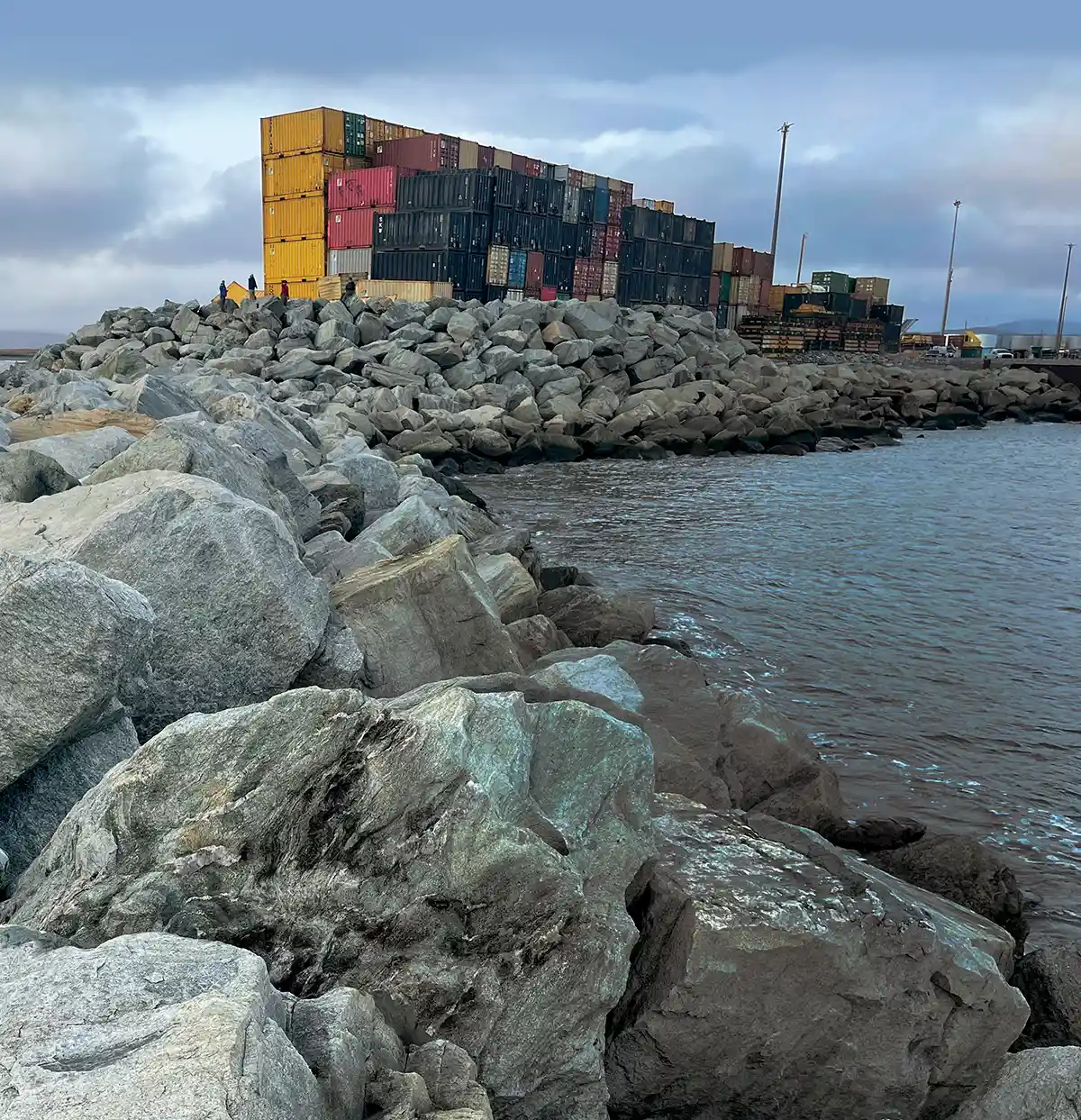
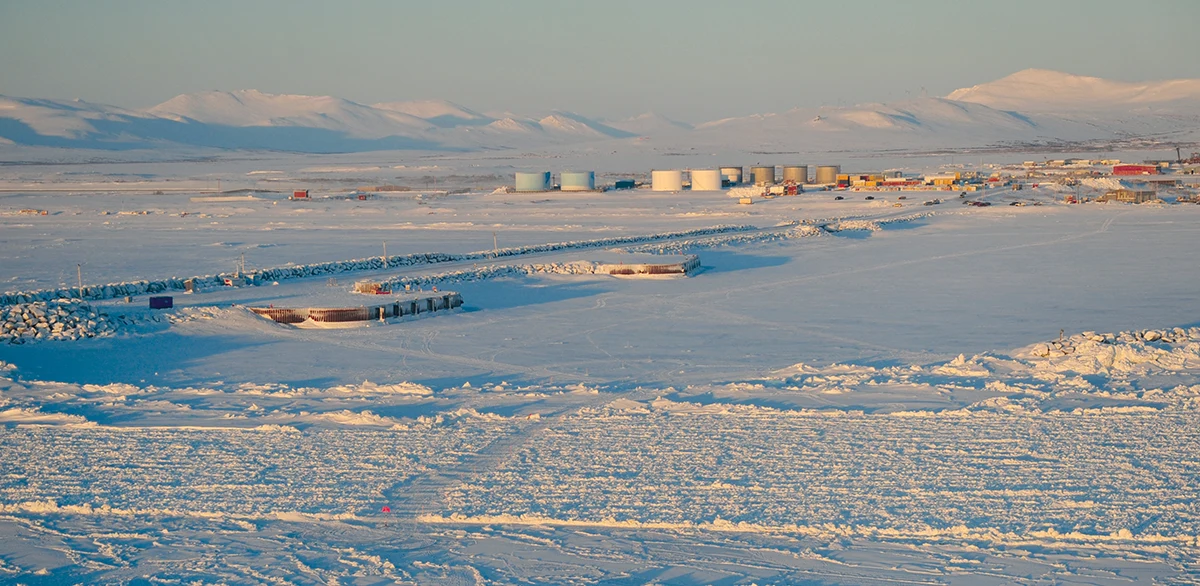
Harrison says the 2026 work season will cover four main areas: 1) mine armor stone from the Cape Nome Quarry; 2) transport and store the rock near the causeway; 3) build a temporary 180-person work camp; and 4) demolish and remove the “spur” that currently ends the causeway.
“This is going to be a construction gold rush for Nome,” says US Senator Dan Sullivan, who’s worked for most of his two terms in Congress on the project. Over the years, the Alaska congressional delegation has worked to insert funding in multiple bills. They also won more favorable funding terms. Under Nome’s agreement with USACE, the city covers 10 percent of costs while the federal government covers 90 percent. Sullivan says the cost split used to be 70/30.
Baker also credits Nome’s state legislators, Senator Donny Olson and Representative Neal Foster, in helping to appropriate state funding for the port project. “That was essential,” says Baker. “Without that, we would not be where we are with constructing Phase 1.”
Later that year, Shell ended its Arctic Ocean exploration campaign, which changed the calculus for the Port of Nome. “When I came to the Senate, this project was essentially dead,” Sullivan recalls. He’d been in office less than a year when Shell announced its change in plans.
Meanwhile, Arctic shipping traffic continued to grow. From 2013 to 2024, total Arctic shipping traffic increased 37 percent, according to data from Protection of the Arctic Marine Environment (PAME), an Iceland-based working group of the Arctic Council intergovernmental forum. Over that time, PAME’s Arctic Ship Traffic Data program found the number of unique ships transiting the region increased from 1,298 to 1,781. General cargo ship traffic increased 40 percent, from 134 unique ships in 2013 to 187 in 2024. Updated in January 2025, PAME’s report The Increase in Arctic Shipping 2013–2024 shows that most cargo ships traverse the Northern Sea Route along Russia’s northern coast. That pattern could change, especially once Nome has a deepwater port that can accommodate larger ships’ refueling and other needs.
Shorter routes from East Asia to Europe via the Arctic have such potential economic significance that the mayor of Busan, South Korea, visited Anchorage and Nome early this year. Mayor Park Heong-joon sought to explore what the port expansion could mean for exports from Korea’s maritime industrial hub. In an AI-translated press release on Busan’s website, Park says an Arctic shipping route could reduce the distance from his city to Europe by more than 30 percent. It would also avoid the perils of the Suez Canal. The release says, “Nome is considered a key mandatory stopover for vessels once Arctic shipping routes become more active.”
At the same time, Russian and Chinese activity near and sometimes inside Alaska waters and airspace has increased. This has run the gamut from joint military patrols near the Aleutian Islands to what Sullivan calls “aggressive military actions” in the Arctic.
“The United States is going to have to up its ante in terms of what it’s doing, defense-wise, in that region,” says Cameron Carlson, dean for the College of Business and Security Management at UAF.
National security was always part of the Port of Nome project’s motivation, Baker says, but “over the years it has elevated higher up the list of reasons to build this and has become… the paramount reason.”
Petty Officer 2nd Class Charly Tautfest | US Coast Guard
Shareholders of the Nome-based Alaska Native regional corporation will benefit even if they don’t get jobs tied to port construction. Pederson says the port is one of two projects that will significantly increase the quarry’s rock production over the next few years.
In a typical year, the quarry produces 50,000 tons of material for various projects. If the quarry gets awarded the rock contract for all phases of both the Port of Nome expansion and the Utqiaġvik seawall project that broke ground last year, the quarry could provide 3 million tons of rock over five to seven years—a nearly tenfold increase in production.
Under the Alaska Native Claims Settlement Act, BSNC owns subsurface rights at the quarry, which bring royalty payments that scale based on production. Sitnasuak Native Corporation, the Nome village corporation, owns the surface rights and provides access to the rock. Pederson says the Utqiaġvik seawall could require about 1 million tons of rock, and the port project about 2 million tons. Of that, Phase 1A should account for about 875,000 tons.
Prior to the USACE award of the Phase 1A contract, BSNC signed an agreement with Kiewit for rock extraction. Pederson says corporation leadership made a strategic decision to contract out the rock production work due to equipment costs. The two parties signed the agreement in 2024, and Kiewit began work onsite in 2025.
Harrison says the quarry contract made sense for two reasons: first, Kiewit’s then-forthcoming bid on the port project, and second, the Nebraska-based construction firm’s long history of major Alaska projects. “We originally developed that quarry in the mid-1980s for the first Nome causeway that was built, so we have extensive history operating in that quarry,” says Harrison.
While Kiewit is bringing some workers from Outside, Harrison “absolutely” wants to hire locally when possible. “It’s important to the local community there and the economy associated with that,” he says. “That’s an important component to ensure that we’re providing an opportunity for the local residents.”
The workforce developer is currently focused on commercial driver license (CDL) trainings, to help residents of Nome and surrounding villages qualify for jobs hauling rock 13 miles from quarry to port. “There’s gonna be a huge uptick in CDL positions,” Pederson says. “We’re planning to provide as much as we can through a contract with Kiewit.”
BSNC is also collaborating this spring with its nonprofit affiliate Kawerak and the UAF Northwest Campus on a welding class. The corporation also hosted outreach meetings with unions to help people learn about requirements for project jobs. A November public meeting had both an in-person and online component so residents of surrounding villages could learn about opportunities.
BSNC purchased a former camp facility to provide housing. In the short term, the sixteen-person structure will mostly house Kiewit staff. Long term, though, Pederson says BSNC wants the building to support workers who come to Nome from surrounding areas.
In 2025, the Snake River Moorage Facility (described in the strategic development plan as the Snake River Floats) won a $13.2 million grant through the US Department of Transportation’s Rebuilding American Infrastructure with Sustainability and Equity program, matched by the City of Nome. The project will improve seasonal small boat storage, adding about 1,700 feet of floating dock that should reduce crowding in the main harbor. The moorage project is currently in the permitting and design phase, Baker says.
Baker says the other ancillary improvements will require various funding sources and separate contracts. One, the offshore Causeway Cruise Terminal, depends on part of the port-expansion work. Other projects, such as a harbor walk, might happen more iteratively. Each of the ten projects serves different needs and users of the area.
The Harbormaster Uplands piece would significantly expand office space, improve a gravel parking lot, and add services such as a “comfort” facility with laundry and showers. The Belmont Point project would add a boat launch to improve access and safety, along with facilities to support recreation and subsistence activities like fish and seal cleaning. Other elements of the plan would support salmon fishing on the Snake River, improve some barge-related tasks, and create a River Street Visitor Facility to serve the influx of tourist traffic Nome anticipates.
It’s too early to tell what ships might visit Nome once the third and final phase of the port expansion concludes. But the project big enough to bring Baker out of her retirement stands to keep Nome and its neighbors as busy as they want to be for the foreseeable future.