

abitational insurance, also known as landlord insurance, is critical for owners of apartments, condominiums, and other types of multi-family housing. This specialized type of commercial insurance protects property owners against claims stemming from third-party injuries and losses due to fire, weather-related storms, criminal activity, and other potential hazards.
But the habitational insurance market is under considerable strain due to significant losses incurred by major insurance carriers. Severe weather events—wind and hailstorms, wildfires, hurricanes, and tornadoes—have caused a surge in claims. In Alaska, the difficulties with the habitational insurance sector are exacerbated by the conditions of aging buildings desperately needing repairs and infrastructure upgrades.
Many insurance carriers are re-evaluating their coverage offerings and tightening underwriting requirements. Some are increasing premiums; others are opting not to insure certain properties based on their age, location, and required renovations. As a result, property owners have fewer habitational insurance options and face stricter standards to secure coverage.
“We know carriers that pulled out of this market this year because they nonrenewed entire books of business, which isn’t a normal practice,” says Christopher Pobieglo, president of Business Insurance Associates, an Anchorage-based independent commercial insurance and surety brokerage firm. “And the ones who still write it are severely restricted or have tightened up their underwriting guidelines.”
While excess and surplus carriers have the flexibility to provide insurance for non-standard exposures, the coverage is often less comprehensive and more costly than standard insurance. “They’ll write almost anything for enough money—but the coverage gets reduced and the price goes, in some cases, double,” Pobieglo says.
Some insurers are exiting Alaska’s habitational insurance market due to financial concerns. Insurance carriers are focused on managing their exposure to losses and ensuring their financial stability amid persistent market difficulties. “These kinds of properties are seeing a lot of liability claims and property claims,” Pobieglo explains. “They weigh the risk and claims paid out versus the premium they take in, and for a lot of carriers this is just not a profitable line of business.”

Business Insurance Associates
Carpenter emphasizes that insurers set rates based upon the risk they anticipate, and they underwrite based upon information and factors that determine the likelihood of a claim. For instance, insurers approach insuring older structures with caution. “Older structures are subject to wear, may not have been maintained, and may not meet current building codes or been upgraded, including being rated to withstand earthquakes or other natural catastrophic disasters that occur in Alaska,” Carpenter explains. “Older structures are also more likely to be damaged by weather, have greater damage, and have structural issues.”
With higher likelihood of damage comes higher cost of repairs. Carpenter says, “The cost of building materials and the physical labor to make repairs remains high. Overall, commercial habitational properties present multiple risk factors that are difficult or impossible for an insurer to control or mitigate.”
Cody Bennett
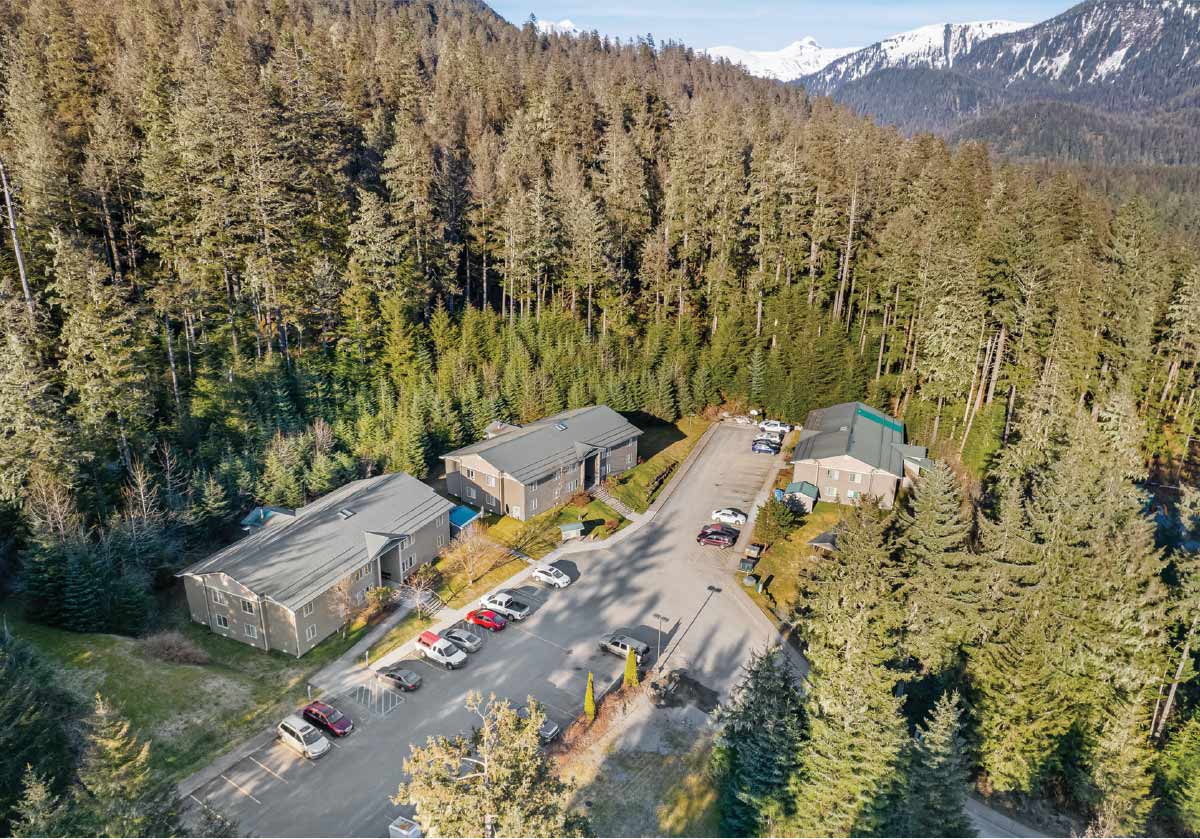
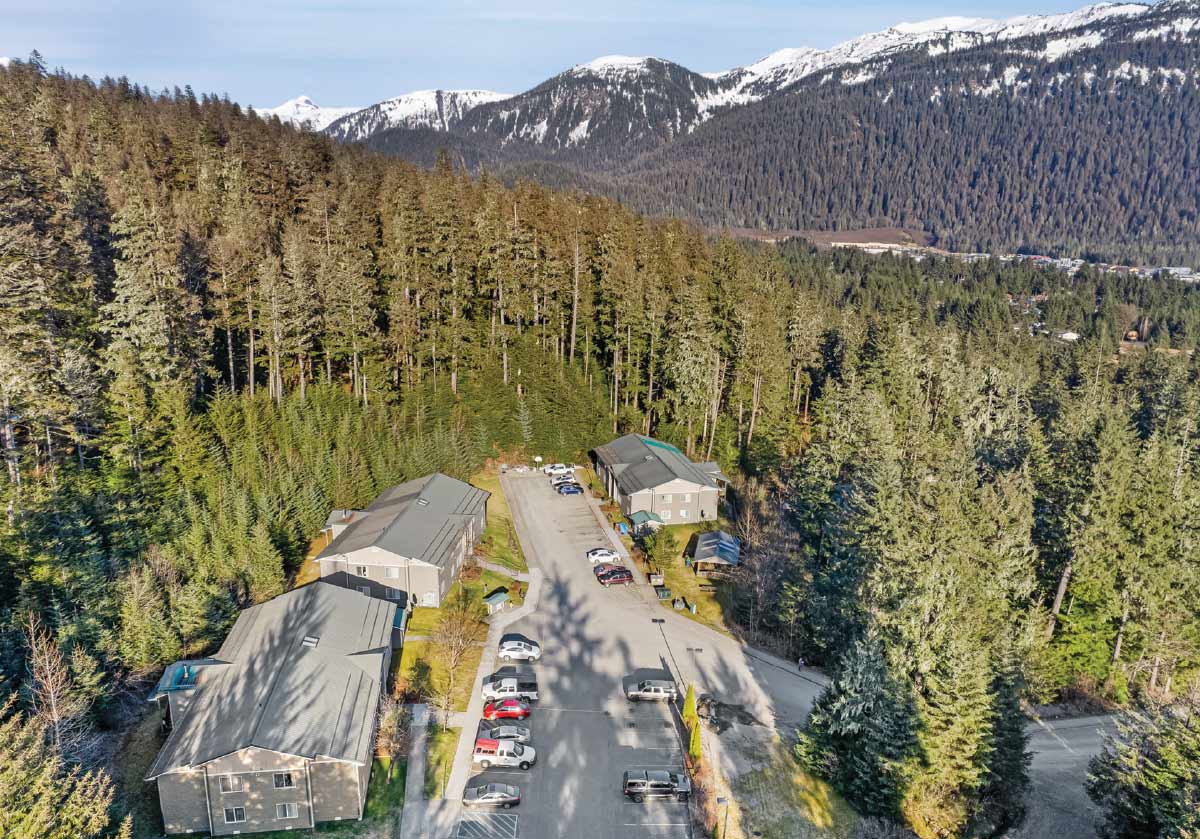
Now insurers are requesting inspections prior to writing a policy. “This practice of wanting to see inspections on the front end is new,” Pobieglo says. “I think a lot of it is because of the state of the housing market and a lot of the older buildings in Anchorage.”
Therefore, it’s more critical for property owners to be able to demonstrate that upgrades and maintenance have been done on the main building systems, especially on older buildings. “You’re not going to be able to get any type of quality insurance if you’re not doing these upgrades and maintenance,” Pobieglo says.
Due to the stricter underwriting requirements, insurance brokers are adjusting their approach to writing policies in what has become an increasingly tough insurance segment. They’re asking more questions about the properties, requiring extra documentation, and being more selective when issuing policies. “We know the insurance companies are going to require, in many cases, photos and copies of inspections [for quotes], so we kind of prequalify that property,” Pobieglo explains. “And, honestly, we’re not looking to broker bad risks. So even though we don’t technically do the underwriting at the broker level, we’re still qualifying clients for who we want to work with and who we don’t. And if we don’t want to work with someone, it could just be because we feel that the property is in poor condition or just wouldn’t be a good risk for us to present to companies.”
“If we find a market willing to place the risk, they reduce coverage to a basic form,” he says. “In heavy snow areas, this is a problem as weight of snow and ice is not covered… With the pullout of Allstate and State Farm on a lot of the Fairbanks properties, the markets cannot keep up with the underwriting or the resources to do a proper inspection.”
Carpenter notes that the Division of Insurance cannot require an insurer to offer property and casualty coverage, which protects the insured from financial losses related to physical assets and legal liabilities for damage or injury caused to others. Insurers use underwriting to identify high risks and either charge higher rates or decline to insure. For example, she says the division is aware that at least one property and casualty insurer will not underwrite structures with knob-and-tube electrical wiring, an obsolete type of wiring largely abandoned in the ‘40s and ‘50s.

Alaska Division of Insurance
In addition to wires, pipes might disqualify a property. Carpenter says, “Plumbing systems are reviewed for materials and condition and should not typically include older galvanized or plastic piping, and prior water losses may require a mitigation plan. Older boilers or furnaces (generally, thirty years or more) should be regularly inspected.”
For commercial habitational properties specifically, one insurer—Umialik Insurance Company—requires carbon monoxide detectors and smoke detectors, according to Carpenter. “Smoke detectors must be hard-wired for all new business submitted, and if carbon monoxide detectors are battery-operated, a documented maintenance plan is required,” she says. “These are reasoned safety measures for occupants of these buildings.”
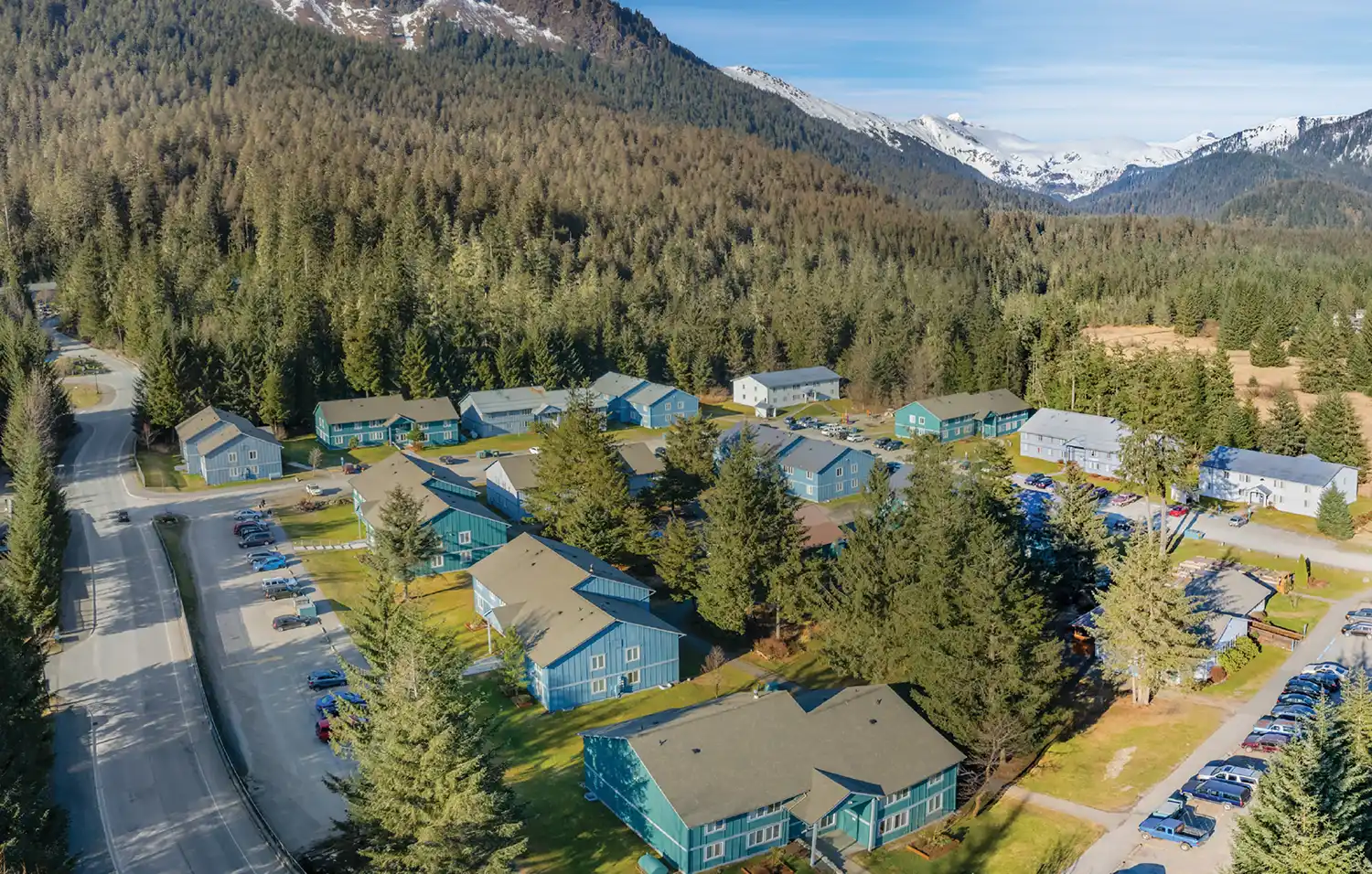
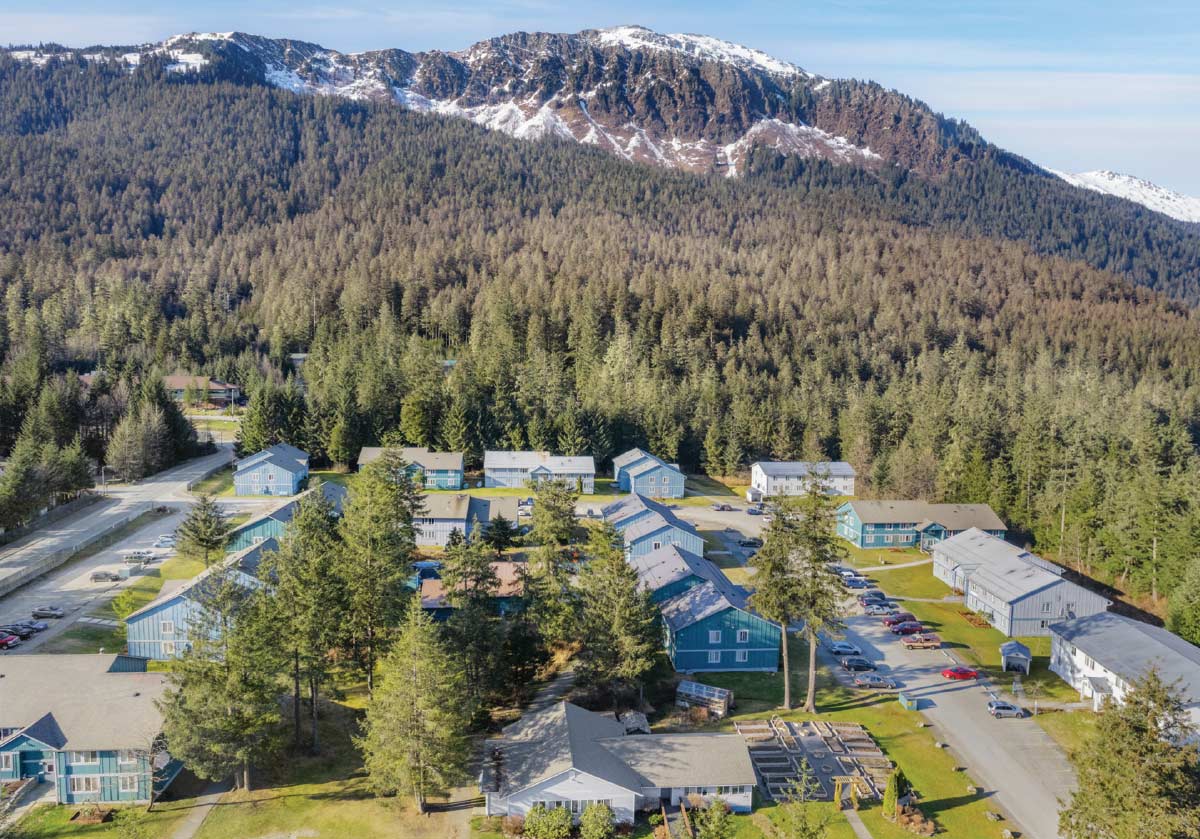
That’s basically what happened with Alaska Housing Development Corporation (AHDC), a Juneau-based nonprofit that develops, owns, and manages affordable housing. AHDC owns and manages 136 units in Juneau. Therefore, having adequate general liability, property, umbrella, and other insurance is critical for the organization’s ability to do business, according to Tamara Rowcroft, executive director of AHDC, a longtime client of Business Insurance Associates.
In 2024, AHDC was nonrenewed for coverage when the insurer it had been with for twenty-five years, Alaska National Insurance Company, ceased writing habitational exposures. The change in appetite by Alaska National—owned by Phoenix, Arizona-based CopperPoint Insurance—left AHDC scrambling to find a suitable replacement. The availability of state-admitted insurance companies for commercial property in Alaska is extremely limited, so it was stressful when AHDC was waiting to hear if it would procure another carrier, Rowcroft says.
Rowcroft feels that everyone in the rental business gets lumped in with all other kinds of rental property across the state. Yet many property owners in Alaska are committed to maintaining their rentals. AHDC, for example, keeps its units in “very good” condition, and they consistently score well on inspections, she says. “We spend quite a bit of money each year on maintaining the physical condition of our properties, including boilers and all the interiors,” Rowcroft elaborates. “It’s a huge job. We have a preventative maintenance program that we follow.”
Hale offers this advice to help property owners improve their chances of obtaining and retaining insurance coverage: “Make sure your electrical, plumbing, and roof are in good condition and updated. And make sure the building and surrounding area is free of trees and debris.”
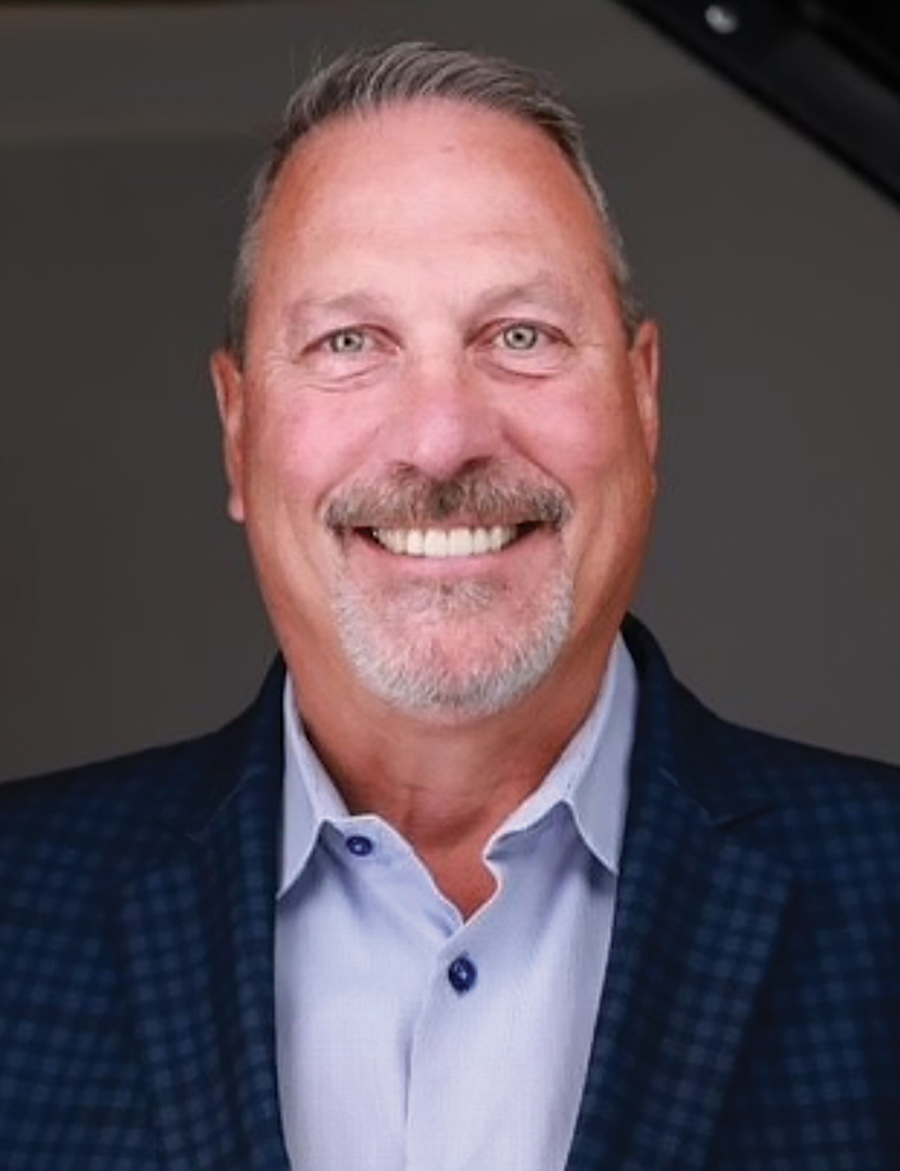
Hale and Associates
Pobieglo emphasizes that proper property maintenance begins with allocating enough funds from the start for long-term costs like roof replacements and ongoing upkeep. Prequalifying tenants can also be advantageous because it reduces liability risks. In addition, having a superintendent present and active onsite can catch maintenance issues early. “Whether it’s the owner or property management company, regularly inspecting properties to resolve anything that is problematic can help,” he says.
Not only can ongoing property maintenance help from an insurance standpoint, but it can enable property owners to avoid local code violations and unnecessary expenses related to noncompliance. For example, in October 2025, the Municipality of Anchorage passed AO 2025-93, which requires landlords to provide financial support to tenants when units are deemed uninhabitable by officials due to life safety issues.
Specifically, the ordinance mandates that landlords must provide displaced tenants with financial support equal to twice their monthly rent, along with refunds for any deposits or prepaid rent, within seven days of receiving the order to vacate. And in the most serious cases where landlords demonstrate deliberate neglect and repeatedly force tenants to live in unsafe conditions in violation of an order to repair or vacate the property, inspectors have the authority to refer these landlords to the municipal prosecutor for potential criminal charges.
The issue, Pobieglo says, boils down to keeping properties in better condition to optimize their functionality, safety, and insurability. The older the property is, the more critical it is for landlords to do proper maintenance. “If you don’t, you might find yourself having an extremely hard time finding coverage or at minimum finding decent coverage at a decent rate,” he says.