

Grows in
Downtown
becomes reality
hen The Wildbirch Hotel officially opened in June 2025, it signaled an era of revitalization in Downtown Anchorage. As the boutique property now nears full completion, the 200,000-square-foot hotel has become a catalyst for growth on surrounding blocks.
Construction was not without its challenges, however. When former US Senator Mark Begich and former Alaska Department of Revenue Commissioner Sheldon Fisher (partnering as MASH LLC) bought the property in 2020, it was at the beginning of the COVID-19 pandemic. Before the hotel could be renovated, the partners needed to raise funds for the purchase; and before guests could enjoy the accommodations, people displaced by the pandemic had to move out of the property, a former Holiday Inn then known as the Aviator Hotel.
“When we bought the building in mid-2020, people told us not to do it, but we saw an opportunity,” says Begich. “It had potential. It had good bones.”
The building’s previous owner decided to sell the property as he couldn’t raise the capital needed to take it to the next level. He also faced the challenge of the hotel’s site in a less desirable area on C Street—across the “imaginary line” that Begich says people rarely cross when staying Downtown.
“In any other city, this would be a great location,” he says of the centrally located venue.
The 252-room, extended-stay hotel already had thirty people in residence, yet Begich says it was lucky to have 10 percent occupancy during the winter months. Despite these drawbacks, the new owners decided to move ahead with the vision of creating a boutique property that would attract visitors and residents alike to a revitalized neighborhood.
“People were unemployed, fishing had shut down, so we said we would focus on having a certain amount of rooms available to help,” says Begich, who served as the general contractor on the guest room portions of the building. “That number continued to grow.”
At one point, approximately 250 unhoused people stayed in the older rooms on the property as construction went forward on renovating rooms in a different area of the building. “You could go down the hall and see thirty completed rooms, then walk through a solid-core, insulated door on the far wing where the remainder of these people were staying,” says Begich.
“Everything was under construction at one point,” he adds. “We had a temporary lobby, no restaurant, no conference rooms, no storage, and no kitchen. It was pretty wild, to say the least.”
Begich says it was important that the hotel provide shelter for those in need until the building could be completed. “My partner and I made a value judgement that this is something we could and would do,” he said. “The HUD [US Department of Housing and Urban Development] Region 10 secretary visited during this time and was very impressed; he gave us lots of kudos.”
The hotel’s affiliated company, JdV by Hyatt, wasn’t sure about this housing arrangement, and Downtown neighbors were confused as well. “It may have hurt us a bit at the beginning because they didn’t know if it was a hotel or a homeless shelter,” Begich says. “But once we opened, we used social media to spread the word, and by the end of summer, there were times when we were oversold.”
“The City worked with us unbelievably well; they wanted this building renovated for a lot of reasons,” says Begich, a former mayor of Anchorage. “Not only was it in disrepair, but they knew that a new hotel would contribute to the revitalization of this area of downtown Anchorage.”
The approximately $50 million project is the largest single-hotel investment from a renovation or new-build standpoint since 2000, Begich notes. Architects and design companies working on the guest room spaces included Anchorage-based KPB Architects (Buildings A and B) and 61northarchitects (Buildings C and D). California-based EDG Design was hired for the design of the entire complex.
UNIT Company, overseen by Fisher, built the public areas, such as the lobby, bar, restaurant, and conference rooms. Both the interior and the exterior of the building were completely reimagined.
“The outside is dramatically different; it went from a 1970s look to a 2025 look,” says Begich. “We also doubled the landscaping space to add a lot of color; five years from now, we want it to look like what visitors who come to Alaska expect to see.”
The renovation included additional insulation and triple-paned, commercial-size windows for heating and sound protection. The building now also co-generates its own energy through a combined heat and power system.
According to Begich, a natural gas turbine provides back-up power, and its waste heat can be harnessed for other systems, such as heating water. “This hot water is used for a variety of purposes, including domestic hot water, building heat, and, in our case, we even heat our sidewalks during the winter to prevent a build-up of snow and ice,” he explains.
“Areas that were supposed to be masonry walls turned out to be structural steel beams with infill framing,” he says. “We were able to make the windows on the south and west sides taller because what was supposed to be masonry wasn’t.
“There were a lot of mysteries from years of previous renovations,” he adds, noting that the building had many different iterations during its lifetime. “While this is not uncommon during remodels, you never know what you’ll find in a building from the ‘70s. Things get buried.”
“We had to cut new penetrations, redo the entire HVAC and plumbing system, as well as perform abatement” of hazardous materials, says Garsha. “A lot of times it was a complete gut.”
Because of the number of variables, UNIT Company shifted from a firm fixed-price contract, originally negotiated for replacing the entire roof, to a cost-plus contract to complete the commercial wing. About twenty-five crew members worked on the hotel during construction, which UNIT Company commenced in 2023.
Logic dictated a top-down approach. “For example, the lobby ceiling would normally have been the last thing we did; instead, it became the first one,” Garsha explains. Also, “Before we built the kitchen, we had to lift the pizza oven through a window on the second floor and then build the kitchen around it.”
Adding to the difficulty was the need to work around guests staying at the hotel once the first renovated rooms were completed.
“We wanted to meet the client’s needs to get it up and running and at least partially functioning, in order to get a revenue stream going,” says Garsha. “But we also had to respect the people staying there, so we couldn’t start making noise until 9 a.m. It was a challenge trying to retain a nice ambience for hotel guests.”
Part of the solution was to create temporary walls throughout the hotel to keep construction work out of sight. UNIT Company also set up barriers and built temporary walkways so that workers could enter and exit the hotel while keeping areas safe for guests and staff.
Rooftops were converted to create north-facing outdoor decks, and original Alaska art, designed by young, modern Alaskan artists, decorates the public spaces on both a permanent and rotating basis, with some art available for purchase.
All 252 guest rooms have been renovated from “skin” to interior, and Begich attests that everything within the rooms is custom designed, from the leather furniture to the bathroom tile. Although modern, the rooms were designed to radiate rustic warmth through the use of soft colors, medium-hued wood, and dimmable lights.
“We really wanted to bring the warmth… without hanging a bear rug in the room,” Begich says with a laugh. “These rooms have a very different feel; you can tell that we brought quality to the table.”
The Wildbirch Hotel
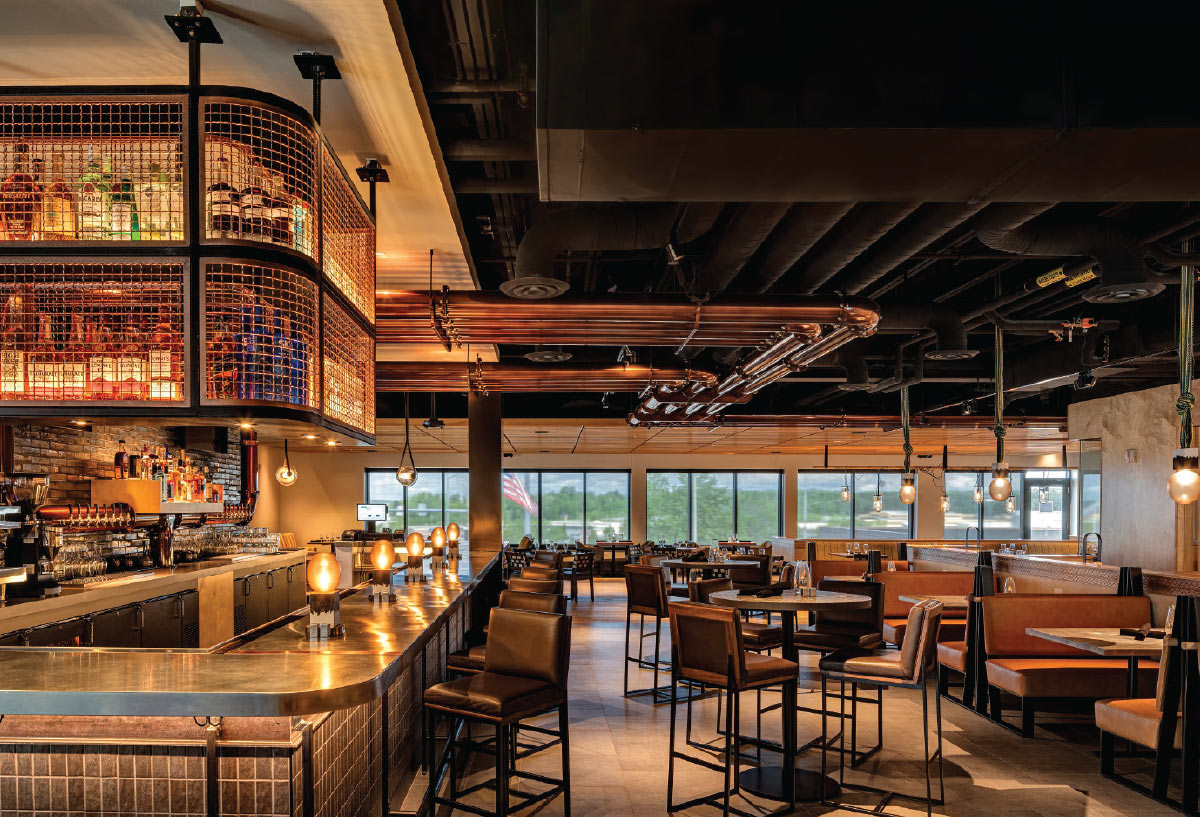
The Wildbirch Hotel
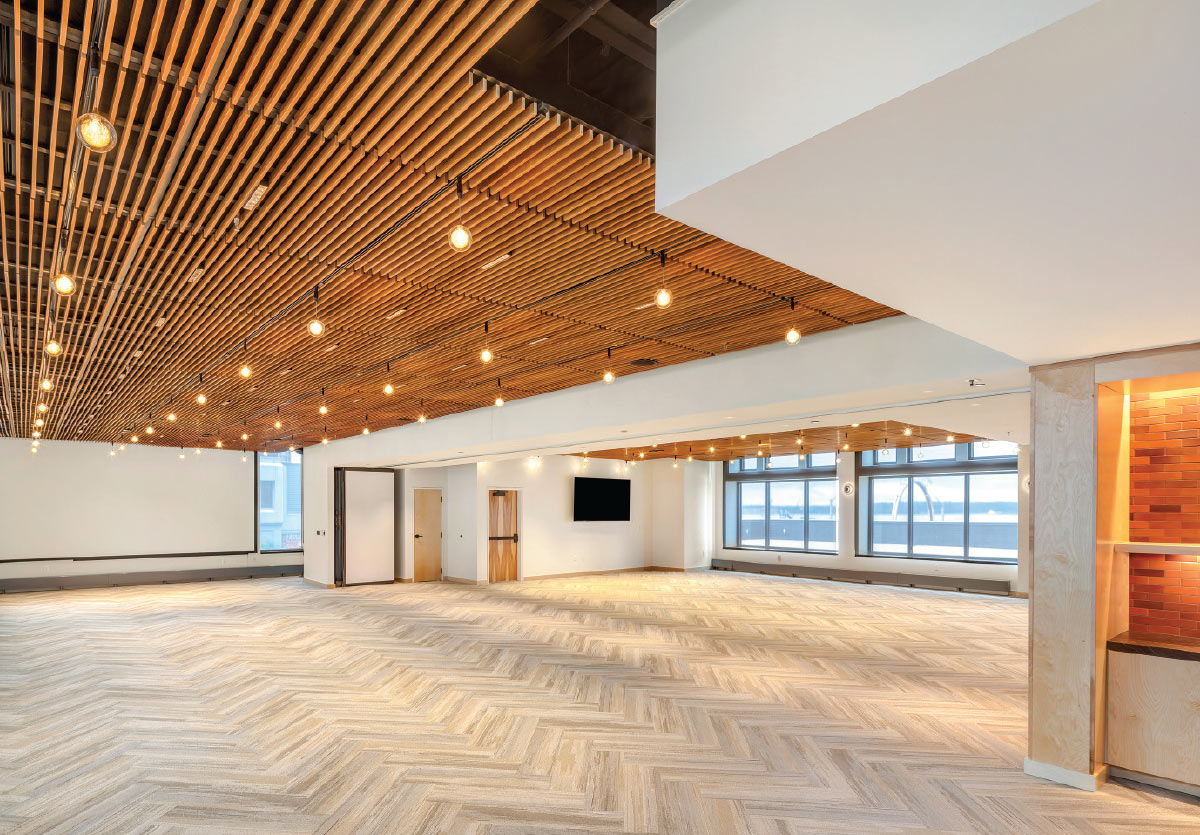
The Wildbirch Hotel
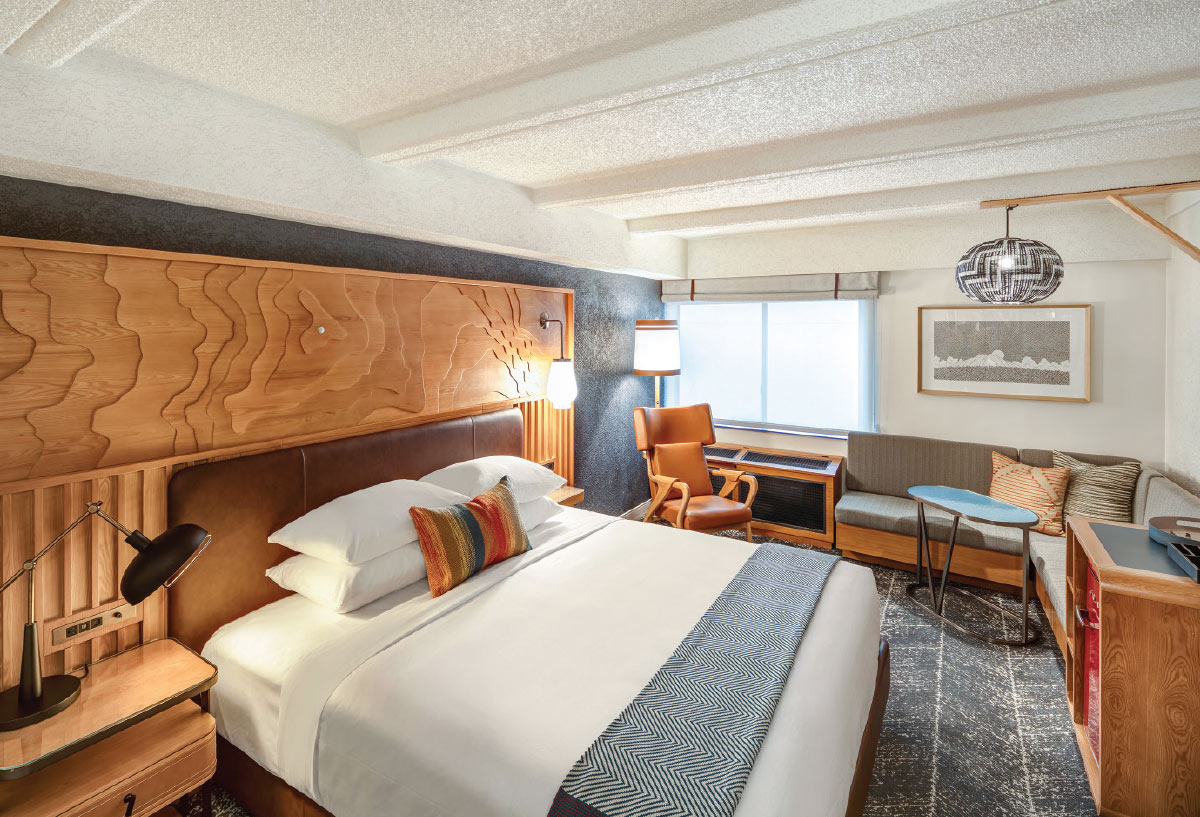
Special amenities include headboards featuring Denali in topographical relief, easy-to-access electrical plugs, and little red retro-styled refrigerators in every room. Begich even designed TV mounting boards that could be used universally throughout the hotel, resulting in easier maintenance.
“As the first boutique hotel in Anchorage, it’s a unique property,” says Begich. “It’s got that Alaska feel, but it’s not overkill.”
In January, just three steps were left before the hotel would be considered complete: crews needed to finalize four suites, complete a fitness center, and wrap up work on a microbrewery called Undertap, set to open on April 1.
“This was a three-dimensional construction project, with a ballet going on at each level,” says Begich. “At one point, we had six different trades working at the same time while still not interfering with the guest rooms that were already opened.”
Although supply chain issues did cause a few hold-ups during the COVID-19 pandemic—especially for electrical components and some glass and metal orders—Begich says the hotel ordered numerous furnishings in advance, which turned out to be a smart move.
“We were lucky because we own the building next door, which was the old Post Office Mall,” says Begich. “This gave us warehouse space so we could order whatever we needed from overseas before the pandemic really took hold.” And, he adds, procuring materials early let MASH LLC avoid last year’s import tariffs.
“There’s more going on here—we’re seeing more long-term development,” says Begich. “People are talking about how there’s more activity downtown, and we’re happy to be contributors to that. We’re proud to be a part of this community.”
The Wildbirch Hotel has also been named as the new headquarters for the 2026 Iditarod; a fact that Begich expects will attract its own unique visitors.
“There’s no better place to stay for the Iditarod, which starts on the street in front of us,” he says. “You can be in a third-floor room or attending a conference and watch the ceremony. We also have parking for 200 behind the hotel, which is a huge advantage because we can fit all the trailers and dogs.”
Between C Street and the Iditarod starting line on D Street, another Fourth Avenue property is gearing up for new life. MASH LLC is in the process of renovating the 88,000-square-foot Post Office Mall and is working on raising another round of equity. The $25 million makeover will feature fifteen residential loft-style condos on the top floor, as well as an open-market concept in the former mall storefronts. A supermarket and pharmacy is still part of the plan. Permitting is complete and demolition has begun on the second and third floors.
Begich anticipates action on the market phase by this spring, but by January a general contractor had not yet been announced.
It certainly could be UNIT Company again. Garsha is looking forward to further revitalization. He says, “What they created is a huge improvement for the Anchorage Downtown area, and I hope it turns out to be really successful. It makes the city I live in a better place.”