

edical transportation was once viewed mainly as a way to get patients to a hospital or clinic. Today, it’s increasingly part of the care-delivery system—extending the emergency department, intensive care unit, and even the outpatient network.
Advances in aircraft, onboard equipment, provider training, and mobile care models are expanding medical transportation across Alaska. Air ambulances and other transport services increasingly function as extensions of the hospital, stabilizing patients sooner, delivering more advanced care in transit, and in some cases supporting treat-in-place (TIP) strategies that reduce unnecessary hospital visits.
At the same time, providers face mounting pressures—ongoing Medicaid reimbursement challenges and the needs of aging and rural populations—that continue to shape how these services evolve.
Take Guardian Flight Alaska, for example. The company provides critical-care air medical services across the state, connecting patients in rural and remote communities to higher levels of care. “Our teams deliver advanced medical care at the bedside and during transport, often in challenging weather, terrain and time-sensitive conditions,” says Matthew Philbrick, regional director for Guardian Flight Alaska.
A division of Global Medical Response, Guardian Flight is one of the few air medical providers nationwide equipped to carry blood products on every flight. Earlier this year, it became the first medevac provider to carry blood products on the North Slope—an approach grounded in the realities of trauma care in time-critical environments. The company also carries blood products on board its aircraft based out of Fairbanks, Sitka, Juneau, and Ketchikan. “We expect this to become the standard of care for all medevac providers,” Philbrick says.
Guardian Flight also began expanding its Alaska fleet earlier this year, adding eight new Beechcraft King Air 350 aircraft, including long-range configurations designed for remote operations. The aircraft will add speed, range, and operational flexibility in the state’s harsh conditions, including the ability to serve shorter and more remote runways. “We continue to make significant investments in clinical capabilities, sustainable aircraft operations, leadership development, and partnerships that support higher-quality healthcare and system integration,” Philbrick says.
Guardian Flight’s investments are guided by a strategy Philbrick calls TIP.
According to the National Association of Emergency Medical Technicians, evidence-based, peer-reviewed studies show that many 9-1-1 callers do not need ambulance transport to an emergency room. TIP lets EMS providers apply—and be reimbursed for—their clinical skills regardless of where care is delivered or whether a patient is transported.
This care model is especially relevant to Alaska’s often remote locations, and it’s an important facet of the Alaska Department of Health’s plan for transforming EMS under the Rural Health Transformation Program (RHTP).
“EMS is often the first, and sometimes the only, point of contact people have with the health system,” said Alaska Department of Health Commissioner Heidi Hedberg during a recent webinar on the topic. “Strengthening EMS means improving health outcomes across the entire system.”
RHTP is a $50 billion federal initiative aimed at expanding healthcare access in rural communities nationwide. Alaska’s first RHTP budget period runs from December 29, 2025, to October 30, 2026, during which the state will receive more than $272 million for targeted, systemwide investments to improve access to care and support long-term healthcare stability.
“Our team at Guardian Flight is excited about the RHTP,” Philbrick says. “The Rural Health Transformation Program has the potential to strengthen access to care in underserved communities by supporting workforce development, infrastructure, and care delivery innovation. For Guardian Flight Alaska, it represents an opportunity to partner in solutions that improve access and coordination across the rural healthcare system, improve the patient’s experience with the healthcare system, and strengthen the healthcare workforce.”
An aging population has more complex and time-sensitive medical needs, Philbrick says, so Guardian Flight must be prepared. “Our nurses and paramedics are equipped to care for patients of all ages, including older adults with complex conditions, while safely transporting patients from rural and remote areas,” he says. “We work closely with hospitals, clinics, and ground EMS partners statewide to ensure patients reach the next appropriate level of care quickly and safely.”
The data related to Alaska’s aging population is “humbling” to Kailah Butters, owner of Wasilla-based Reliable Care Rides. The company provides non-emergency medical transportation (NEMT) to help patients in the Mat-Su get to medical appointments safely and on time. While the service is designed for individuals with mobility challenges or limited access to transportation, Reliable Care Rides serves a broad spectrum of customers.
“I launched this business expecting seniors to be our primary demographic, and they are not,” Butters says. “The majority of our clients are working-age adults and younger individuals navigating disability, chronic illness, and financial hardship.”
Founded in 2024, Reliable Care Rides has provided more than 3,000 round-trip rides for ambulatory clients traveling to physical therapy, behavioral health, radiation, infusions, substance treatment, and dialysis. These NEMT services fall into a distinct category of medical transportation. NEMT is pre-scheduled, non-emergency transportation to and from medically necessary appointments only, according to Butters.
“Some NEMT companies expand services to include wheelchair, Broda chair, or stretcher services, as we plan to in the future, but these individuals are medically stable and do not require medical intervention or care,” she elaborates. “Medical transport—emergent or not—with highly trained, skilled clinical staff like WEKA [Medical] or Alaska Medical Transport may have a nurse, EMT, or paramedic on board for medically fragile patients who require monitoring, often called EMS, critical care transport, or advanced life support and basic life support transport.”
Butters, who spent years working in the assisted living sector, is a strong advocate of aging in place. “Our elders should be supported to age in place with easily accessible wraparound services whenever possible,” she says. “Transportation is one of those services. It is what keeps our elders connected to their care, their community, their family, and their independence.”
Medicaid transportation covers travel to and from facilities for eligible patients receiving care that is medically necessary and authorized by their healthcare provider. Alaska Medicaid, for instance, pays for local ground transportation, such as a taxi, bus, or wheelchair van, to travel to and from medical appointments, either in Alaska or out-of-state, according to the Alaska Department of Health website.
But, as Philbrick points out, Medicaid reimbursement for air medical services has historically not reflected the true cost of delivering such a level of care in Alaska—particularly given the state’s geography, weather, and infrastructure challenges. “Across the state, Medicaid fails to cover the costs of air (or ground) ambulances,” he says.
Likewise, Butters has experienced low and slow Medicaid reimbursements for non-emergency medical transportation. She says Medicaid reimbursement is, without question, the most “destabilizing force” the industry faces. “Despite services being pre-authorized before the trip ever takes place, on average, it takes six to twelve months from the date of service to receive payment, if I even receive reimbursement at all,” she elaborates. “And yes, that means even with a pre-authorization there are instances when I may never get paid for my services.”
Part of the problem is how medical transport has been devalued over time, Butters says. When the state authorized taxi companies as NEMT providers, it created a perception problem that has never been corrected. “Dedicated NEMT providers set rates that reflect the actual cost of operating a specialized service, but when reimbursement takes six to twelve months, regardless of what we bill, the rate becomes irrelevant,” she says. “You cannot run a business on money you may not see for a year. The market has been quietly set by whoever could afford to accept the lowest reimbursement rate, and dedicated providers are the ones paying the price. The state itself has acknowledged Alaska’s transportation and healthcare access crisis, as evidenced by the Rural Health Transformation Program launched this year, yet the current reimbursement structure continues to drive dedicated providers out.”
Newer TIP initiatives are trying to change the traditional approach to reimbursement. For example, the US Centers for Medicare and Medicaid Services is encouraging the adoption of new care delivery models and to ensure providers are adequately reimbursed for these services.
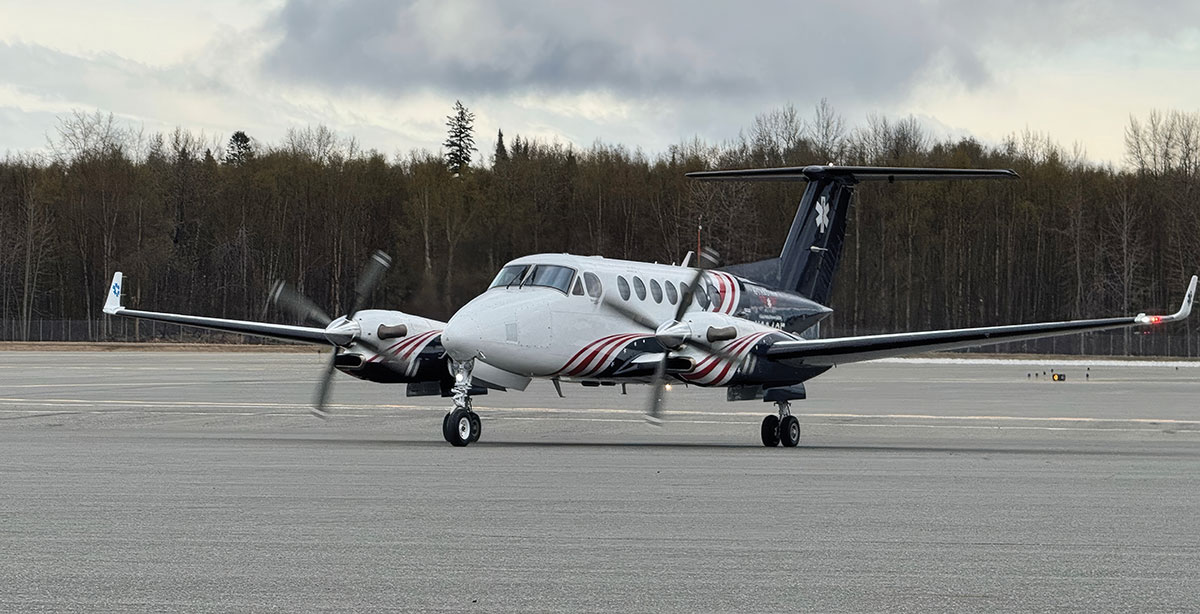
Guardian Flight Alaska
In Alaska, medevac flights are evolving to meet the realities of long distances, challenging weather, and limited access in rural communities.
“At the core of everything we do is a responsibility to be ready when Alaskans need us most—especially when time, distance, and conditions leave few alternatives,” Philbrick says. “Roughly 82 percent of Alaska’s communities are not connected to a road system, making air travel essential for medical emergencies, and, in many cases, the only way for patients to reach advanced, lifesaving care.”
Given these realities, Guardian Flight recognizes that emergencies can bring significant financial uncertainty for patients and families. Offering an air medical membership through AirMedCare Network is one way the company is working to reduce that burden—regardless of insurance status—so patients and families can focus on care rather than costs.
“Providing pre-hospital healthcare and transportation in Alaska requires adaptability, partnership, and a strong commitment to the communities we serve,” Philbrick says. “We are proud to be part of Alaska’s healthcare system and remain focused on continuous improvement.”