

he Engineering Excellence Awards honor projects that demonstrate innovation, creative problem-solving, and how engineering has a unique ability to improve the world. The projects listed here are nominees for the 2025 Engineering Excellence Awards for Engineers Week Anchorage, and the winner will be announced during Engineers Week, which is taking place February 22–28, 2026.
Coffman Engineers provided civil, structural, mechanical, and electrical engineering for the leachate concentrator system. Civil design included grading, drainage, and site utilities. Structural engineering focused on the building foundation, load-bearing supports, and seismic restraints for major components, as well as racks for electrical gear and a pre-engineered metal building to house the process equipment. Mechanical and electrical design incorporated a new underground service and main distribution panel, delivering power to the concentrator skid, HVAC systems, lighting, and heat trace circuits. Integration of these systems required precise coordination to meet operational and safety standards.
The facility uses methane from the landfill as its primary energy source, reinforcing sustainability while reducing dependence on external power. The system captures contaminants such as PFAS and zinc, protecting groundwater and surrounding ecosystems.
Since October, the concentrator has processed 600,000 gallons of runoff and is projected to save the borough approximately $270,000 annually. Funded through the Alaska Department of Environmental Conservation Clean Water Program, the $5 million project reflects advanced engineering and collaborative design.
Design began in 2023, and the ribbon cutting took place in November 2025, marking a major milestone in cost-effective, environmentally responsible waste management for the Mat-Su region.
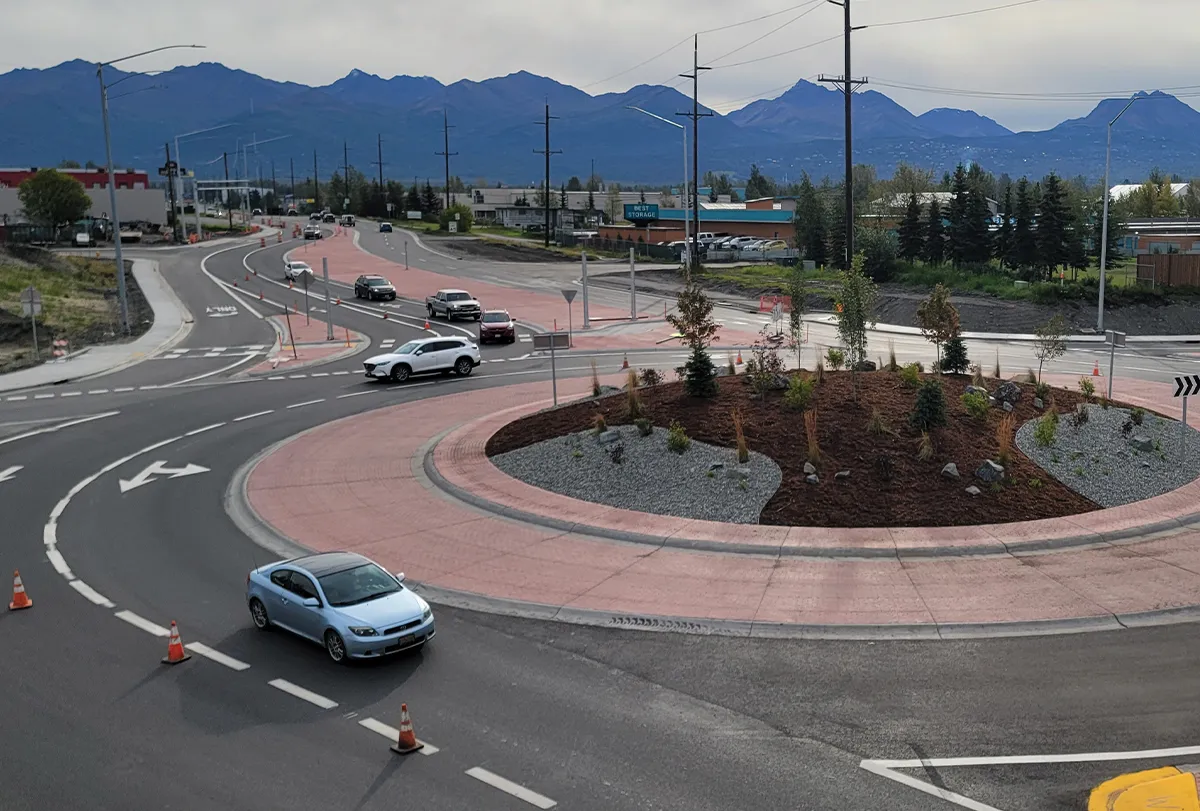
This project, derived from the larger program, included mainline expansion, a new bridge, major utility relocation, new roundabout terminals, pedestrian accommodations, and maintenance of traffic for approximately 70,000 vehicles per day. To match the mainline that had previously been constructed on either side of the interchange on the highway, the bridge over Dowling Road was replaced and the mainline was reconstructed from a narrow, substandard cross section to a full-width cross section that consists of six divided lanes, full-width shoulders, and median ditches. The project reconstructed the interchange roundabout terminals, increasing their size and relocating Dowling Road to the north to increase capacity. The intersection contains Alaska’s largest multi-lane roundabouts. Rectangular, rapid flashing beacons were designed to aid with pedestrian and bicycle crossings.
During construction, the Department of Transportation and Public Facilities accepted a contractor-proposed alternative traffic control plan. The as-bid traffic control plans had to be adapted quickly to close traffic on Dowling Road and still begin construction in May 2022. This change allowed the bridge to be built in nineteen weeks, the mainline to reopen in October of 2022, and the project to be finished a year ahead of schedule.
Coffman Engineers

Lounsbury & Associates
Reid Middleton
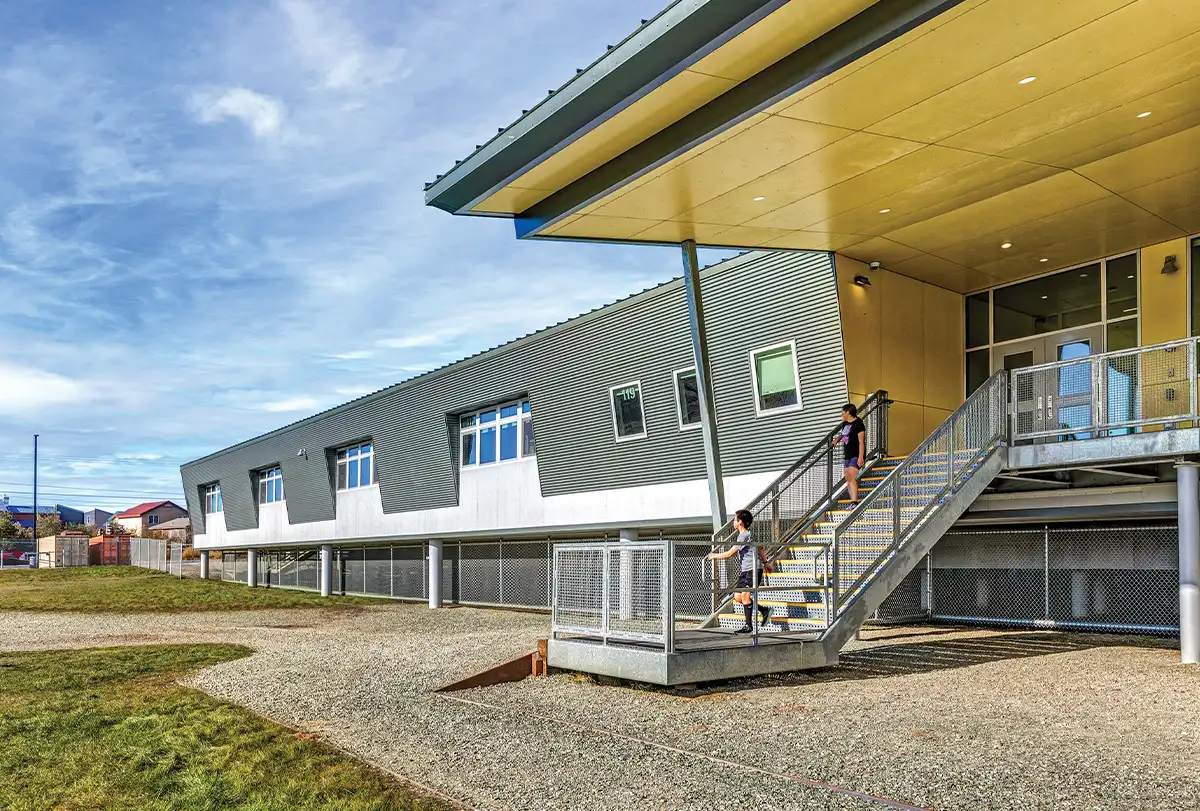
Most construction materials were barged up the Kuskokwim River. Design challenges for the project included the logistics of construction in western Alaska as well as the complex geometry of the structure, which features sloping walls and an irregular plan. To support the Lower Kuskokwim School District’s available funds, the building was designed so the gymnasium could be built separately if funding didn’t allow for the full facility to be built all at one time.
The new Ayaprun Elitnaurvik school met all the requirements of the Lower Kuskokwim School District—a constructable design that could withstand the climate of Bethel and provide space to celebrate the local heritage.