

Horizon
hile Alaskans aren’t seeing unmanned aircraft deploying cargo just yet, the idea of using this technology to deliver food, medicine, and even heavier payloads isn’t far away. In fact, according to Paul Quirion, director of operations for Everts Air Cargo, it is likely that the state could see some of these autonomous flights sooner than people might imagine.
“Our goal is to eventually accomplish operations—at least partially in the autonomous advanced air mobility world—in the next several years,” he says. “Realistically, we are looking at autonomy and systems that are involved with making pilotless flights safe coming to fruition within the decade.”
Certainly, Alaska is poised to pioneer the tools and techniques for long-distance cargo drones. “If not operating under the full-blown CFR, we will certainly be taking part in advancements including some of the test flying and mock segments here in Alaska,” he adds. CFR is the Code of Federal Regulations, specifically Title 14, which contains the rules for Aeronautics and Space.
Cathy Cahill, director of the Alaska Center for Unmanned Aircraft Systems Integration (ACUASI) at UAF, agrees.
“Lower altitude work, mainly flights below 400 feet, will be coming faster, though longer-distance larger aircraft, which is what we need in Alaska, will take a while longer,” she says.
She notes that the Federal Aviation Administration’s (FAA) Part 108 rule, a new regulation for routine Beyond Visual Line of Sight drone operations that was proposed in August 2025, has received more than 1 million comments.
“The FAA is in the process of going through and responding to those comments before issuing the final rule,” Cahill explains. “There will be more opportunity to do beyond visual line of sight flights lower in the atmosphere, but we’re looking at flying higher. In terms of larger unmanned aircraft operations, it will probably be five to ten years.”
According to Cahill, several companies are interested in automated cargo delivery in Alaska, including Everts Air Cargo.
“They are watching what is happening in this air space to determine what the potential could be,” she says. “But until we get to where we do not need to request special permissions to do each operation, carrying cargo is almost impossible to do under the current rules and regulations because it won’t be cost-effective. It’s a wait-and-see game while this technology undergoes testing to get it to the point where it is commercially viable.”
“We got involved pretty early with the hope that we can get these aircraft to a point where we could safely fly them to do a large range of missions: anything from long-range cargo delivery to medical supply delivery to mapping of natural resources, land, and animals,” she says.
Piloted aircraft are currently being used for these tasks, putting pilots and passengers at risk.
“All of us know biologists and pilots that have been killed doing animal surveys, and we want to take them out of these risky situations while getting the same quality data,” she says. “We want to be able to fly the entire Trans Alaska Pipeline looking for encroachments and leaks without a human pilot. That would be a major benefit in aviation safety, and that’s key for us.”
She notes that drones can fly in places where pilots can’t because of visual flight rules, including fogged-in communities and those that must wait weeks for the weather to break. As passenger and cargo transport businesses exit those markets, drones could supplement the capability of current aircraft fleets to serve more communities.
“These aircraft are constantly being monitored, and the pilot can take over and hand fly it if necessary,” says Cahill, adding that redundant links are used during testing of the aircraft to ensure that it is behaving appropriately. “We have multiple ways of controlling the aircraft, and our pilots are trained to look at the data to determine if it is safe or the aircraft needs to land.”
Flight plans for larger aircraft are also established to avoid general aviation areas; for example, not traveling over rivers or under 500 feet.
Cahill says the main challenge right now is ensuring that, when a drone flies out of the pilot’s visual line of sight, there is no risk of it hitting an occupied aircraft or any other obstacle.
“We are working with the FAA to enable either a system on-board the aircraft to spot other aircraft and autonomously avoid them or to use a ground-based system to make sure that, if the aircraft loses the link with the pilot in command, it has situational awareness to ensure that there are no collisions,” she says.
In 2019, ACUASI used a ground-based radar system to perform a true detect-and-avoid over the Trans Alaska Pipeline System with a small unmanned aircraft. It has also flown between a natural gas platform and the Kenai Peninsula carrying environmental samples for platform operator Furie Operating Alaska that was a true visual beyond-line-of-sight.
“By doing that full detect-and-avoid, we proved to the FAA that these aircraft can be safely equipped to be in areas with a lot of general aviation that is not broadcasting where they are,” says Cahill. “They are very protective of the national air space system, and we often say the regulations are written in blood—meaning that something unfortunate happened which resulted in regulations. The FAA is very risk-averse, so it requires a lot of proving out under new conditions before it will accept new technology.”

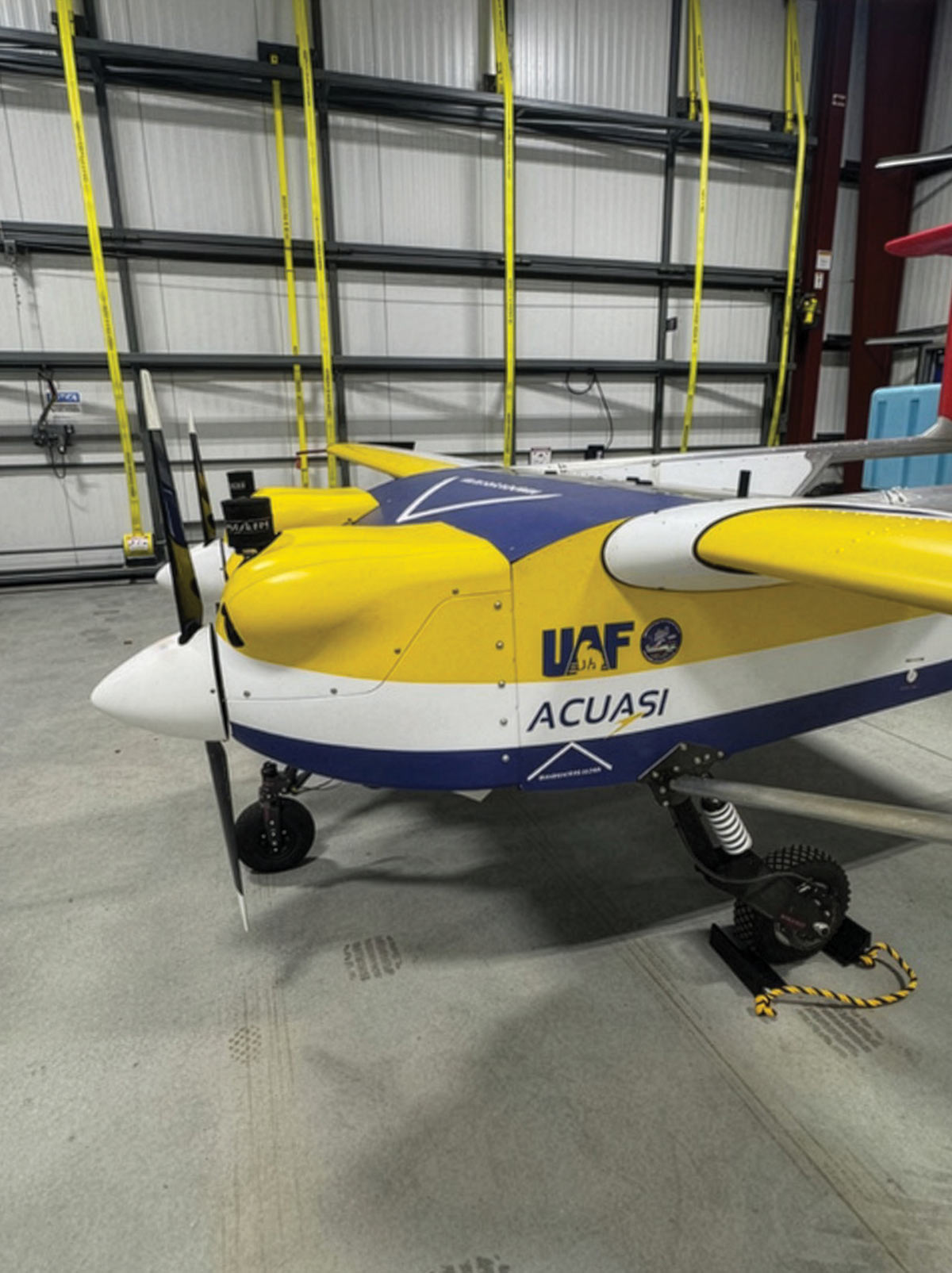
Alaska Center for Unmanned Aircraft Systems Integration | UAF
“We are working with a couple of companies to put radar on the aircraft to provide 360-degree coverage to guarantee that this particular aircraft can spot and avoid anything in the air if it ever loses the link,” says Cahill. “Keep in mind, we fly with redundant links at all times. We have radio line-of-sight links and also have satellite command and control links to ensure that we are always in control of the aircraft.”
Another issue is ensuring that flight data is protected through encryption or another form of data protection. “You have to ensure that the aircraft is not only flown safely but is resistant to hacking or jamming; cyber security is definitely an important area of research to ensure that no one can take the aircraft over for nefarious purposes,” says Cahill.
“We are looking at this from two different perspectives; large aircraft (Part 121) and small aircraft (Part 135),” he explains. “Most of what we are doing focuses on the 135 level, like smaller aircraft that would serve Bush communities downriver from Fairbanks, [as well as] the North Slope.”
He notes that the company is not interested in using drone aircraft for small loads, such as individual packages.
“We handle heavy freight, cargo, and bypass mail, so we are looking to invest our time into companies that are developing that technology,” he says. “We provide them with data, including movement rates (how often we frequent a market, how many airframe cycles, the amount of cargo per segment), so they can scale products and technology accordingly.”
He adds that Everts Air Cargo also shares its Alaska-centric experiences, including how to work in harsh environments.
While nondisclosure agreements do not permit Quirion to discuss the specific companies with which Everts is working, he says that the airline is looking at drones that are comparable in scale to carry cargo and freight weights in the 2,000 to 3,000 pound range.
The company is also interested in autonomous technology that can be incorporated into its current and standing fleet. “We want to render our fleet type autonomous by way of operating without a pilot and crew,” Quirion says. “That is ‘holy grail’ for us at this point.”
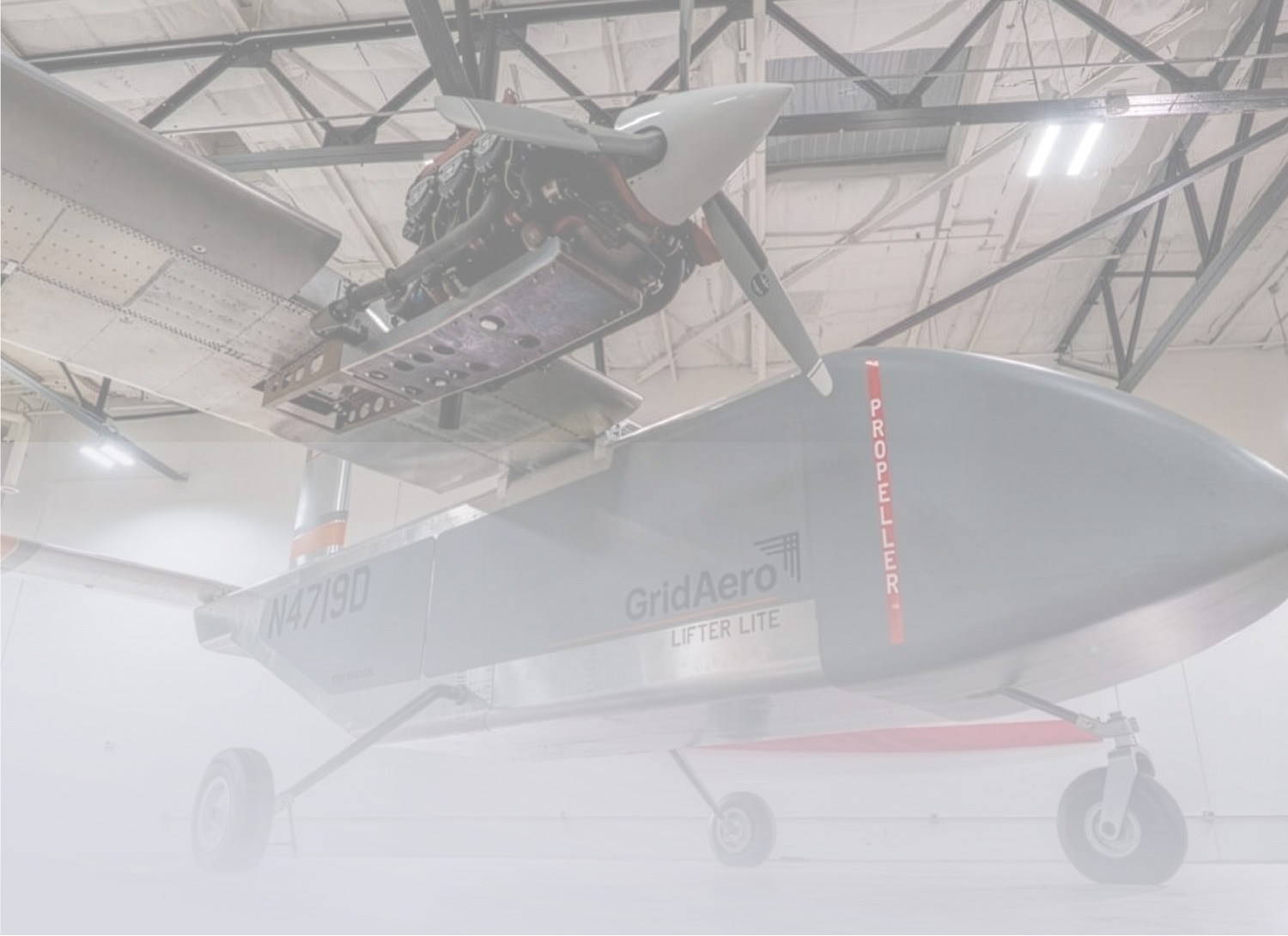
GridAero, an aerospace startup focused on building a resilient autonomous air cargo network, recently reported that it had received a letter of intent from Everts Air to deploy its Lifter Lite aircraft for freight and fuel deliveries across Alaska’s most remote communities. The Lifter Lite is designed as a long-range cargo drone capable of transporting substantial payloads across extended distances at a low cost—characteristics that directly address the challenges of serving these areas.
According to Quirion, whether using an autonomous drone or a certificated aircraft flying remotely without a crew, this technology could enhance human and aircraft safety.
“For example, the rules CFR airmen have to work under are highly restricted in terms of weather, with ceiling and visibility limitations,” he says. “Humans have limits, and the rules are written to incorporate what is safe and reasonable within those limits. An autonomous aircraft can operate under environmental conditions that humans cannot.”
By accounting for risks that non-human pilots can take, new rules could broaden the possibilities for aviation in Alaska. “You can land a drone or autonomous vehicle in 0/0 conditions because everything is GPS-based,” Quirion says. “That increases safety and reliability in terms of our schedule, and we will be able to frequent destinations that on an ordinary piloted day we would not even be able to dispatch.”