

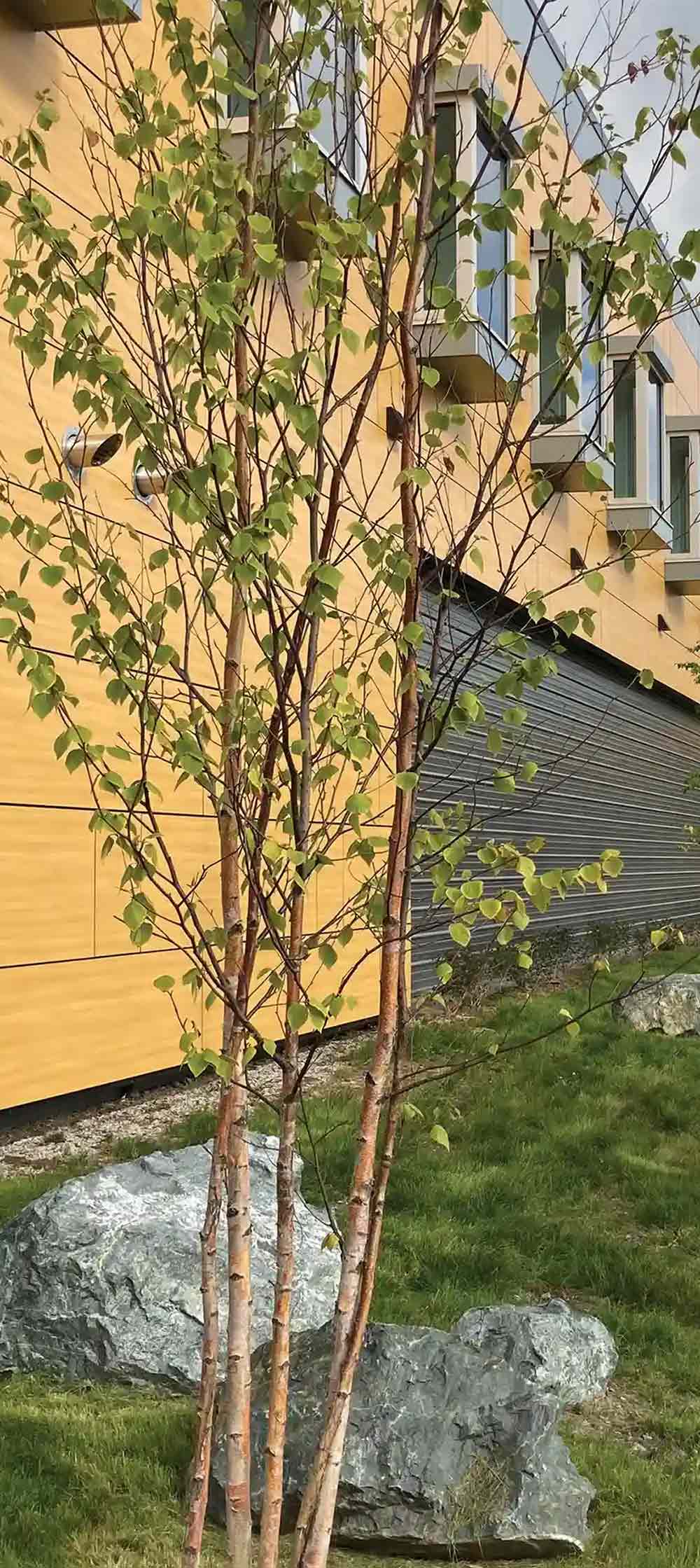
atural light pours through windows that frame the Chugach Mountains and into the newly expanded US Department of Veterans Affairs (VA) mental health clinic at Joint Base Elmendorf-Richardson (JBER). Rooms are intentionally arranged to feel open, not clinical. The color scheme is warm. It’s a space designed to calm and soothe—a place where healing feels possible.
For architectural and engineering firm GDM, a service-disabled veteran-owned small business (SDVOSB), the project was more than a typical expansion and remodel. It was a challenge in balancing clinical needs with pleasing aesthetics.
It was also an opportunity to fulfill a personal mission.
“I really want to provide excellent service to veterans,” says GDM President Will Gordon, a disabled combat veteran himself. “My mother worked at the VA hospital for thirty years. When she couldn’t find a babysitter, she’d bring me to work and sit me down somewhere. Ever since then, I wanted to be part of something like this.”
Gordon and his business partner, GDM Vice President and COO Conrad Chandler, purchased the company in late 2024. Their first year of ownership overlapped with the final phases of the mental health clinic expansion, a project that required nearly three years of construction and extensive collaboration with VA clinicians and leadership. What emerged was a modern, welcoming facility designed to meet the evolving needs of Alaska’s military veterans.
Meanwhile, Chandler, an engineer, was working under a three-year contract supporting the facilities team at the Alaska Department of Military and Veterans Affairs. The experience gave Chandler a firsthand look at how to design with veterans in mind.
“It’s meaningful work,” he says. “I learned a lot about all the nuances in these active VA hospital environments and their workflows.”
VA work eventually brought Gordon and Chandler together. A friendship grew, and then a partnership: the two teamed up to buy GDM, a firm that had been established in 1972 and underwent a key transformation in 2018 when a merger led to its status as an SDVOSB. That change opened a new chapter—one involved heavily in federal and veteran-focused projects across the country.
“Having the SDVOSB status has enabled us to go from working within Alaska to working all over the country,” Gordon explains. “We work in Hawai’i, Maine, the Dakotas, Montana, Birmingham, New Orleans—all throughout the Lower 48 now.”
More recently, the company was tapped for a $14.8 million expansion of the Alaska VA Mental Health Clinic at JBER. GDM provided full architectural and engineering services, self-performing the design, civil engineering, and mechanical engineering. G2 Construction sub-contracted the construction effort, and Coffman Engineers commissioned the project and performed the fire protection design. Kramer Gehlen & Associates of Vancouver, Washington, provided structural engineering.
Jamey Bradbury

The addition included individual counseling rooms, telehealth suites, exam rooms, group therapy spaces, and collaborative work areas for VA staff.
But the design intent went far beyond square footage.
“A lot of the client’s goals centered around controlled access and safety requirements for mental healthcare, without creating too much of an institutional feel,” Chandler explains. “Balancing those objectives was a major design challenge.”
The solution required repeated engagement with the people who would eventually use the space: clinicians, mental health providers, administrators, and facility managers.
“It was a totally collaborative approach,” Chandler says. “We had multiple user-group meetings, onsite planning sessions, and design workshops to understand what the end users truly needed.”
GDM’s extensive history of providing design and engineering work for VA facilities brought a unique understanding of the balances that must be struck when approaching a project like this one: no matter how beautiful the design, it still has to meet safety and security standards.
“When designing a mental health facility, you want it to feel warm and welcoming,” Gordon says. “Colors matter. Materials matter. But you also have to meet code, safety requirements, design-guide criteria. Putting those together in a way that works for everyone—that’s the challenge.”
The new building addition would also displace a significant amount of parking, so GDM phased the project to complete a new parking area prior to starting construction on the addition.
Seismic resiliency and the interaction between the existing building and the new structure provided the design’s most technical hurdle.
“We had to account for differential movement between the two,” Chandler says. “In Alaska’s seismic zone, the way these buildings interact during an earthquake is critical. There was a lot of coordination required between the architectural and structural design teams on the seismic joint between the buildings.”
Inside the building, Chandler wanted to capitalize on access to natural light. Floor-to-ceiling windows invite daylight and mountain views. But sunlight—even during Anchorage’s short winter days—brings its own challenges.
“When you have open sunlight hitting materials, it can create reactions with volatile organic compounds (VOCs),” Gordon says. “That can cause odors or make people feel unwell. You have to be thoughtful about carpets, couches, everything.”
Years of environmental health experience at the VA taught him how easily a beautiful space could become a complaint. “You’ll get a phone call from a nurse who doesn’t feel well and doesn’t know why,” Gordon says. “Usually, they’re in a room with so much sunlight, and all these materials are interacting with each other. So [in our design] we specify green materials without VOCs to avoid those issues.”
The clinic also required specialized acoustic treatments, especially in telehealth rooms and group therapy spaces, where privacy and sound control are paramount. Acoustic wall panels provide sound-dampening in those rooms, and privacy-screening millwork at the waiting and check-in areas make clients feel comfortable and protected.
Jamey Bradbury
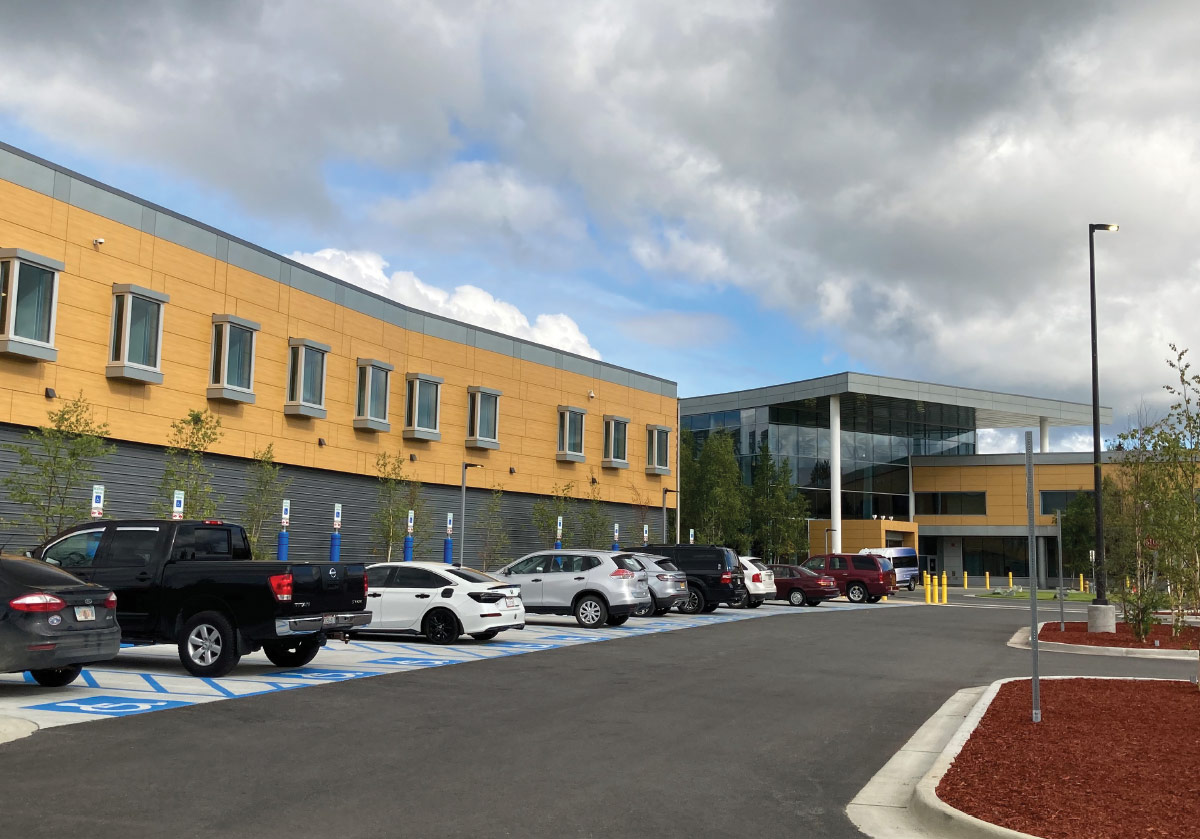
“One of the biggest design constraints is balancing the footprint you need with the setback requirements,” Chandler explains. “We want to minimize impact to the parking and existing services but still meet all the physical security standards.”
Within those restrictions, GDM prioritized creating spaces that feel human, not clinical. That’s part of the firm’s broader design philosophy: safety first, but never at the cost of dignity or comfort.
Alaska is home to the highest concentration of military veterans in the country; nearly 10 percent of the state’s residents are vets, compared with 5 percent of the population nationwide. The Alaska VA healthcare system serves more than 38,000 veterans statewide—a number only expected to grow as military recruitment numbers have gone up since 2024.
Many of those veterans will require mental health services.
“Especially with the post-war veterans from Iraq and Afghanistan, mental health is a huge priority,” Gordon says. “We designed this space anticipating future growth.”
At the ribbon-cutting ceremony, Gordon saw the impact of the GDM’s thoughtful design firsthand.
“Everyone was pleased,” he says. “The staff are grateful. The veterans like it. People finally have the space they need to do their work comfortably.”
The expansion also resolved everyday pain points for clinicians and staff. Flexibility to meet growing demand is built into the treatment spaces, which can be reconfigured as needs evolve.
“Before, it was a much smaller clinic,” Chandler explains. “Now people have their own office or workstation. Having your own space—it really matters.”
For Chandler and Gordon, this project was about honoring the veterans they’ve spent their careers supporting.
“Veterans deserve places like this,” Gordon says. “Spaces that help them feel calm, safe, and taken care of. We’re grateful we could help make that happen.”