

MARK PFEFFER
CEO
Pfeffer Development
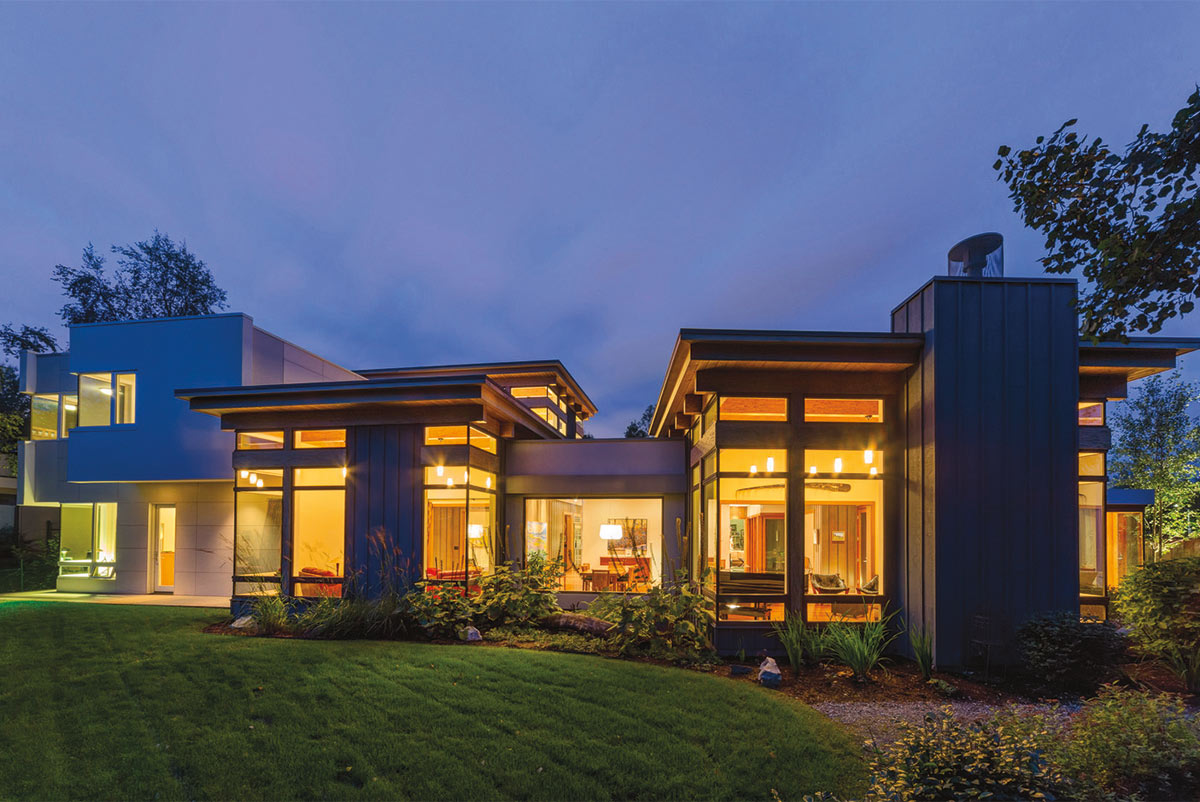
n 1964, Alaska was hit by the strongest earthquake ever recorded in the state, which left huge swaths of destruction behind. One of the hardest-hit areas was the Turnagain neighborhood in Anchorage, a subdivision built in the ‘50s, where huge chunks of the neighborhood fell into the ocean. Although the area was rebuilt, its history remains, notably in the home of Mark and Desiree Pfeffer.
Mark Pfeffer, founder of the firm KPB Architects, designed the house himself. “When we broke ground, we found the ruins of houses from the ‘50s that had slid onto this lot during a landslide, so the concept was to rejuvenate those structures and fill in the gaps around them with new construction,” he says.
Because the original houses had three different types of siding, including shiplap, board and batten, and asbestos shingles, Pfeffer incorporated board and batten into the exterior of the house as well as in the interior.
“When people visit my home, they wander through and wonder why things are certain ways,” he says. “When I tell them the story of the site, they think it’s really cool and they share the story with others. Apparently word has gotten around.”
The result is a home that resembles, inside and out, a conglomeration of houses that once stood in the Turnagain neighborhood. Each room is tilted and swiveled, as if tossed by the force of the quake.
“While not everything I design starts with a story, when I was lucky enough to find this lot, it was the perfect opportunity,” Pfeffer says.

KPB Architects

“The building required fairly extensive renovations to make it safe for students, but while doing that, we had the opportunity to refresh the school and inject their neighborhood story into the architecture,” says Jennifer Midthun, an associate at the firm.
She says BDS Architects often integrates stories into their designs. “Architecture has this ability to say a lot about the person or the organization it represents; you can imply a lot about your culture, your thought processes, and your feelings about a subject through a building, so we try to integrate this storytelling into our work fairly regularly,” Midthun explains.
For Eagle River Elementary, designers drew inspiration from the school’s established symbols. “Their school mascot is the eagle, and their motto is ‘From eaglets to eagles, our students soar to new heights in education,’ so we decided to incorporate that into the building.”

Above: BDS Architects | Below: Jay Jumanan
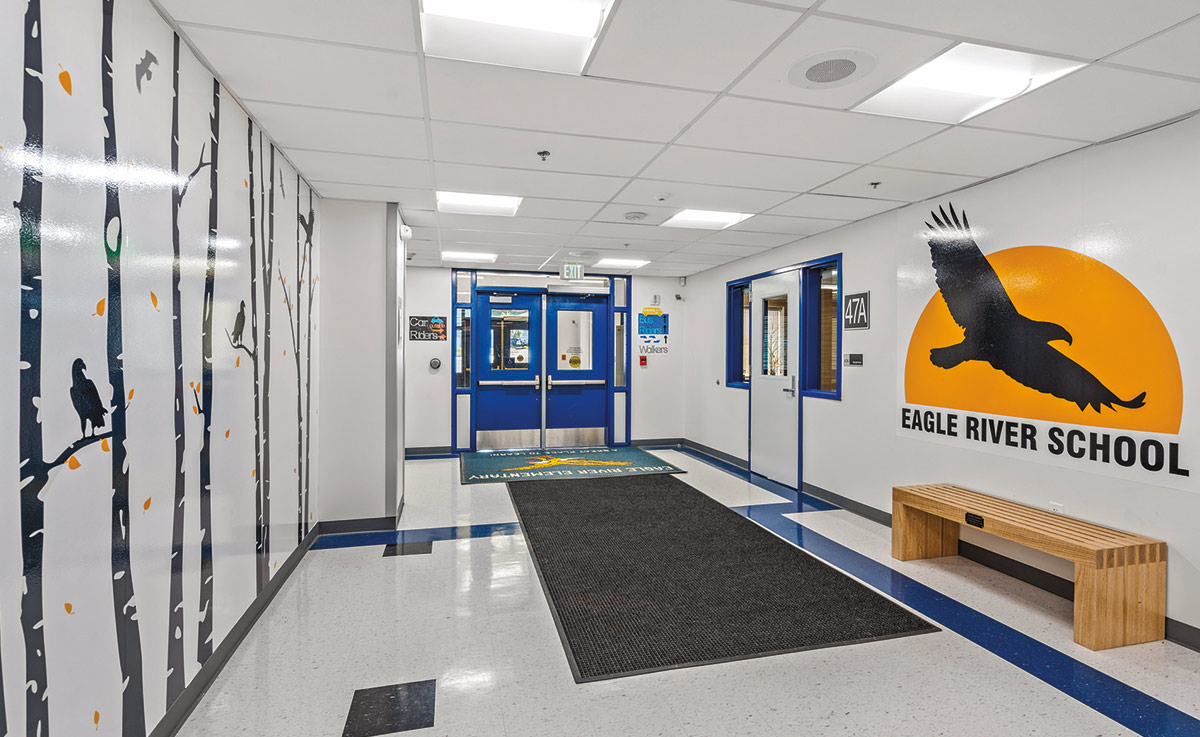
Working with school district stakeholders, the firm chose a photo of an eagle sitting in a birch tree as a starting point in their design. Motifs of eagles nesting and flying can be found throughout the school. Designers incorporated the bright gold color of the birch’s autumn leaves into the building’s interior and exterior, and a landscape architect planted birch trees in front of the school.
Outdoor spaces are often carefully considered as a stage to demonstrate an organization’s narrative.
“We build stories into the landscape,” says Peter Briggs, founder of Corvus Design, which works on a broad cross-section of projects from playgrounds and trails to corporate offices, libraries, and museums. “They can be used as a design theme, helping you to organize the way you look at a site and providing inspiration.
“Some projects are your bread and butter, like parking lots and metal buildings that don’t leave much room to tell a story; they’re just very functional sites,” he adds. “But when you move beyond the functional, at a minimum, a story or design theme is important to tie things together and help you make design decisions.”
He adds that the Russian Jack project was especially meaningful, as it replaced old, dilapidated tennis courts and an abandoned restroom building to create a playground for a diverse neighborhood that had been underrepresented from a parks perspective.
Briggs says discovering what clients really want sometimes requires extra work. “Every project is different, and you have to figure out with each client what the best way is to get information out of them,” he says. “Some clients are familiar with the design process and others are not, so you have to be more foundational to bring them along in the process.
“Often when people tell you what they think they want, you have to go deeper than that, to make sure that the design outcome solves a problem or meets a desire,” he adds. “Whether we’re working with a school or a community organization, we adapt what we do to them.”
Corvus Design
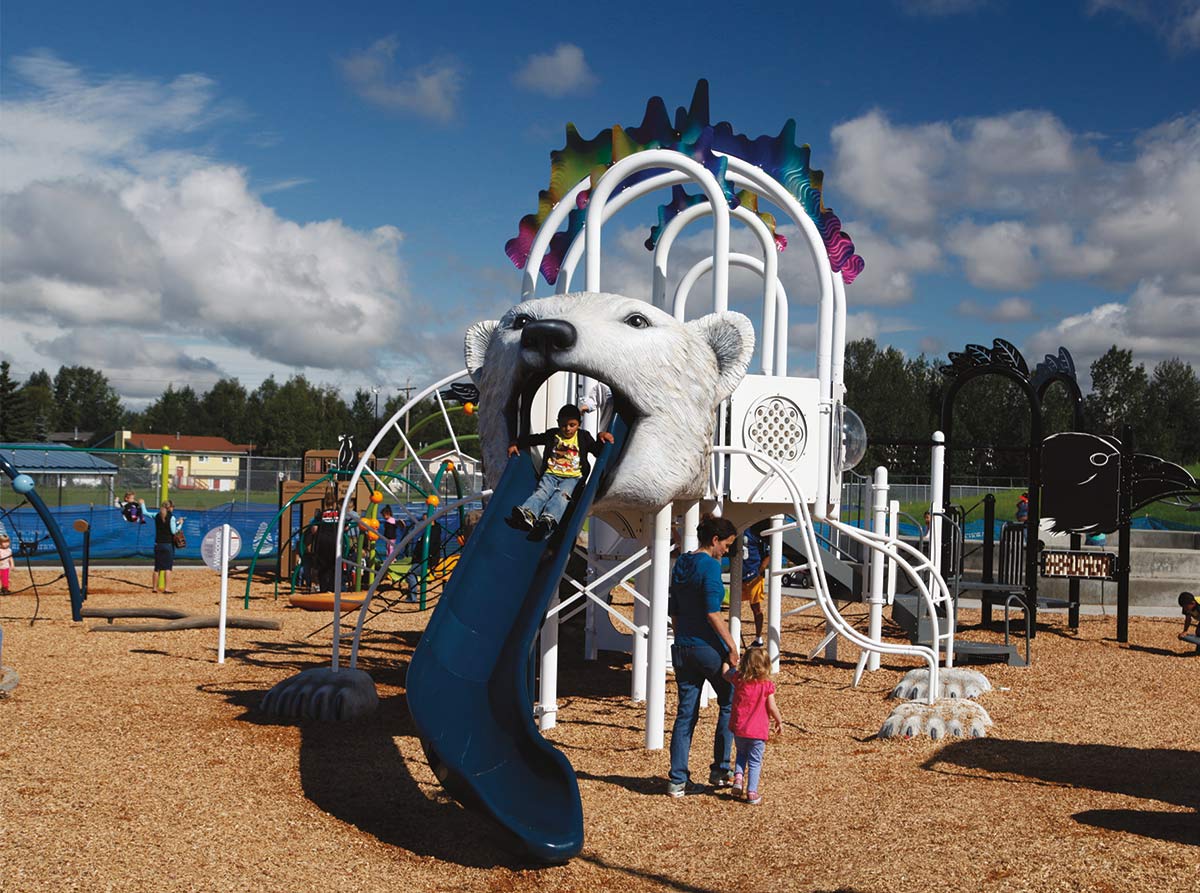
“When people show up and see the outcome of their input, the designer should become invisible,” he says. “But that’s perfectly fine because it’s great when a kid or adult can see their involvement in the process right in front of them. Ideally, they’ll interact with the story naturally as something of theirs—they’ll just get it.”
He notes that while some stories can be shown quite literally, such as pavement created to look like a river, other stories may be more abstract and might not be as obvious at first glance.
“When we’re doing fun projects like playgrounds, especially when combined with tribal entities as clients, it gives us lots of room to tell stories,” he says. “I jokingly call myself the landscape whisperer; I listen carefully to what a client has to say in order to identify the stories they want people to see or experience in their site and landscape.”
“I love the multiple levels of meaning that can be possible on a well-designed site; every time you go there, you should find new things,” Briggs says. “The first time, you may see the literal concrete braided river channel; the next time, you might spot the boulders in the landscape representing something of importance. I think that sites are best when you can’t understand them with just one visit; every visit gives an opportunity to experience and learn new things.”
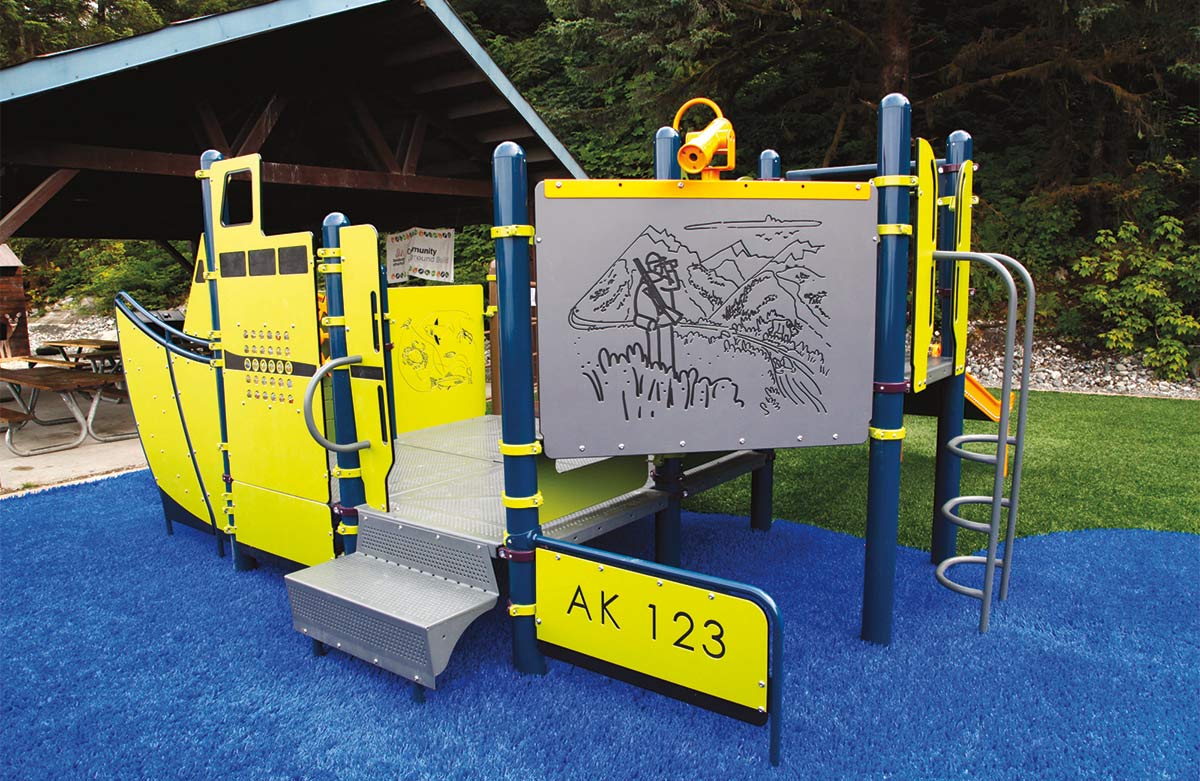
When designing the City of Yakutat Playground, which is located on the town’s waterfront, Briggs says meetings with the tribe and local school children helped devise a customized look based on their stories.

Corvus Design

Corvus Design

The playground is fully inclusive, and the design includes a wharf with a boat, a crab trap, and artwork for the fish that are caught in the area. “With such place-specific design, we hope that we provide a framework for kids to play and use for their own stories and be open to reinterpretation as well—in a child’s mind, that boat might become a spaceship,” says Briggs.
The campus of the Alutiiq Center near Midtown Anchorage, which is the headquarters of Afognak Native Corporation and its subsidiary, Alutiiq, doesn’t have much room for landscape flourishes, but they are there for visitors to appreciate. KPB Architects infused the site design and the five-story building with images of Afognak Island and the region of the Alutiiq people.
Pfeffer explains, “The grass basin in the front of the building represents the ocean, and the walkway to the front door is reflective of a ramp going out to the docks. The whole building is set in a basin, and it’s easy to imagine an island out in the water; it’s a very beach-like landscape.”
Further, the Alutiiq Center’s walls proclaim its heritage to passersby. “One of the most striking features of the building is the exact replica of four ancient petroglyphs found in the Alutiiq region, which go back more than 5,000 years,” says Pfeffer.
Storytelling elements aren’t always so literal. For example, KPB Architects designed the downtown Fire Station #1 in Anchorage with a focus on public duty combined with private lives. A workplace where employees eat, sleep, and work in 24-hour shifts suggested a metaphor: “The story behind the design is that firefighters are a brotherhood, similar to monks in a monastery,” Pfeffer explains.
Corvus Design

The metaphor might not be obvious from the curb, but the story is there for anyone to read it.
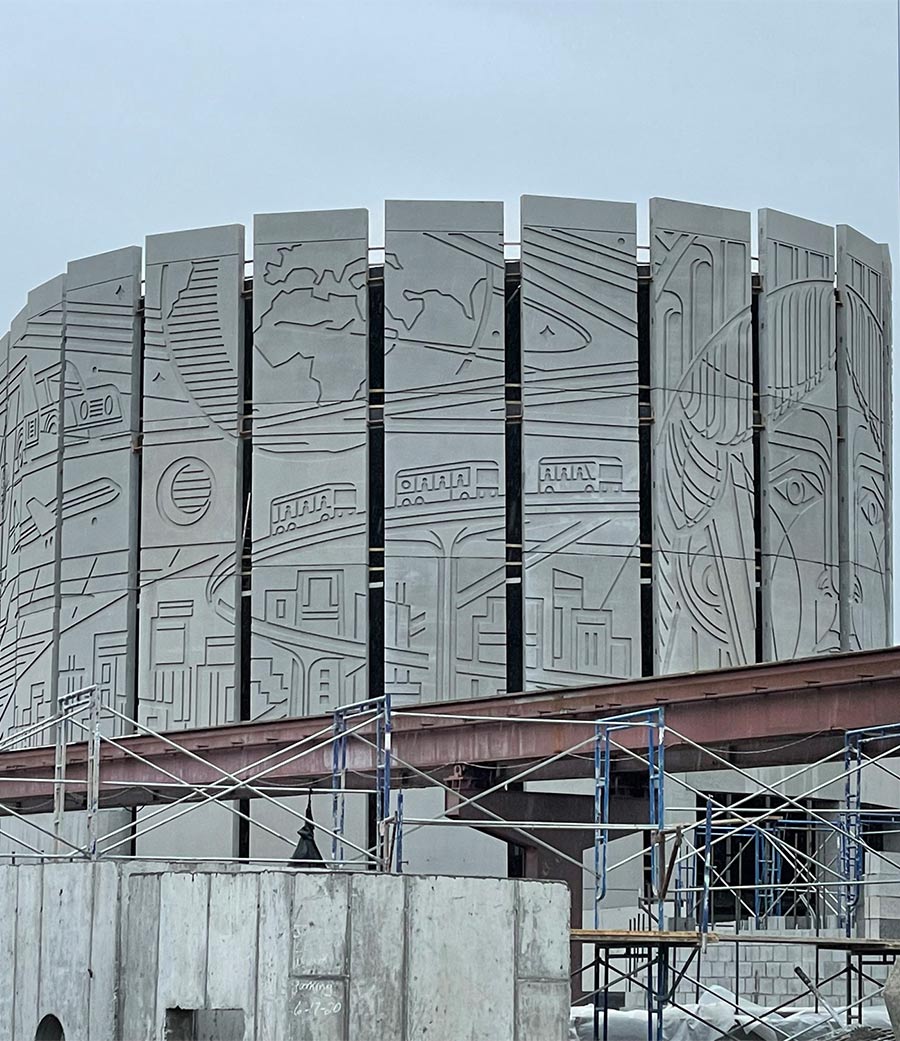
Pfeffer launched the first privately developed rental car center in the country in Anchorage, and he followed that up with similar buildings nationwide. The 3.5-million-square-foot rental car center in Newark is his latest. It opened in November, showing off a seven-story helix that serves as a canvas for a cast-in-concrete mural.
“This is an example of a building literally telling a story, showing all of the kinds of transportation related to the airport,” explains Pfeffer. “I based the idea on the History of Cinema mural at the Cinerama Theater in Seattle and worked collaboratively with Don Clark of Invisible Creature Studio, the artist for Cinerama.”
Corvus Design


Above: BDS Architects | Below: Mark Meyer

Mission-based design is one approach that BDS Architects uses to embody the purpose of a client’s space, according to Midthun.
For example, on a project for Access Alaska, a nonprofit that serves the disabled community, BDS Architects made sure that the building held true to the organization’s mission statement, which is to encourage and promote the total integration of people who experience a disability, and for senior Alaskans to live independently in the community of their choice.


Mark Pfeffer


By designing the building to be fully utilized by those with disabilities, BDS Architects was able to share Access Alaska’s story and demonstrate that any company could remake their own space to be disability friendly.
“Not only does it show that if we can do it, you can do it, too, but on a different level, it makes the community more comfortable within that building,” says Midthun. “If a building reflects a person’s story, they’ll feel welcome. It still has to be functional, but making that building feel good to the people using it ensures that they’ll actually use it.”