

oughly 850 miles separate Utqiaġvik, at the northernmost tip of the North American continent, from Old Harbor, a village south of Kodiak. In Lower 48 terms, that’s as far as Minneapolis, Minnesota, from Dallas, Texas—farther, even, because no year-round roads connect to Utqiaġvik, and Old Harbor is, of course, on an island. But that separation can’t prevent each community’s village corporations from working together.
Ukpeaġvik Inupiat Corporation (UIC) subsidiary UIC Nappairit completed work in March on the Nuniaq Community Center and Tsunami Shelter, fulfilling a long-held vision in Old Harbor for a gathering place during times of celebration and times of danger.
Known as “the people who build,” UIC Nappairit specializes in remote projects involving dynamic challenges of extreme climates, complicated logistics, and minimal resources. The Nuniaq Center fit the bill perfectly.
The local economy centers on commercial and subsistence fishing, supplemented by hunting and small-scale tourism. Traditional practices of harvesting fish, deer, and marine mammals continue, as well as gathering wild plants, clams, and berries. The landscape is rich in wildlife, including the famous Kodiak brown bears, sea lions, puffins, and eagles.
“The surrounding waters and mountains provide both sustenance and a strong sense of identity,” Berns explains. “Though the community faces challenges common to remote Alaska villages, it remains grounded in cultural heritage, resilience, and stewardship of the environment.”
The village of Old Harbor was devastated by the 1964 magnitude 9.2 earthquake and following tsunami, which destroyed nearly every building and forced families to relocate until homes could be rebuilt. The upheaval also allowed residents time to rethink how to live safely along Alaska’s coast.
“Today, similar challenges face communities in western Alaska as storms, erosion, and flooding destroy homes and force relocation,” Berns says. “The parallels are striking—both experiences highlight the deep emotional and cultural toll of displacement and the resilience required to start anew.”
Planning for the facility took almost two decades due to the community’s focus on other infrastructure priorities, funding challenges, complex site selection, and the need to coordinate with multiple partners.
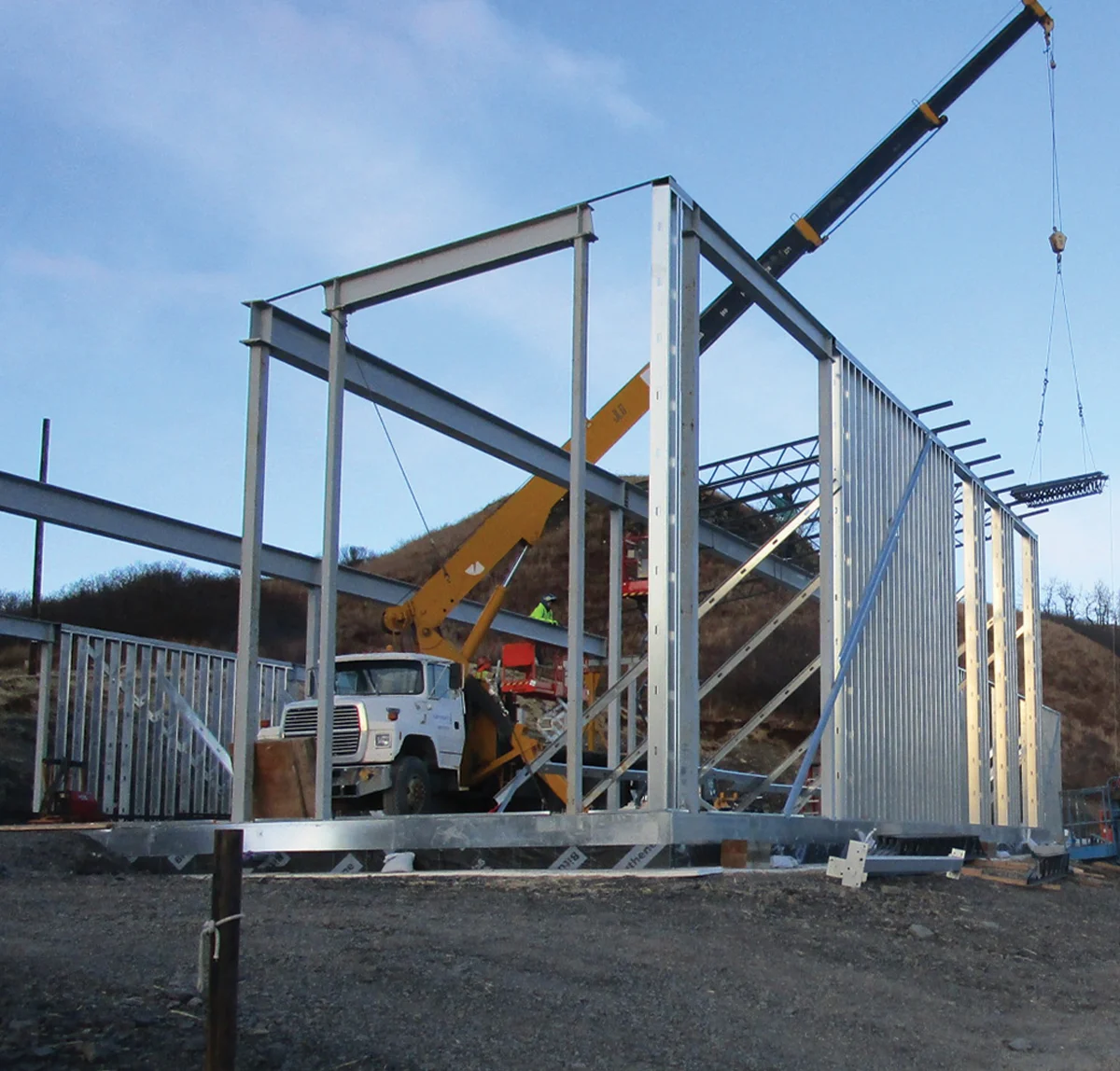
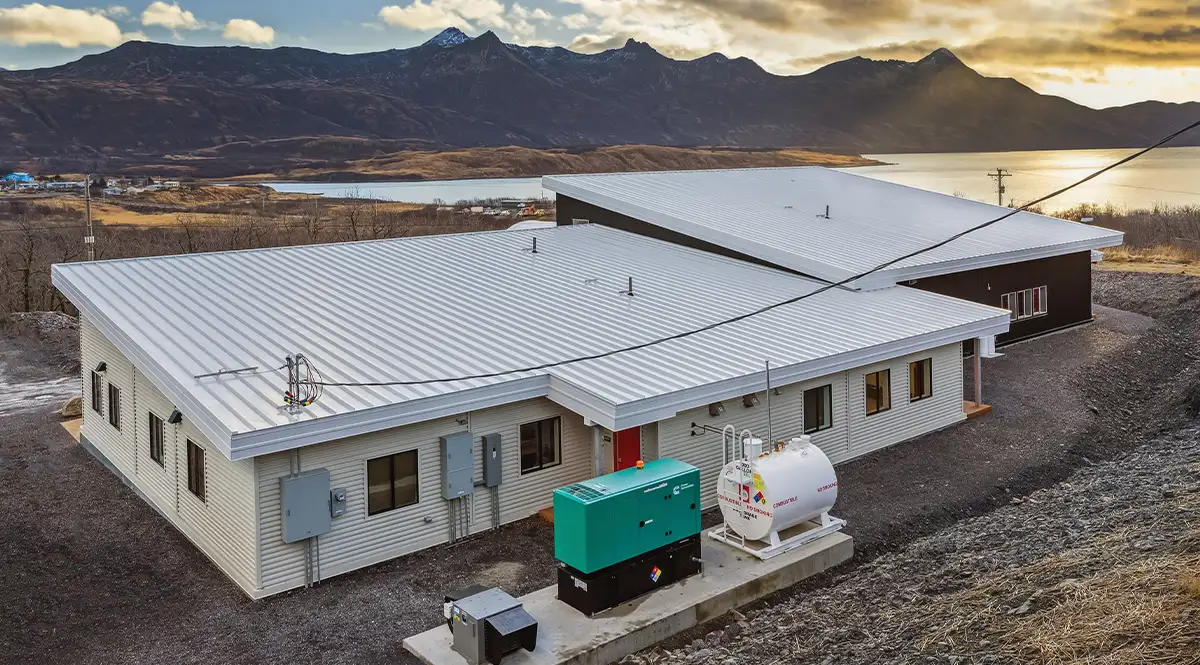
Following a competitive bid process, UIC Nappairit began mobilizing crew and equipment to the remote site in May 2023. It completed the 7,807-square-foot, $10.7 million facility in March 2025. The center was funded through a collaborative effort of OHNC, the City of Old Harbor, the Alutiiq Tribe of Old Harbor, and state and federal agencies.
“A [Cessna] 208 is the biggest airplane available from Kodiak you can get in here because of runway length,” says Mark Thomas, UIC Nappairit project superintendent of the Nuniaq Center. Large or heavy supplies must come in by freighter, barge, and landing craft, he notes, so construction materials flown to Kodiak were transferred to a smaller landing craft for the final leg to Old Harbor.
Initial mobilization of equipment and tools involved moving start-up tools, equipment, a job office, and supplies to Homer and using Alaska Marine Excavation to transport items on M/V Polar Bear, a 120-foot landing craft that delivered right to the Old Harbor beach, Thomas says. That same company also supplied and delivered the aggregate, concrete powder, and mixing trucks on subsequent trips.
The building package was shipped to Seward on Sampson Tug and Barge. UIC Nappairit’s sister company, UIC Bowhead Transport, transloaded the material to M/V Unalaq, a 400-ton capacity, 150-foot landing craft that delivered directly to the Old Harbor beach laydown yard, he explains.
“We had several deliveries by Coastal Transportation from Auburn, Washington, that sailed from there to the Old Harbor ferry dock,” he adds.
Communication channels were also an issue. With limited telephone land lines available and no cellphone service in the village, UIC Nappairit purchased four Starlink kits that allowed satellite internet and WiFi calling at the jobsite and crew camps.
Another unique aspect of remote work sites is the hazard of four-legged visitors.
“We had a couple of local dogs that made up our ‘doggie day care’ here,” says Thomas. “They would hang out at the site and even alert crew to brown bears, which are famously prevalent on Kodiak Island. ‘Red’ is an Irish Setter and one happy-go-lucky dog. One day he was barking and barking, and we looked out at the end of the pad to see a big old boar.”
UIC Nappairit crews are keenly aware of safety measures necessary for working in remote areas where wildlife is present, but the companionship of alert canines was welcomed.
“Just months after UIC arrived in Old Harbor, I asked how they were doing,” recalls Jeff Peterson, mayor of Old Harbor and former chief of the Alutiiq Tribe of Old Harbor. “They said Old Harbor was one of the friendliest villages they had ever worked in. Their knowledge of working in remote villages and their understanding of our unique situations made them the go-to guys when anyone had electrical, mechanical, or building construction questions. They not only helped us but taught us a few things as well.”
Berns recalls the people of Old Harbor did more than just watch when UIC Nappairit arrived to begin construction—they pitched in.
“Local residents were hired as laborers, helped pour concrete, and assisted with logistics like unloading barges and transporting supplies,” says Berns. “The Alutiiq Tribe of Old Harbor and Old Harbor Native Corporation staff managed grants, coordinated FFE (furniture, fixtures, and equipment) materials, and worked with UIC [Nappairit] to ensure construction stayed on track despite the village’s remote setting.”
Life with a long-term construction crew brought unusual bustle to the quiet community.
“Workers became familiar faces at the store and around town, often lending a hand beyond the job site,” Berns adds. “Local families shared meals and stories, and even village dogs made daily visits to the crew’s work area. The collaboration between builders and residents made the Nuniaq Center not just a new facility but a shared achievement born from community effort and hospitality.”
UIC Nappairit rented houses from community members, temporary homes for fifteen tradesmen during peak construction. Thomas recalls the good fortune of finding a large house complete with a large kitchen and an excellent cook who kept the crew well fed.
UIC Nappairit

UIC Nappairit
UIC Nappairit

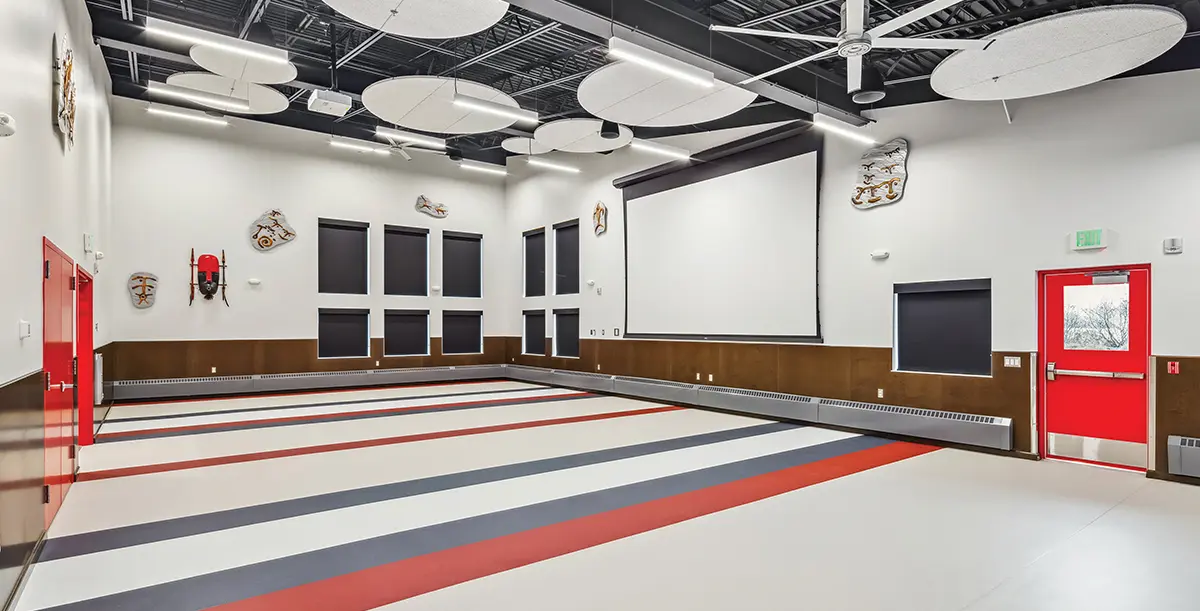
Built at a higher elevation out of the path of tsunamis, the reinforced structure includes a back-up generator, storage for 1,000 gallons of potable water and emergency supplies, dedicated space for an emergency operations center, and “small things like having one electric stove and one propane stove in the kitchen,” says Thomas. The building also includes wide access ramps and Americans with Disabilities Act-compliant design for elders and families to access safely and comfortably.
Since completion, the Nuniaq Center has already played a role in emergency readiness. Residents were directed to the new facility during a recent tsunami warning instead of waiting in vehicles on exposed roadsides. “A powerful sign of progress for a community that has faced the ocean’s power for generations,” Berns says.
Ownership of the facility rests with the Alutiiq Tribe of Old Harbor, with strong collaboration from OHNC and City of Old Harbor—“A partnership that turned a long-held vision into a cornerstone of community resilience,” says Berns.
“This building stands as a monumental testament to our village and all that we hold dear,” Chief Allison Pestrikoff of the Alutiiq Tribe of Old Harbor said during the facility’s May ribbon cutting ceremony. “It is not just a shelter in times of emergencies; it will be the very heart of our community. Here we will continue to uplift one another, celebrate our rich culture, nurture the leaders of tomorrow, and honor our elders with the love and respect they deserve. As I reflect on our journey, my heart swells with pride over what we have achieved together.”