

Helpers
celebrates four decades of
positive physical therapy
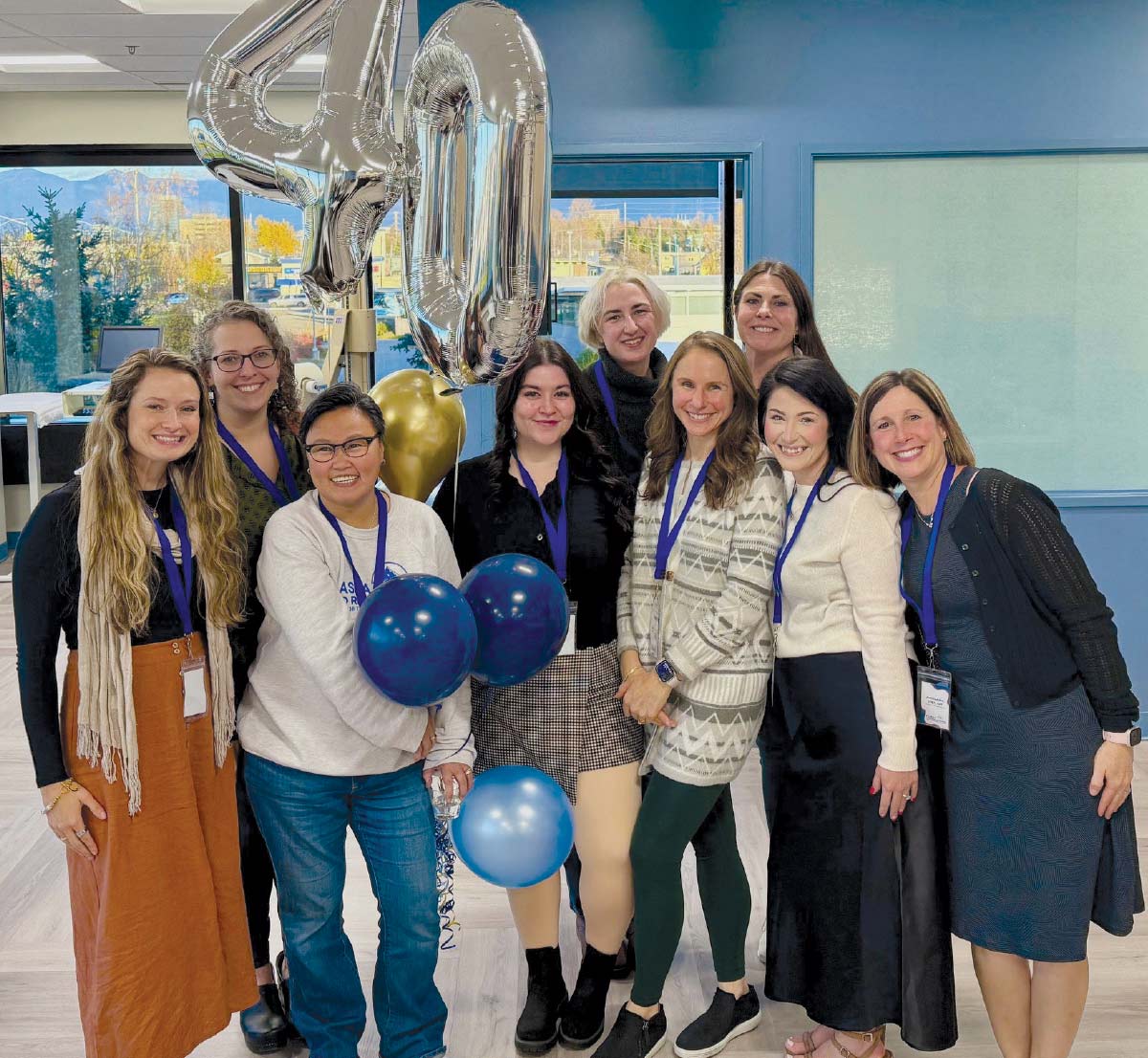
ny business that makes it to the forty year mark deserves a hand, and that is especially apropos as Alaska Hand Rehabilitation (AHR) celebrates its fourth decade in business this year. Established in 1985 by licensed occupational therapist and certified hand therapist Linda Glick, what started as a very small, one-person clinic in Anchorage grew to become a much-beloved employee-owned practice that recently moved into a new, larger location designed to serve more patients in the community.
In an ESOP, a retirement fund for the company’s employees owns part or all of the business. Each employee holds shares depending on how long they’ve worked, and the better the business performs, the greater the benefit when they retire. Keckhut adds, “The management structure still maintains Linda’s vision, but when I retire, for example, the shares go to someone else. It’s a way to help the business last longer, and we’re hoping to see 100 years; we’ve already made it to 40!”
One of the reasons that the company has thrived, according to Practice Administrator Kati Harkreader, is that the company culture embraces values that are important to its employees.
“Our goal is to work together to get people back to living well,” she explains. “Our culture includes showing compassion and kindness; giving people the benefit of the doubt; going beyond what is typically expected; communicating clearly, directly, and openly; and providing constructive feedback.”
The culture of AHR motivates staff to go the extra mile. Harkreader says, “We are open to learning and sharing with each other and helping each other without hesitation.”
AHR prioritizes continuing education for its staff by offering tuition or reimbursement to attend conferences outside the state. It also uses Medbridge, a continuing education platform that therapists can access for in-state learning. The company also hold in-service clinics to provide therapists with insight into what specialists in different areas are doing.
“Our patients come from all over the place; we may see a commercial fisherman flown into Anchorage for emergency surgery or provide tele-rehab services to someone in an outlying village who doesn’t have a post-surgery specialist available,” says Keckhut.
Patients most often work with a certified hand therapist, a designation which requires three years of clinical experience in hand therapy and successfully passing the Certified Hand Therapist exam. All AHR clinical staff are either already certified or in the process of earning that designation.
While the center specializes in upper extremity issues, Keckhut says that it is AHR’s mission to treat the whole person.
“There are often other issues that affect the person more than just an arm or hand,” she explains. “They may have neck or shoulder problems or even mental health concerns as a result of the injury; everything is connected.”
Alaska Hand Rehabilitation
Alaska Hand Rehabilitation
“Some patients are distraught and depressed and feel that they are never going to be how they were before,” she says. “You have to meet the patient where they are and give them encouragement. And when they are ready to accept it, you have to challenge them, which makes them work harder.”
They key is to listen to the patient and help them navigate the trauma. “To see someone come from a place of despair to, at discharge, going on a river-rafting trip that they never thought could happen, gives me a lot of satisfaction,” Keckhut says. “I also enjoy seeing the staff grow and learn, and they’ve watched me grow too. It’s so rewarding seeing everyone’s hard work pay off.”
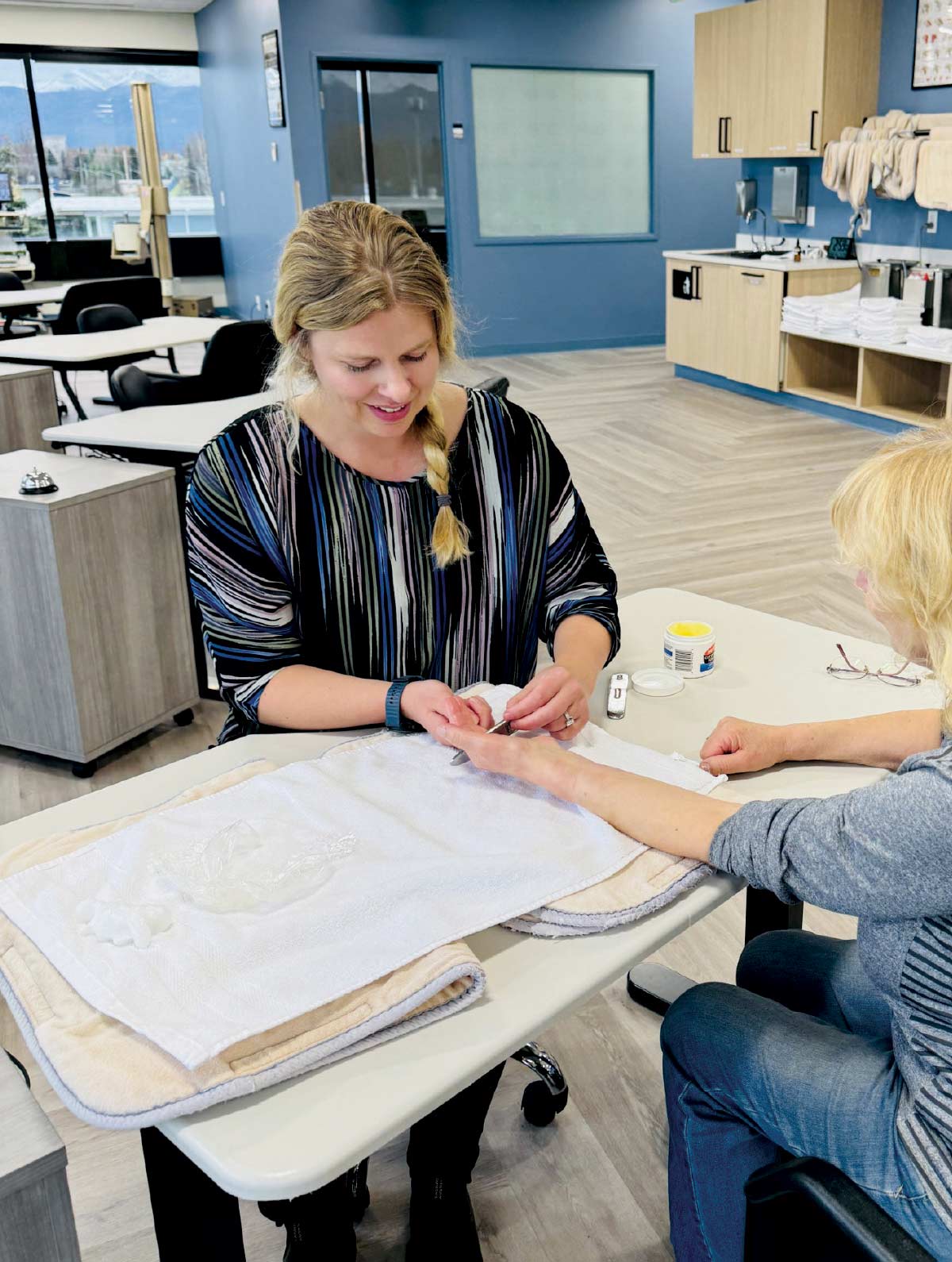
AHR offers numerous treatment modalities for patients, ranging from lymphedema treatment, dry needling, and Graston Technique, or instrument-assisted soft tissue treatment, to ultrasound, laser treatments, and custom splinting.
“It’s not always technology that’s the answer but the techniques that we’ve learned,” says Keckhut. “No matter what we do, we always have the patient’s best interests in mind.”
“I had wrist fusion surgery this year, and there was no doubt in my mind where to go for therapy,” he says. “They are the best in town for this. AHR hires very knowledgeable, intelligent therapists who will work outside the box to help improve patients’ quality of life.”
Thomas also praises AHR for being accommodating. “It’s like a family there. You may work with one therapist one day and a different therapist the next day, but you’re not losing anything because they work together. They study up on you before they see you so they know what’s going on and know how to proceed,” he says.
Today, Thomas says he can do everything he’s always done prior to surgery—except flex or extend his wrist because of the plate inside.
“Once you go through rehab, the therapists educate you on how to do the things you thought you’d never be able to do again,” he says. “They’ve always gone above what you would expect, and I would not go anywhere else or refer people anywhere else.”
Alaska Hand Rehabilitation
“I moved to Alaska from St. Louis, and every time the ice calls my name here, I answer,” she says of weather-related injuries. She has also been treated for rotator cuff tears, torn ligaments, a broken hand, and nerve damage in her hands, which prevented her from some of her favorite pastimes.
“I could barely write at all with my hands and had to use a special pen to write,” she says. “But more important, I play congas and bongos, and at one point I had to stop playing. And that’s my happy space!”
Weaver, a child psychologist, says not being able to do those activities took a toll mentally and emotionally. “But I never gave up, and the therapists saw that in me. They worked with my insurance, got me dry needling treatments, and now I can play again. I also went from not being able to write to being able to write better than ever before,” she says.
Weaver adds that she always feels welcome at AHR, no matter why she’s returning for treatment.
“It’s just a blessing how they treat me; it’s not like, ‘Oh, here she comes again,’” Weaver says with a laugh. “If you want to be taken care of, it’s where you need to go. At times, I was embarrassed and decided to cancel an appointment, and they said, ‘Why aren’t you coming? You’re not going to get better without us helping you.’ They help me carry on.”
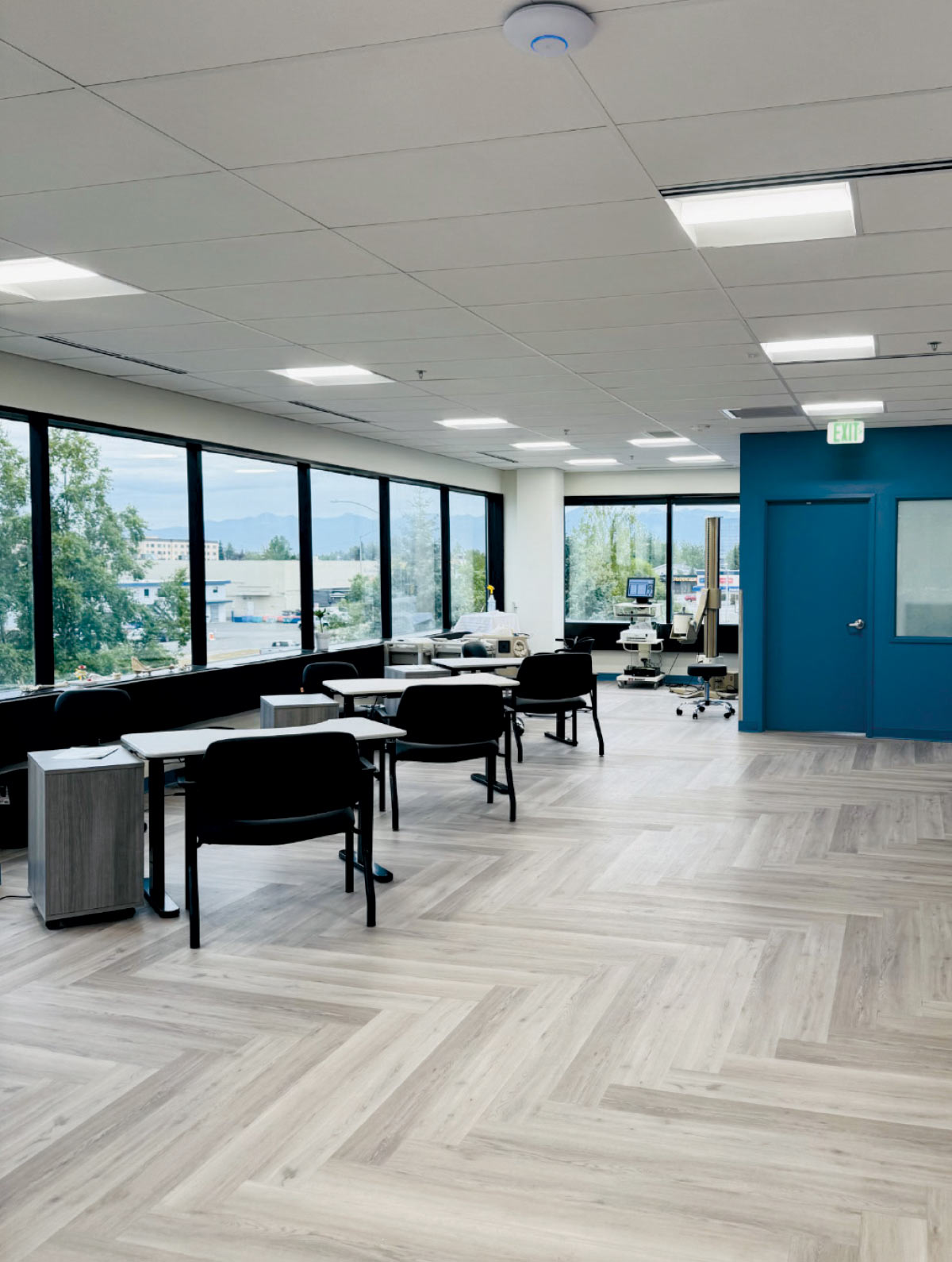
“It’s 6,900 square feet of pure joy. We love it,” Keckhut shares. “It’s very open and bright and has a mountain view. We also have a very open area to treat patients as well as private rooms. We have a gym area with exercise equipment for patients and a dedicated splinting area.”
“Part of the reason we moved into this space is that we outgrew our old one,” adds Harkreader. “We have almost double the space, which is great because we have a lot of goals for company growth.” The employee-owned company aims to hire more therapists, and they’ll need room to practice.
“I can honestly say that I enjoy coming to work every day; everyone here has a high level of respect for each other as individuals and as team members,” Harkreader says. “It’s very special to be part of something like this.”