

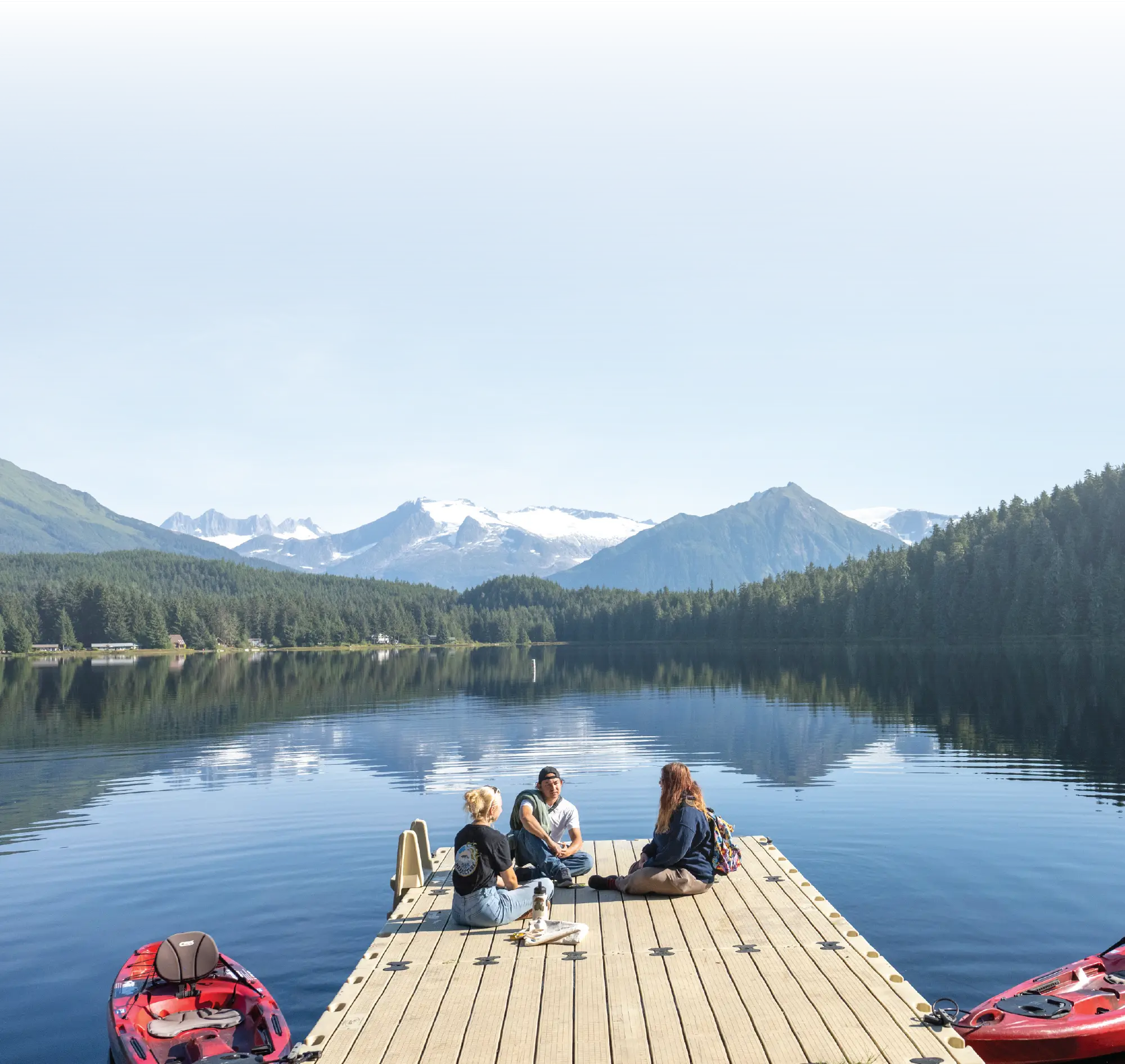
aying for a college education is an investment. But for many students, the cost of in-state versus out-of-state tuition can determine where they enroll. This is especially true in Alaska, where cost and distance often determine whether out-of-state students can afford to matriculate to the 49th State.
UAS has met this challenge head-on by introducing the Alaska Unlocked initiative to make its campuses throughout Southeast financially accessible to students who aren’t Alaska residents. Beginning with the 2026 fall semester, out-of-state undergraduates will pay in-state tuition—a savings of approximately $14,472 per academic year.
“UAS has wanted to offer in-state tuition for all undergraduate students for some time,” says Vice Chancellor of Enrollment Management and Student Affairs Lori Klein. “It is a risk; it is a revenue loss. But we need to open up pathways to bring in students from other places.”
Discounted in-state tuition has long been an enticement for Alaskan students to obtain a home-grown post-secondary education, yet not enough locals are filling the UAS campuses in Juneau, Sitka, and Ketchikan. “Alaska’s population growth is not going to provide us with the equivalent university growth,” Klein says. “When you think about students from out-of-state, cost and distance are the biggest barriers to enrollment, and this initiative removes that cost barrier.”
In conversations with the UA Board of Regents last year, Klein said Chancellor Aparna Dileep-Nageswaran Palmer floated the idea of opening up UAS with in-state tuition for all undergraduate students to increase enrollment. Resident undergraduate students currently pay $6,372. The cost of non-resident undergraduate tuition is $20,844.
“The Board of Regents thought that it was a very innovative concept, and while we know that it will take a few years to increase enrollment enough to offset revenue loss, we’re cautiously optimistic,” Klein says. “It will take about eighty new students to offset the loss of revenue, so we’ve set a target for next fall to bring in twenty-five more out-of-state students, in addition to the forty-five currently enrolled. We estimate it will take two or three years to get those eighty students in.”
Klein says data collected on out-of-state students shows that they put their skills to work in the Alaska economy at a higher rate than in-state students.
“After completing college, 80 percent of out-of-state students stay and work in Alaska,” she says. “While our current volume of out-of-state students is low, we know that increasing this number will result in students becoming employed in Alaska at a higher rate, which is our ultimate goal.”
The admissions process remains the same, and no additional paperwork is needed. Both prospective and current out-of-state UAS students are eligible for the reduced tuition as long as they remain enrolled as undergraduates. This includes out-of-state students from states who are currently part of the Western Undergraduate Exchange and are already receiving a discount. International undergraduate students are also eligible for in-state tuition.
On top of reduced tuition, “Students who receive this discount can still apply for financial aid, and we hope that they do,” adds Klein.
In-state tuition is not a fixed number, however. The Board of Regents is considering an approximately 3 percent tuition increase across all UA schools for the next year.
“The board would be considering this regardless of the Alaska Unlocked initiative,” says Klein, noting that the tuition increase, if adopted, will not offset the revenue loss from eliminating out-of-state rates. “The board recognizes that we may need additional support over the next couple of years as our numbers reach a high enough level to offset the loss. Of course, our goal is to surpass those enrollment numbers for revenue generation.”
“I think they want to watch to see how things go for us first,” says Klein. “It’s not a transition that they can make at this time.”
UAS
UAS
UAS
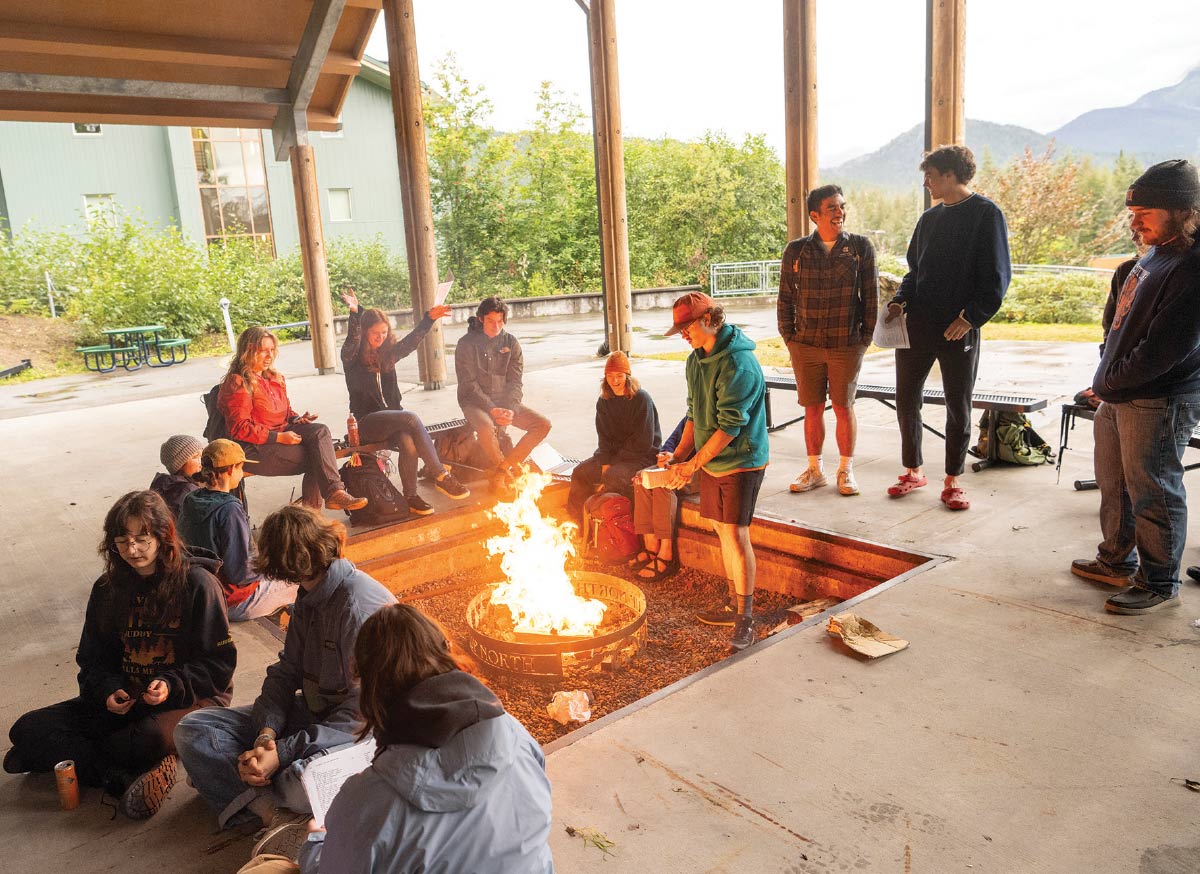
“Because we’re not connected to other states, that doesn’t work for us,” Klein observes with a laugh. “But we believe we offer a lot of good programs that could attract students from states down south.”
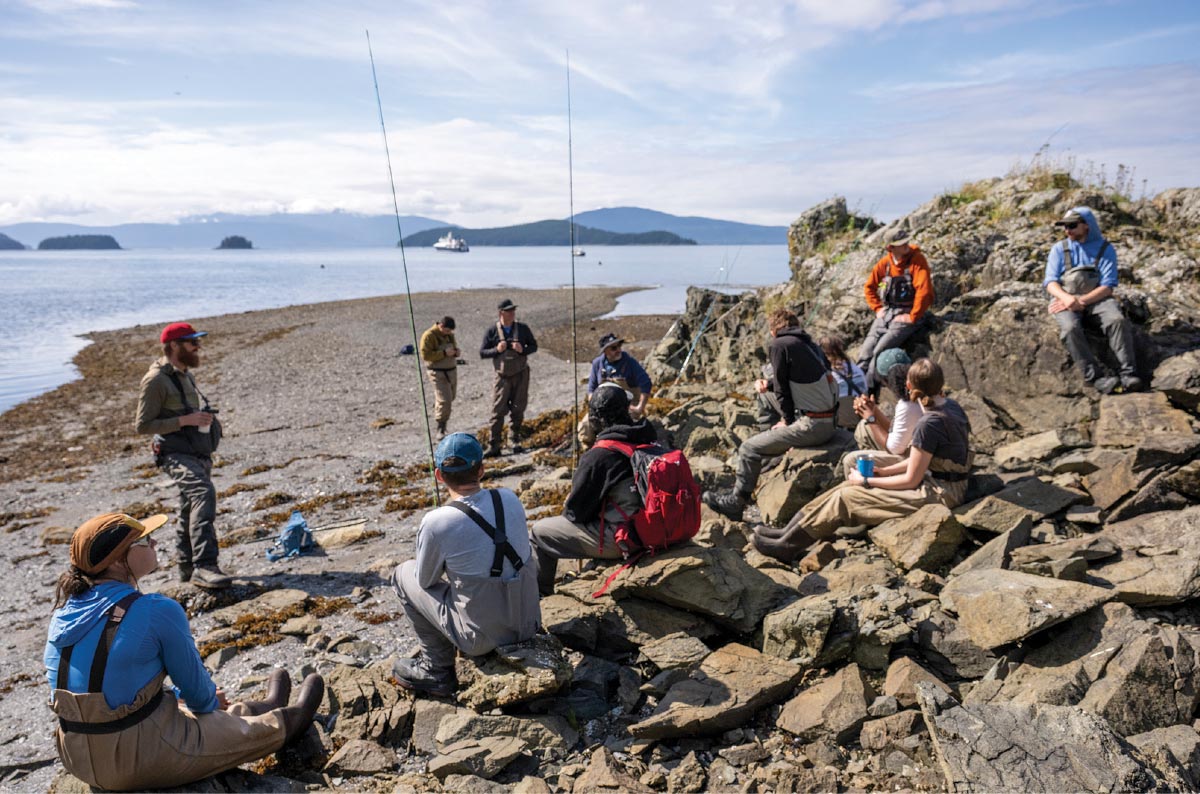
Klein notes that UAS’ marine biology program, biology program, environmental studies program, environmental science program, and outdoor studies program often appeal to students in the Lower 48, especially as the university’s coastal rainforest location lends itself to all sorts of opportunities to engage with the natural environment.
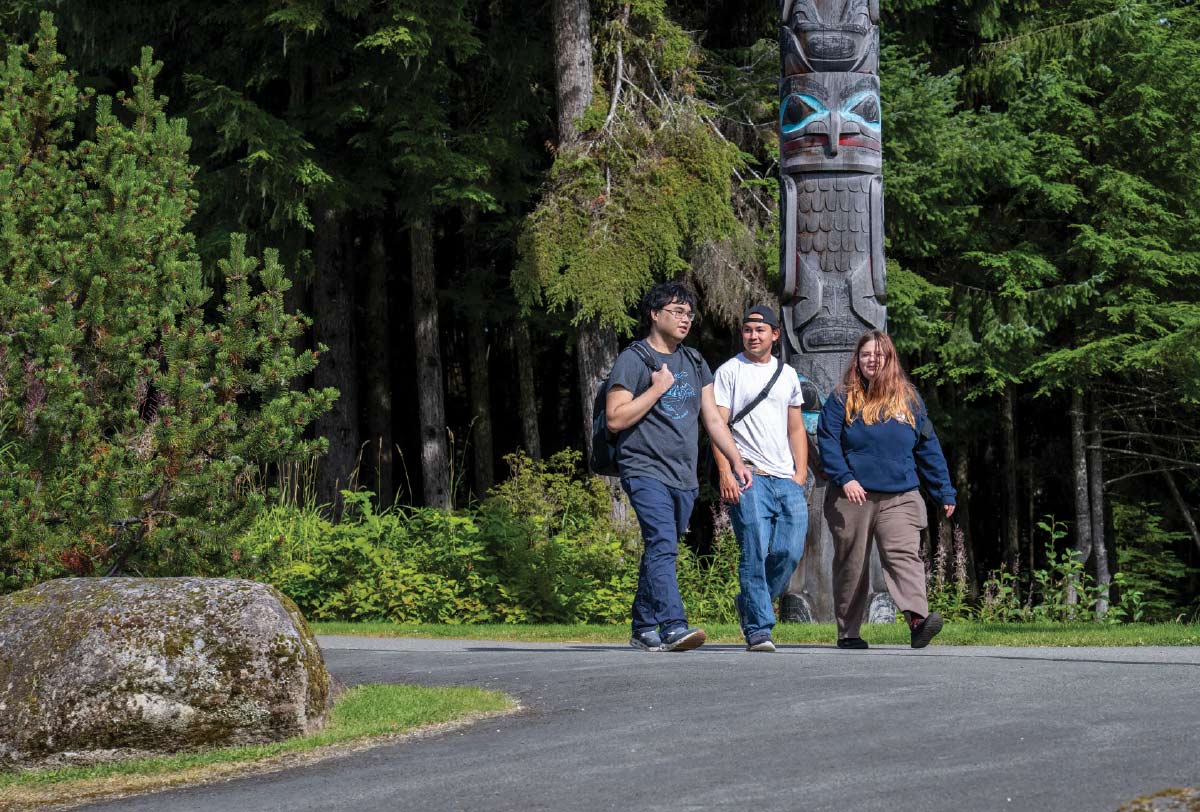
“Even classes that are not naturally connected take advantage of our dramatic natural environment, like our popular Northwest [Coast] Arts program and the humanities and social science programs,” says Klein. “Our location provides added value to students who are interested in studying in these programs.”
“We know that we are an out-migration state; kids who are raised here are looking to get off this rock and get Outside,” she says. “There are students in Washington and Oregon and Colorado who want to get off their rock, too, and offering in-state tuition removes the cost barrier.”
The university’s outreach efforts include visiting college fairs and focusing targeted marketing to 50,000 high school students in Oregon, Idaho, Colorado, and Washington, as well as promoting brand marketing throughout the Pacific Northwest.
“Our goal is to get the Alaska Unlocked initiative on people’s radars,” says Klein. “Our recruiters are also intentionally doing relational outreach to reach specific prospective students.”
UAS is also working with local partners to get the word out. It is currently in conversation with the Juneau Economic Development Council to find ways to collaborate on promoting both the city and UAS.
“The council is doing its own campaign, Choose Juneau, and is looking at ways that they could include UAS as part of their campaign efforts,” says Klein. “We would also promote Juneau as part of our marketing efforts.”
In addition, the university is providing information about Alaska Unlocked to its accreditation network and professional networks to let out-of-state students know more about the opportunity.
Even as these recruiting efforts reach Outside, Klein wants to ensure those who live in Alaska that the university’s commitment to residents of the state has not changed.
“A number of folks expressed concern that this transition will pull us away from our commitment to provide access to all Alaskans, and that’s not the case at all,” she says. “The board considered this when we looked at expanding recruiting efforts down south and doubled our recruiting team. This way, we can provide the same level of recruiting effort to Alaska students who want to stay in-state and take advantage of our programs.”
While response to Alaska Unlocked has been positive, UAS doesn’t yet know if the numbers will reflect this trend.
“The application for the fall 2026 semester opened in mid-September, and recruitment efforts out-of-state started in October, so we won’t know until we close out the month the difference between this October and last October,” says Klein. “But we did have to send additional supplies down to recruiters in Minnesota, Colorado, and Oregon, so that’s a good sign that Alaska Unlocked is resonating with high school students in the west and Pacific Northwest.”