


of Belonging
Alaska Native corporation
shareholders
hen the Alaska Native Claims Settlement Act (ANCSA) established the scaffolding for regional and village corporations, it was with the intent that those corporations support the roughly 74,000 Alaska Native shareholders enrolled by 1973.
ANCSA set out guidelines about who could be shareholders: blood quantum requirements and a cut-off date for eligibility. Shareholders had to be born on or before 11:59 p.m. December 18, 1971—the day ANCSA was signed into law—to be eligible to hold shares.
The legislation left it up to corporations to figure out how to connect with shareholders, how to give them a voice in governing the new corporations, or what shareholder benefits should look like. Nearly 200 village and regional corporations operating today have developed a range of approaches to communication, often led by shifting demographics and evolving needs of their shareholder base.
Through successful management within the corporations, many shareholders have more benefits available to them, and to descendants of original shareholders, than ever before. But Native corporations face the pressure of preserving culture and tradition at a time when a village or regional corporation’s shareholder base might be spread across the world.
“Word of mouth was the primary way things were communicated,” says Cameron Poindexter, president and CEO of Dillingham-based Choggiung, Limited. “Most all of our shareholders at the original issuance of shares were living within the villages that were originally established. There were a small portion that were enrolled with Choggiung, Limited who had moved away, but that number was pretty small.”
Many villages had tribal councils, but informing a region about this new way of operating entailed a fresh strategy for communication and training.
In Kodiak, people setting up Koniag regional corporation held community meetings in villages dotting the archipelago. Newsletters from 1973 include photos of early Koniag officials traveling from village to village for a regional training event, using a fishing vessel for transport and holding meetings in a school and community hall.
It’s not that different from today, says Stacey “Imaq” Simmons, vice president of Koniag Region Investments.
“We go to Larsen Bay, Old Harbor, Port Lions, Ouzinkie, Akhiok, and Kodiak. We try to do those all in one week—we do two a day. Then we go to Portland [Oregon], Soldotna, Anchorage, and Seattle,” Simmons says. Annual meetings rotate between Kodiak, Seattle, and Anchorage.
Koniag takes shareholder involvement a step further, with shareholder committees. Those began in 1997, Simmons says.
“It’s a volunteer committee; people who want to be directly involved in the needs of the shareholder base volunteer their time,” she explains. “It’s a great vessel for communication, to get feedback from our shareholders.”
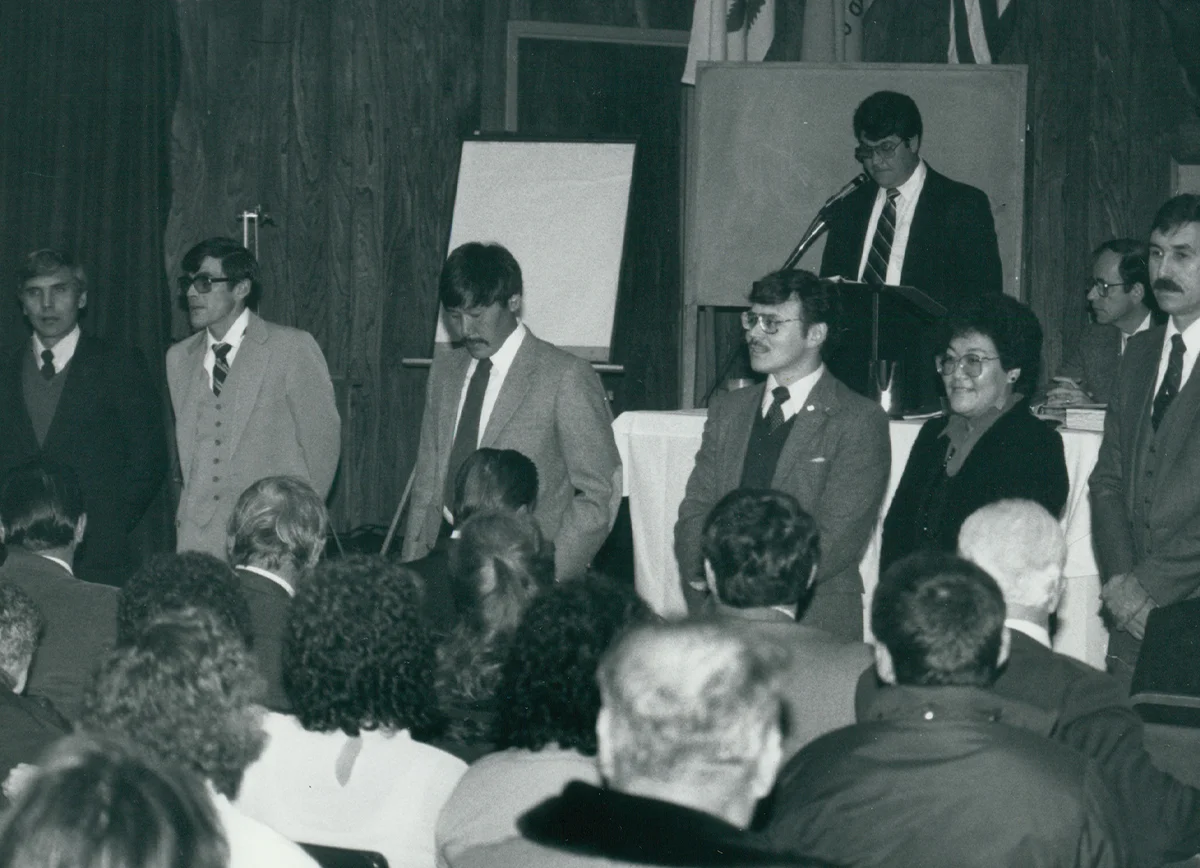
Chugach Alaska Corporation leaders say early communication ranged from handwritten letters to newsletters and community meetings, with early gatherings fostering trust and a sense of belonging among an already close-knit community of shareholders.
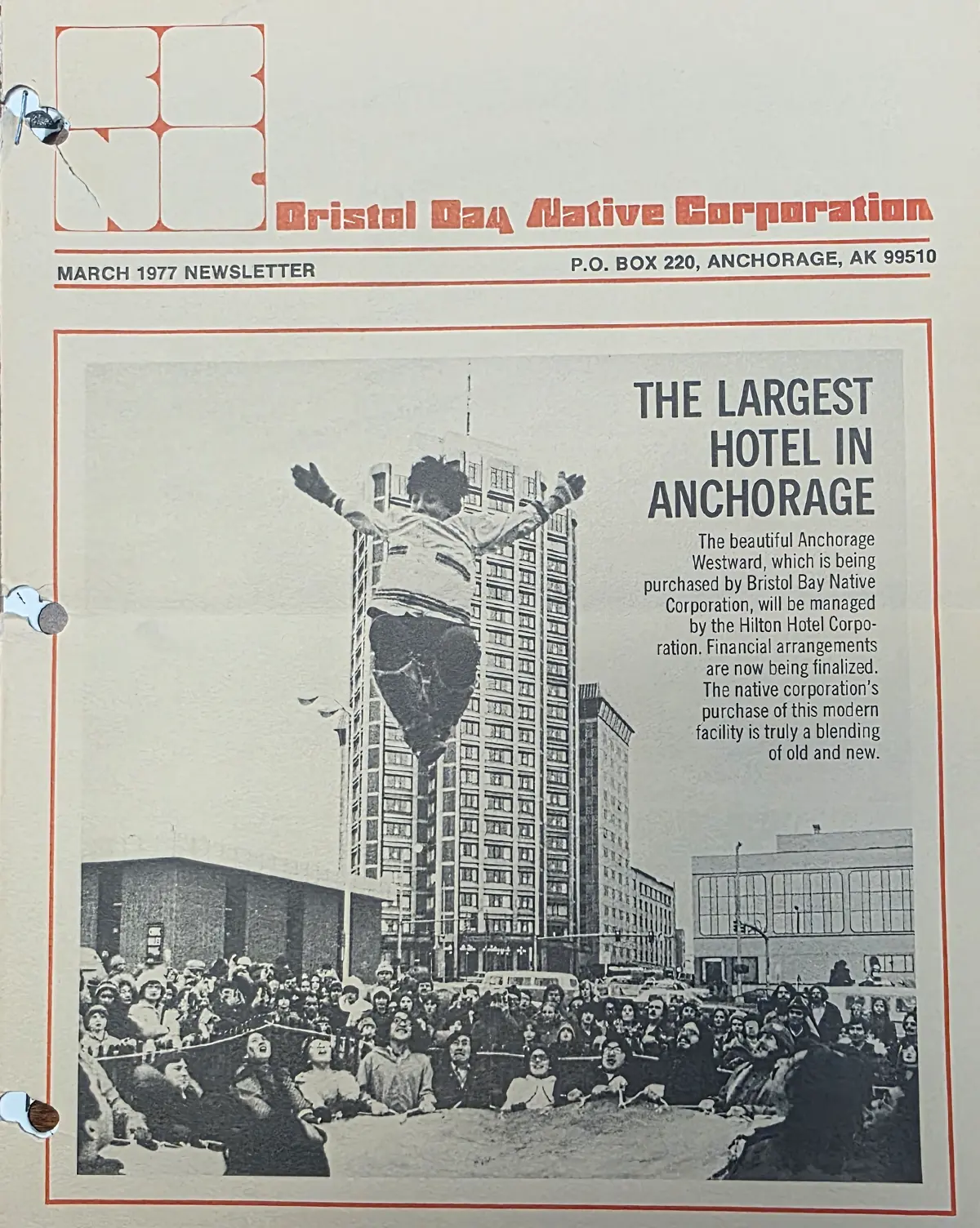
Today, corporations rely on an array of methods to reach out to shareholders, from newsletters (printed, emailed, and posted online) and mailouts to text messages and posts on various social media platforms. It’s not uncommon to see a post on Instagram celebrating a Bristol Bay Native Corporation (BBNC) shareholder or one by Ahtna, Inc. highlighting the traditional uses of crowberries.
“Twenty years ago, we did a lot of newsletters, a lot of physical mailings. Today, primarily, BBNC promotion is social media, web based, and recently a lot more texting,” says BBNC President and CEO Jason Metrokin. The texts, he notes, often include a link to a newsletter or other notification online. For some demographics, it’s more effective than email alone, he says.
“Our ancestors stayed connected across great distances through stories and shared purpose. In many ways, we’re doing the same today, using new tools to continue that tradition of connection, transparency, and belonging,” says Chugach Board Chairman Sheri Buretta. “Our commitment hasn’t changed, only the ways we reach our people.”
Bristol Bay Native Corporation
Bristol Bay Native Corporation

When Metrokin started at BBNC twenty years ago, more than 50 percent of shareholders lived in the Bristol Bay region, he recalls. Today, about one-third of shareholders live there. Most have moved to Southcentral, and about 20 percent live in the Lower 48 or outside the United States.
Chugach leaders say almost half of its shareholders live outside Alaska, with the largest portion in Washington state, where Chugach regularly hosts both annual and informational meetings.
“Technology has really been a big game-changer,” notes Curtis McQueen, executive director of the Alaska Native Village Corporation Association. McQueen, a member of the Tlingit and Haida Indian Tribes of Alaska and former CEO of Eklutna, Inc., says COVID-19 kickstarted the trend of online access to annual meetings, and it has helped bring together shareholders who live outside Alaska.
Chugach leaders add that what began as a temporary adaptation has become a lasting innovation that continues to strengthen connection and access across distances.
But sometimes an annual meeting isn’t enough to handle all that needs to be discussed. In the case of a significant change, such as Choggiung’s 2022 question to shareholders about adding a separate class of stock for descendants, Poindexter says Choggiung held informational meetings in Dillingham, Anchorage, Kenai, and Wasilla to connect with as many of its 2,700 shareholders as possible. Shareholders ultimately approved the measure, allowing lineal descendants of original shareholders—born after the December 18, 1971 cutoff date and who are not enrolled as a descendant in another village corporation—to become Class B Life Estate Stock shareholders. Residents who were eligible to hold original Class A stock but who missed the 1973 enrollment deadline were also deemed eligible to receive Class B shares. Choggiung joins several other village corporations—and now nine of the twelve regional corporations—in offering a second tier of stock to descendants of original shareholders.
Although precise guidelines vary, one common theme of this second tier of stock is that, instead of being an inheritable asset, it stays with the shareholder during his or her lifetime and reverts to the corporation upon the shareholder’s death.
“Open enrollment is about honoring the wisdom of our elders while welcoming the energy of our next generation. It’s a chance to bring more of our family into the circle, to learn from those who came before us, and to ensure our culture and values carry forward through new voices and new leaders,” says Chugach Alaska Vice President of Shareholder Services Millie Fox-Hill.
The shareholder age among many corporations is already skewing younger. Some of that shift is due to original shareholders gifting shares to their children or family members. When original shares were first set up, each shareholder was allotted 100 shares. Those shares could be gifted to close family members while the original shareholder was alive or inherited after their death.
Metrokin notes that most BBNC shareholders in the ‘80s and ‘90s held between sixty and seventy shares. Today, the average shareholder holds around forty-five shares, reflecting the redistribution through gifting or inheritance of shares over time.
“We have a very large and growing bubble of shareholders between the ages of 18 and 35,” Metrokin says.
Today, about 12,000 BBNC shareholders hold original shares. Following the October 4 vote to create a Class D share for descendants, Metrokin says, “we anticipate roughly the same amount, 12,000, that would be eligible to apply for the new descendant stock. That would roughly double our shareholder base.”
Not all those descendant enrollees will be new to the corporation, however. He estimates about two-thirds already hold inherited or gifted shares. Another one-third will be new to the organization.
“We have to work extra hard to help them understand what being part of an Alaska Native corporation means,” he says.

Bristol Bay Native Corporation
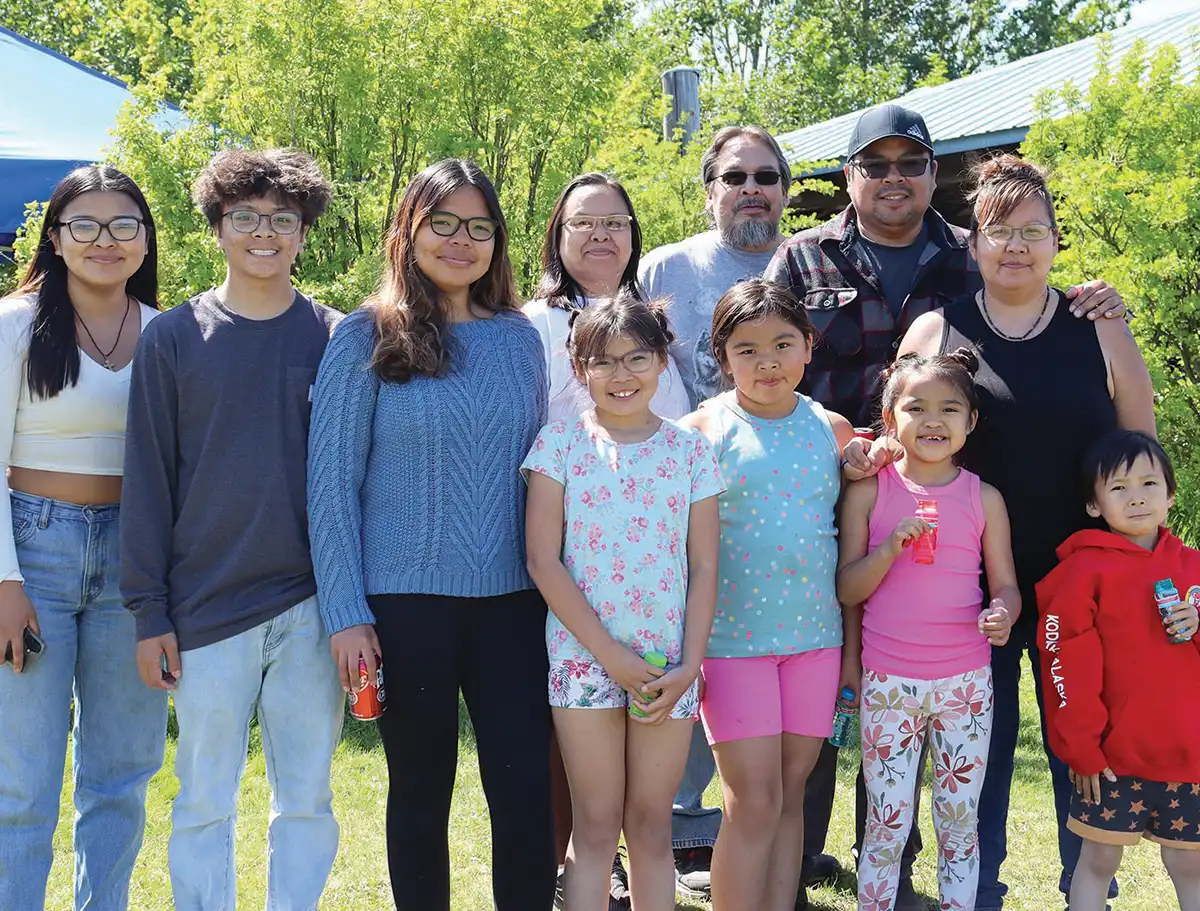
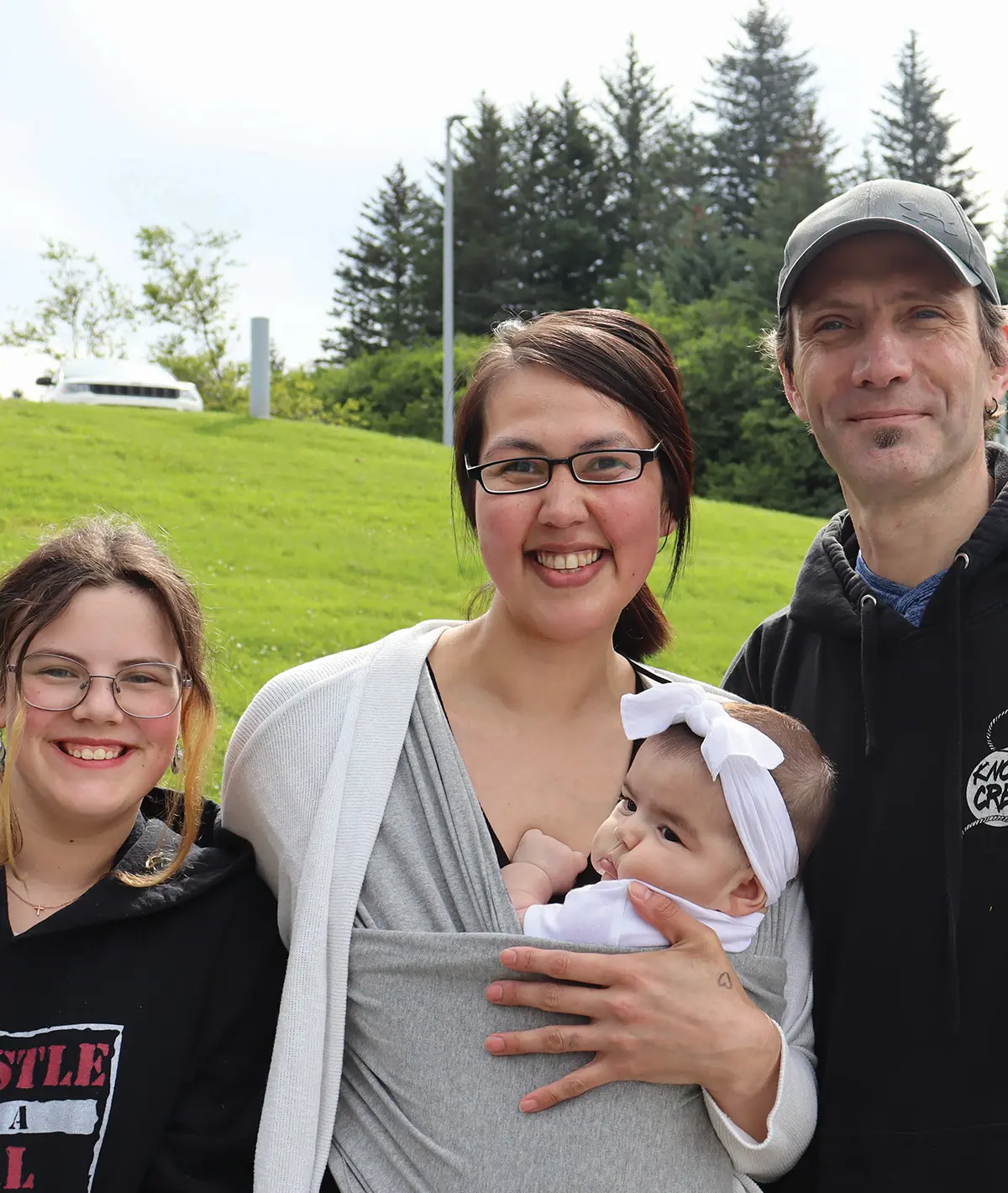
“When we were ready to develop our lands, we didn’t have our own engineers, our own construction companies, our own lawyers,” says McQueen. “But we started putting aside money to invest in [scholarships to] colleges and trade schools. Now, you walk into these corporations, and the majority of staff are either shareholders of our corporation or other corporations.”
Scholarships were an early added benefit for shareholders and their descendants. Today, scholarships are something many Native corporations offer—both to colleges and to trade schools. For instance, BBNC partners with every school district in the Bristol Bay region to provide career and technical education and was a founding partner of the Bristol Bay Fly-Fishing and Guide Academy, which aims to provide education on salmon stewardship that fosters sustainable outdoor employment opportunities for Bristol Bay teens and young adults.
Finding ways to make BBNC relevant, both across Alaska and specifically to its shareholders, is a constant driver. Metrokin says, “We’ve been around for fifty-three years, and we intend to be around forever. We have to evolve based on our shareholders and based on the changes to our financial resources.”
In addition to annual meetings, town halls, and informational meetings when needed, Koniag also hosts holiday parties and summer picnics in Kodiak, Anchorage, and Seattle to support the culture and community of its shareholders.
Other benefits include a shareholder burial benefit to help offset the costs that come when a loved one dies, and an elder benefit—a payout to original Koniag shareholders over the age of 62—that now distributes money each fall and spring. To boost business development, Koniag offers a business directory, open to shareholders and descendants, that businesses from construction companies to artists can take part in.
Chugach has distributed more than $13 million in scholarships to more than 2,300 recipients across Alaska and the United States, a nod to the vital role education plays in Chugach’s vision for the future.
“Chugach invested in my education and opened doors for me to grow into leadership roles with our corporation. That experience shaped my belief that opportunity can transform lives and communities,” says Chugach President Katherine Carlton. “When we invest in education, we’re cultivating the next generation of Alaska Native leaders who will carry our vision forward.”