

Alaska Trends
he largest philanthropic organization in Alaska gave away more cash in 2022 than the rest of the top ten private foundations combined. According to a 2024 economic impact report from The Foraker Group, the Rasmuson Foundation awarded nearly $32.6 million to various causes that year. The foundation continues the Rasmuson family legacy of giving away wealth since 1955, even before Elmer Rasmuson invested earnings from National Bank of Alaska into oil fields to become fabulously rich (for an Alaskan).
The Rasmuson Foundation was originally endowed with $3,000, worth about ten times as much these days and therefore a bit outside a typical household budget. Yet nearly 150,000 ordinary folks volunteered their time in 2022, according to the report, averaging almost one hour per week for $9.5 million in economic benefit. Individuals in the aggregate contribute at the same order of magnitude as some of the state’s largest corporate donors. National Bank of Alaska’s successor, Wells Fargo, has given approximately $4.8 million over the last four years. In 2024 alone, Alaska Airlines distributed $5 million in Alaska in cash and in-kind donations. And ConocoPhillips Alaska averages $6.7 million annually to Alaska causes.
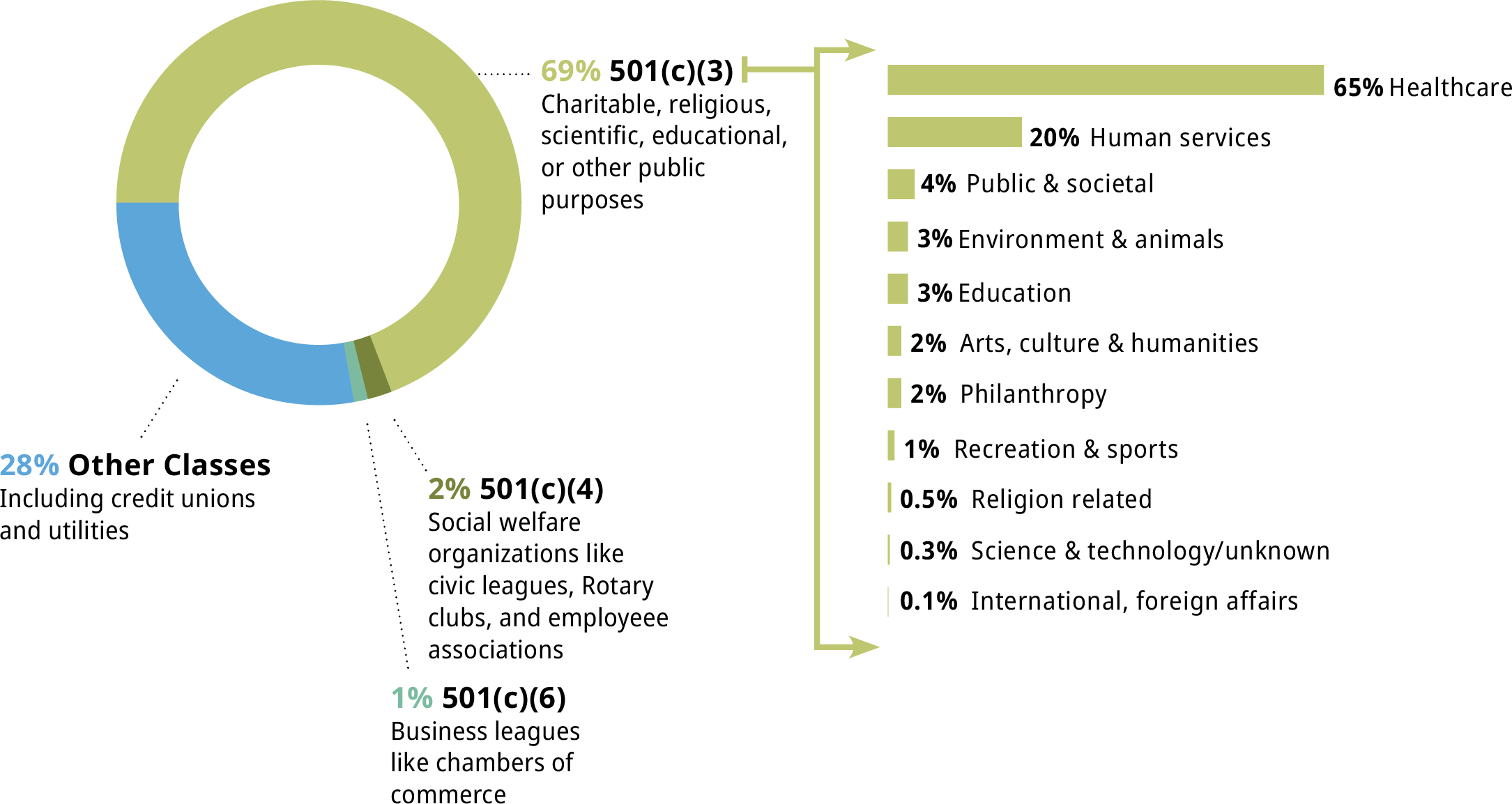
The Foraker Group—established in 2001 to stand alongside the nonprofit sector, just like Alaska’s third-tallest mountain stands beside Denali—counts total economic impact from nonprofits equivalent to about one-sixth of Alaska’s gross domestic product. If that’s surprising, remember that nonprofits include electric and phone utilities, healthcare networks, and credit unions, including the report’s sponsor, Credit Union 1.
This edition of Alaska Trends serves up a generous helping of data from the report.
Nonprofits generated $9.4 billion in revenues in 2023, an increase of 19% from 2020.
Nonprofits employ 14% of the non-government workforce. Nonprofits account for up to 40% of direct employment in some rural areas.
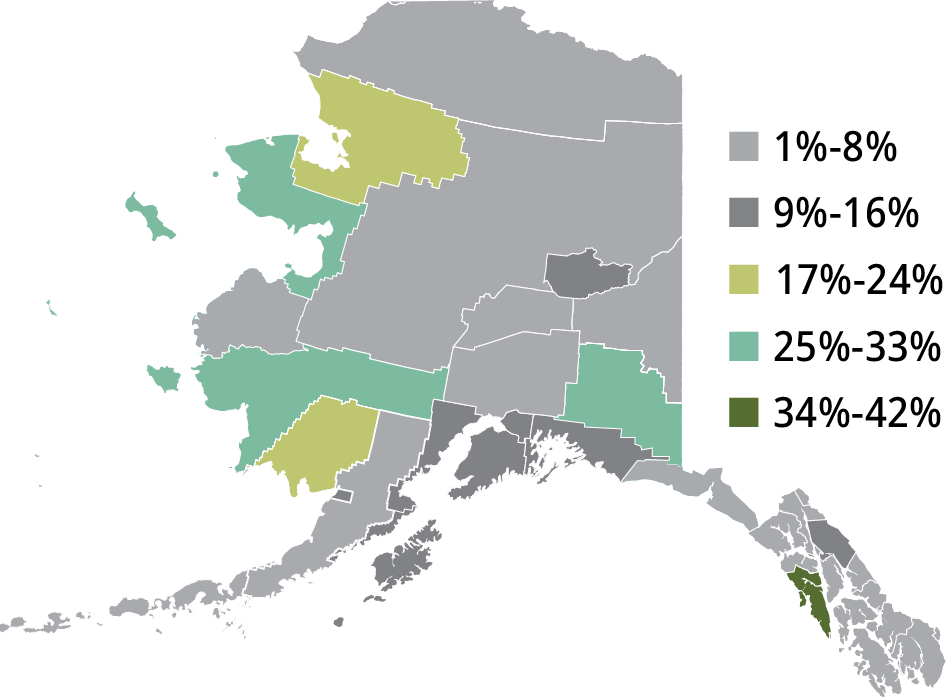
When looking at only private (non-government) employment, the nonprofit sector supports 1in 5 jobs.

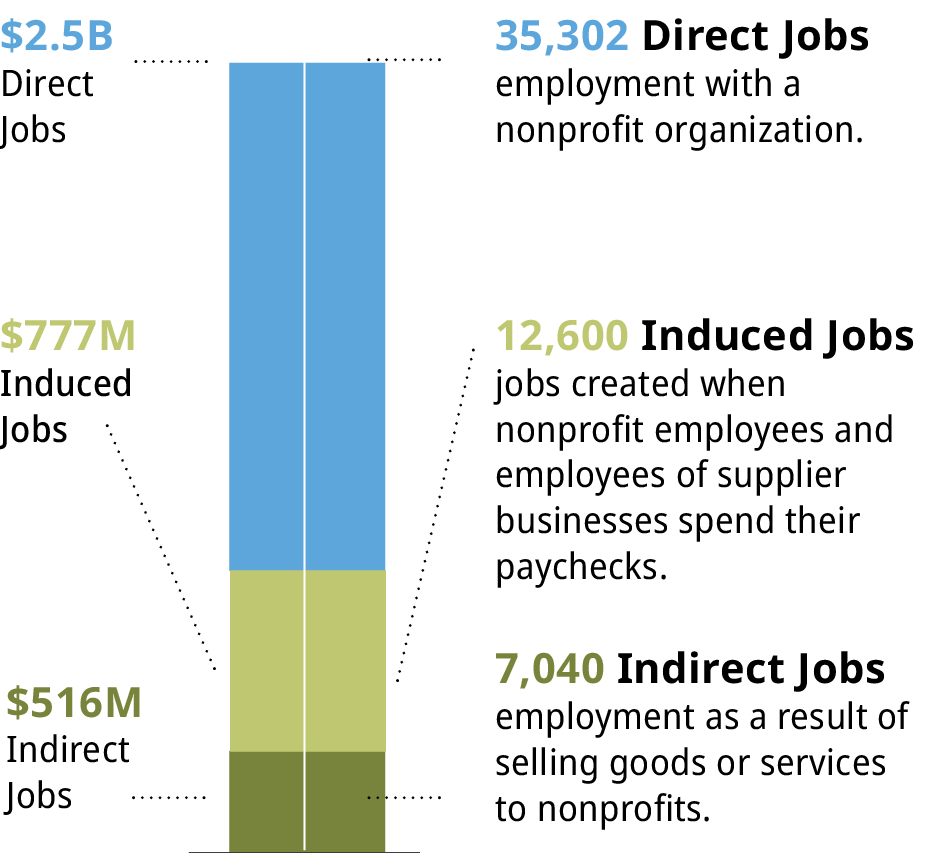
Nonprofits are responsible for sustaining 54,942 jobs within the state of Alaska.
All nonprofit jobs combined translate to $3.8B total income generated by the sector.
Social services, the 2nd-largest subsector, depends on nonprofits for 80% of its jobs.
