

s it better to buy, build, or lease commercial property? It’s an important question because these options have vast discrepancies in costs as well as pros, cons, and other factors that business owners need to consider.
The current inventory of commercial real estate in Alaska—which ranges from office buildings and retail spaces to industrial properties, medical centers, hotels, and even large apartment complexes—is tight. This is especially true in Anchorage for industrial, warehouse, and well-located, service-type commercial properties, according to Manny Rodriguez, an associate broker with Jack White Commercial, which specializes in facilitating the purchase, sale, and lease of commercial properties.
“Vacancy rates for functional industrial space are low by historic standards, helping to keep both sale and lease prices relatively firm,” Rodriguez says. “Pricing has generally leveled off, but well-kept and competitively priced properties continue to sell quickly. Lease rates have held strong as new construction has been limited in recent years. Overall, core submarkets remain undersupplied, keeping competition high despite increasing interest rates.”
Industrial and warehouse properties are the fastest-selling commercial real estate in Anchorage due to low supply and strong demand from logistics, trades, and service-based businesses, Rodriguez says. Smaller owner-user buildings under 10,000 square feet also perform well because they attract both investors and business owners. Properties with functional layouts, sufficient parking, and flexible zoning are most sought after. In contrast, older office buildings with outdated layouts and deferred maintenance tend to move more slowly. “Buyers and tenants are increasingly focused on efficiency and operating costs, so well-located and modern-use properties continue to outperform the broader market,” he says.
Brandon Walker, also an associate broker at Jack White Commercial, says the biggest challenge now is that construction costs are so high most new inventory is not economical. These elevated expenses make development of new properties difficult to justify, creating a pronounced supply-side problem. The existing inventory is relatively picked over; most of what’s available is suffering from obsolescence, whether located too far away or configured in the wrong way for today’s business needs.
Anchorage is undersupplied with industrial properties, relatively healthy for the retail sector, and weak among lower-quality office buildings. This imbalance highlights the ongoing challenges in matching available properties with current market demand. “If I have an industrial client, it’s harder to find what we need,” says Walker, who has worked in the commercial real estate industry for more than twenty years in various roles. “Sometimes we’re looking at office buildings and trying to consider how can we convert them. In terms of the poorest-quality buildings, with the cost of remodeling, by the time you acquire the building and do the conversion, the cost would be higher than if you just bought a new building.”
Industrial construction costs often exceed $300 per square foot when including land, utilities, and site work. “As a result, replacement cost plays a key role in supporting existing property values, which is one major reason buyers often favor existing buildings,” he says.
According to Rodriguez, buying an existing commercial building in Anchorage usually provides the most stable route to occupancy; it offers known pricing, predictable operating costs, and shorter schedules. Leasing requires less initial capital and provides flexibility, but it limits long-term control and exposes businesses to potential rent increases.
On the other hand, building new allows for customization to modern standards, but it’s typically the most complex option due to limited land, permitting challenges, and high construction costs. “Development timelines often range from eighteen to thirty-six months, adding both cost and risk,” Rodriguez says. “Financing is also more favorable for stabilized buildings than for speculative construction. These factors make existing buildings especially appealing to many Anchorage owner-users.”
However, existing buildings often come with certain drawbacks, according to Todd Christianson, president and CEO of Anchorage-based Titan LLC, which performs site work and vertical and civil construction. Most available inventory consists of older properties, typically built in the ‘80s or ‘90s. As a result, buyers may need to invest in updates or renovations.
With new construction, many variables affect development costs. And it all starts with the ground, Christianson says. “If the ground has organics—which most of the ground in Anchorage does—it costs a lot more to develop it,” he explains. Organic soil composed of plant and animal matter is typically excavated and replaced with structural fill with a more mineral composition.
While new construction usually requires more time and higher upfront costs, the property will likely appraise for higher than the construction cost. “So there’s a good chance that you can gain more equity with building brand new,” Christianson says.
Similar factors exist in the Fairbanks area, and the availability of commercial property is “thin,” reports Angie Tallant, a Somers Sotheby’s International Realty agent with more than twenty-five years of industry experience. With around seventy properties on the Multiple Listing Service, much of the commercial real estate activity happens off market. Functional properties like industrial/flex and well-located retail/office spaces maintain strong pricing, and average price per square foot has steadily increased over five years. “The properties that are selling the fastest are usually mixed-used buildings with good frontage on a major Fairbanks roadway or in proximity to railroad or industrial areas,” she says.
Tallant says multifamily properties with more than eight dwelling units—which rarely enter the market—can sell quickly when correctly priced due to high construction costs for logistics, short building seasons, and cold-weather requirements. Fairbanks’ construction cost premium is significant, about twice the national average, according to the US Army Corps of Engineers Area Cost Factor.
For companies that are certain they will continue operating for the foreseeable future, owning can provide greater stability and control. For instance, they may not want a landlord telling them they have to move out or cannot make certain improvements in their leased space. “Usually, what we’ll see is a tenant who’s been in a bad situation,” Walker says. “That drives them to want to own their property so that they don’t have to be at the whim of their landlord.”
The buy-build-or-lease choice often hinges on specific business objectives. Rodriguez helps clients evaluate all the pertinent elements. For example, he helps analyze total projected occupancy costs over their expected operating timeline. This includes purchase or rental prices, financing terms, operating expenses, capital improvements, and potential exit value.
“We also assess flexibility and control needs, which are factors often as important as total costs,” he explains. “Market data, comparable sales, and lease benchmarks help ground the analysis in current Anchorage conditions. For long-term businesses, ownership often provides better cost certainty and equity growth. Ultimately, the goal is to align any client of ours’ real estate strategy with both their financial and operational objectives.”
Similarly, Tallant says determining the client’s use for the commercial property and future business goals is key. Purchasing an existing building is usually the quickest solution—provided the property meets the business’ operational needs. The key is due diligence, including evaluating the building’s physical condition, environmental status, title and survey, zoning and permitted uses, verification of income and expenses for investment properties, and meeting lender requirements.
Constructing a new building on purchased land is more complex and time-consuming, with extra steps such as site evaluation, design, permitting, contractor selection, financing, and construction oversight. Leasing can be quickest if a suitable space is available, focusing on lease terms, renewal options, tenant improvements, maintenance obligations, transfer rights, and exit flexibility.
Titan LLC
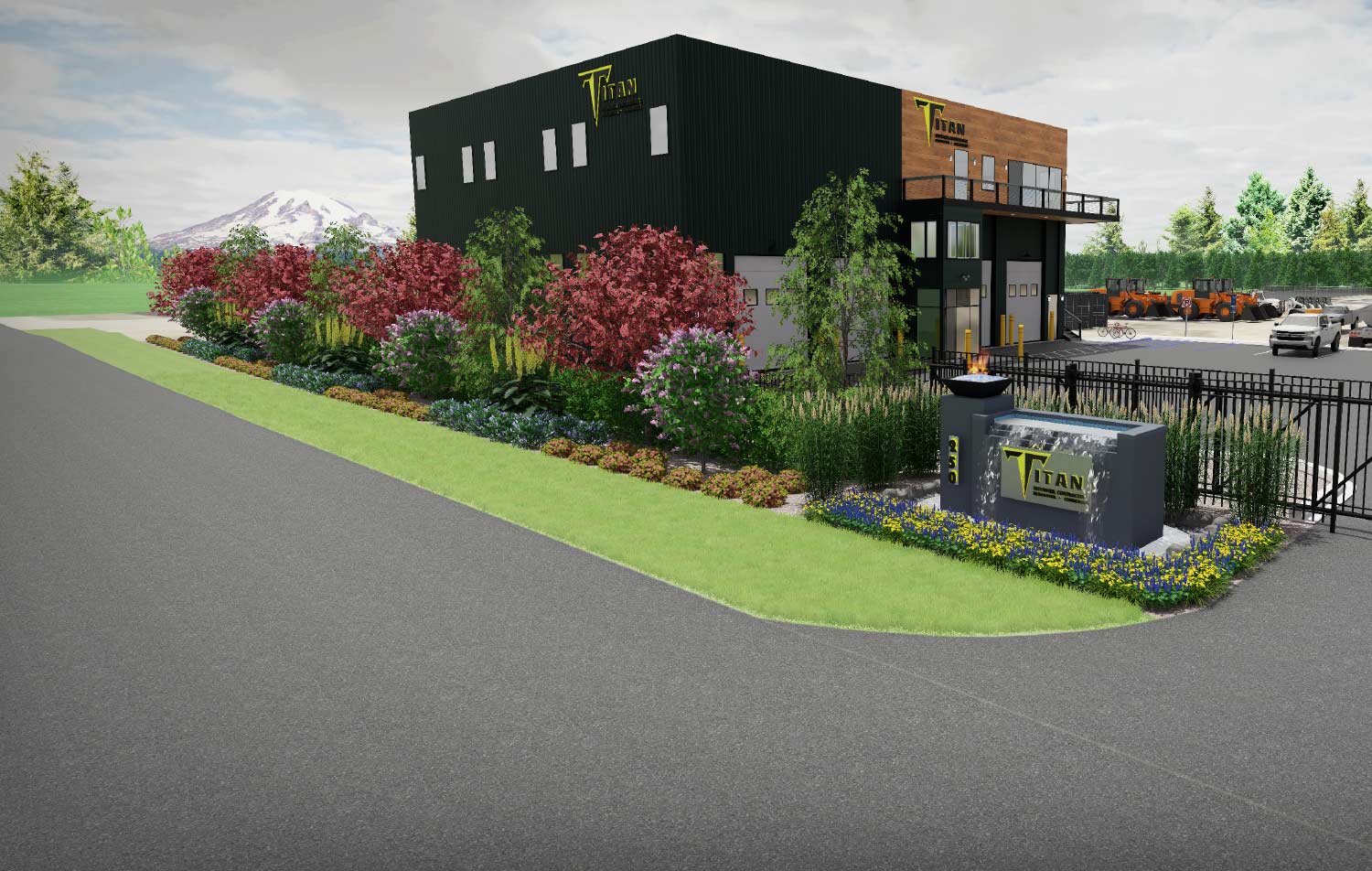
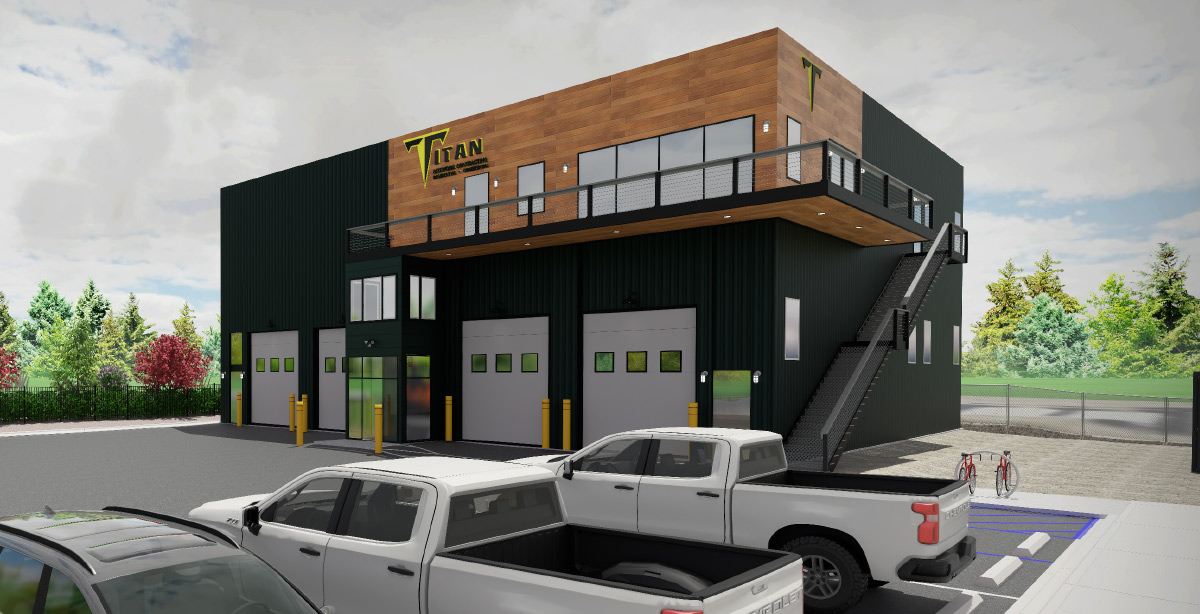
According to Christianson, who has been in business for forty-three years, the new building is integral to Titan’s vision of establishing itself as a “destination” construction company. And this requires attracting and retaining the best talent, offering competitive compensation, and providing high-caliber facilities and training. The building will not only enhance training opportunities but offer ample space to optimize equipment storage and usage.
Christianson says the structure will be a “game changer,” as it will also alleviate logistical challenges for Titan. Currently, the company is paying a premium for a mechanic shop located about five miles from its main site, resulting in several employees going back and forth daily. By centralizing maintenance and storage under one roof, Christianson expects the investment in the new facility to pay for itself through increased productivity and more frequent use of equipment.
Perhaps more important, the new edifice will reflect Titan’s commitment to excellence, enhance its prestige, and support future growth. “It’s going to be one of the best construction offices in Alaska,” Christianson says. “We’re designing it to fit our needs and for expansion, as our company is looking at $25 [million] and then $50 million growth here in the next three to five years. It’s a critical part of our success.”
Still, for many businesses, Rodriguez says, building fresh is less optimal than buying an existing commercial property, in terms of cost certainty, long-term control, and value—especially with today’s high construction costs. Leasing remains a strong choice for businesses needing flexibility or shorter commitments, although long-term lease costs often exceed ownership costs. New construction can make sense for specialized users, but it’s generally the most expensive and time-consuming option, given land and infrastructure constraints.
Rising replacement costs continue to support the value of existing buildings. “Ultimately, the right choice depends on how long a business plans to stay and how essential customization is to its operations,” Rodriguez says.